al2o3 & platinum Catalyst for VOCs removal&Exhaust Gas Purifying
- Category: >>>
- Supplier: Jiangxi CAS Kerry Pro-Environment Catalysts Co. Ltd.
Share on (60220200740):
Product Overview
Description
1. Production Introduction
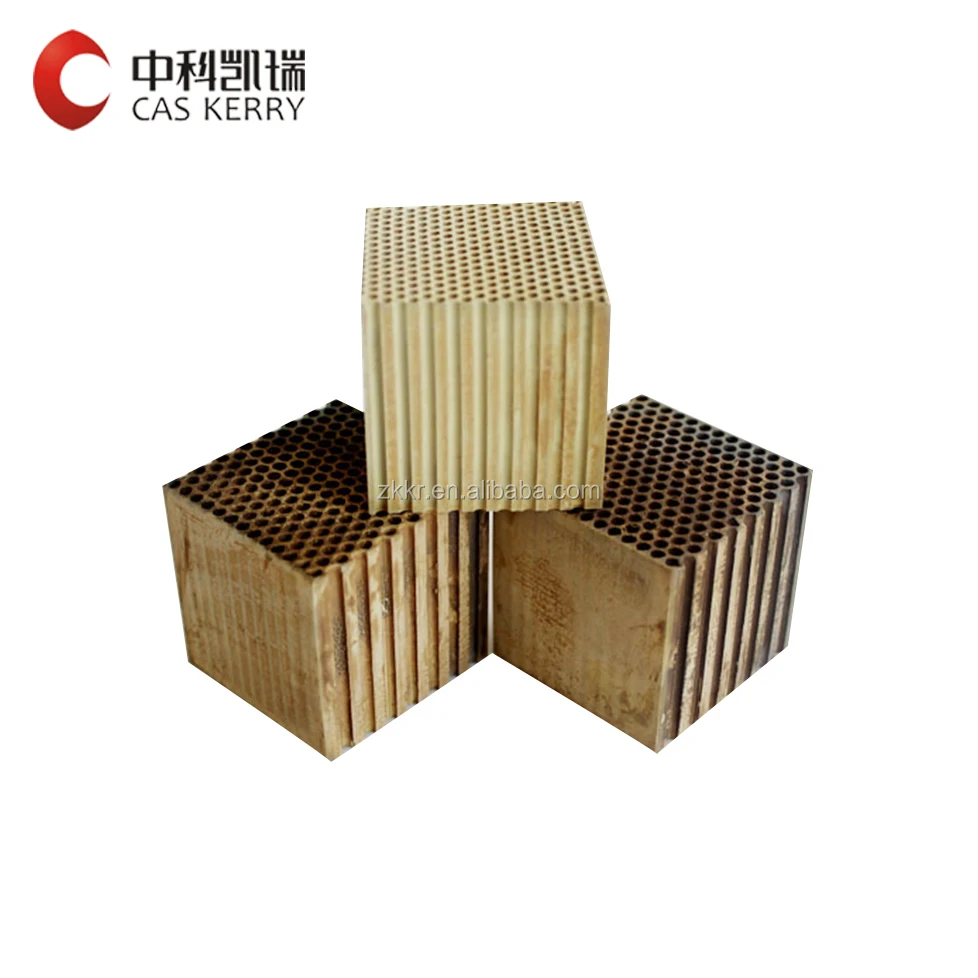
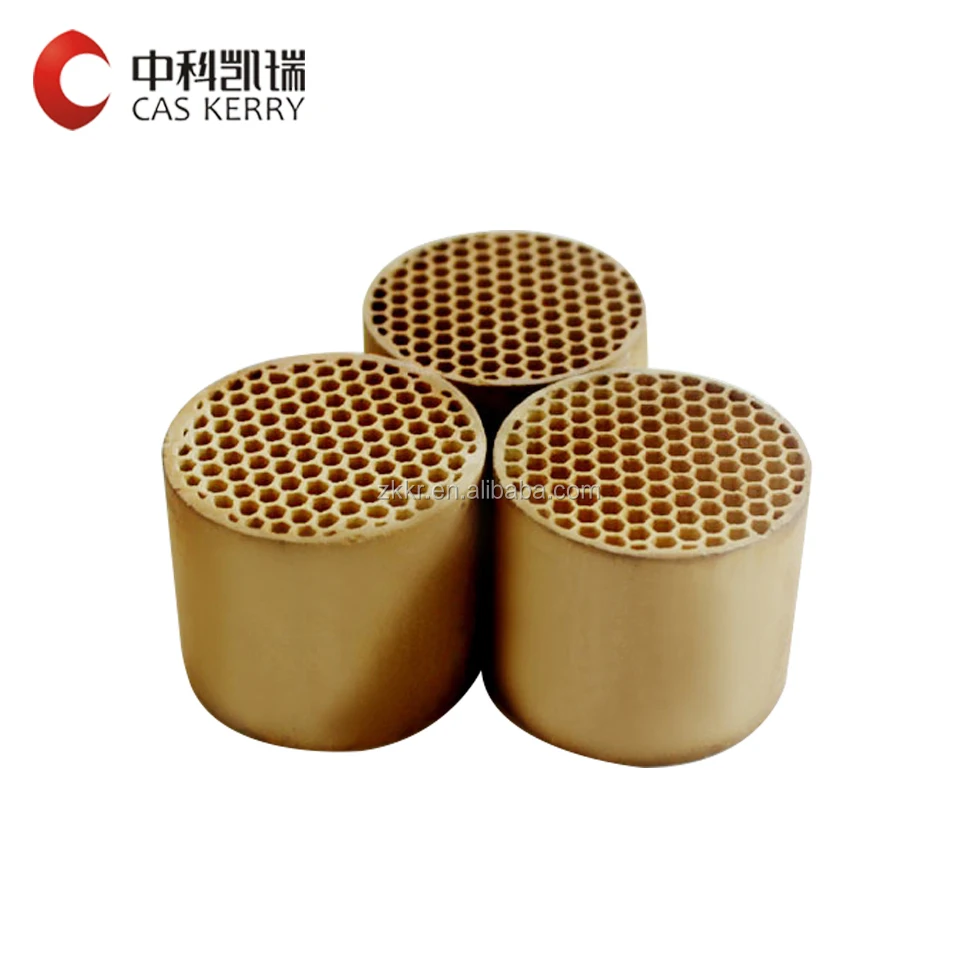
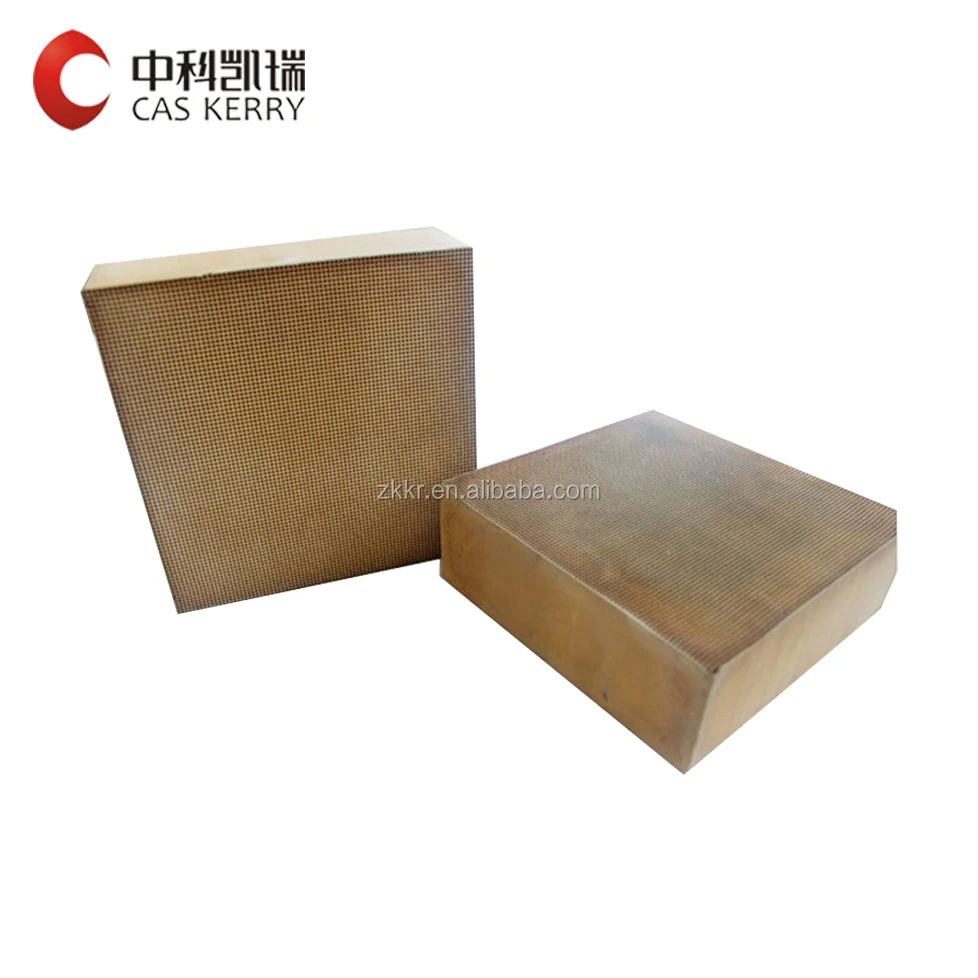
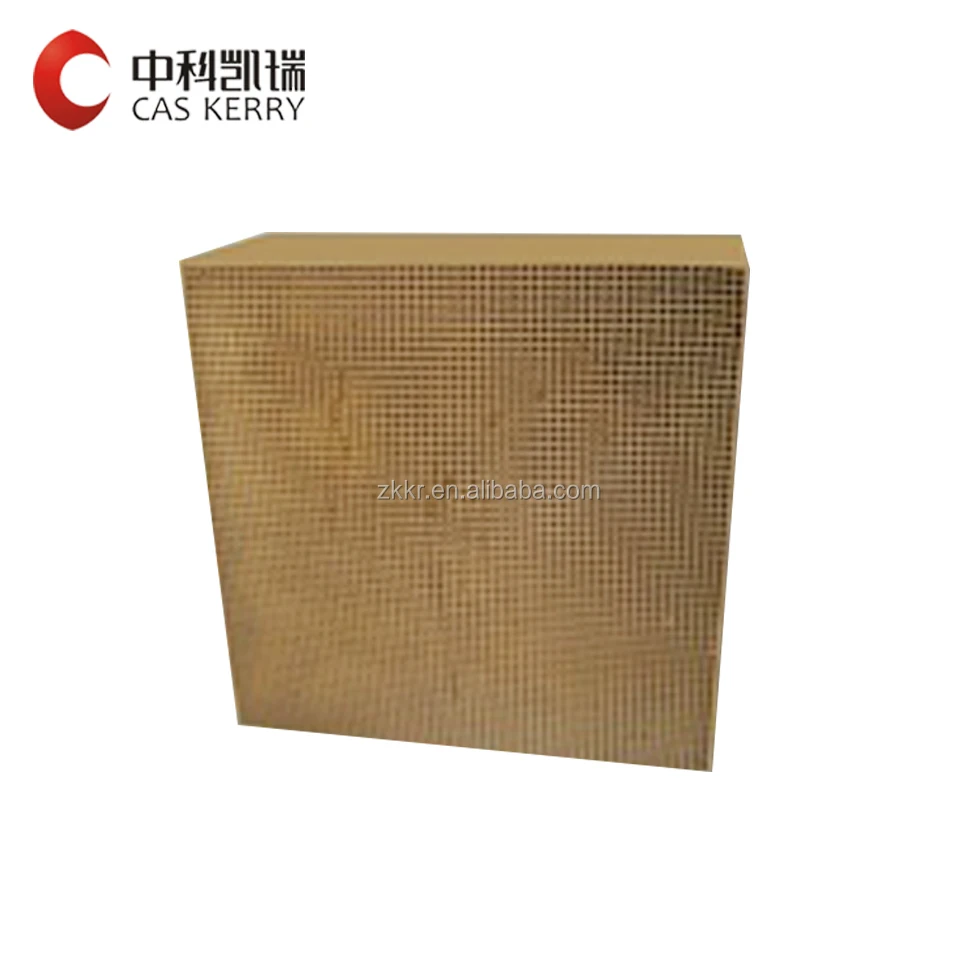
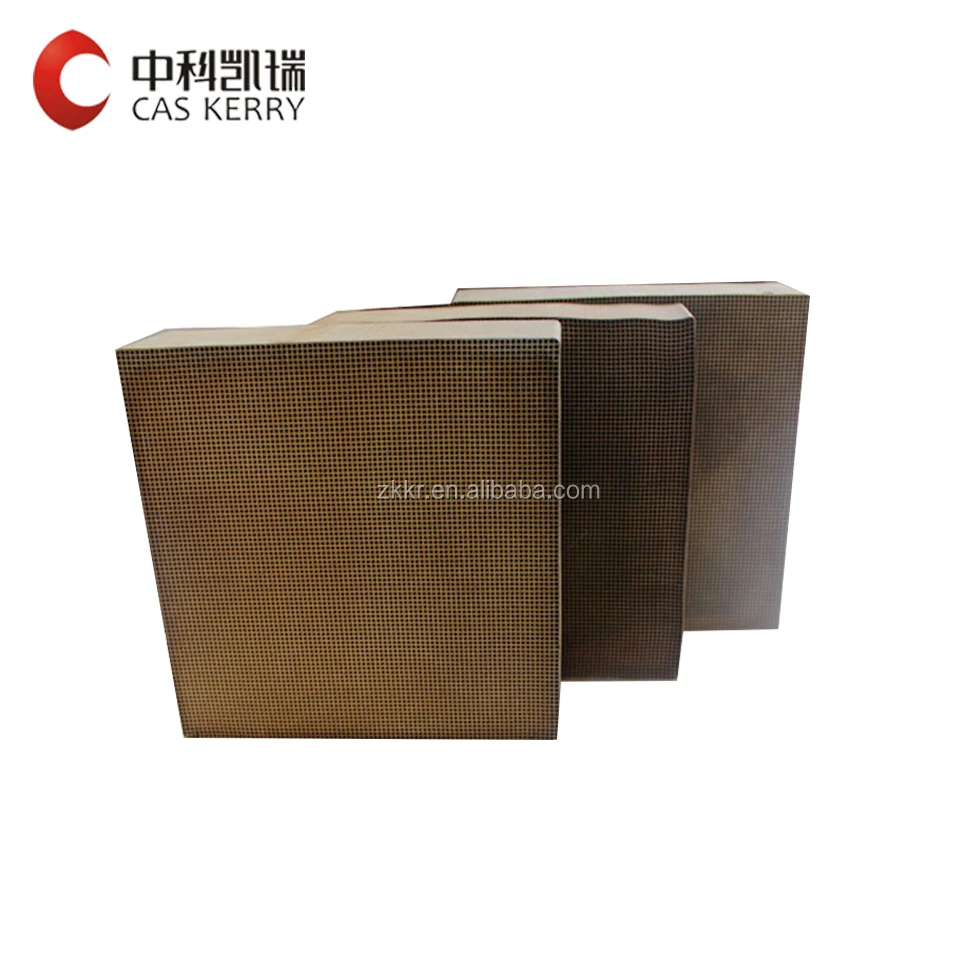
CAS-KR-V01 VOC organic exhaust gas purifying catalyst could work with low ignition temperature, high conversion rate, the concentration of the exhaust emissions meet the design requirements; high compressive strength ; excellent heat resistance and chemical stability ; strong adhesion, uniform appearance color ; low flow resistances.
2. Operation condition & Technology properties
Serial No. | Test Items | Technical Specification |
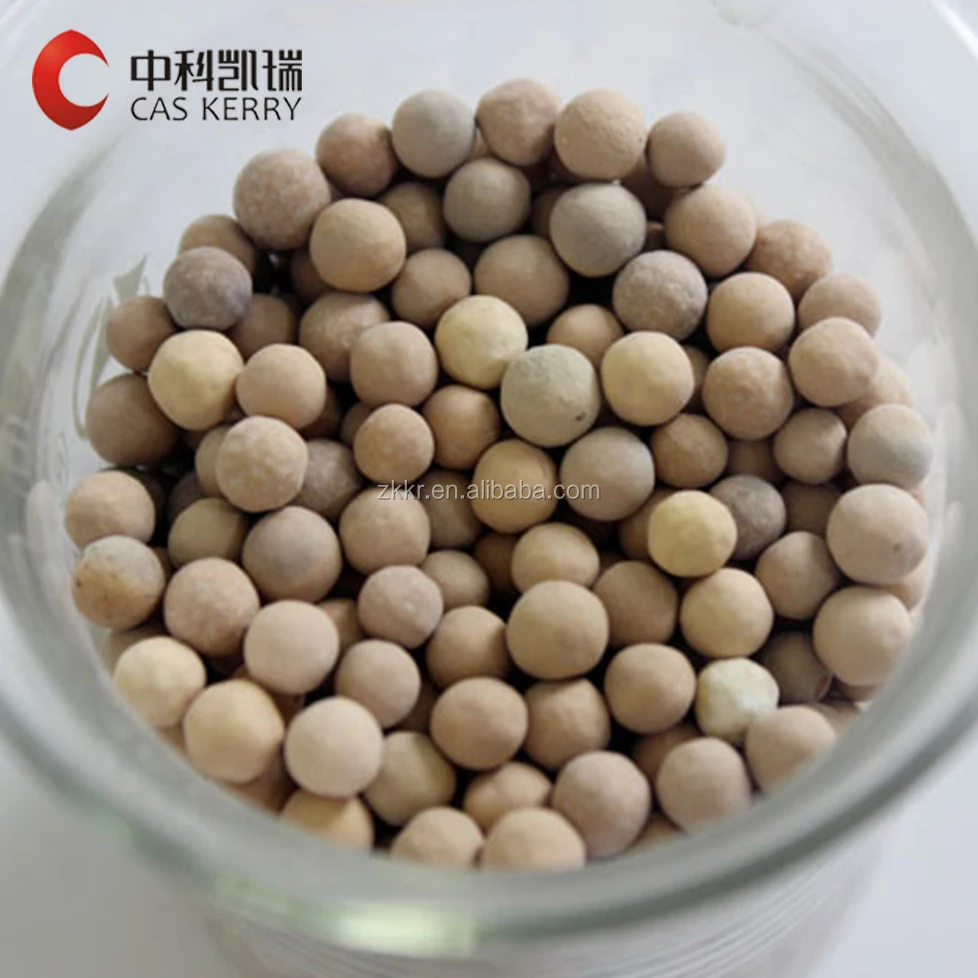
Carrier could cordierite and composite alumina with different specs | ||
1 | Space velocity | ≥1×10⁴ h-1 |
2 | Ignition temperature | 150°C-300 °C |
3 | Optimal operation temperature | 300°C-500 °C |
4 | Waste gas purification rate | ≥90 |
5 | Service life | 0.5~2 years |
6 | Outlet Waste gas concentration | <100ppm |
7 | Bulk density | 0.68±0.05g/mL |
8 | Crushing strength | ≥14 MPa |
9 | Coating loading | >10.0% |
10 | Active component loading | 0.05%--0.2%(or upon customer requirement) |
11 | Expulsion rate | <1% |
12 | Appearance | Conventional fawn (reduction in gray) |
13 | Package | Moisture-proof and sealed |
14 | Recommended installation Height/diameter ratio | Ceramic honeycomb 4:1;2:1 particle type: 1:1;1:2 |
3.Basic principle and technological process of organic waste gas purification treatment
VOCs organic waste gas purification adopt by low temperature catalytic combustion method, low temperature catalytic combustion process is dealing with the organics in end gas to be low temperature, highly active and energy conservation and environment protection by the catalytic effect of catalyst, so that to achieve the purpose of emission standard.
The reaction of catalytic combustion is a typical gas - solid catalytic reaction, its essence is at a certain temperature, organics will be adsorbed on the catalyst surface (VOCs) and catalyzed oxidation reaction with the oxygen in the air, completely oxidized into harmless CO2and H2O, and release the heat of reaction.
The catalyst can be greatly reduced organic light-off temperature, for the flameless combustion, reducing the preheating energy consumption and NOx, the typical reaction equation:

The simple VOCs organic waste gas purification treatment process as shown below:
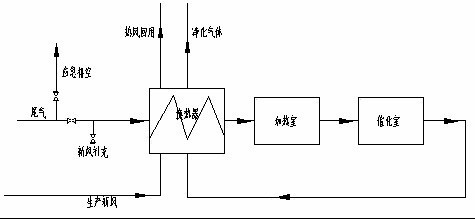
According to the flowchart ,the total content of organics in high concentration of organic waste gas in general is about 1000mg/m310000mg/m3 (high concentration should be diluted with air), system consists of preheating, heat exchanger, catalyst, PLC control module.
The production of exhaust gas by the organized collection, sucted into the cleaning heat exchanger system, heated exchange heating, sucked into the heating chamber supplementary heating (stop heating up to combustion temperature), to be inhaled catalytic bed, catalytic oxidation type flameless combustion.
The combustion efficiency is usually up to more than 99%, can be completely discharge standards.High temperature flue gas after purified by heat preheating gas entrance to light-off temperature, maintaining the system without heating power operation.
When the temperature is high after the flue gas preheating, can also be used to heat the fresh air or water so to be water vapor, the heat energy recycling, reduce waste gas treatment and energy production.
4.Technology characteristics of low temperature catalytic combustion
1).Low light-off temperature, It can self-sustaining operation when reach a certain concentration without external energy supply and,and save energy.
2).The low combustion temperature,flameless combustion,no NOx compounds
3).The fast burning rate, burning completely, no benzo pyrene, dioxin, a highly toxic and carcinogenic substance produced
4).The products of combustion are harmless CO2 and H2O, no solid waste, sewage, waste gas, waste solvent and two pollutants
5).Processing efficiency is very high, the Standard rate in a treatment is far higher than other treatment
6).Process equipment is simple, mature technology, equipment and operation cost is low, the unit cost of waste gas treatment is low
7).Reasonable design, safe and reliable, stable performance, PLC fully automatic operation, no need for special maintenance
8).Extensive application, suitable for high ,low concentration, different industries, all kinds of complex odorous gas treatment
9).Compact structure, small occupation area
5.The catalyst using precautions and maintenance measures
Maintenance measures:
Low temperature "smother": Before the normal operation ,the catalytic bed is preheated in the fresh air to get the reaction temperature, then entering the organic waste gas; sulfur and other toxic substances are: through pretreatment method to get rid of this kind of material or select corresponding catalyst; dust, coke, high boiling goo: good dust removing pretreatment; high temperature: when the catalyst bed temperature over 600 °C ,the system will stop running, or using of fresh air dilution cooling.
6.Applications
Organic waste gas is a common pollutant from petroleum chemical industry, light industry, plastics, printing, coating, paint and other industries emissions,and hydrocarbons, oxygen-containing organic compounds often contain in exhaust gas.If these gases are no treated, and discharged into the atmosphere directly ,they will cause serious pollution to the environment, also endanger human health.
The waste gas treatment technology, mainly included combustion, condensation, adsorption, membrane processing technology.Except the combustion technology, other treatment methods is mainly suitable for single species, and a stable waste gas condition,and suitable conditions are small.
But most existing species complex, industrial waste gas condition fluctuation, the recovery value is not high , the most suitable for this type of tail gas is combustion technology.In addition, compared with the ordinary thermal incineration technology, low temperature catalytic combustion technology is more energy saving and environmental protection advantages of economic.
As a kind of high efficient catalytic oxidation technology, processing of catalytic combustion technology can be applied to most combustible organic waste gas, and it is applicable to a wide concentration range (200 ~ 10000mg/m3), 1000mg/m3 of the low concentration to concentration, 10000mg/m3 concentration needed to dilute.
Especially the organic in the tail gas is not suitable for recycling or no recycling value, can be highly efficient, low cost processing by catalytic combustion technology, purified gas concentration can be reduced to below 100ppm.
7.Application industries
The Petrochemical industry (compared with other industries, the composition of the exhaust gas is more pure, more easy purification treatment)
Exhaust system in petrochemical industry usually contain organic waste gas, air volume is very large, 20000 m3/h --20 m3/h, the exhaust gas is low concentration, no recycling value, usually adopt catalytic combustion process.
The Painting industry
Painting industry is more typical of the coating process of container, automobile production lines, can produce complex organic waste gas containing a large amount of painting thinner composition, in order to meet the health needs of painting technology and personnel, air is usually very big, can be as high as 200000 m3/h, concentration is usually 200 ~ 1000 mg/m3, the exhaust gas is low concentration, no recycling value. The industry often adopt adsorption and catalytic combustion process.
The Coating industry
Coating industry is more typical of reflective film, tape, color steel tile, coating industry, coating materials containing large amounts of organic solvents such as benzene, toluene, ethyl acetate, acetone, formaldehyde and other volatile formation in high concentration organic waste gas exhaust more complex, resulting from high temperature oven, are the main characteristics of high temperature, high concentration, complex composition.The main rate of 1000 m3/h to 30000 m3/h; a concentration of 2000 mg/m3 to 8000 mg/m3; the temperature of 40 °C to 150 °C.
The other gas, fuel, burning, oven industry
Combustion, barbecue and other industries due to incomplete combustion, so the existence of the harmful gas of organic waste gas and carbon monoxide, because of the exhaust gas temperature is higher (generally in more than 200 °C), so it is easier to deal with.
The environmental protection equipment manufacturing industry
Organic waste gas purifying catalyst as the core component of VOCs equipment is the focus of the environmental protection equipment procurement.
8.Reactivity test index
Chemical Compositions | Benzene | Toluene | Xylene | Acetone | Methanol | Heptane | Acetic Acid | Ethyl Acetate |
T10%(°C) | 220 | 210 | 190 | 200 | 180 | 230 | 220 | 210 |
T90%(°C) | 260 | 240 | 220 | 240 | 210 | 260 | 260 | 250 |
Concentration(G/M3) | 5-8 | 4-6 | 6-8 | 4-6 | 4-6 | 4-6 | 5-9 | 5-9 |
We Recommend
New Arrivals
New products from manufacturers at wholesale prices