High Quality OEM Natural Beeswax Candle
- Category: Bee Wax >>>
- Supplier: Qingdao Fraken International Trading Co. Ltd. [Shandong China]Qingdao
Share on (60231229690):
Product Overview
Description
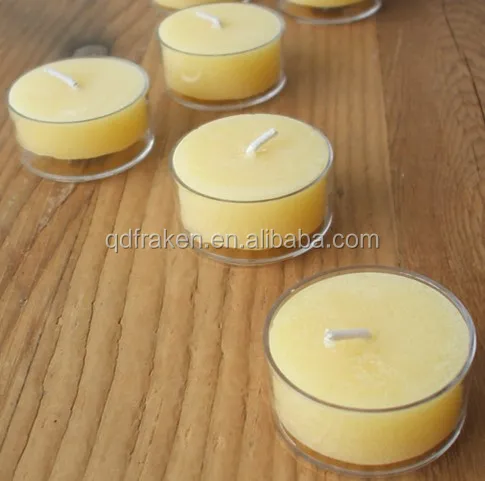
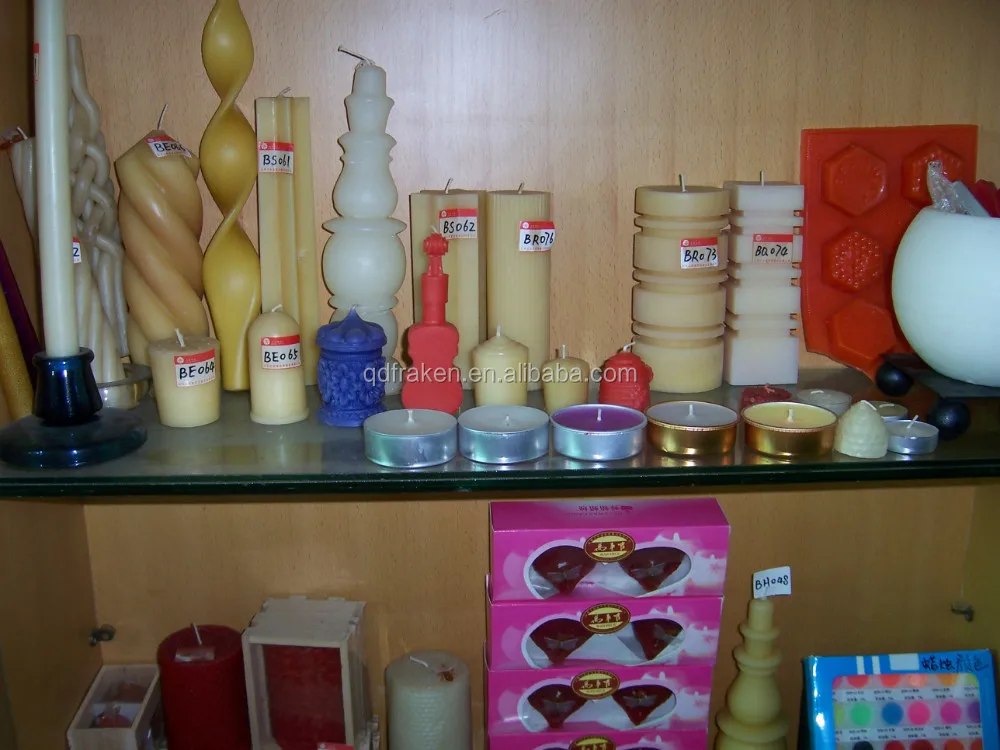
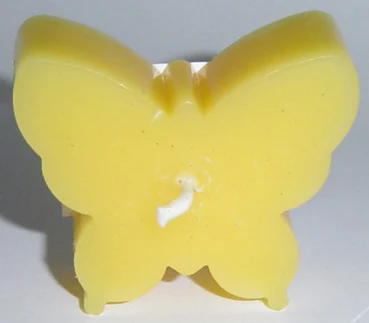
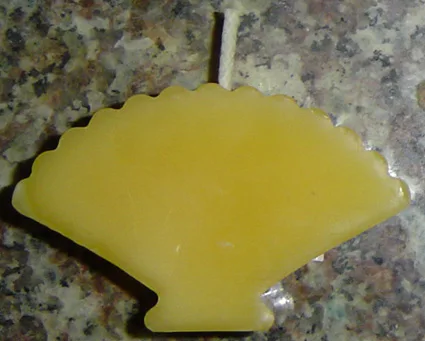
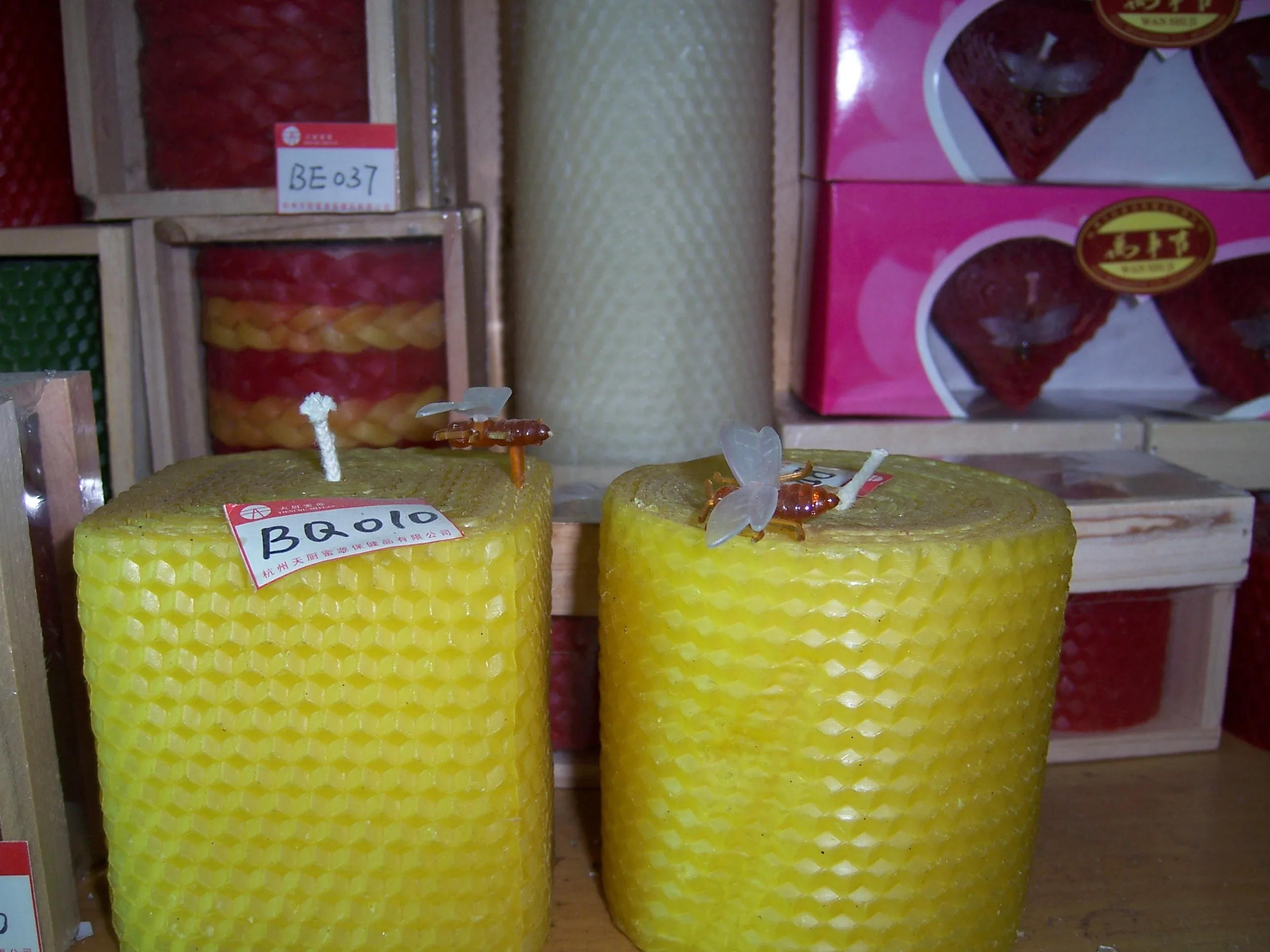
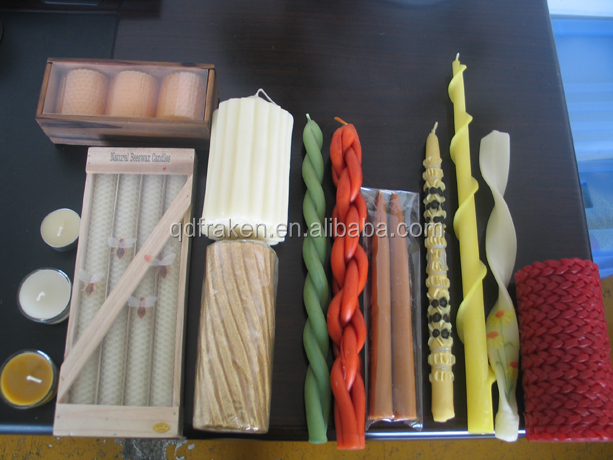
Pure beeswax candles made in different designs with color. natural beeswax,non-toxic,clean burning,100% cotton wicks,free of smoke.
Beeswax is a secretion of the abdominal glands of the honeybee,which is used for building its hexagonal combs within the hive. Wax is collected by removing a portion of the hive’s capping and the refined for use in wide variety of applications.
Beeswax is used as a protective coating (varnish) in painting, as a paint binder, and as a stabilizer in oil colors. It is usually available in the form of cakes, pastilles or prills, either bleached white or in its natural yellowish color. It melts between 62–65° C. (144–149° F.) and will dissolve when heated in water, turpentine, mineral spirits, or oil. Beeswax does not oxidize and polymerize as does drying oil, but rather, solidifies as it cools to make an solid mass. It does not darken or change color with age, and it resists the action of atmospheric impurities more than do resins or oils. On the other hand, it is somewhat more sensitive to temperature changes, becoming soft in heat and brittle in cold. It is also more sensitive to abrasion and rubbing than a dried film of oil or varnish.
White beeswax is the recommended choice for most painting techniques calling for wax ingredients. Beeswax cuts the glossy quality of oil paints, giving them a more satin finish while extending the drying time of paints, making them thicker and more workable for longer periods of time. When making your own oil colors you may add about 2% white beeswax when grinding colors. The wax helps to give the paint a more buttery consistency and guards against flocculation of the pigment.
Beeswax is used in a painting technique called "encaustic." The technique itself is very simple. Pigment is added to molten beeswax and often resin (such as Venice turpentine or damar), which is then applied hot to the painting surface. The surface itself may be warmed allowing for manipulation of the encaustic paint. It may also be cool causing the brush stroke to immediately solidify. The final treatment is the "burning in" which consists of passing a heat source over the surface, fusing and bonding the painting.


We Recommend

Refined Yellow Beeswax for making Soaps
US $3.00-$6.00
new cheap beeswax natural beeswax bees wax for candle
US $3.50-$10.80

Apis mellifera bee wax comb foundation sheet
US $2.60-$6.00


New Arrivals
New products from manufacturers at wholesale prices