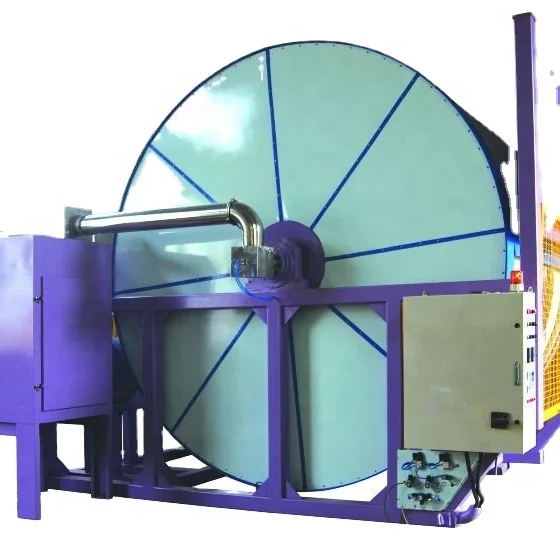
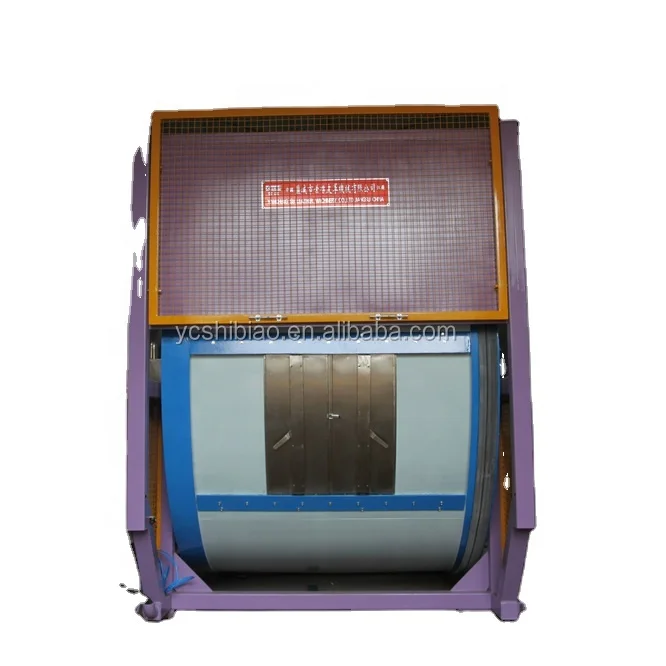
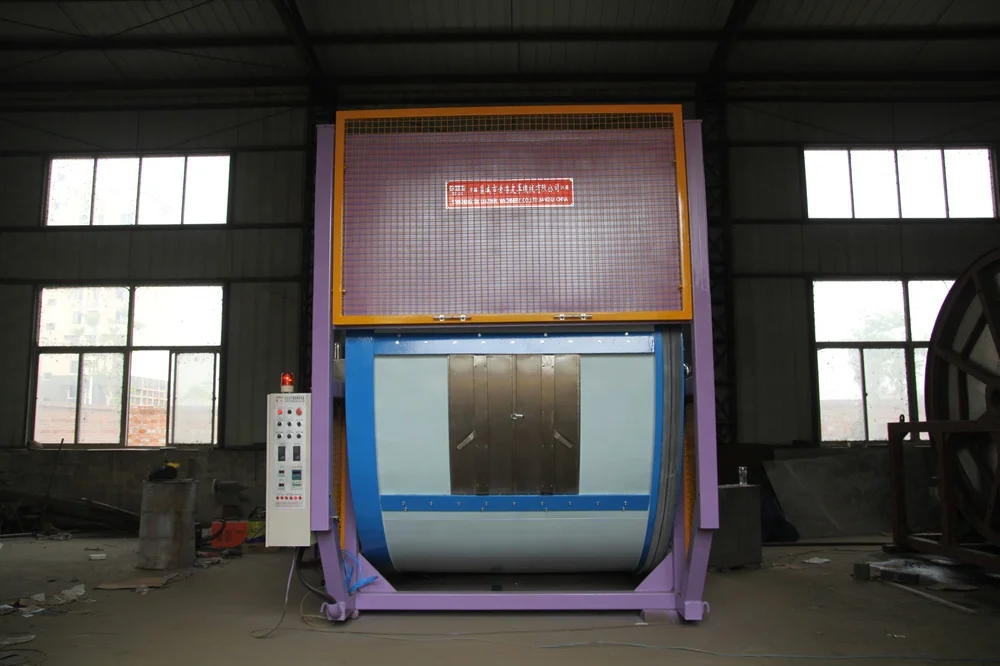
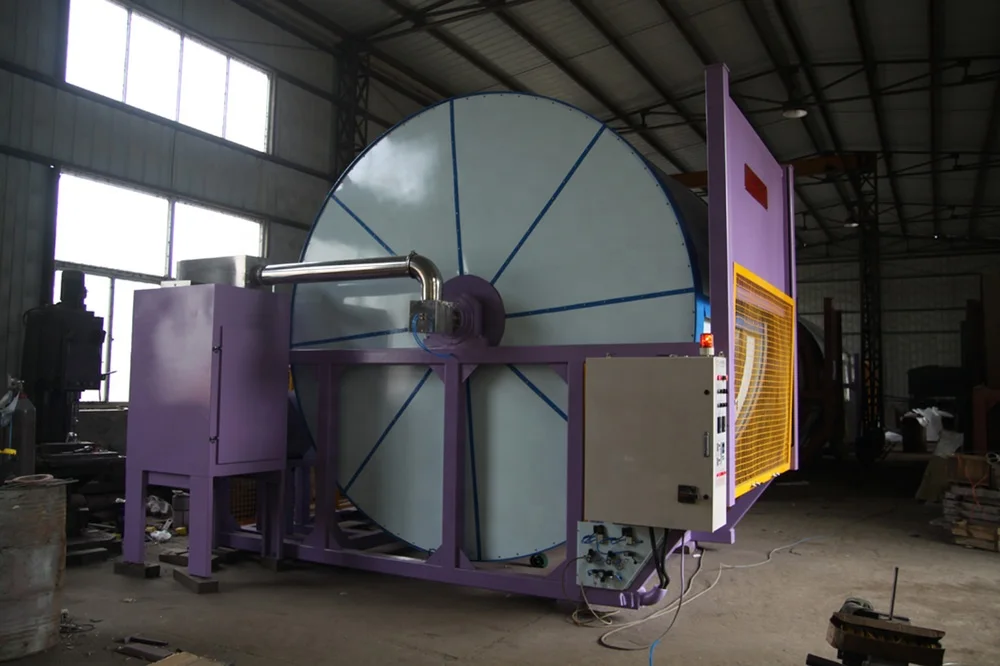
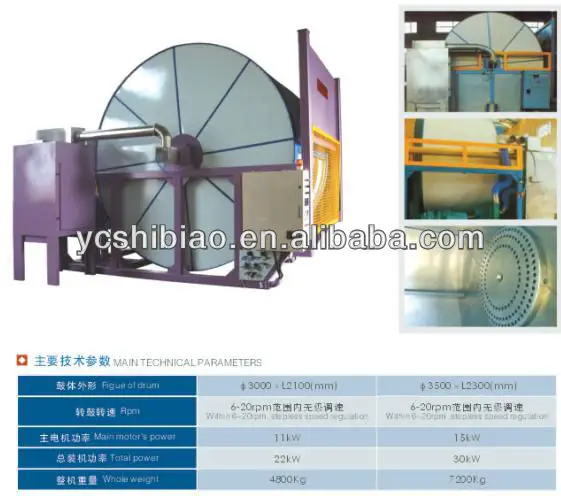
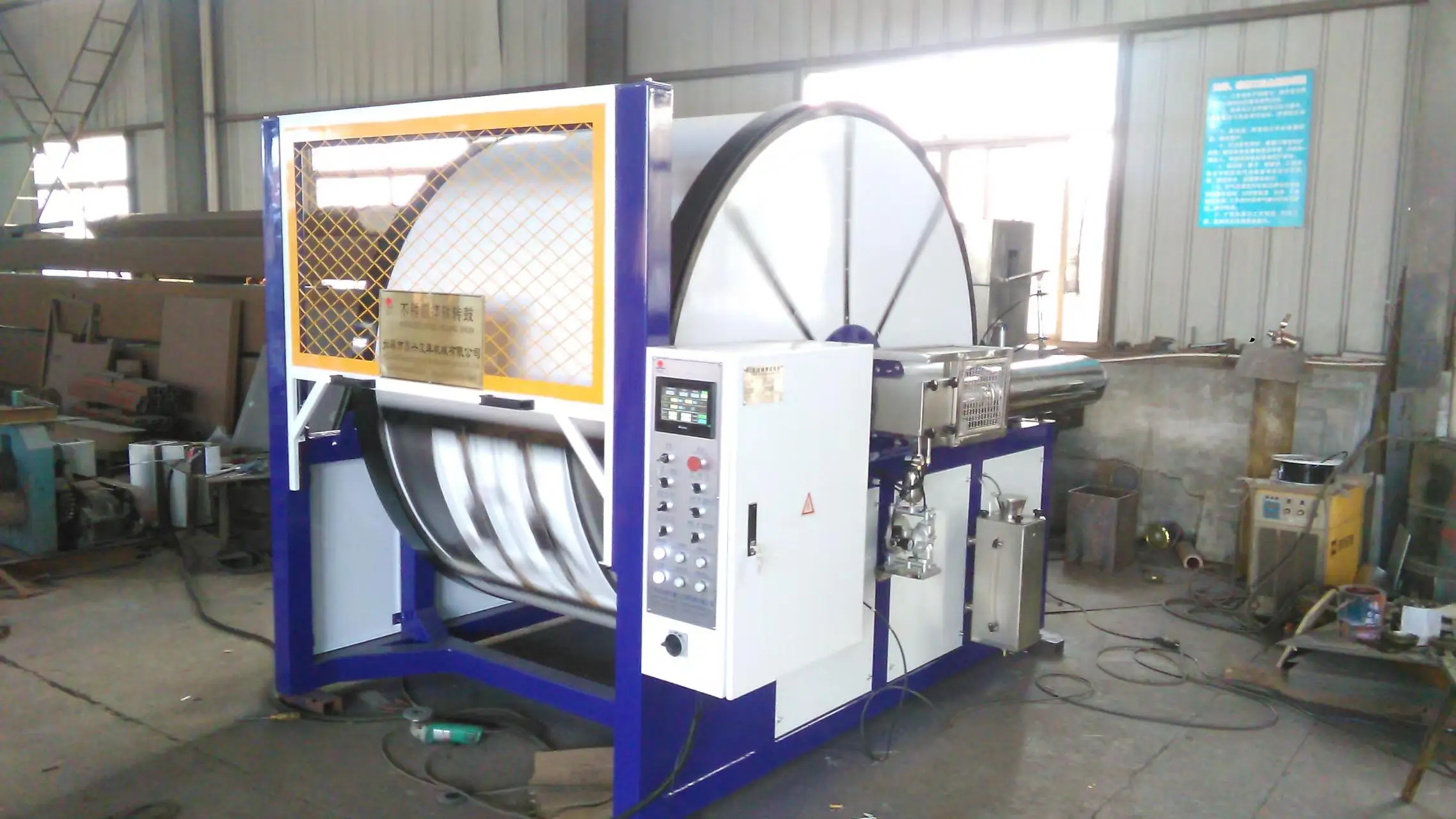
leather processing machine/leather round stainless steel milling drum/ leather milling drum make leather soft machine
- Category: >>>
- Supplier: Yancheng Shibiao Machinery Manufacturing Co. Ltd.
Share on (60288803300):
Product Overview
Description
Product Description
Φ3000x2100mm Round Stainless steel milling drum configuration form
Specification | Φ300x210 roundness |
Dimension of the drum | Φ3000x2100(mm) |
Material of inside drum | σ2mm thickness stainless steel board |
Material of drum’s shelf | 100 thick walled(square) tube |
Door of drum | Quickly traversing gate |
Dedusting way | Circulation filter collector |
Dedusting channel and deduster | All are stainless steel |
Electric motor | 11kw brake motor, (German brand) SEW |
Speed reducer | Spiral gear Speed reducer, (German brand) SEW |
Blower | Dedusting blower,(Chinese brand as order) |
Calculagraph | Panasonic(Japanese brand) |
Spraygun | American brand |
Electrothermal tube | All are stainless steel |
Temperature humidity controller | Chinese brand as order |
Transducer | Chinese brand as order |
Procedure controller | Japan MITSUBISHI brand |
Pneumatic component | Taiwan AIRTAC brand |
Function of control segment | The machine is controlled by PLC, realizing milling , dedusting, auto-control tempreture and humidity, stepless speed regulation,auto/ manual control front and back running ,stopping,increase /decrease temperature, add/reduce moisture,show speed, positioned stopping, flexible starting ,retarding braking , pros and cons crawl, timelag starting,total time stopping , breakdown protection ,safe warning etc. |
Speed of the drum | 0-18 rpm variable speed by frequency changer |
The complete automatic stainless steel milling drum developed by our company by introducing advanced techniques is made of imported stainless steel sheets. The whole machine unit has a strong structure. It rotates easily. There is no any weld spot or screw inside the drum. Adopt the most preferred dimensions for scraper blades to achieve a smooth inner side. The utilization of strong wind not only scatters the leathers in the drum so that they are not cohered with each other but also remove away the dusts circularly. It greatly improves the leather's surface luster degree.
The leather after being processed in this milling drum is greatly different from that processed in wooden or iron drum. The main drive adopts the electromagnetic plane brake motor that is a famous brand product in China and adopts an excellent reduction box. Driven by the tailor-made powerful rubber V-belts, the drum body revolves smoothly without any noise. Long usage life. The dust-collector and the circulating air duct are all made of stainless steels to prevent any rust and to reduce down resistance. The temperature's raise and drop are respectively realized through heating the circulating air by stainless steel layer-clustered electronic pipes and through opening the valve to discharge heat. The increase of humidity is realized by a stainless steel steam-liquid nozzle's intermittent spraying controlled by a solenoid valve.


Company Information
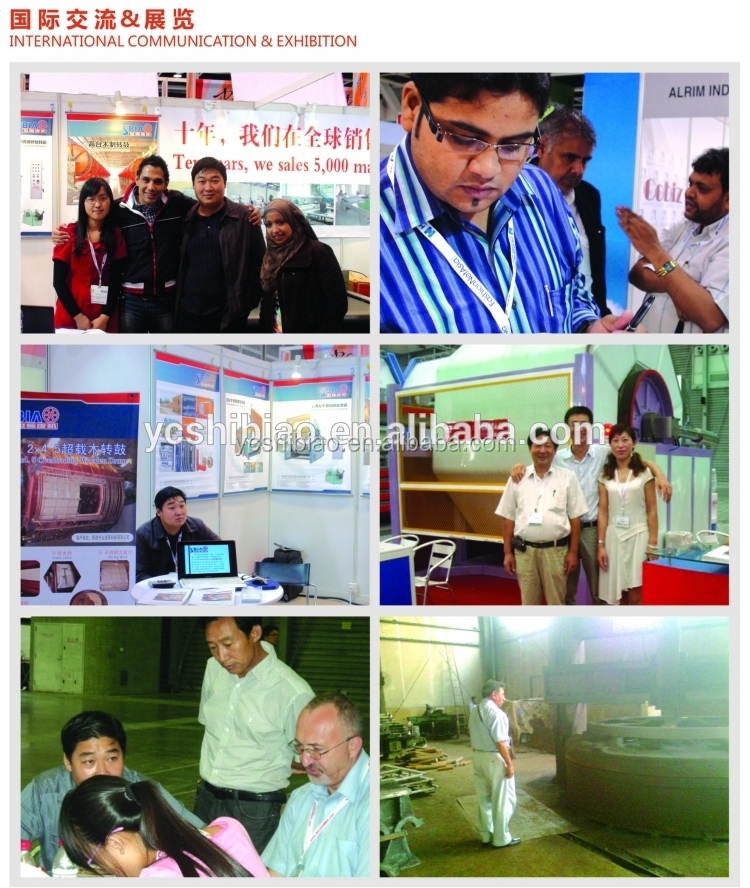
Our company provides GJOB1-2 series impendent iron, wooden drums, GJOF series full-automatic stainless steel cylinder, octagonal milling drums, HC series paddles, and many other leather machinery products all the year round. Our Products are sold well in Zhejiang, Shandong, Guangdong, Fujian, Henan, Hebei, Sichuan, Xinjiang, Liaoning, and other areas. They are popular with many leather factories all over the country. Our products have been successively passed provincial tests and the test conducted by National Leather & Shoe Machinery Quality Testing and Supervision Center. They were awarded the Silver Prize on China High- and New- Technology & New- Products Exhibition in year of 2005. Our product parts, steel-cored nylon-plastic drum posts, have obtained national patent right. At the same time, our company provides many services including design of leather machinery with special specifications, repair and adjustment of equipment, and technical reform. We have established complete testing system and reliable after-sale services.
For a long time, Yancheng City Shibiao Leather Machinery Co., Ltd. Has always been guided by the principle of seeking existence by quality, seeking development by service, and the good reputation is the aim. Sincerely welcome customers old and new to come for a business cooperation and welcome friends from all social circles to give guidance!

leather process
Lime / Liming
The first step in the liming drum is the soaking of the hide.
Using water, the raw material is cleaned of any natural hide dirt.
The main objective in soaking the hide is to restore it to its natural condition as on the living animal with a water content of approximately 65%
After this, the liming takes place in the same drum.
Here, substances that can´t be turned into leather, such as natural oils and proteins, are washed out of the hide.
By adding lime and sodium sulphide, the ph-value during the dispensing process is raised. By doing so, hair is chemically removed from the surface of the hide.
Soaking and liming are carried out in one process, which typically lasts from 24 to 36 hours.
The limed and dehaired hide is now called pelt.
Fleshing
In the fleshing excess flesh and fatty tissue from under the pelt is removed mechanically.
Afterwards, the defleshed pelt is trimmed. During this process, the sections of the root of the tail, the navel, the kneecaps, and other unwanted parts of the hide are cut off.
Splitting
A bandknife is used to split the pelt horizontally into a grain split and a flesh split.
The grain or leather split is later processed into upper leather.
The flesh split is usually processed into split leather, but is here supplied to the gelatin industry. It is far too thin to be used as split leather, because the leather split is cut extra thickly.
Tanning
The central flow of work during leather fabrication is the tanning, which takes about 20 hours and follows a special formula carried out in a drum.
Until it is tanned, the hide is perishable. Only by tanning is the hide preserved and made durable.
This process is made up of five steps, which take place one after another in the tanning drum: deliming, bating, pickling, tanning, and basification.
During the first step - deliming -, the lime added in the liming drum is released, this step is carried out using carbon dioxide, which is very environmentally friendly.
During the next step - bating-, collagen and other proteins are removed in a regulated way by the use of enzymes. By doing this, the fibers become more flexible and the leather becomes softer.
In the pickle, the ph-value of the hide is lowered by adding acid and salt to prepare the hide for the addition of tanning agent.
When the hide has reached a ph-value of about 3 throughout its full width, it is ready for the adding of the tanning agent..
A wide variety of substances can be used for tanning.
Chromium, the most widely used and the most eco-friendly tanning agent available.
Chromium is a natural, non-toxic element and is actually a micronutrient found in our food.
When the ph-value is low, the chromium molecules are very small and can therefore easily penetrate the hide and become incorporated in the skin fibers
During basification, the pH-value is now slightly raised, which makes the chromium particles in the hide grow larger and connect with the skin collagen in at least two places.
This connection between tanning agent and hide material is called tanning.
The chromium tanning dyes the hide into a bluish color; therefore, after tanning it is called ”wet blue”.
Sammying / cutting
The wet blues, which are soaking wet, are placed on the sammying machine and two felt rollers press out a part of the water under high pressure.
Afterwards, the complete hide is cut into two sides, because sides are easier to be handled in further processing.

conact person

We Recommend
New Arrivals
New products from manufacturers at wholesale prices