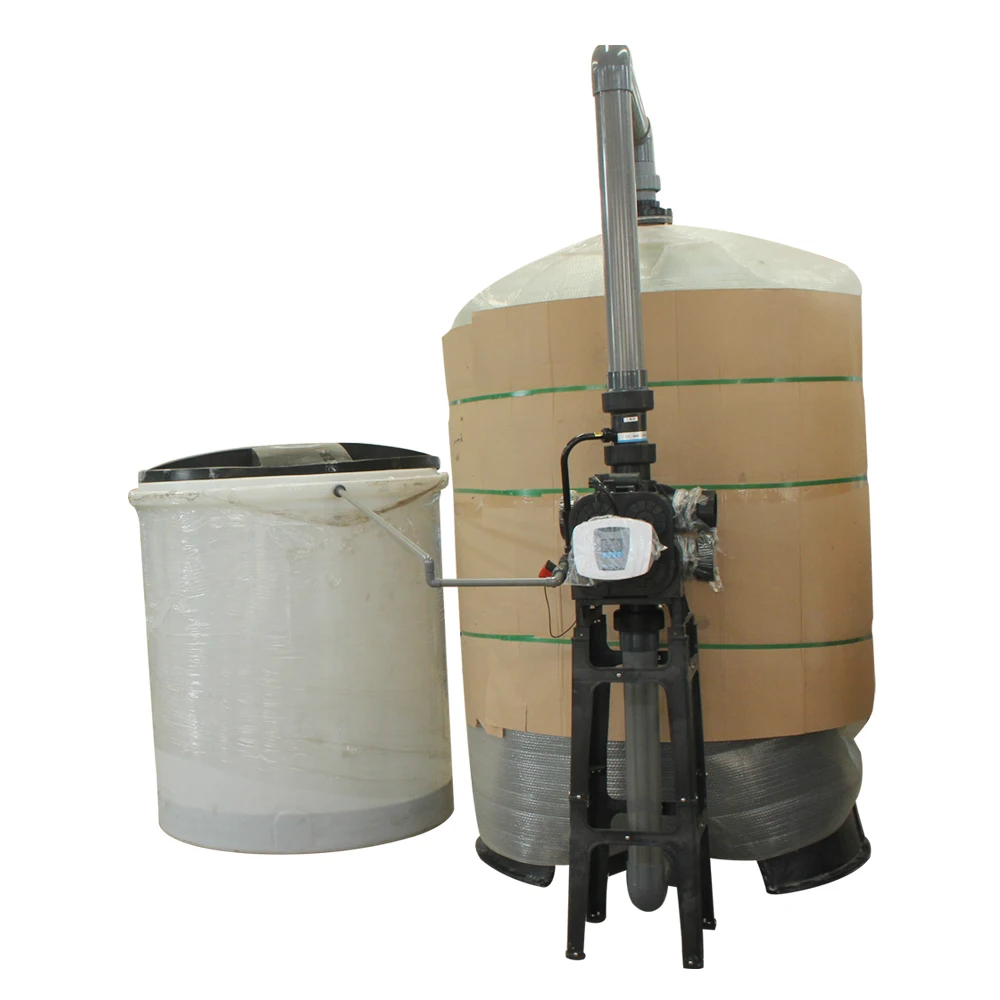
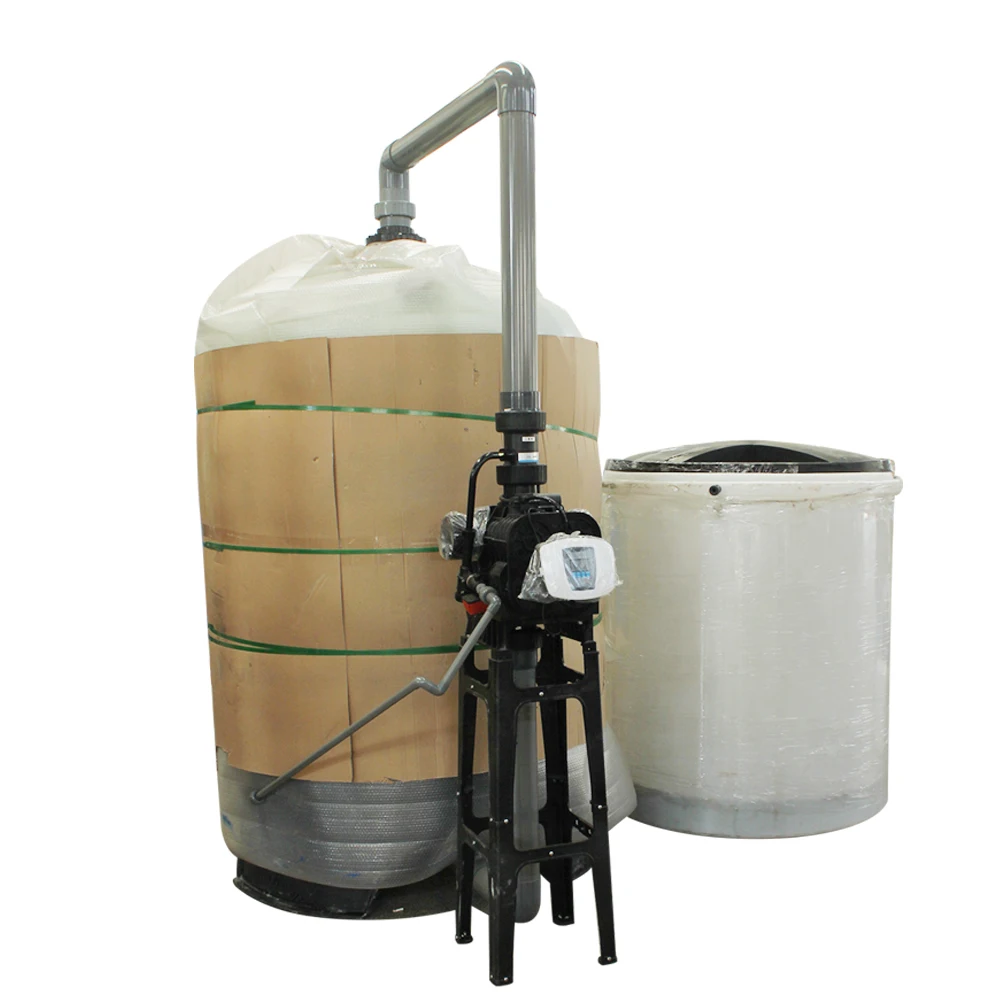
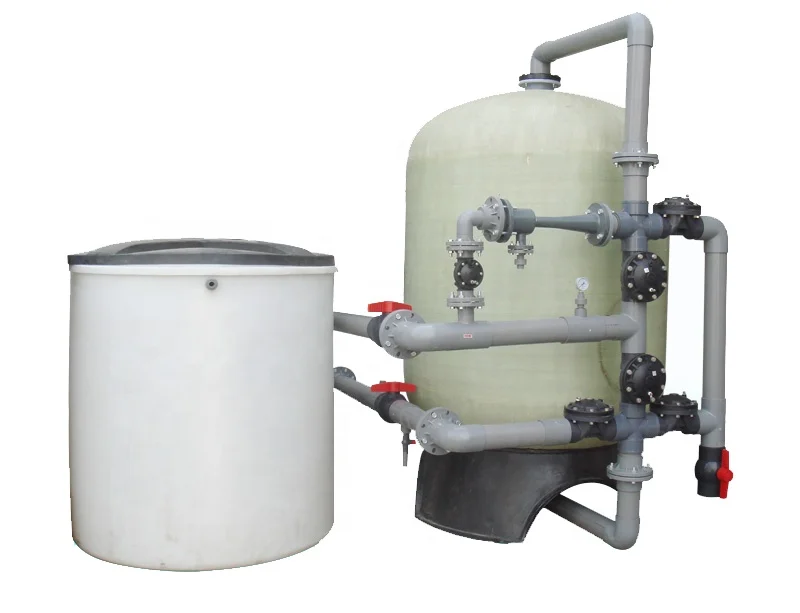
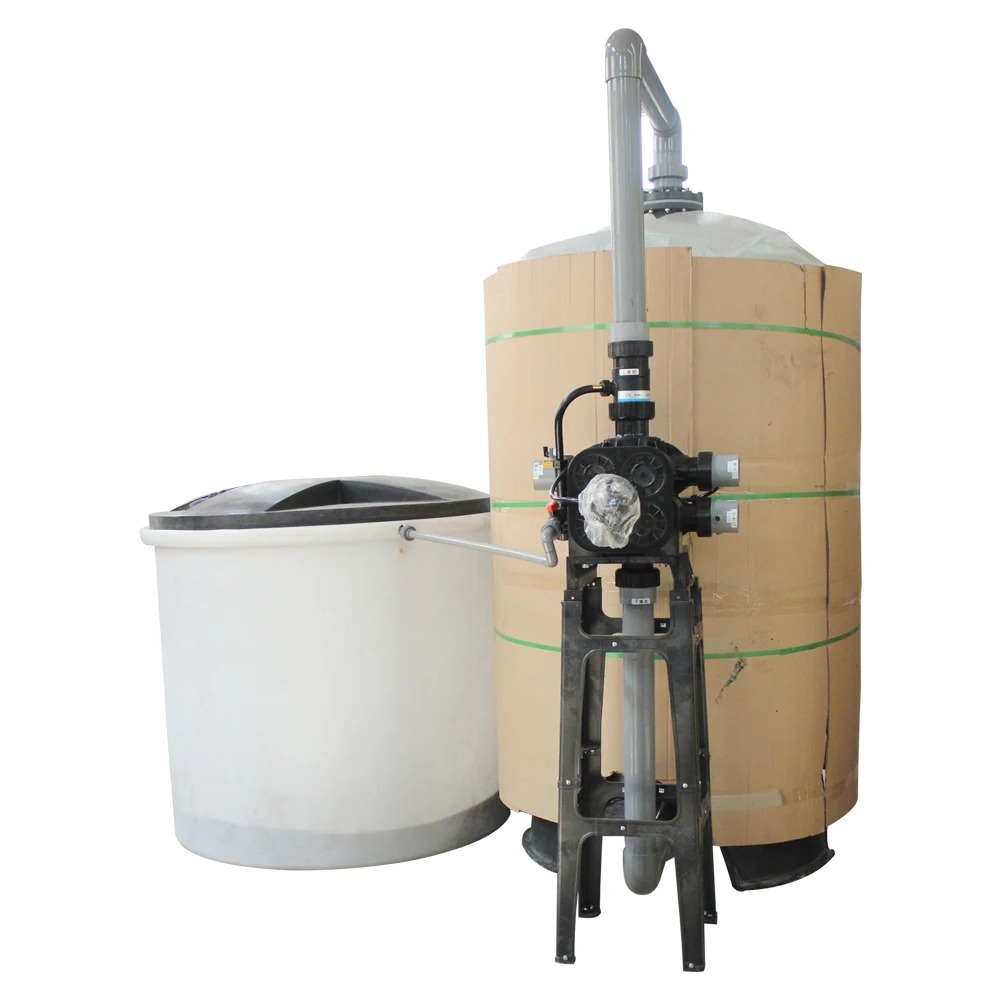
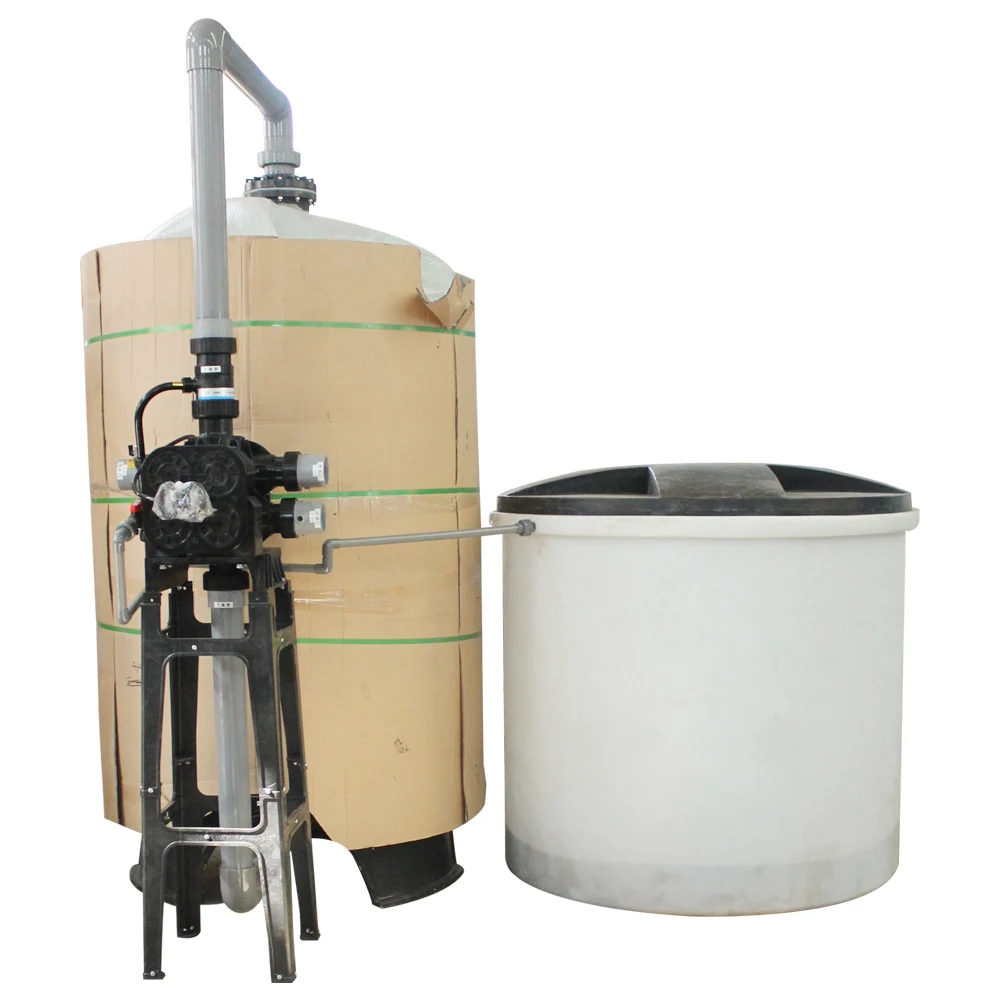
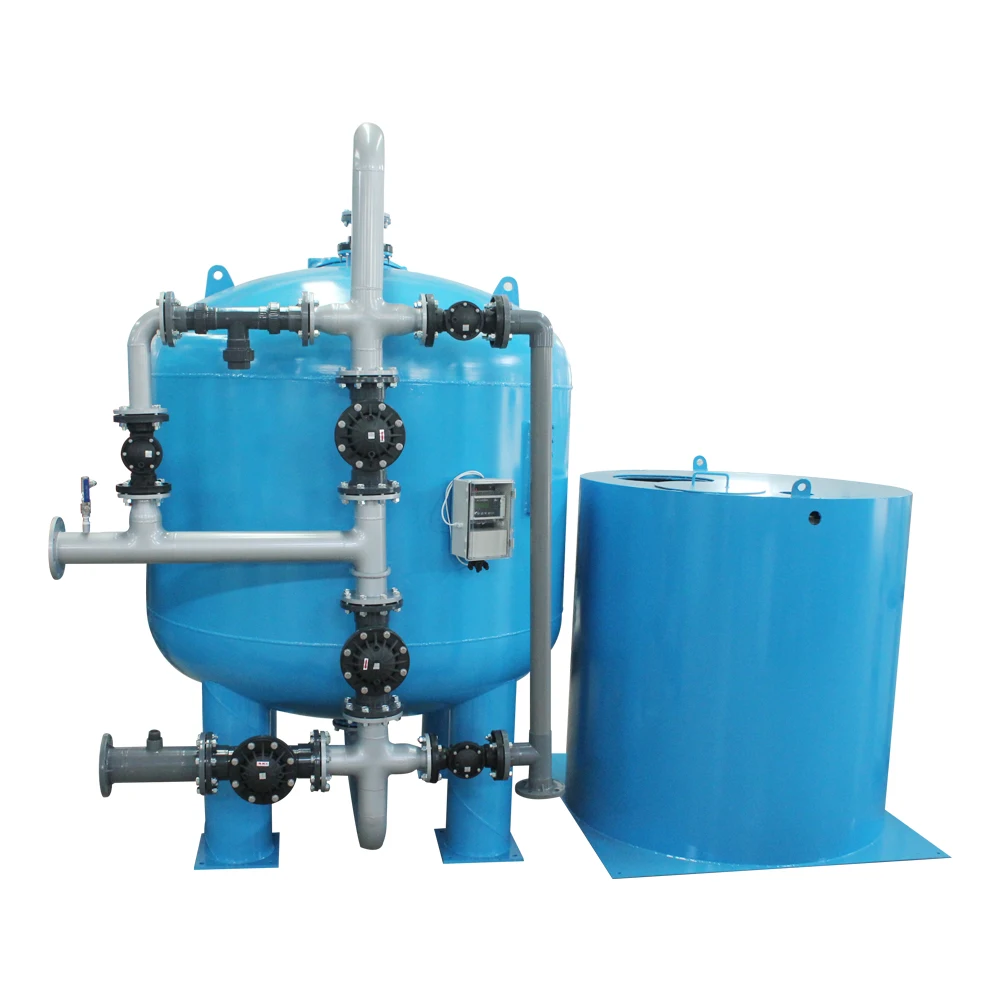
Resin change 30m3/hr Water softener system to Remove Calcium hardness
- Category: >>>
- Supplier: Jiangsu YLD Water Processing Equipment Co. Ltd.
Share on (60298890239):
Product Overview
Description
Ion exchange resin type Water Softener
How to Soften Hard Water
Hard water is high in minerals, usually calcium and magnesium. These minerals leave behind deposits that can clog drains, stain glass and tile, prevent soap from sussing, and leave a residue on hair and skin. Studies have not found any health risks or medical reasons for softening water, but it is an inconvenience nevertheless. There are several ways to soften hard water. See Step 1 and beyond to find the right method for you.

How does a Water Softener work?
Softeners have been used since the early 1900‘s to prevent scale in boilers, so the technology is well understood and their performance is predictable and reliable.
They involve a process called ion exchange which uses an ion exchange resin. The resin comprises tiny polymeric beads which are specially formulated so that they can be charged with certain ions. Calcium and magnesium, the causes of scale and scum from hard water, are referred to as ions, and as water passes through the resin the calcium and magnesium ions swap places with the sodium ions on the resin. Sodium salts, unlike calcium and magnesium, are highly soluble so sodium does not cause scale or scum. When all the sodium ions have been exchanged for calcium or magnesium, the resin must be regenerated by recharging it with sodium ions. This is done by flushing the resin with salt solution (brine).

Softeners are supplied in different shapes and sizes. All have a tank to hold the resin through which the water is passed to soften it, all have a tank to store and dissolve the salt for the regenerating brine and all softeners regenerate automatically. There are various ways in which softeners determine when to regenerate - some are fitted with a timer and some regenerate after a pre-set volume of water has been treated.
Ion exchange involves the use of a resin bed. Ion exchange resin is a very small synthetic bead-like material that looks a little bit like brown sugar. The beads are very small, about the size of a pin head.
The process is called Ion exchange because the ions calcium (Ca) and magnesium (Mg) are exchanged for small amounts of sodium (Na).
Water softeners use ion exchange (see above) and although they all differ in design they do share the following characteristics.

Operation and Maintenance
Maintenance of water softeners is largely confined to restocking the salt supply for the brine solution. Semiautomatic models require either a manual start of the regeneration cycle or regular service for a fee.
The resin should never wear out. If resins are not regenerated on a regular basis, at the proper intervals, they may become contaminated with slime or impurities and require replacement. Resins can also become clogged with tiny particles of iron if the raw water contains that mineral. Back-washing, that is, reversing the normal flow of water through the treatment unit, may be required to remove the iron. Alternately, special additives may be added to the brine to help minimize this condition.

Costs
The initial cost of water softeners depends on the total hardness of the water, the degree of desired automation, the volume of water to be treated, and other design factors. Retail prices range from approximately $300 for a one-tank system capable of removing 12,000 grains between recharging to more than $1,000 for a two-tank system capable of removing 48,000 grains between recharging.
Operating costs depend on the frequency of resin regeneration. Only salt made specifically for ion exchange units should be used. This salt costs about $3.50 for a 40-pound bag. Electrical costs should be considered as part of operating expense for ion exchange units. Seek units that are energy efficient as expressed by their Energy Efficiency Rating (EER).
An often overlooked environmental cost of water softening systems is that they degrade the quality of reclaimed and gray water by increasing water salinity (TDS). Remember, most of the additional sodium or potassium that is used in water softeners, and the brackish water produced during resin regeneration are discharged into the sewage or gray water systems and, eventually, into the environment.


Packaging & Shipping

Company Information
We Recommend

New Arrivals
New products from manufacturers at wholesale prices