ZK crop best quality 1000tpd cement plant industry machinery
- Category: >>>
- Supplier: Henan Zhengzhou Mining Machinery Co. Ltd.
Share on (60303899537):
Product Overview
Description
Product Description
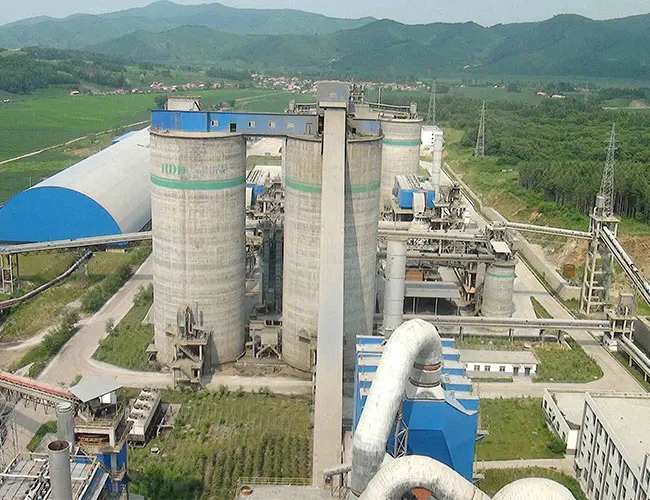
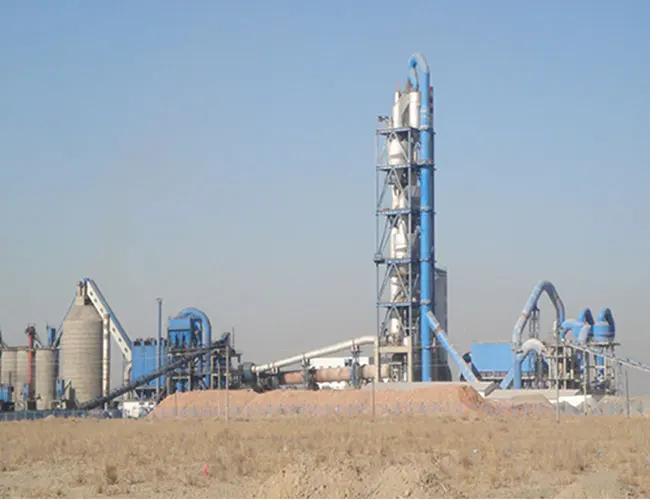
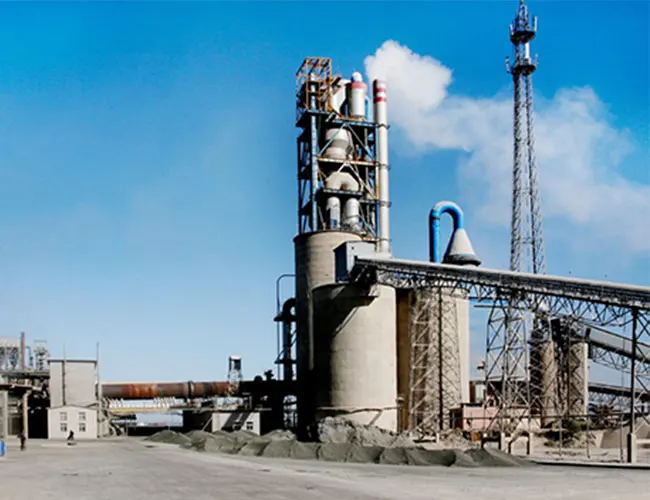
Cement production technology and equipment is the advantage of my plants ,my plant the production of cement rotary kiln, cement mill can be used Nissan 1000 tons to 6000 tons of cement plant.
Cement production line is the construction project to produce cement by a series of equipment. ZK Corp adopts advanced technology and equipment to improve the efficiency, technical level, advanced design, ensure the economical investment for the cement production line. We provide the full range service including design, manufacturing, and installation. We design and manufacture equipment for new type dry method cement production line, for which the capacity varies from 50t/d to 3000t/d.

1.Raw Material: limestone, sand, shale, clay, and iron ore, gypsum, slag etc.
2.Cement classification: Normal Cement, Portland cement, Slag cement, Volcano ash cement, Fly ash cement
3.Cement producing line include:crushing and prehomogenization, raw materials homogenizing, preheating decomposition, cement clinker burning and cement grinding, packaging.
4.Capacity: 100-2000ton/day
5.Fuel: Coal, Gas, Oil
Production Process
1.Raw Materials
The main raw materials used in the cement manufacturing process are limestone, sand, shale, clay, and iron ore. The main material limestone is usually mined on site while the other minor materials may be mined either on site or in nearby quarries. Another source of raw materials is industrial by-products. The use of by-product materials to replace natural raw materials is a key element in achieving sustainable development.
2. Raw Material Preparation
Mining of limestone requires the use of drilling and blasting techniques. The blasting techniques use the latest technology to insure vibration, dust, and noise emissions are kept at a minimum. Blasting produces materials in a wide range of sizes from approximately 1.5 meters in diameter to small particles less than a few millimeters in diameter.
Material is loaded at the blasting face into trucks for transportation to the crushing plant. Through a series of crushers and screening, the limestone is reduced to a size less than 100 mm .
Depending on size, the minor materials (sand, shale, clay, and iron ore) may or may not be crushed before being stored in separate areas.
3. Crushing And Pre-homogenization.
Most of the raw materials must be first crushed before being used to make cement. These raw materials include limestone, clay, iron ore, coal and etc. Limestone is the largest amount of raw materials to make cement. According to the raw materials' different particles and hardness, there are many crushers used in crushing these raw materials, such as jaw crusher, impact crusher, cone crusher and vertical shaft impact crusher and etc.
4. Raw Material Homogenization.
In the process of new dry cement production, the stability of pit entry clinker raw material component is the premise of the whole system. Raw material homogenization system plays very important role in the stability of pit entry clinker raw material component.
5. Preheater And Calciner
Raw material preheating and decomposition is completed by preheater, which can improve the kiln system productivity and reduce heat consumption of clinker Purposes.
6. Cement Clinker Burning.
Raw material is carried out into the rotary kiln clinker for completion after preheating in the preheater and pre-decomposition.
7. Cement Clinker Grinding
Cement Grinding is the last process of cement production line, also the most power consuming process. Its main function is to grind the cement clinker (and gelling agent, performance tuning materials, etc.) into the appropriate size and a certain particle size distribution, which is for increasing the size of its hydration, accelerating the hydration rate and meeting the coagulation, hardening requirements.
8. Cement Packaging
Transported by inclined Belt Conveyor, the fine crushed dolomites will be sent to the Hopper on the top of Preheater and then discharged into Preheater by feeding chute. The high temperature gas from rotary kiln can preheat the dolomites to 800℃. Some of the dolomites can dissociate after preheating. After this process, the dolomites are push out by hydraulic push-rod and get into the Rotary Kiln for calcination with 1100-1250℃ through transfer slide. After calcination, all the materials are discharged into Cooler for cooling to less than 100℃ and then discharge to next process for grinding.
Production Process
In the cement produciton line,it contains 8 parts:raw materials,raw material preparation,crushing and pre-homogenization,raw material homogenization,pre-heater and calciner,the burning of concrete clinker,grinding and concrete packging.

Main equipments in the cement factory
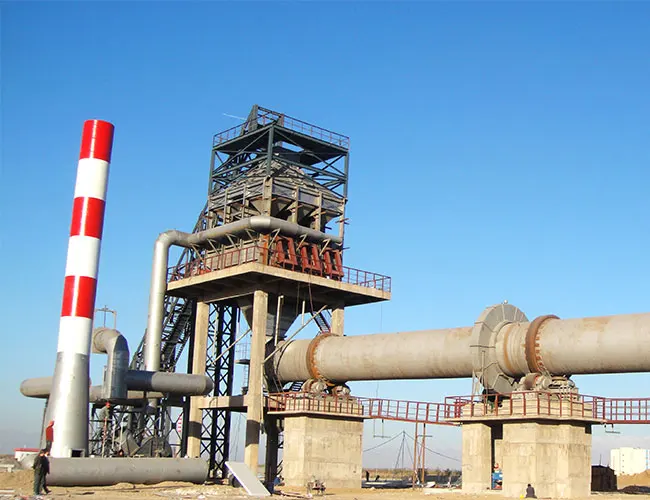
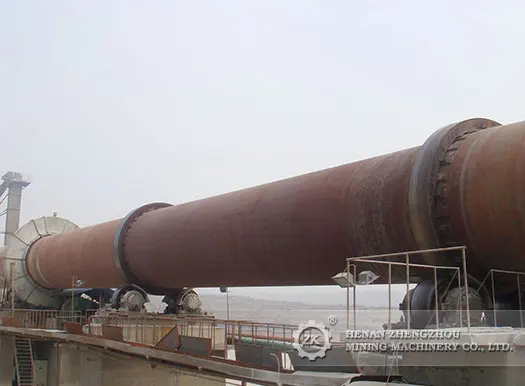
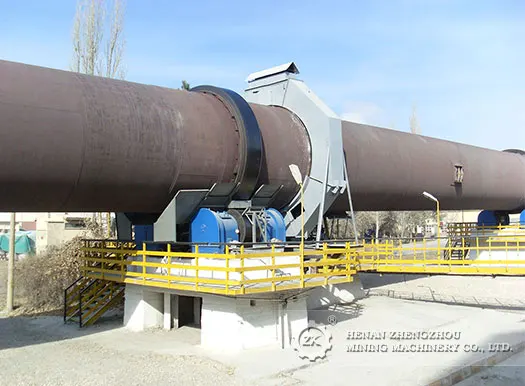
Rotary kiln is the main equipment for cement plant. The rotary kilns produced by our company can be divided into dry process and wet process. They can also be used for chemical industry, metallurgy industry and etc. Throught technical renovations, the rotary kiln sintering system equipment made by our company has adopted high measuring precession plunger pump, variable speed adjusted valve, contact graphite block air seal and other national advanced technologies.

Company Information
Henan Zhengzhou Mining Machinery Co., Ltd, is located in Wulong Industrial Park of Zhengzhou Xingyang which is the capital of Henan Province. It is at the junction of 310 State Road and Xingmi Road, close to the highway, railway station, West Zhongyuan Road, downtown area of Zhengzhou and Zhengzhou International Airport. The transportation condition is very convenient.
Certifications

Our Services
Pre-sale services: enthusiasm
We provide you with the prophase plan, process flow design and manufacturer equipment
according to your special demand.
Our ZK Cement plant equipment Advantages:
1. Good quality and high output, suitable for large-scale activity of lime production line and large-scale production.
2. Stable production, all the production with the negative pressure, air flow and higher security.
3. Simple structure, easy control and beneficial operation and maintenance.
4. Fine grade limestone can be calcined, full use of mine resources.
5. Low heat consumption per unit of product, installation in vertical kiln perheated kiln can take advantage of exhaust warm limestone, greatly reducing the fuel consumption.
6. Making full use of industrial waste gas as a fuel for lime burning (such as blast furnace exhaust gas, acetylene tail gas, charcoal blue exhaust, etc)
7. Kiln head adopts the design of vertical cooler integrating kiln head cover. The construction area is small, good sealing, effectively avoiding hot waste gas emissions unsystematically.
8. Environmental protection, the adoption of pulse bag filter dust collecting dust, discharge concentration less than 50mg Nm³/ and below national emission standard (less than 100mg/Nm³)
9. High automation level, the adjustment of production system operation, control and alarm adopts PLC to control in the control centre room, reducing artificial and improving efficiency.
We Recommend

China new 100T Cement Silo for hot sale
US $7533-$8133


Lime Cement Dolomite Rotary Oven Furnace
US $5000-$1000000

Multi-stage Lime Slaker for Calcium Hydroxide Production Plant
US $70000-$200000
New Arrivals
New products from manufacturers at wholesale prices