
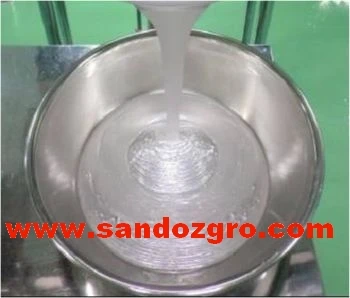
solar cell conductive Aluminium paste
- Category: >>>
- Supplier: Shenzhen Nanshan District Magaoding Chemical Material Factory
Share on (60439140079):
Product Overview
Description
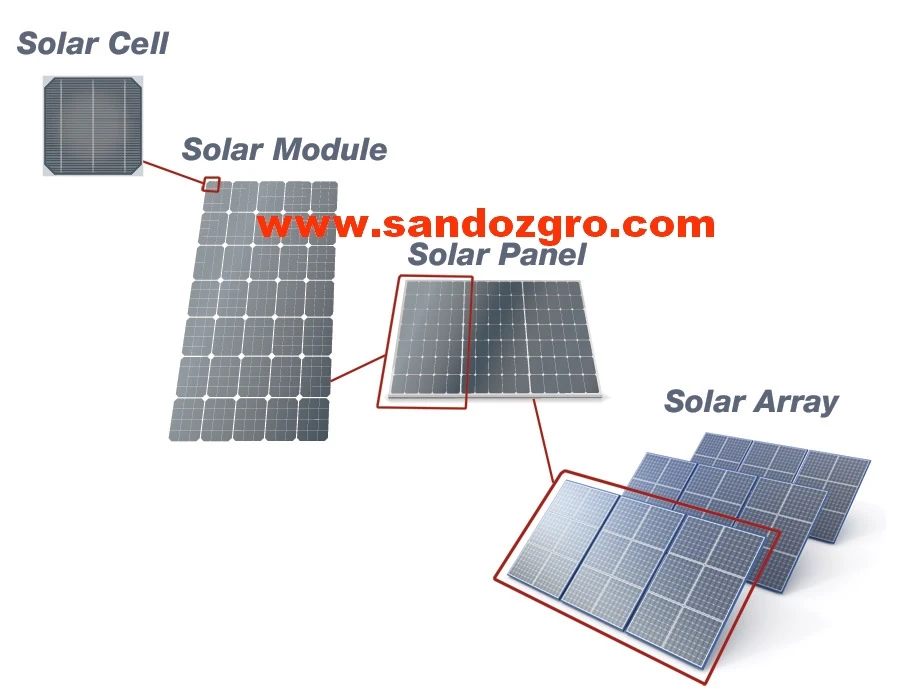
MGD series paste is a front electrode for mono and multi-crystalline silicon solar cell wafers. It easily penetrates the anti-reflective (SiNx:H or TiO2-x) layer during the firing process and provides low contact resistance. Ag Paste can be co-fired with commercially available backside Al and Ag-Al Pastes.
These Silver Metallization Pastes are customizable to your process, thus increasing efficiency and fill factor while providing wider processing windows.
Front Side Ag Paste Properties:
Capture higher efficiencies and wider processing window
Achieve a higher aspect ratio
Excellent fine line resolution
Low contact resistance on lightly doped emitter
Cd free
Pb free available
Applicable to a wide range of sheet emitter wafers
Back Side Ag Paste Properties:
Increased adhesion
Co-firable with back Aluminum and front Silver pastes
Greater peak adhesion strength
Increased paste coverage with superior results provides a high quality, cost effective solution
Customized Ag Paste Solutions.
Sandoz electronic aluminium paste developed to provide back contact metallization for solar cell,
Technology data :
1.Printing: Recommend 250~325mesh BOPP stainless steel screen. Recommend viscosity: 55-75 Pa·S when using 280mesh,50-70 Pa·S when using 300mesh. Stirring for 30min near the bottom of the vertical mixer, or 6h in roll mixer before use.
2.Control the printing wet weight: 0.75-0.90gon125 single silicon, 1.20-1.50g on 156 polysilicon.
3. According to the wet weight above-mentioned: Dried thickness: 30-35μm. Fired thickness is 25-30μm
4.Drying temperature(°C): Infrared stove,about 3min,220-250°C. Quick stove, about 24-30s, 280-310°C.
5.Recommend Firing temperature(Despatch sintering furnace,the actual temperature of silicon substrate surface):780-810°C
6.Conversion Efficiency:125 single crystal silicon,average conversion efficiency≥18.50%,156 single crystal silicon,average conversion efficiency≥18.20%,156 polysilicon, average conversion efficiency≥17.00%.
7.Alcohol wipe test:Cotton ball moistened with alcohol and wipe the aluminum back surface field, no black powder.
8.Warpage:125 single silicon≤1.5mm, 156 single/polysilicon≤2.0mm
9.Resistant to boiling:Immersed cells in 70°C deionized water by 10min,take out and observe Aluminium back surface field.There are non-white, blistering, shedding and other undesirable phenomena, as well as no powder out or nigrescence wiped by alcohol.
10.Adhesion:Laminating fired cells,gash a 1cm wide EVA strip. Tensile testing is more than 10N and no shedding on Aluminium back surface.
11.Damp heat test: Kept in an environment at a temperature of 85 °C, humidity of 85% for 48 hours, and at room temperature after 4 hours, than observe the Aluminium back surface. There are non-white, blistering, shedding and other undesirable phenomena.
12.Thermal cycling test: Kept the cells in an environment at a temperature of -40 °C, humidity of 60% for 10 min,then heated to 85°C through 5 hours and retained for 10 minutes, temperature change rate between highest and lowest is no more than 100°C/h. This is a cycle. There is no shedding or serious cosmetic defects after 5 cycles.
13.Reliability: After composed to modules, test it according to "Crystalline silicon terrestrial photovoltaic modules IEC61215", "PV module safety certification IEC61730", "flat photovoltaic panels UL1703". In the standard test conditions, the maximum output power attenuation meet the standard requirements, no serious cosmetic defects.
14.Thinner: The viscosity is adjusted to good printability when produced. It is not recommended to add the thinner.so you must be very cautious to add it, then stir it uniformly.
15.Compatibility: Before the mass production,you must test the compatibility between Aluminium paste and wafer, Ag paste and Aluminiumpaste.


We Recommend
New Arrivals
New products from manufacturers at wholesale prices