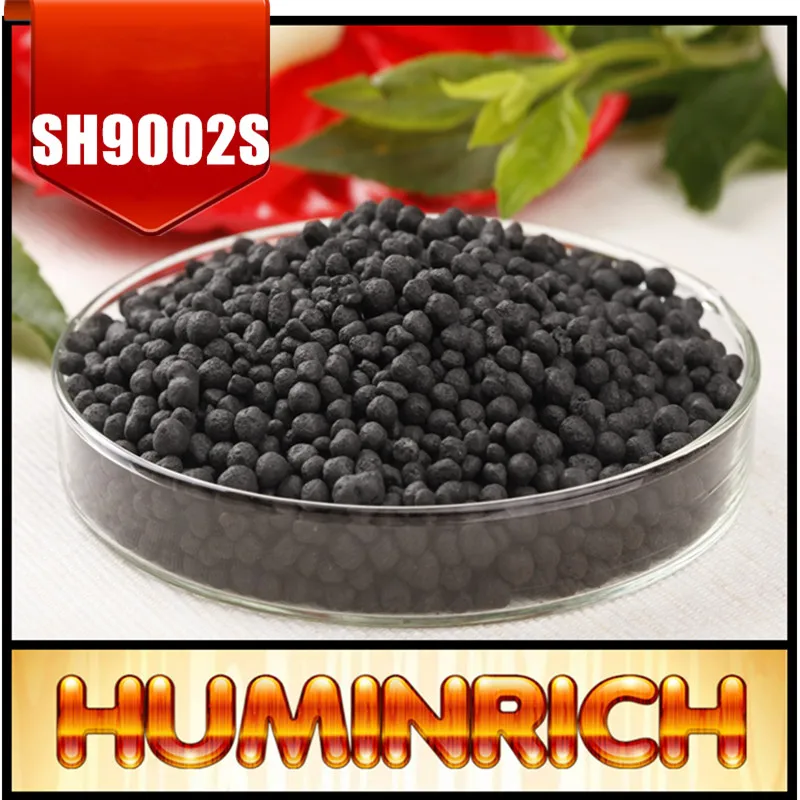
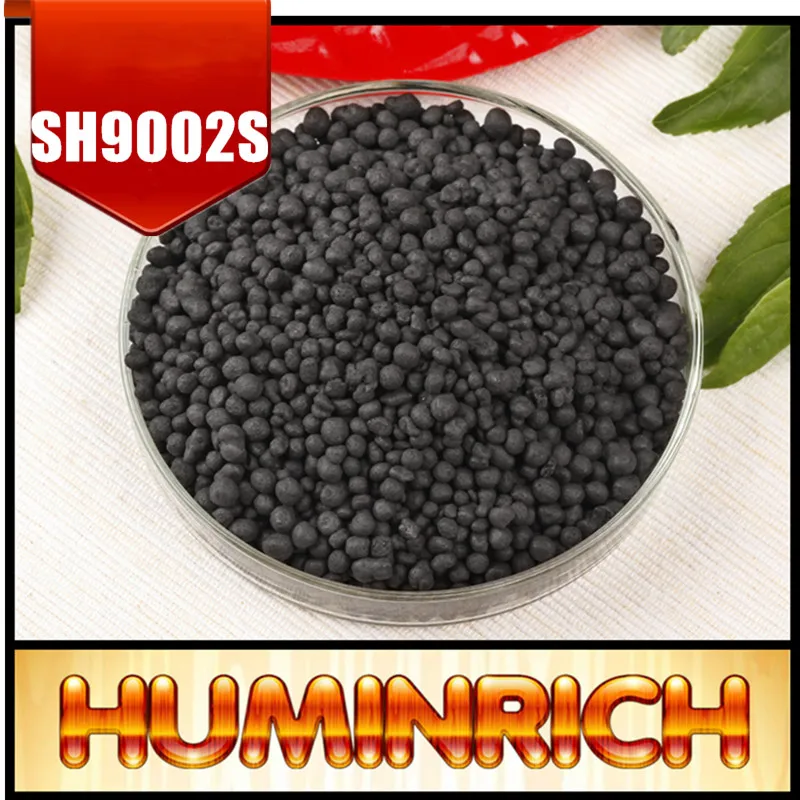
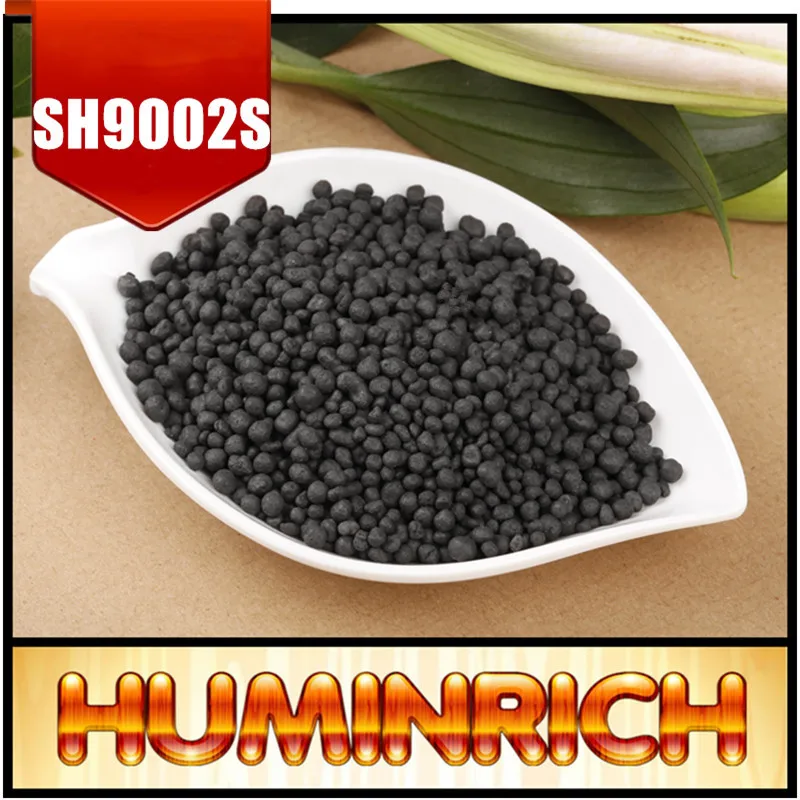
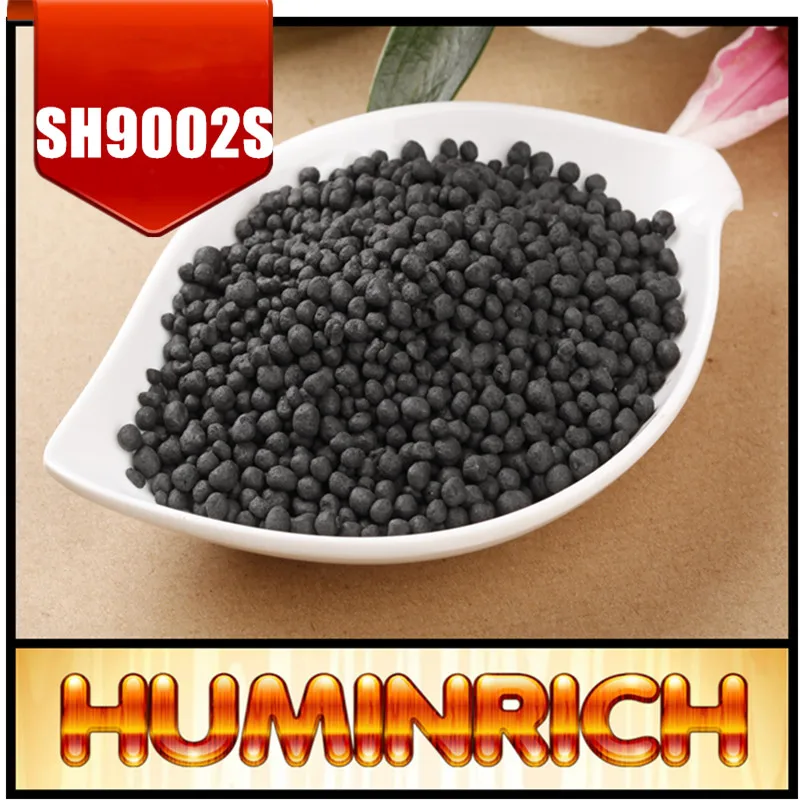
Huminrich Optimum Plant Growth Organic Fertilizer Granuale Humic Acid Soil Improvement
- Category: >>>
- Supplier: Shenyang Humate Technology Co. Ltd.
Share on (60457361032):
Product Overview
Description
 | |||
What Is The Humic Acid ?
| |||
Humic acids which is sourced and produced in China. The product’s high quality and proven performance is now well recognised all over the world. Humic acids are naturally derived from the breakdown of plant and microbial matter. Humic acids are the foundation of all fertile soils. Over the years, these humic acids accumulate in the soil. This provides the soil with greater nutrient holding ability, water holding capacity, readily available carbon food source for beneficial soil microorganisms and better soil structures. This is nature’s way of minimising nutrient losses in order to maintain long-term soil fertility and to ensure sustainable plant growth. Humic acids present in the soil hold a wide range of micro-nutrients and macro-nutrients around plant roots. This provides all the essential nutrients for quick root uptake and optimum plant growth. Humic acids also improve the wetting ability and water holding ability of the soil.
Humic acid is an extraction of Leonardite which forms after 70 million years of humification process. The main content of soil is named as hummus and we can proclaim Humic acid as the most active part of the soil. Todays increasing usage of chemical fertilizers depleting soil hummus reserves. Decline in humus substances in the soil, not only hindered the absorption of plant nutrients bu also led to low yielded harvests. As a result today Humic Acid applications are rapidly increasing in world wide.
Humic acids as a natural large bio-polyelectrolytes; contains polyphenols, polycarboxylic acids, carbonyls and peroxides. With its complex chemical structures Humic acids, enables absorption of necessary nutrients to the plants. Macro and Micro elements in soils generates plant available organo mineral Chelates with Humic Acids. In soil, Potassium, Calcium, Magnesium, Iron and Zinc reacts with Humic Acids and produces organo-mineral bridges, this organo-mineral bridges feeds plants and beneficial soil organisms together
| |||
What are benefits of Humic Acids?
| |||
What Is Soil Organic Matter ?
Soil organic matter can be grouped in four section Section 1: After the decomposition process by microorganisms 800 of soil is called HUMUS. Only Leonardite Based Humic Acids can add up directly to Humus content of the soil. Other fertilizers (can increase humus content after the decomposition process of Microorganisms in low percentages. The most valuable content which increases soil organic matter is Humus; and only the Humic Acid can directly increase Organic Matter Percentage of the soil. Section 2: Alive organisms and plant roots consists the 5% of the soil organic matter. Section 3: Consists of death animals,plants and soil microorganisms which are not decomposed yet. Section 4: Consists of 10% of the soil parts which are exposed to rapid decomposition. The Humic and Fulvic Acids can directly mix up with (80%) Humus contents and increase the yields. Other Organic Fertilizers can only mix up with %20 of the soil content.
What the benefits of humic acids? Humic Acid holds onto a wide range of nutrients from applied fertilizer in the soil until plants are ready to use them Humic Acid also helps unlock bound nutrients in the soil,making them available to the plants.Humic Acid are very effective in chelating many plant nutrients and more importantly,in retaining water (see illustration below).This enables humic acids to retain a wide range of nutrients,all in close proximity to plant roots to provide more balanced nutrients,all in close proximity to plant roots to provide more balanced nutrients for growth.
Soil moisture Humic acids, like most forms of plant organic matter, improves the water holding ability of most soils. In sandy soils, humic acids form a hydrophilic (water-attracting) coating on the sand particles which increases their wetting ability and moisture retention properties. In clays, humic acids open up the clay structures to enable greater water penetration and retention. Better soil wetting ability and greater soil penetration reduce water losses from run-off and drainage and improved water usage and reduction in labour requirement and costs.
Nutrient retention and availability to plants Soil organic matter (humus) has a great ability to hold nutrients in the soil until they are required by plants. It is the humic acid molecules in the humus which hold most of the nutrients from applied fertilisers.Huminrich Humic acids, with its high concentration of humic acids, greatly improves the ability of sandy soils to hold many essential nutrients such as ammonium, potassium, calcium, magnesium and the trace elements.
Sustaining balanced nutrition the well being of plants depends not only on what you feed your plants, but also on the availability of the nutrients in applied fertilisers and how successfully the plants are able to take these nutrients through their root system and foliar. Huminrich Humic Acid can unlock some of the bound phosphate and micronutrients in the soil by chemical reactions which solubilise the fixed phosphates. Huminrich Humic Acid soil conditioner increases the movement of calcium down the subsoil and plant root zone where it is most needed. This means quicker response from applied calcium in terms of nutrient availability and plant uptake. Calcium is important in promoting plant cell development which will result in healthier plants, greater resistance to diseases and better crop quality.
Better root growth Huminrich Humic Acid also stimulates greater root growth in seedlings and mature plants resulting in higher nutrient uptake in plants and a greater ability to tolerate extended dry spells between irrigations or rainfall. A more extensive root system growth promotes greater plant vigor and better crop yield and quality.
| |||
Huminrich Humic Acid Fertilizer Specifications
| |||
Brand | HUMINRICH | HUMINRICH | HUMINRICH |
Type | SH9002A-2 | SH9002B-5 | SH9002S-1 |
Name | Humic Acid Granular | Humic Acid Granular | Humic Acid Granular |
Appearance | Black Shiny Granular | Black Shiny Granular | Black Shiny Granular |
Diameter | 2-4mm | 2-4mm | 2-5mm |
Source | Young Active Leonardite | Young Active Leonardite | Young Active Leonardite |
Feature | Coated With Fulvic Acid | Coated With Amino Acid | 98%-100% Soluble |
PH | 5-6 | 5-6 | 9-11 |
Humic acid (dry base) | 55%-60% | 70%-75% | 55%-60% |
Organic matter (dry base) | 65%-70% | 80%-85%
| 65%-70% |
NPK | 3-5%
| 3-5%
| - |
Trace element | Ca, Mg, S, Cu, Zn, Mn, Mo
| Ca, Mg, S, Cu, Zn, Mn, Mo
| - |
 | |||
Huminrich Humic Acid Fertilizer Application Scope
| |||
In all crops:
Vegetables And Fruit:
| |||
We Recommend
New Arrivals
New products from manufacturers at wholesale prices