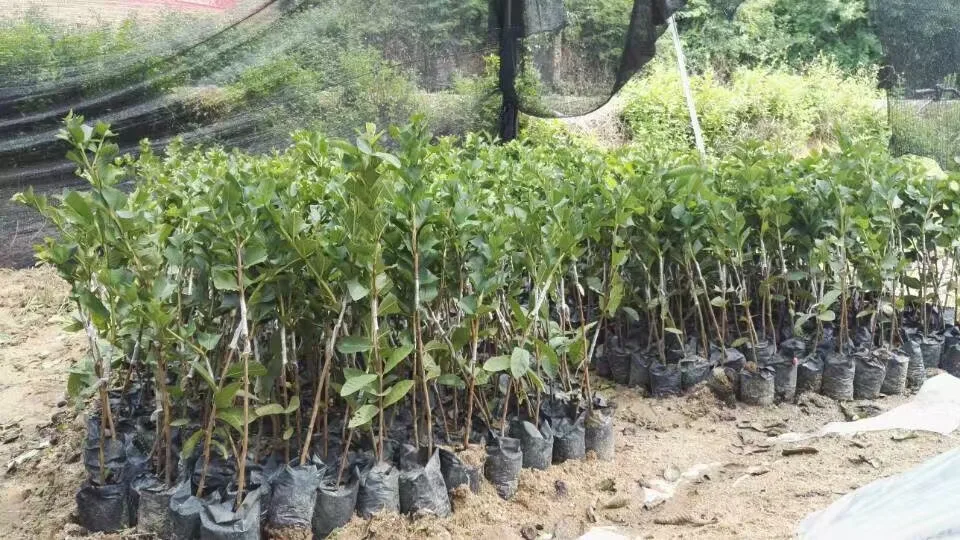
Slow growth rate tangelo fruit seedling tree Citrus tangelo
US $1.50-$3.00
Share on (60560965770):

Address:Xiamen city,Fujian province,China
Contact person: Ms Beryl
Skype: friendship bridge
What's app/MB: 008618359256229
We chat:18359256229
QQ: 3434219837
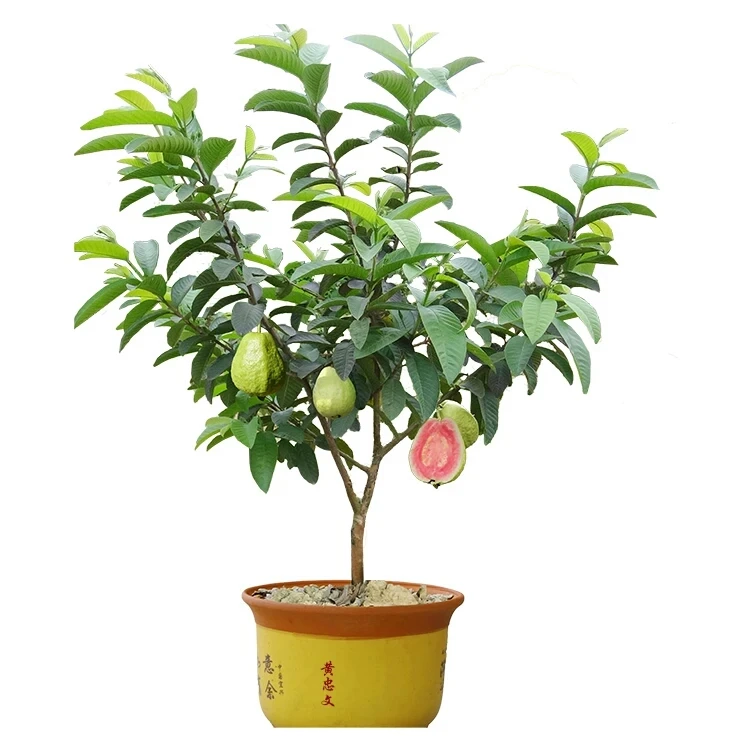
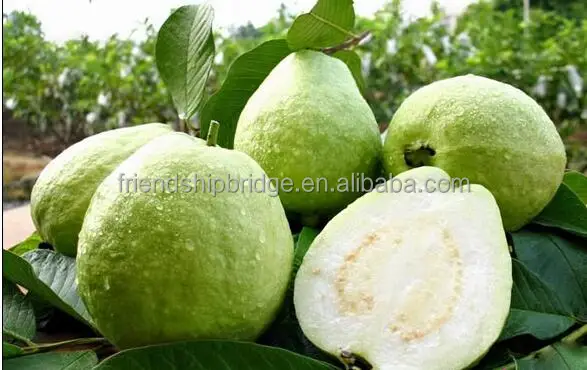
Psidium guajava, the common guava, yellow guava, or lemon guava (known as goiaba in Portuguese and guayaba in Spanish) is an evergreen shrub or small tree native to the Caribbean, Central America and South America. It is easily pollinated by insects; in culture, mainly by the common honey bee
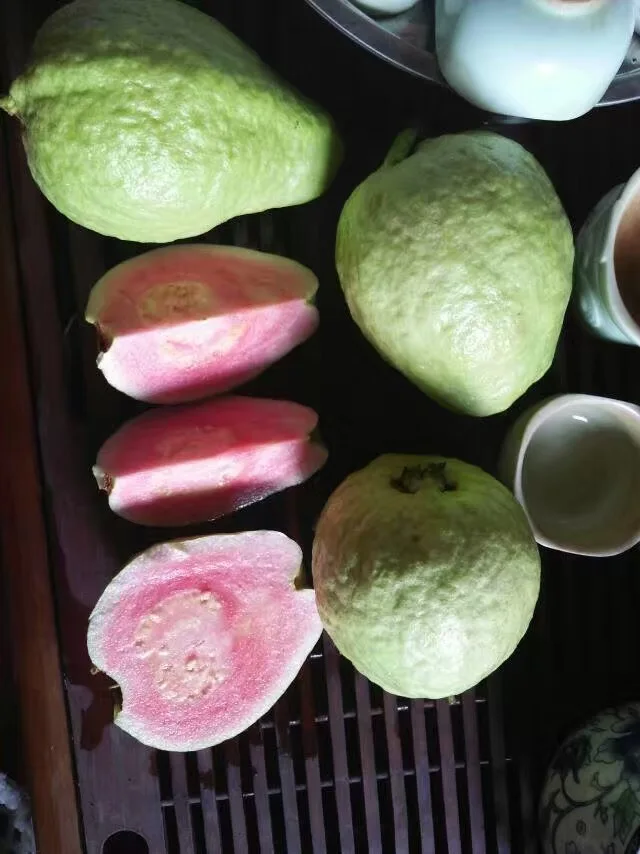
Widely cultivated in tropical and subtropical regions around the world, guava fruits can range in size from as small as an apricot to as large as a grapefruit. Various cultivars have white, pink, or red flesh, and a few also feature red (instead of green or yellow) skin.
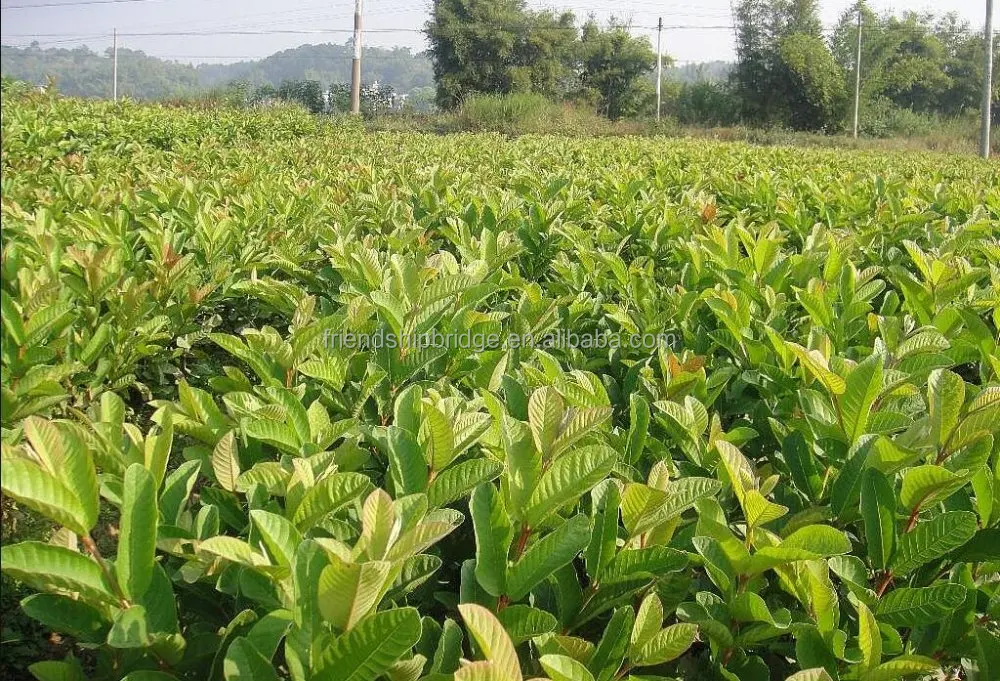
Owing to its hardy nature, guava is grown successfully in tropical and subtropical regions up to 1,500 m (4,900 ft) above mean sea-level. Best quality guavas are obtained where low night temperatures, 10 °C (50 °F), prevail during winter. It tolerates high temperatures and drought conditions in North India during summers but it is susceptible to severe frost as it can kill the young plants. An annual rainfall of about 100 cm (39 in) is sufficient during the rainy season (July–September). The rains during harvesting period, however, deteriorate the quality of fruits.
Guava is cultivated on varied types of soils- heavy clay to very light sandy soils. Nevertheless, very good quality guavas are produced in river-basins. It tolerates a soil pH of 4.5-8.2. Maximum concentration of its feeding roots is available up to 25 cm (9.8 in) soil depth. Thus the top soil should be quite rich to provide enough nutrients for accelerating new growth which bears fruits.


Phytosanitary Certificate / CO

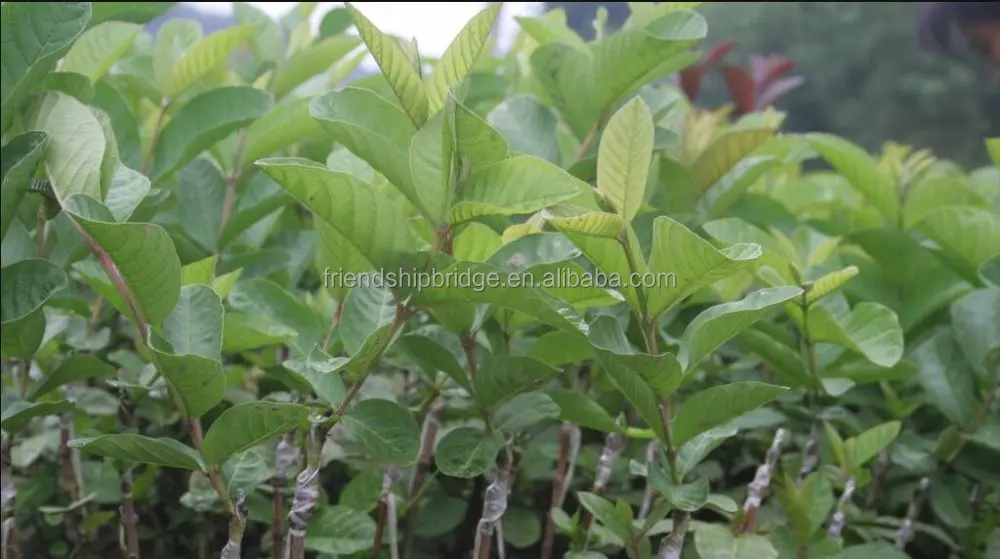
Bare Rooted Mulberry Seedlings ,wrape some coco peat or other stuff to keep the moisture if necessary , then pack them with bag and carton . Sometimes pack them with fumigation free strong wooden boxes as customer require.
Usually Deliver by Air, take 1-3 days for Asia countries ,3-5 days for Middle East countries, 3-7 days for European countries and American countries.


91.8% Response Rate
91.8% Response Rate
91.8% Response Rate
Our horticultural nurseries has focused on Indoor&Outdoor plants since 40years ago with our nurseries base in Fujian Province, South China.
Many years experiences and techniques make our flower and plants popular to our customers from domestic and international market.
Our main products :
Ficus microcarpa/
Cactus/Echinocactus/
Mini Succulent plant/
Cycas /Pachira /
Dracaena/Adenium obesum/
Palm trees /
Phalaenopsis/
Bamboo Poles/
Fruit Seedlings of Mango,Cherry, Apple, Pear, Pomelo, Longan, Dragon Fruit ……
Flower Seedlings of Peony, Rose ,Orchid……
Fresh Fruit- Honey Pomelo
Our international market has expanded to Eastern Asia, South Asia, Southeast Asia, Mid-east Area, Oceania, Europe, North America and Africa.
Let's work together to make our earth more beautiful and greener !
New products from manufacturers at wholesale prices