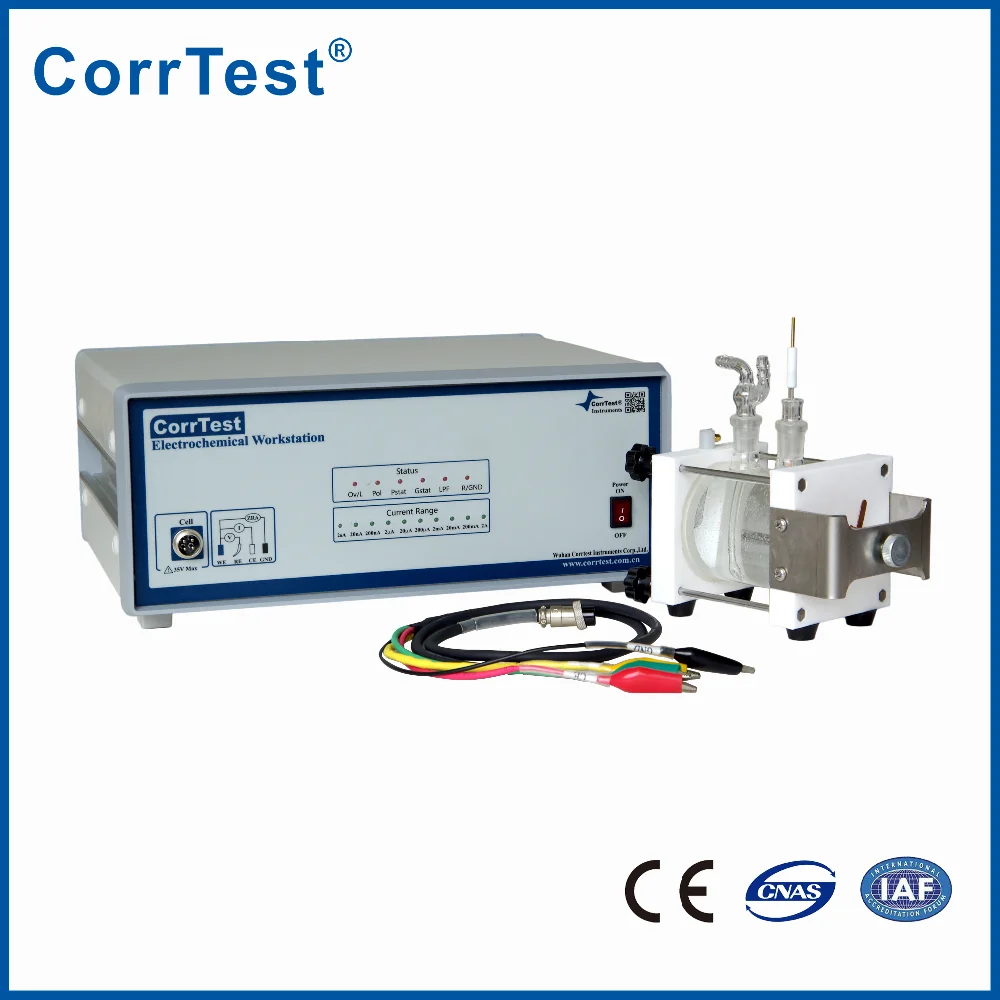
Potentiostat galvanostat CS350 for Tafel plot /Corrosion/EIS
- Category: >>>
- Supplier: Wuhan Corrtest Instruments Corp. Ltd.
Share on (60606624716):
Product Overview
Description
Overview
CS series electrochemical workstation (potentiostat/ galvanostat) contains a fast digital function generator, high-speed data acquisition circuitry, a potentiostat and a galvanostat. It has high performance in stability and accuracy with advanced hardware and well-functioned software. It is a comprehensive research platform for corrosion, batteries, electrochemical analysis, electrochemical sensor, life science and environmental chemistry.
Application:
1) Electro-synthesis, electro-deposition (electroplating), anodic oxidation, etc.
2) Electrochemical analysis and sensor;
3) Battery (Li-ion battery, solar battery, fuel cell, super capacitors), new materials, optoelectronic materials;
4) Corrosion mechanism of metals in water, concrete and soil;
5) Fast evaluation of corrosion inhibitor, water stabilizer, coating and cathodic protection.
Specifications
| \t | \t |
| \t | \t |
| \t | \t |
| \t | \t |
| \t | \t |
| \t | \t |
| \t | \t |
| \t | \t |
| \t | \t |
| \t | \t |
| \t | \t |
| \t | \t |
| \t | |
| \t | |
| \t | \t |
| \t | \t |
| \t | \t |
| \t | \t |
| \t | \t |
| \t | |
| \t | |
| \t | \t |
| \t | |
| \t | \t |
| \t | |
| \t | |
| \t | |
| \t | |
Some Test Methods
| \t | \t | \t | \t | \t | \t | |
| \t | \t | \t | \t | \t | \t | \t |
| \t | \t | \t | \t | \t | \t | |
| \t | \t | \t | \t | \t | \t | |
| \t | \t | \t | \t | \t | \t | |
| \t | \t | \t | \t | \t | \t | |
| \t | \t | \t | \t | \t | \t | \t |
| \t | \t | \t | \t | \t | \t | |
| \t | \t | \t | \t | \t | \t | |
| \t | \t | \t | \t | \t | \t | |
| \t | \t | \t | \t | \t | \t | \t |
| \t | \t | \t | \t | \t | \t | |
| \t | \t | \t | \t | \t | \t | |
| \t | \t | \t | \t | \t | \t | \t |
| \t | \t | \t | \t | \t | \t | |
| \t | \t | \t | \t | \t | \t | |
| \t | \t | \t | \t | \t | \t | |
| \t | \t | \t | \t | \t | \t | |
| \t | \t | \t | \t | \t | \t | |
| \t | \t | \t | \t | \t | \t | |
| \t | \t | \t | \t | \t | \t | |
| \t | \t | \t | \t | \t | \t | |
| \t | \t | \t | \t | \t | \t | |
| \t | \t | \t | \t | \t | \t | \t |
| \t | \t | \t | \t | \t | \t | |
| \t | \t | \t | \t | \t | \t | |
| \t | \t | \t | \t | \t | \t | |
| \t | \t | \t | \t | \t | \t | \t |
| \t | \t | \t | \t | \t | \t | |
| \t | \t | \t | \t | \t | \t | |
| \t | \t | \t | \t | \t | \t | \t |
| \t | \t | \t | \t | \t | \t | |
| \t | \t | \t | \t | \t | \t | \t |
| \t | \t | \t | \t | \t | \t | |
| \t | \t | \t | \t | \t | \t | |
| \t | \t | \t | \t | \t | \t | |
| \t | \t | \t | \t | \t | \t | |
Please be noted that the method in # has the corresponding stripping voltammetry method.
Detailed Images
Shipment List
Instrument host x 1
CS Studio software x 1
Dummy cell x 1
Power cable x 1
USB cable x 1
Electrode cable x 2
Certifications
We Recommend

New Arrivals
New products from manufacturers at wholesale prices