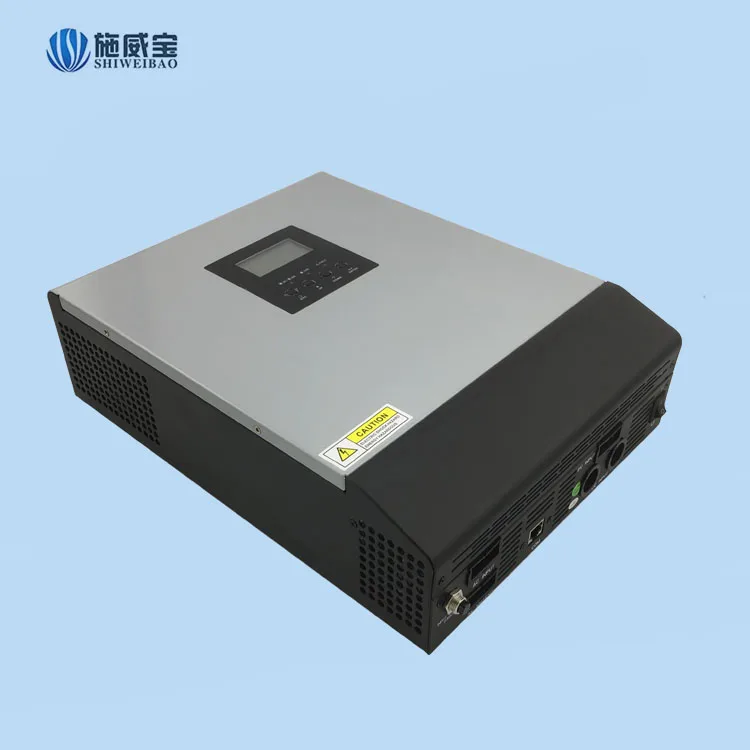
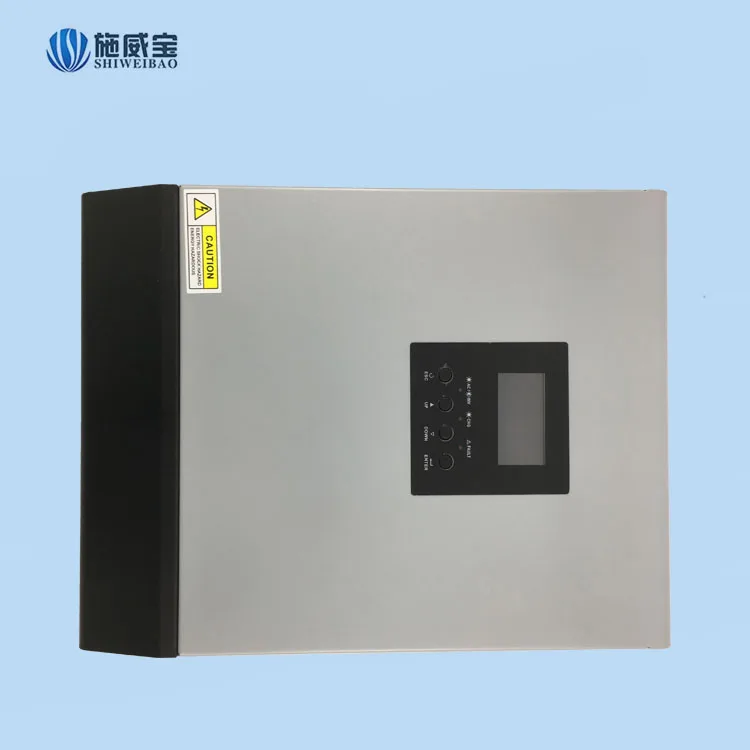
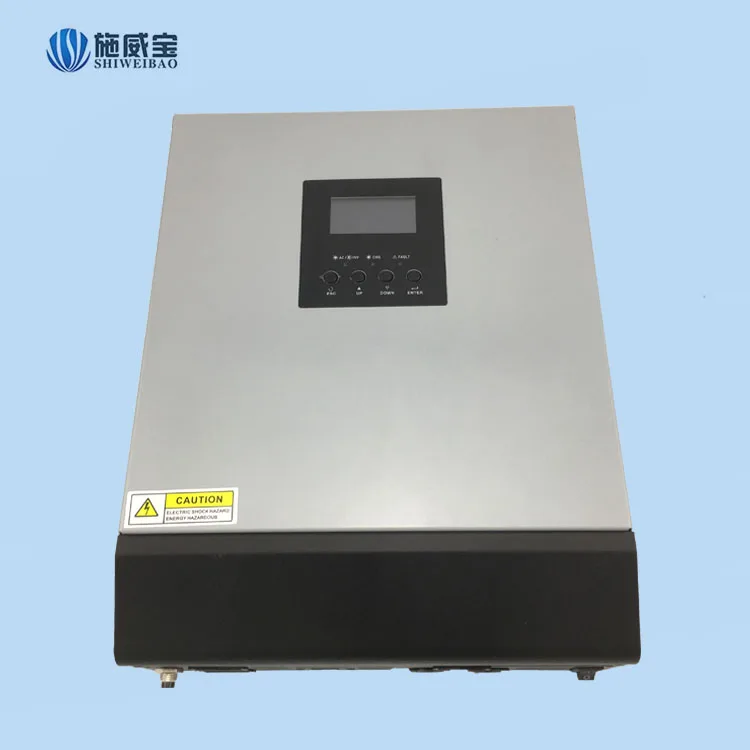
Solar Hybrid Inverter Pure Sine Wave Power 3kva Inverter with Charger
- Category: >>>
- Supplier: Yueqing Swipower Technology Co. Ltd.
Share on (60610307469):
Product Overview
Description
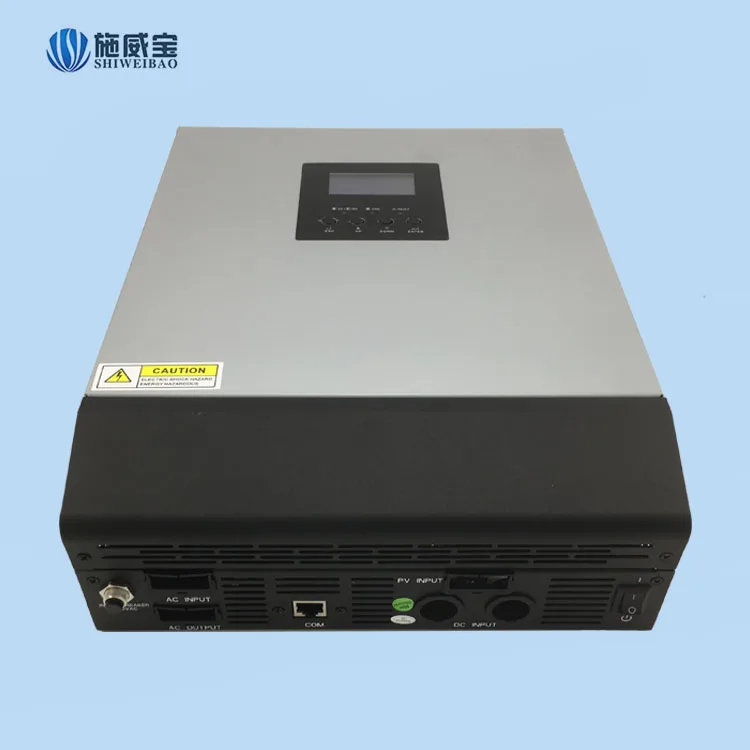
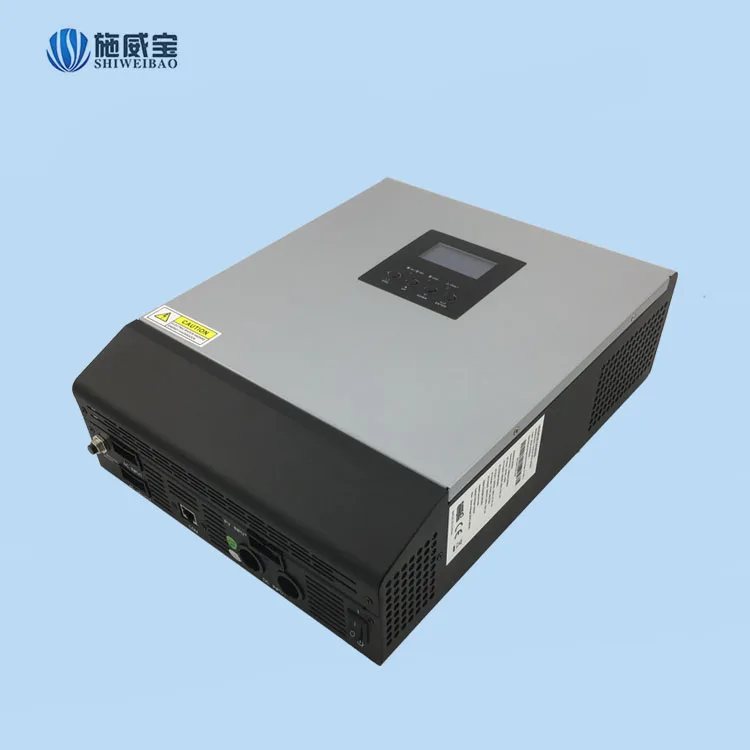
pure sine wave hybrid ups 3kva inverter with solar charger controllerer

Product Description
| Rated Power | 3000VA/2400W | |||||
| INPUT | Phase&waveform | 230 VAC | ||||
| Voltage selectable range (for Personal Computer) | 170~280 VAC | |||||
| Voltage selectable range (for home appliance) | 90~280 VAC | |||||
| Frequency range | 50Hz/60Hz (Auto sensing) | |||||
| OUTPUT | AC voltage Regulation (Batt.Mode) | 230V AC ± 5% | ||||
| Surge Power | 6000VA | |||||
| Efficiency (Peak) | 93% | |||||
| Transfer time | 10ms (for personal computer),20ms (for home appliance) | |||||
| Wave form | Pure sine wave | |||||
| Battery& AC Charger | Battery voltage | 24VDC | ||||
| Floating charge Voltage | 27VDC | |||||
| Overcharge Protection | 30VDC | |||||
| Maximum Charge Current | 20A or 30A | |||||
| PV Input | Charge current(PWM) | 50A | ||||
| Range @ Operating Voltage (VDC) | 60 VDC | |||||
| Standy powr consumption | 2W | |||||
| Physical | Dimension, D×W×H (mm) | 100×272×355 | ||||
| Net Weight (Kgs) | 6.9 | |||||
| Environmental | Humidity | 5%~95% Relative Humidity (Non-condensing) | ||||
| Operation Temperature | 0℃~55℃ | |||||
| Storage Temperature | -15℃~60℃ | |||||
Product Show


Product Main Feature
1. 2400W Pure Sine Wave Output
2. Built-in 50A PWM Solar Charger
3. Built-in 3-Stage High Efficiency 30A Battery Charger
4. Transfer time <9ms
5. Dual Priority Operation Selectable: AC vs. DC Mode
6. Fuse Protection Against Reverse Polarity
7. Free Monitoring Software
8. Works With 24Vdc Battery System Only
9. Works With 220~240Vac Load Only
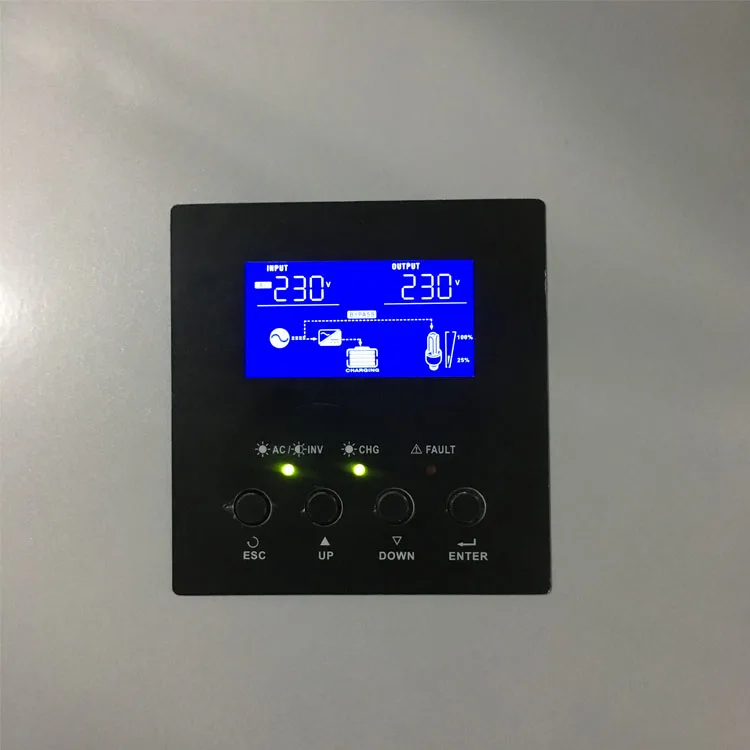
10. Supports 50hz or 60hz via LCD program
Product Link Skretch

Related Products

Certifications

Company Information

Yueqing Swipower Co.,Ltd. specializes in producing 19 rack mount inverter, pure sine wave inverter, pure sinewave inverter by pass, pure sine wave inverter with charger. Quality trusted by the user, the current product sales throughout the country most of the provinces. Through independent research and development to master the high-frequency switching power supply system is the core technology, is the few customization to meet customer requirements, to provide complete integrated power system products and solutions for businesses.


Package Size | 430*350*190(mm) |
Carton Weight | 7.8KG |
Warranty | 2 Years |
Delivery time | 15~21 Days |
FAQ
How to choose suitable inverter ?
If your load is resistive loads, such as: bulbs, you can choose a modified wave inverter. But if it is inductive loads and capacitive loads, we recommend using pure sine wave inverter. For example: fans, precision instruments, air conditioner, fridge, coffee machine, computer, and so on. Modified wave can be started with some inductive loads, but effect for load using life, because capacitive loads and inductive loads need highquality power.
How do I choose the size of the inverter ?
Different types of load demand for power are different. You can view the load power values to determine the size of the inverter. Notice: resistive load: you can choose the same power as the load. Capacitive loads: according to the load, you can choose 2-5 times power. Inductive loads: according to the load, you can choose 4-7 times power.
How connection between batteries and an inverter ?
We usually believe that cables connecting battery terminal to inverter shorter is better. If you are just standard cable should be less than 0.5M, but should correspond to the polarity of the batteries and inverter-side outside. If you want to lengthen the distance between battery and inverter, please contact us and we will calculate the recommended cable size and length. Due to long distances using a cable connection, there will be a reduced voltage, which means that the inverter voltage would be far below the battery terminal voltage, this inverter will appear under voltage alarm conditions.
How to calculate the load of working hours requires configuration of the battery size ?
We will usually have a formula to calculate, but it is not hundred percent accurate, because there is also the battery's condition, the old batteries have some loss, so this is only a reference value: Work hours = battery capacity * battery voltage *0.8/load power (H= AH*V*0.8/W)


We Recommend
New Arrivals
New products from manufacturers at wholesale prices