Green tea extract new products 2017
- Category: Other Extracts >>>
- Supplier: Herblink Biotech Corporation
Share on (60627922305):
Product Overview
Description
Green tea extract new products 2017

Latin Name: Camellia sinensis (L.)O.Ktze
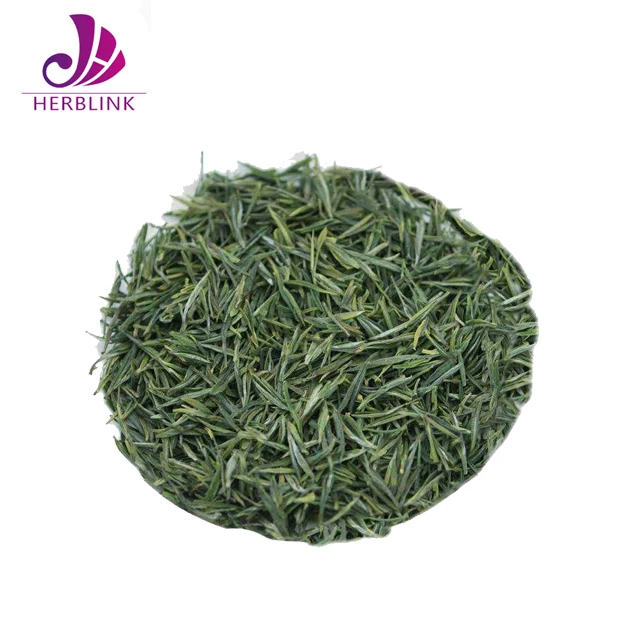
Part of Used: Leaf
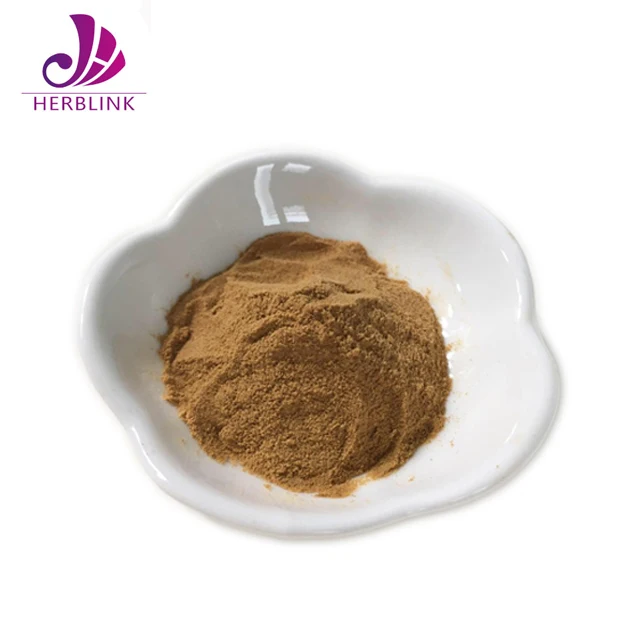
Appearance: Red brown/ Light yellow/ Yellow fine powder
Application: Food additive, dietary supplement
Description:
Archeological evidence suggests that tea leaves steeped in boiling water were consumed as many as 5,000 years ago. Botanical evidence indicates that India and China were among the first countries to cultivate tea. Although the English are known for their love of tea, Americans invented the tea bag and began the practice of drinking iced tea in the early 1900s. Today, hundreds of millions of people drink tea around the world, and studies are now suggesting that one variety of tea in particular -- green tea (Camellia sinensis) -- has many health benefits.
Among populations in China and Japan, where high amounts of green tea are consumed daily, cancer rates are statistically lower. There is now growing scientific research from reputable sources that shows promising results as to how the active ingredients in green tea might be responsible for lowering rates of various kinds of cancer.
Green tea extract is derived from leaves of camellia sinensis. It is associated with several health benefits, many supported by preliminary scientific research. This includes potential cancer-fighting properties, and a strong antioxidant effect that protects the body from the damaging effect of free radicals.

Chemical constituents of Green tea extract
The chemical composition of green tea varies with climate, season, horticultural practices, and age of the leaf (position of the leaf on the harvested shoot). The major components of interest are the polyphenols. The term polyphenol denotes the presence of multiple phenolic rings (A phenolic ring is a 6-carbon benzene ring with an attached hydroxyl (OH) group -- also referred to as the hydroxyl functional group). The major polyphenols in green tea are flavonoids (e.g., catechin, epicatechin, epicatechin gallate, epigallocatechin gallate (EGCG), and proanthocyanidins). Epigallocatechin gallate is viewed as the most significant active component. The leaf bud and first leaves are richest in epigallocatechin gallate. The usual concentration of total polyphenols in dried green tea leaves is around 8 to 12 percent.
CERTIFICATE OF ANALYSIS
ANALYSIS | SPECIFICATION | RESULTS | METHOD&REFERENCE |
Sieve Analysis | 100% pass 80 mesh | Complies | USP<786> |
Bulk density | 40-65g/100ml | 48g/100ml | USP<616> |
Loss on Drying | 5% Max | 3.31% | USP<731> |
Sulphated Ash | 5% Max | 3.06% | USP<731> |
Extract Solvent | Alcohol&Water | Complies |
|
Heavy Metal | 20ppm Max | Complies | AAS |
Pb | 2ppm Max | Complies | AAS |
As | 2ppm Max | Complies | AAS |
Cd | 1ppm Max | Complies | AAS |
Hg | 1ppm Max | Complies | AAS |
Residual Solvents | 0.05% Max. | Negative | USP<561> |
Microbiology | |||
Total Plate Count | 10000/g Max | Complies | USP30<61> |
Yeast & Mold | 1000/g Max | Complies | USP30<61> |
E.Coli | Negative | Complies | USP30<61> |
Salmonella | Negative | Complies | USP30<61> |
Conclusion: | Conform with specification. | ||
Storage: | In cool & dry place. Keep away from strong light and heat. | ||
Shelf life: | 2 years when properly stored. | ||
Quality Control : | BiehuTian | ||


We Recommend

China Manufacturer Organic Black Bean Extract
US $8.00-$25.00

Undersun Supply Food Grade Supplement Pitaya Powder
US $1.00-$29.00


Resist Fatigue Enhance Energy Physical Maca Extract 10:1
US $11.00-$20.00

European Huckleberry Extract Powder 10%
US $5.00-$10.00
New Arrivals
New products from manufacturers at wholesale prices