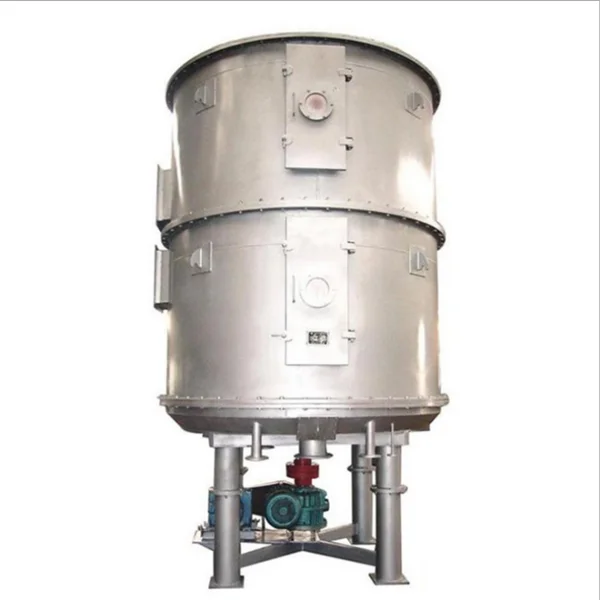
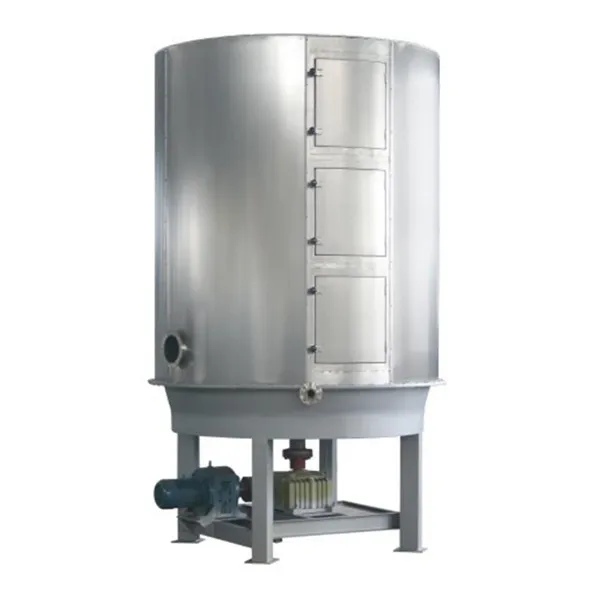
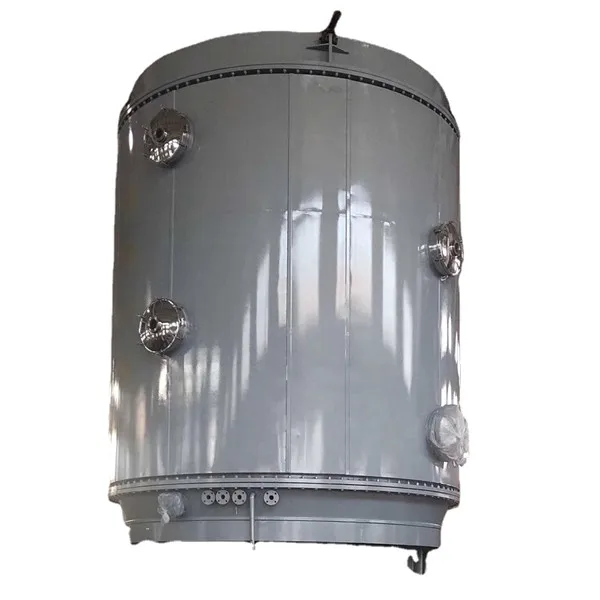
Powder, PVC, tea and wet materials PLG continual industry tray dryer, professional disc plate dryer drying machine
- Category: >>>
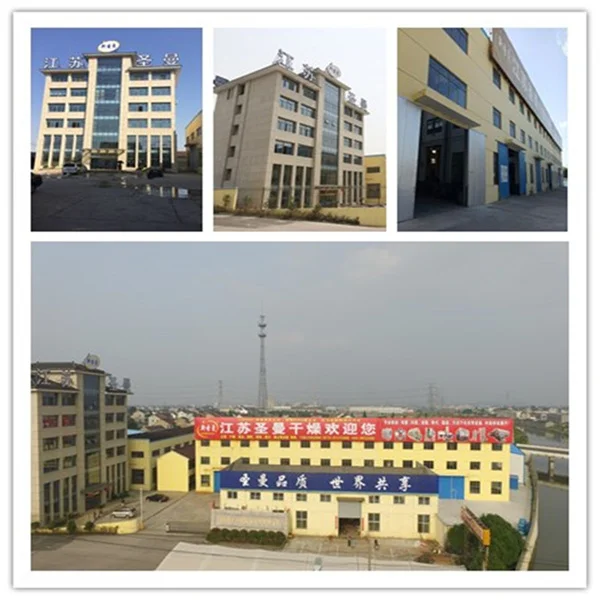
- Supplier: Jiangsu Shengman Drying Equipment Engineering Co. Ltd.
Share on (60690497526):
Product Overview
Description
Powder, PVC, tea and wet materials PLG continual industry tray dryer,
professional disc plate dryer drying machine
Product Description
Description:
PLG Series Continual Plate Dryer is a kind of high effective conducting and continuous drying equipment. Its unique structure and operating principle determine that it has advantages of high heat efficiency, low energy consumption, small occupying area, simple configuration, easy operating and control as well as good operating environment etc.
It can be widely used in drying process in the fields of chemical industry. Pharmaceuticals, agricultural chemicals, foodstuff, fodder, process of agricultural and sideline products etc. and is well received by various sectors in their practical usage. Now there are three big categories, named normal pressure, closed and vacuum styles; 1200, 2500, 2200 and 3000 size and so on; and three kinds of materials, namely A(carbon steel ), B(stainless steel used for those all part where materials are contacted) and C(on the basis of B to add stainless steel materials for vapor pipes, main shaft and support, and stainless steel linings for cylinder body and top cover).
With a drying area being from 4 to 180 square maters, now we have hundreds of models of series products and various kinds of auxiliary devices available to meet requirements of drying materials for customers.

Features of technology:
1. Drying plate
Designing pressure: general is 0.4MPa, Max can reach 1.6MPa.
Work pressure: general is less than 0.4 Mpa, and Max can reach 1.6Mpa.
Heating medium: steam, hot water, Oil. When the drying plates’ temperature is 100℃, hot water can be used; when 100℃-150℃, it will be saturated water steam ≤0.4Mpa or steam-gas, and when 150℃-320℃, it will be oil.
2. Material transmission system
Main shaft revolution: 1-10 rpm, electromagnetism or frequency steeples speed regulating.
Harrow arm: There are 2 to 8 pieces arm that be fixed on the main shaft on each layer.
Harrow’s blade: spliced on the harrow arms, float together with the surface of the plate to keep contact. There’re several of types.
Roller: for the products easily agglomerate, or with the requirements of grinding, the heat transfer and drying process might be reinforced by placing roller(s) at the appropriate place(s)
3. Shell:
There’re three types for option: normal pressure, sealed and vacuum
Normal pressure: Cylindrical shell or eight prismatic types, with whole body and split structure. The main pipes of inlets and outlets of heating medium can be inside the shell, or outside the shell.
Sealed: Cylindrical shell could bear the interior pressure of 5Kpa, the main ducts of the inlet and outlet of heating media might be inside of the shell or outside.
Vacuum: cylindrical shell could bear the exterior pressure of -0.096Mpa. The main ducts of inlet and outlet is inside of the shell.
4. Air heater:
Normal used with the application of draft fan, in case the wet air enters, to increase drying efficiency.
Features:
1. Easy control, wide application.
2. Easy and simple operation.
3. Low energy consumption.
4. Good operation environment, solvent can be recovered and powder discharge meet the requirements of exhaust.
5. Easy installation and small occupying area.

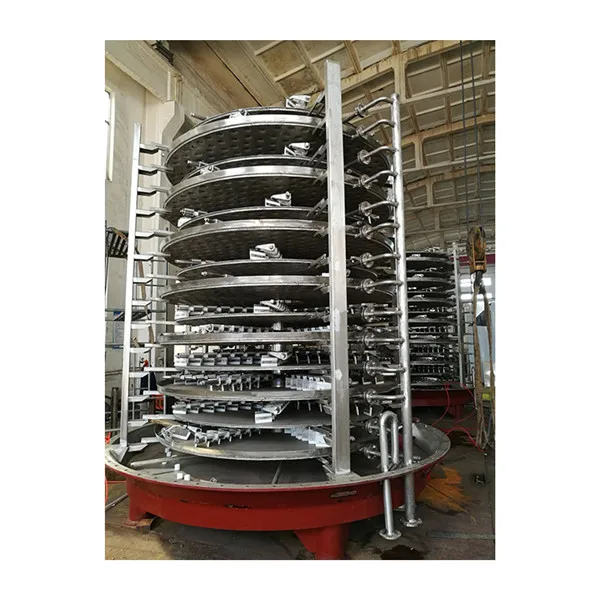
The wet material is fed continuously to the first drying layer on the top of the dryer. It will be turned and stirred by rakes when the rake arm rotates and drop down to the outer edge of the large drying plate along the exponential helical line. The material will be moved from the small drying plate to its outer edge and drop down to the outer edge of the large drying plate underneath.
Both small and large drying plates are arranged alternately so the materials can go through the dryer continuously. The heat medium can be saturated steam, hot water or thermal oil. The heat will be led into hollow drying plates from one end and come out from the other end. The dried materials will drop from the last layer of the drying plate to the bottom of the dryer and then moved by rakes to the discharge outlet. The material moisture will be removed from the exhaust outlet on the top cover.
For the vacuum-type plate dryer, the moisture will be sucked out by the vacuum pump on the top cover. The dried materials will be discharged from the bottom layer. The drying capability can be improved if the dryer equipped with supplementary devices such as finned heater, condenser for solvent retrieval, bag dust remover, return and mix mechanism, draft fan, and etc.
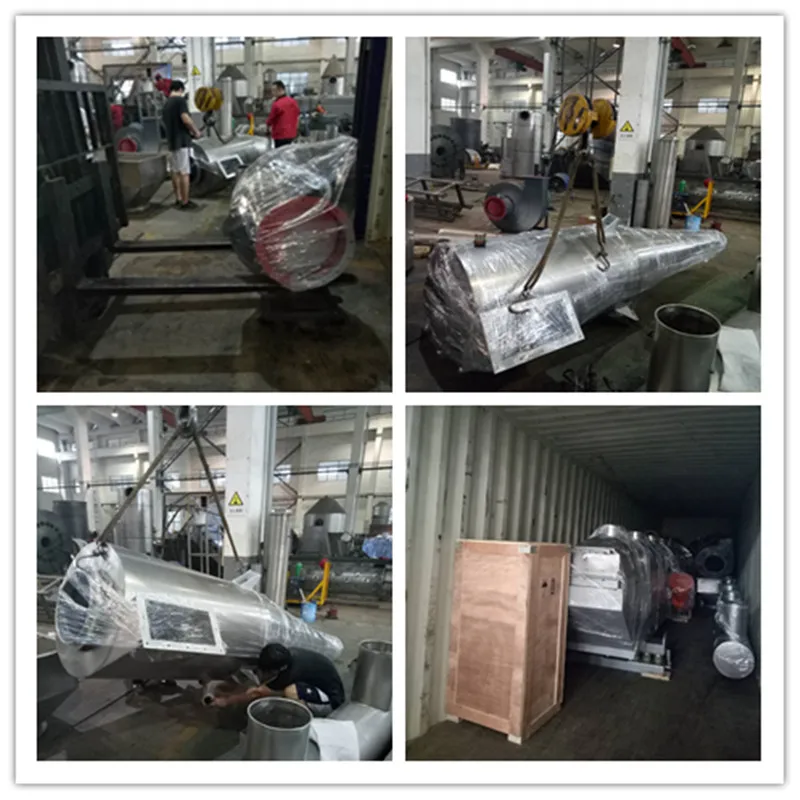
Packaging & Shipping

Our Services
Pre-service:
As a good and rich experience supplier, we should offer customer the best quality and best price of the machine.
1. Introduce the suitable product to the customer in detail, answer the question raised by customer carefully.
2. Make the suitabe project as the customer requirement and make sure the machine is suitable for the material.
Sale service:
1. Ensure product with high quality and pre-commissioning before delivery.
2. Delivery on time.
3. Provide full set of documents as customer’s requirements.
After-sale service:
Provide considerate services to minimize clients’ worries.
1. Assist clients to prepare for the first construction scheme.
2. Install and debug the equipment.
3. Train the first-line operators.
4. Examine the equipment.
5. Take initiative to eliminate the troubles rapidly.
6. Provide technical suppor.
7. Establish long-term and friendly relationship.
Service commitment:
1. Provide clients one-year warranty to make sure the machine work well.
2. We always keep certain inventory level of spare parts, which means the replacements can be sent to you timely.
3. Send every client a preferential quotation.
Company Information
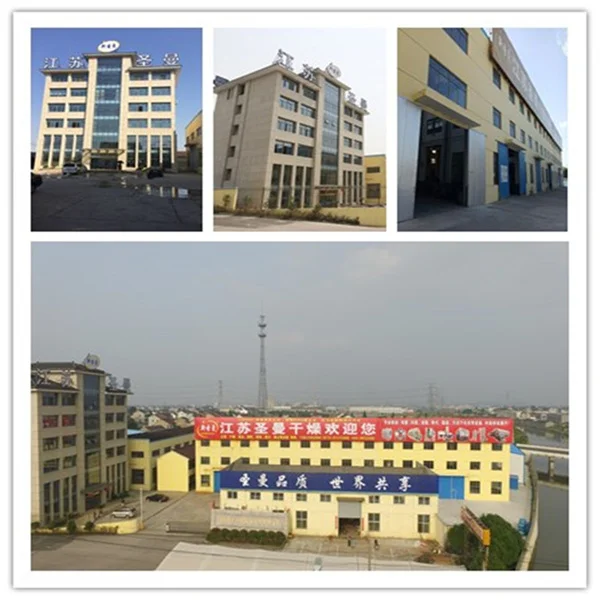
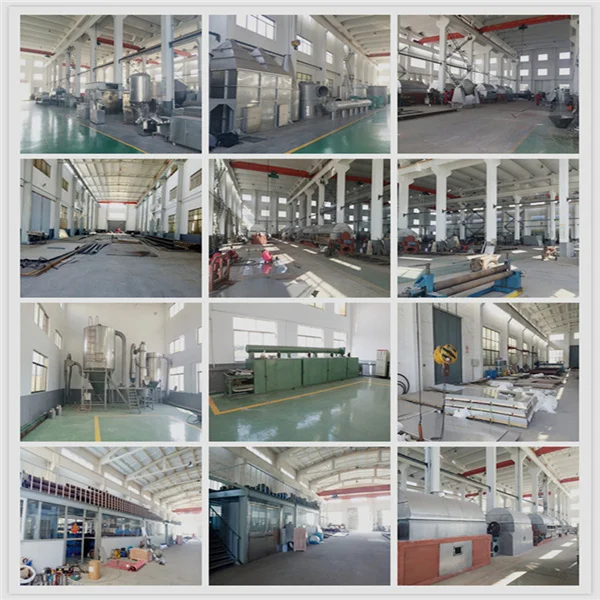
Important Notice
In order to quote you the right drying machine equipment with best price, we would like to get the following information include in your inquiry:
-What is the raw material? Material related characteristic? Does it corrosive, strong basicity, or highly acid? Please confirm.
-What is the capacity per hour you need (kg/h)?
-What is the initial moisture and final moisture of finished products you require to get?
-What about the maximum heat temperature of raw material?
-What kind of fuel you use to heat the dryer? Natural gas, electricity, fuel oil or steam?
-Which equipment material do you like prefer? SUS304, SUS316L or Carbon steel?
-Provide us your country’s electricity information, such as phases, voltage, HZ.
-How about dust collect requirements?
-Other special requirements.
We Recommend
New Arrivals
New products from manufacturers at wholesale prices