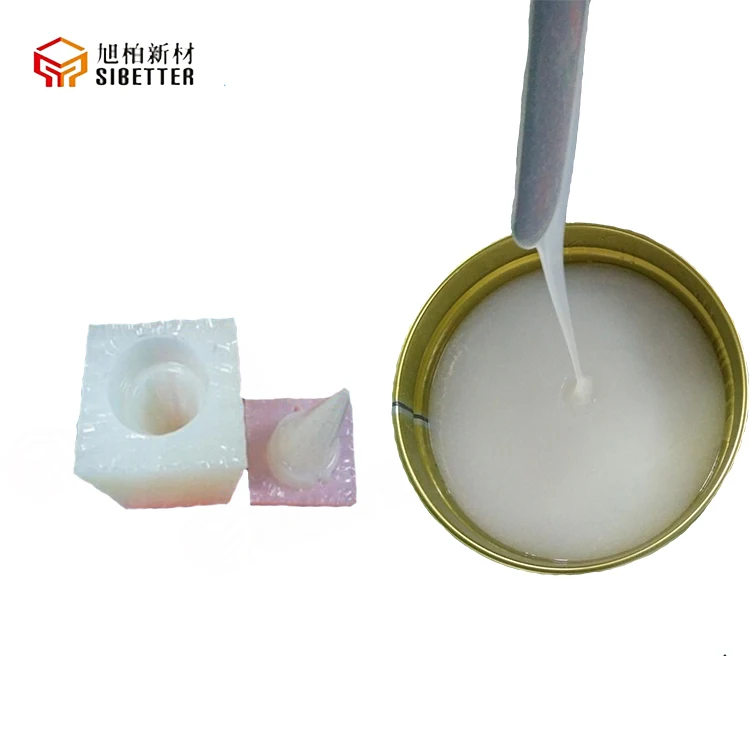
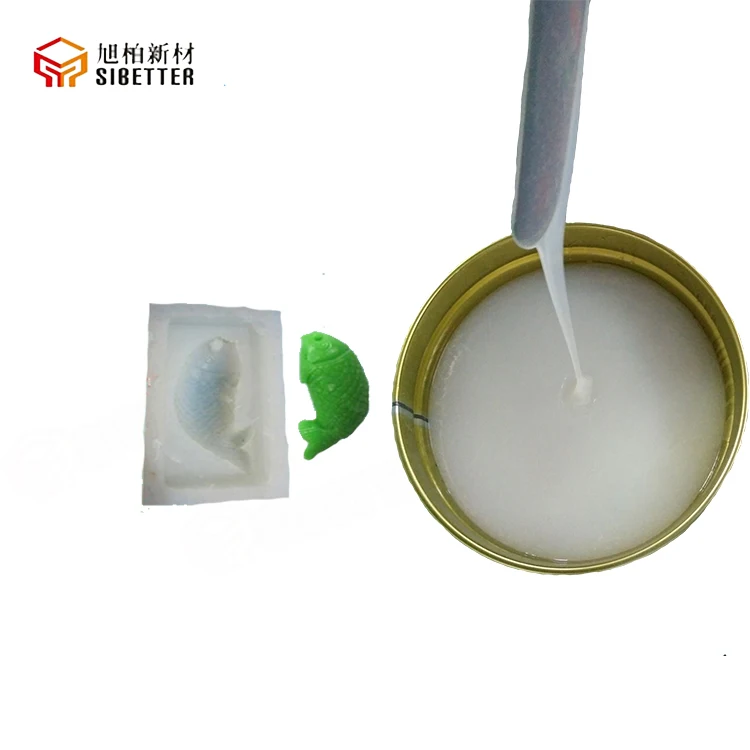
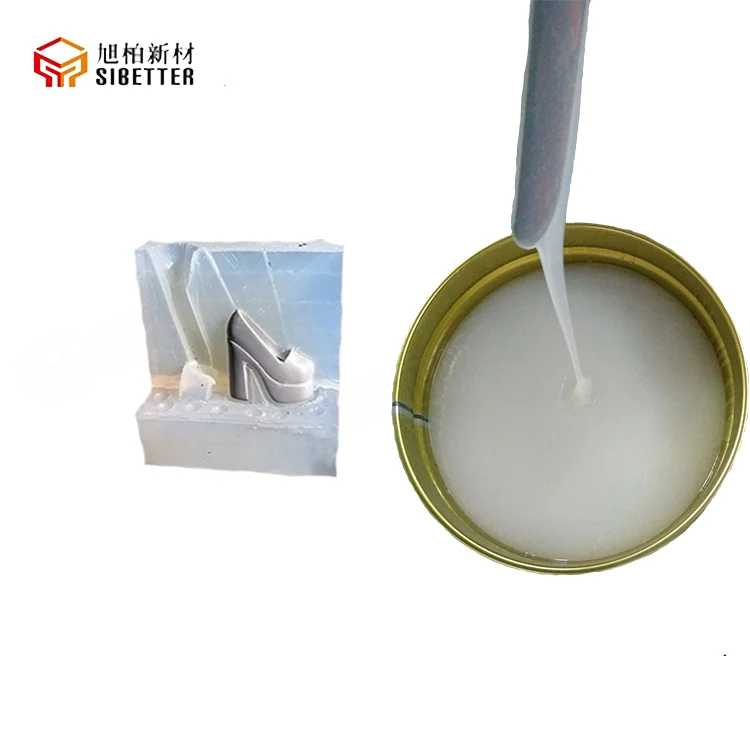
Molding Silicone to Make Molds for Resin Jewelry
- Category: Rubber Raw Materials >>>
- Supplier: Dongguan Sibetter New Material Technology Co. Ltd.
Share on (60703813310):
Product Overview
Description
Molding Silicone to Make Molds for Resin Jewelry
Product Description
1. Brief introduction of Molding Silicone to Make Molds for Resin Jewelry
Addition molding silicone is generally named rtv 2 silicone rubber, Part A and part B with the features of:
(1) Liquid RTV Silicon for template with certificate approval
(2) Curing agent arrange together as free charged
(3) With an exceptional fluidity and good operability
(4) Temperature and deformation resistance as well as low shrinkage
2. Applications of Molding Silicone to Make Molds for Resin Jewelry
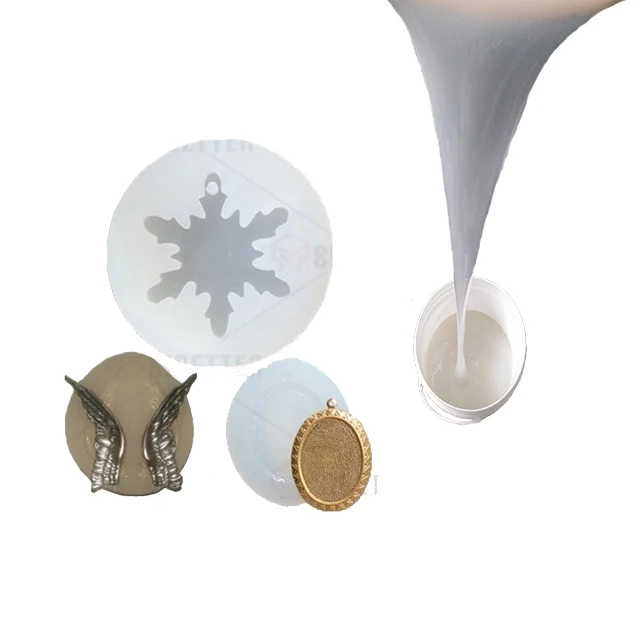
It's mainly for resin jewelry mold making , make shiny resin ring , earrings, artificial jewelry, resin Jewelry, artificial necklace, artificial bracelet etc.


3. Datasheet of Molding Silicone to Make Molds for Resin Jewelry
| Model NO· | XB-645# | XB-650# | XB-655# |
| Mixing ratio (by weight) | 1:1 | 1:1 | 1:1 |
| Appearance/Color | Translucent | Translucent | Translucent |
| Hardness (Shore A) | 45±2 | 50±2 | 55±2 |
| Mixed viscosity (mPa·s) | 8000±500 | 8000±500 | 9000±500 |
| Working time (at 23℃/75℉, MINS) | 30~40 | 30~40 | 30~40 |
| Curing time (at 23℃/75℉, HRS) | 3~5 | 3~5 | 3~5 |
| Tensile strength (Mpa) | ≥5.2 | ≥5.2 | ≥4.8 |
| Tear strength (KN/m) | ≥19.3 | ≥14.2 | ≥13.2 |
| Shrinkage (%) | <0.1 | <0.1 | <0.1 |
| Elongation at break (%) | ≥350 | ≥300 | ≥200 |
Notice
1, As addition cure silicone is very easy to cuase uncured problem , pls clean up all the tools which had mixed with condensation cure silicone rubber to avoid uncured problem
2, Do not add any pigment or powder into the addition cure silicone rubber before testing to prevent uncure
3, Addition cure silicone rubber is bicomponent including Part A and Part B, do not add the Part B on the container which had hold Part A,the same for part B
4, The mixing ratio 1:1 must in strict accordance with the ratio in case of the changing of hardness
5, Make sure nobody smoke there when using the platinum cure silicone rubber to make the mold
Using Instructions
Step 1 Handle the mother mold
Clean the surface of mother mold and dry it. Fixed it and surround it with frame made by card/plastic/wooden board.
Brush the release agent (Vaseline, soap water, detergent, liquid paraffin, silicone oil) evenly on the surface.
Step 2 Weight part A&B
Weighting two parts in Electronic scale with mix ratio 100:3.
Eg: Take 100g part A and 3g part B
Step 3 Stirring evenly
Mix the two parts evenly and totally, or the mould would be cured incompletely.
Step 4 Vacuum pumping
Put the mixture into vacuum machine for 3~5mins at -0.1~-0.8mPa. If no this machine, skip it.
Step 5 Pouring
Pouring the silicone rubber to the frame from a corner, make the silicone rubber flow to the frame smooth.
This is with 30~40mins working time.
Step 6 Demoulding
After 3~5 hours, the silicone mould has been cured, then it can be demoulded.
It wouldn’t better if to demould the mould after 24 hours and put the mould into production after another 24 hours.
Our Services
Why Choose Us?
a. Free technical training on products usage and operation instructions
b. Provide considerate after-sales services;
c. Over 10 years of liquid silicone production experience;
d. Professional R&D team and sales team;
e. Top quality & competitive price advantage.

Trading information

Contact:
If you need any further information about the liquid silicone rubber, pls feel free to contact Vicky:
E-mail: vicky(at)sibetter(dot)com
SKype: vicky(at)sibetter(dot)com
Mobile/whatsapp: +86-135 3863 9382
Tel: +86-0769-23077653
Fax: +86-0769-23077651
We Recommend


New Arrivals
New products from manufacturers at wholesale prices