Protable mini silver/gold smelting equipment form factory price
Product Description
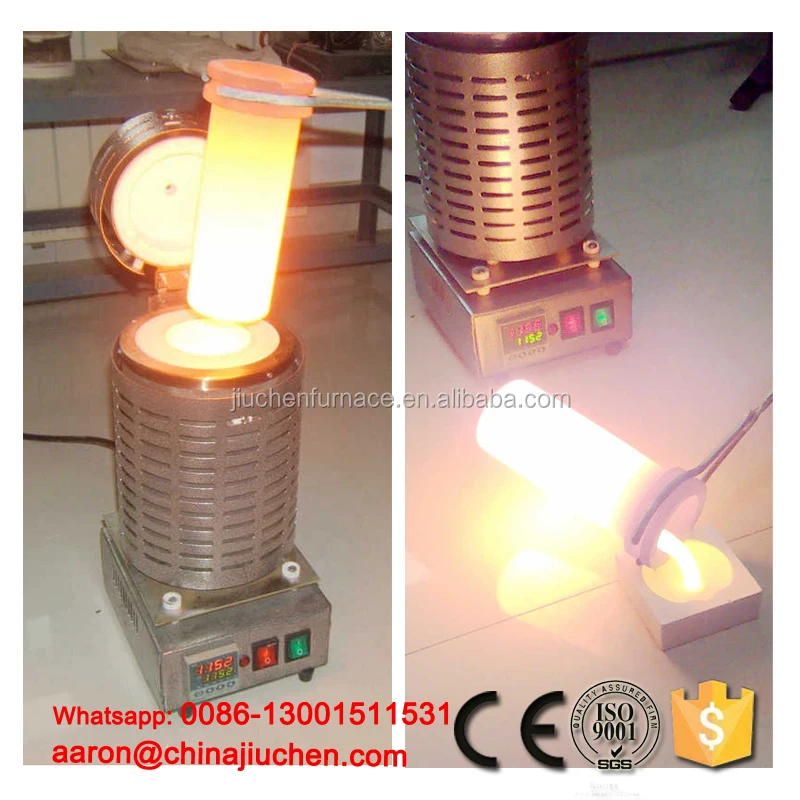
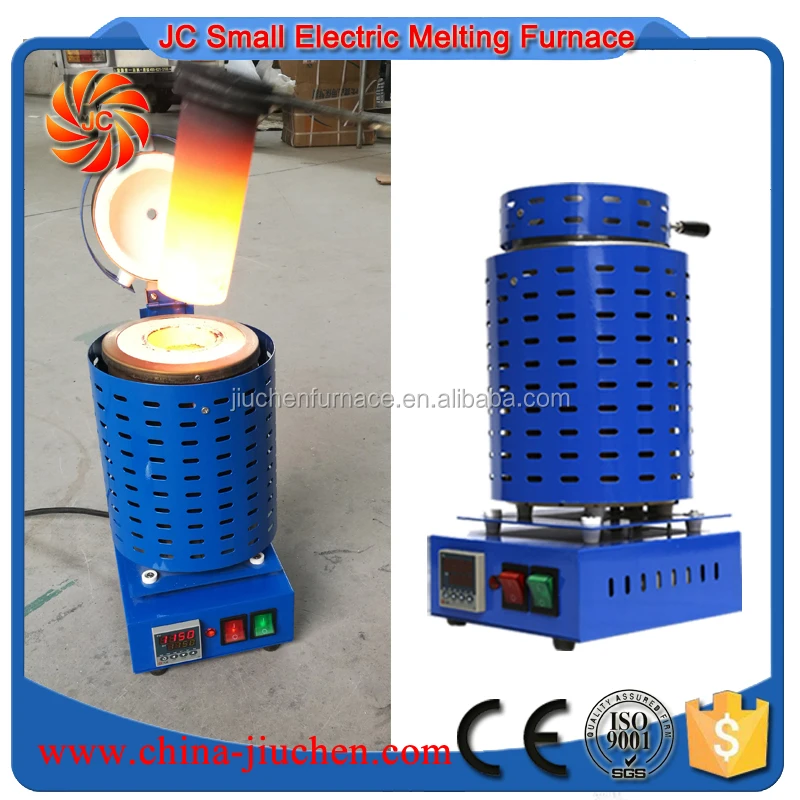
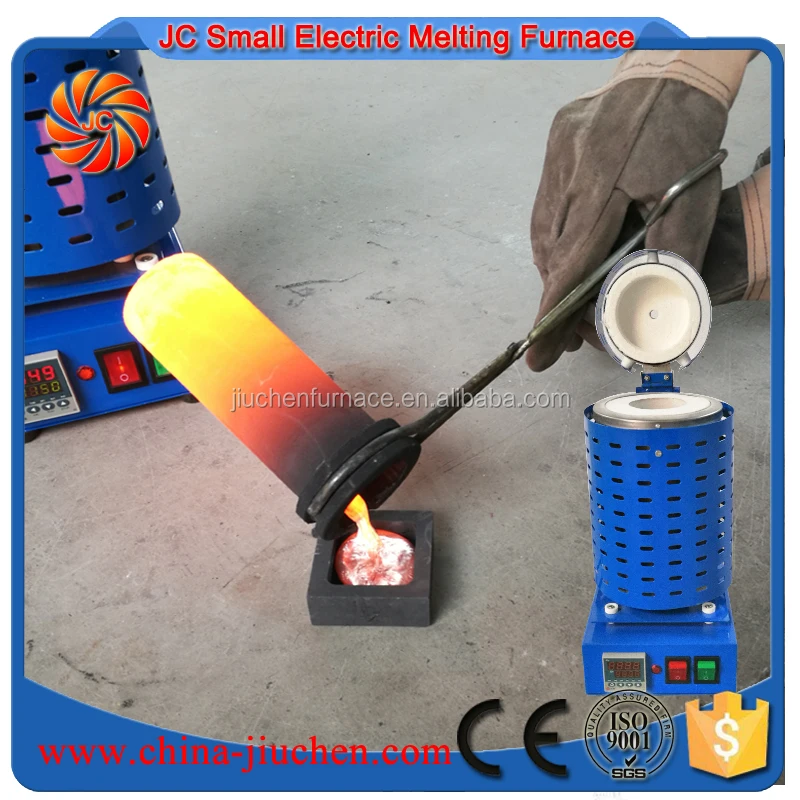
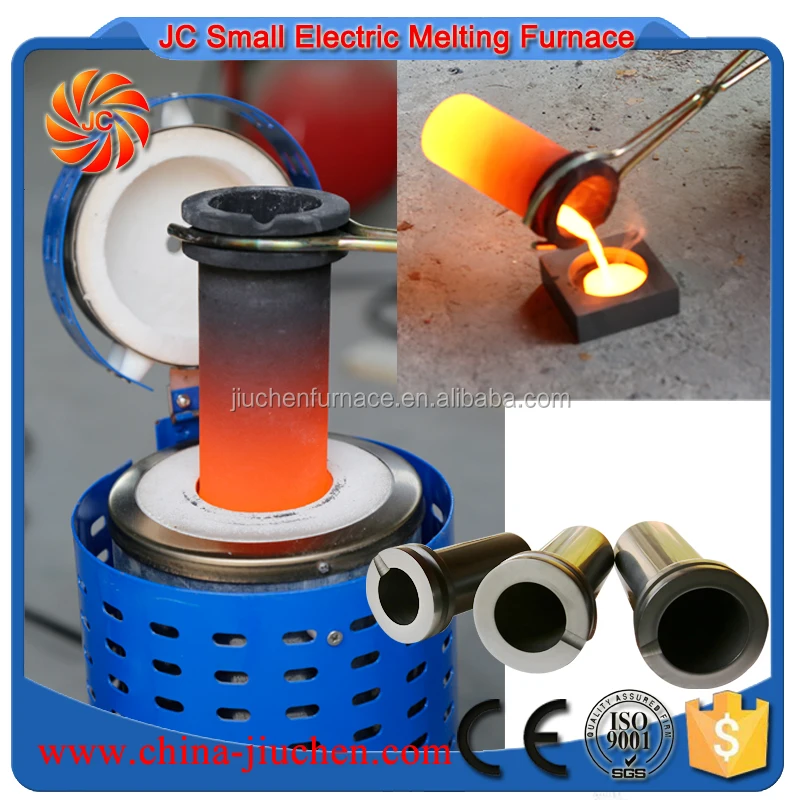
This small electric furnace is best suited for handheld pouring and melting. This small electric furnace is designed for handheld pouring directly from the crucible, and melts non-ferrous alloys and scrap for casting or ingot pouring.
The grooved top enables easy removal using the specially designed tongs (provided with each furnace).
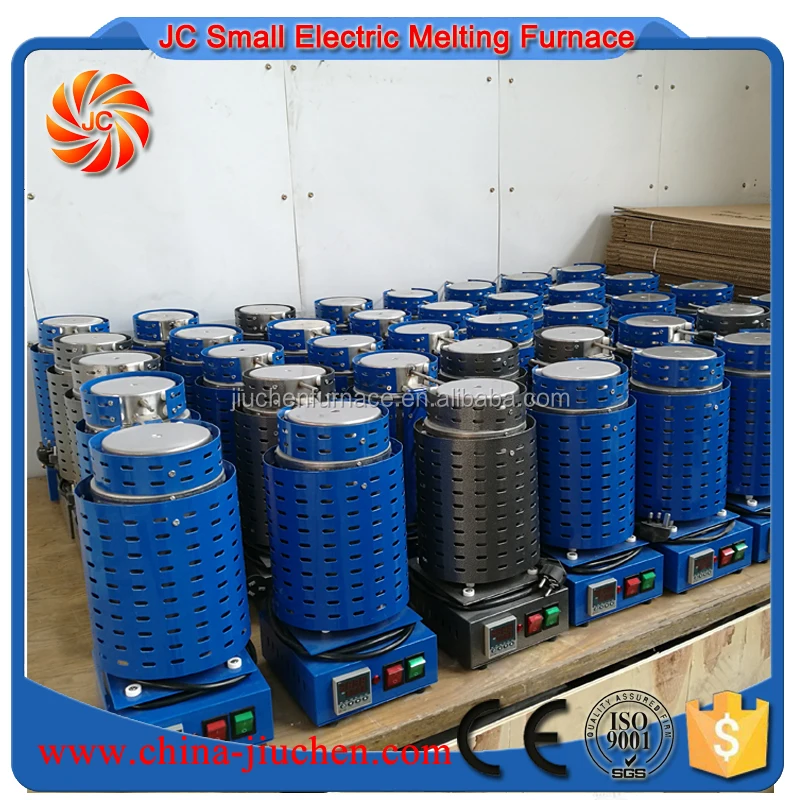
Built-in electronics provide a digital temperature readout. Comes with a 110v AC power adapter but is also available in 220v.
Measures 170*200*360mm. Melting capabilities of up to 1kg, 2kg or 3kg (this capacity is based on gold, different metal with different density, so the capacity will also be changed)
Features:
1,Exquisite & Convenient:
Small size(170*200*360mm), light weight(N.W.:6kg), easilyportable and independent operation.
2 Easy operation: controlpanelequips with four push-buttons to set the temperature conveniently. The parameters can be changed conveniently by pressing the push-button. The unit operates safety by heating switch and circuitmain switch.
3. High precision temperature controlled
Application of artificial intelligence control algorithm with auto turning function
Achieving precise control from 0C to 1150C
4 High efficiency:
Heating up to 1100C with 15 Mins,lasting insulation with integrated with our company’s technique of Aluminosilicate insulation material.
Applications
1. The smelting of gold, silver, copper and other metals in jewelry processing.
2. Melting and heat treatment of non-flammable, non-explosive materials in schools, laboratories and scientific establishments.
3. Melting and heat treatment of products which need High precision temperature controlled.
4. Small place needs constant temperature.
Technical Parameters
Model
JC-K-220-2
JC-K-110-2
Body Size (mm)
170*200*370
melting chamber Size
(mm)
63*175mm
(we can also produce 78*175mm)
Working Volt (V)
220-240V/AC
100-130v/AC
Power(kw)
1.5Kw
Measuring rage (℃)
0~1150C (2102F)
Heating rate (Heat to 1150C)
15-20mins
Capacity(kg)
1-3kg (based on gold)
Temp display mode
℃/℉
Temp control mode
Adopting AI PID control method; Measured values(PV), set data(SV) can be shown at the same time;Set data can be changed by arrow buttons.
Fitting Parts(supplied)
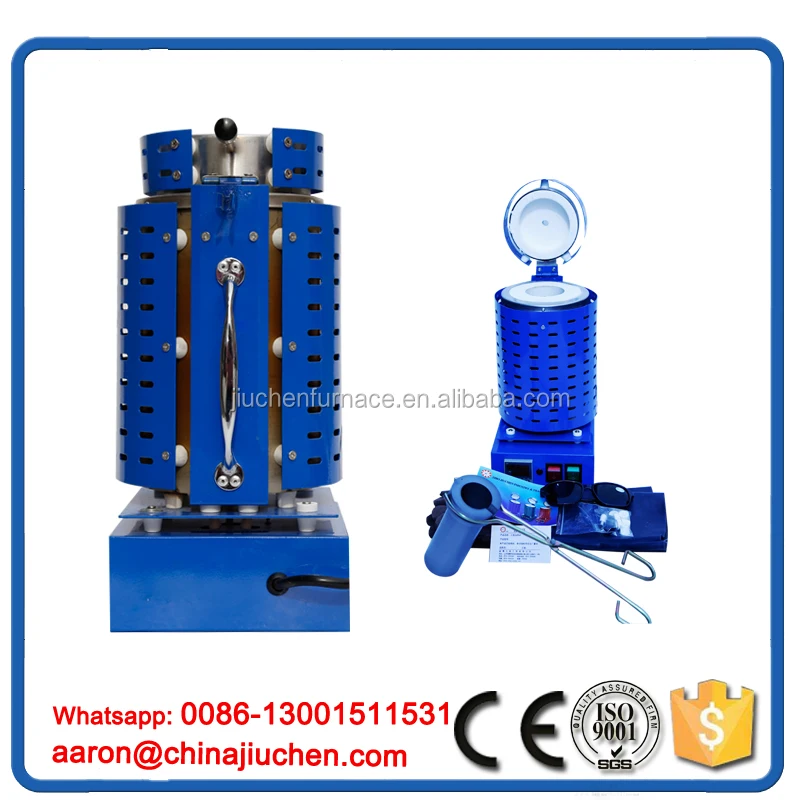
Crucible,crucible tong,glasses, glove, manual
Optional fitting parts
1-4kg crucible, graphited mould, muddler, insulation board (put the crucible after heating), glove with high-temperature resistance , blinkers
Package
Gray color carton package with Five layer corrugated paper, one furnace with fitting parts packs in one carton.
Body Size (mm) with package
29*33*47cm
Considerations in Operating the Furnace:
1 When operating the furnace, be aware that the indicated temperature is that of the internal thermocouple and the external sides of the crucible, whilst the actual temperature of the metal in the crucible may be significantly cooler, especially at the early stages of the melt. When holding at the pouring temperature, the actual temperature of the metal will begin to come closer to the displayed temperature.
2 When operating the furnace, set the target temperature to 2/3rd of the required final temperature. Then when this temperature is reached, then reset the target temperature to the final value. This is to reduce overshoot and undershoot of the temperature around the target value.
3 You must be aware of the melting and pouring temperature for the metal that you want to melt. Do not allow the furnace to heat the metal more than the recommended pouring temperature.
4 Make sure that any metal that is added to the molten bath, in the crucible, is absolutely dry. Any moisture on any charge material going under the surface of the molten bath will cause a violent and dangerous eruption or explosion of the molten metal in the crucible.
5 When pouring molten metal into a metal mould, make sure that the mould is pre-heated to avoid any condensation on the surface of the mould.
6 When pouring molten metal into a sand mould, make sure that the sand is not wet and that the mould has sufficient breather holes to let the steam escape.
7 When pouring molten metal into a refractory mould, such as plaster of Paris, make sure that the mould has been oven dried to remove all traces of moisture.
8 Do not overfill the crucible, or carrying the crucible may result in spillage.
9 Gently scrape clean the sides and bottom of the crucible after each melt. This is to reduce possible contamination of the next melt. It is also to prevent build-up of dross or slag material inside the crucible, which can cause spot heating of the crucible and possibly cause cracking of the crucible.