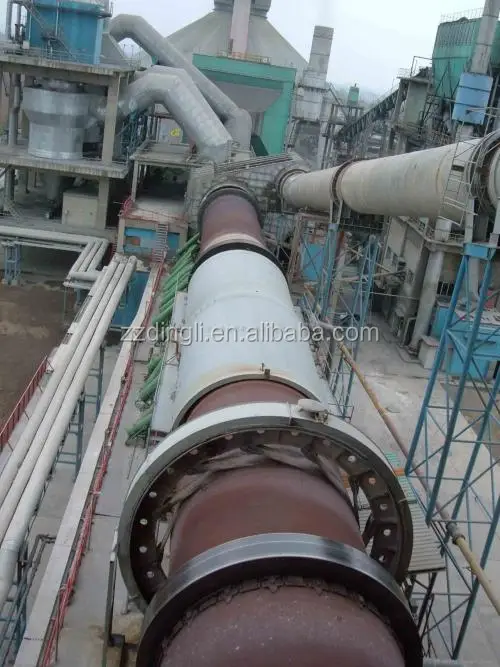
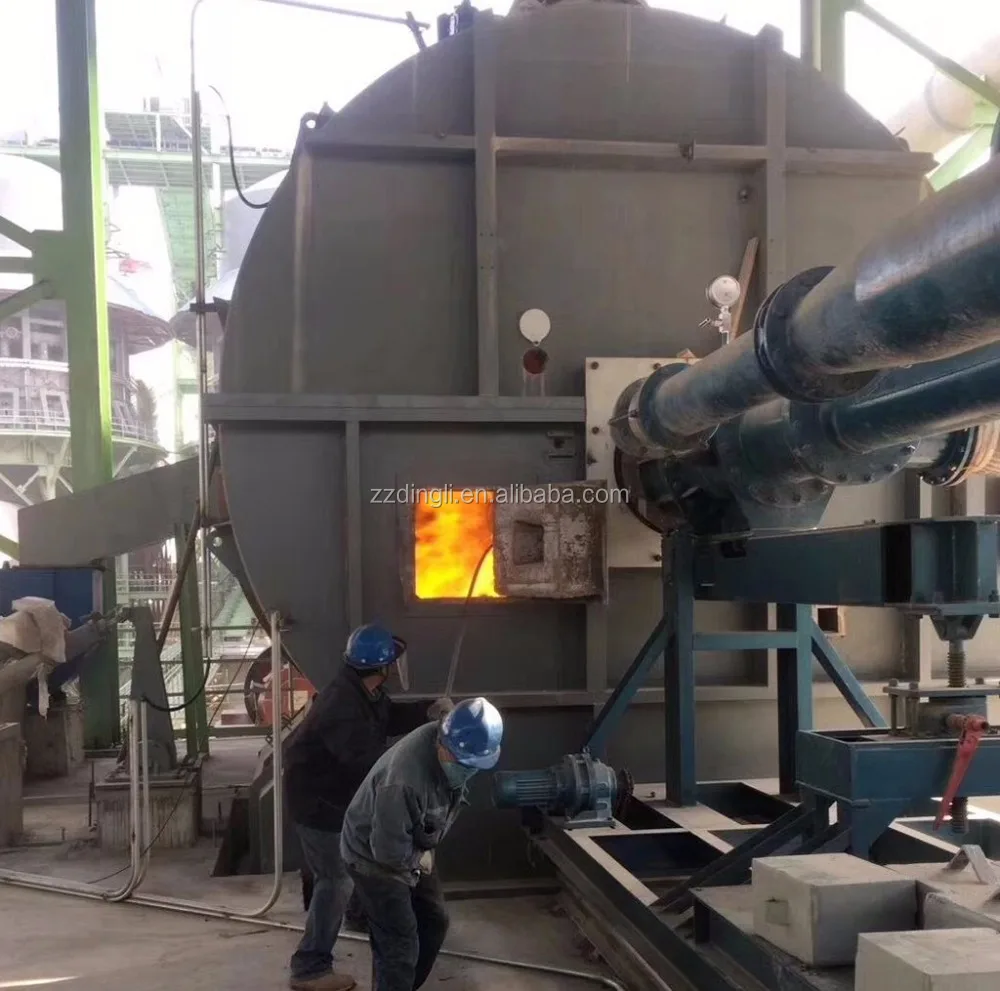
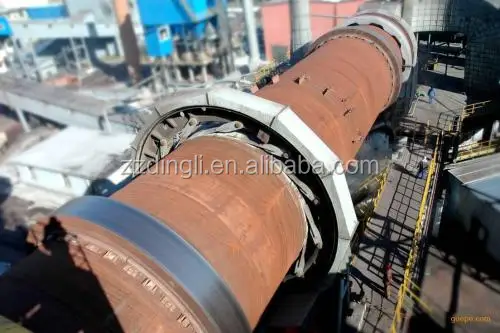
Cement Clinker Rotary Kiln with capacity from 200TPD to 10000TPD
- Category: >>>
- Supplier: Zhengzhou DynNor Industrial Machinery Co. Ltd.
Share on (60743219004):
Product Overview
Description

Cement Clinker Rotary Kiln
Cement clinker kiln is used for production of various types of hydraulic cement, where calcium carbonate reacts with silica-bearing minerals to form a mixture of calcium silicates. Cement kiln is the heart of the production process: its capacity usually is the capacity of the cement plant.
Production Process
A typical manufacturing process consists of three stages:
- grinding a mixture of limestone and clay or shale to make a fine green batch
- heating the green batch to sintering temperature (up to 1450 °C) in a cement kiln;
- grinding the sintered clinker to make cement.
In the second stage, the green batch is fed into the kiln and gradually heated by contact with the hot gases from combustion of the kiln fuel. Successive chemical reactions take place as the temperature rises:
- 70 to 110 °C - Free water is evaporated.
- 400 to 600 °C - clay-like minerals are decomposed into their constituent oxides; principally SiO2 and Al2O3. Dolomite (CaMg(CO3)2) decomposes to calcium carbonate, MgO and CO2.
- 650 to 900 °C - calcium carbonate reacts with SiO2 to form belite (Ca2SiO4).
- 900 to 1050 °C - the remaining calcium carbonate decomposes to calcium oxide and CO2.
- 1300 to 1450 °C - partial (20–30%) melting takes place, and belite reacts with calcium oxide to form alite (Ca3O·SiO4).
Alite is the typical constituent of cement. Typically, a peak temperature of 1400°C to 1450 °C is required to complete the reaction. The partial melting causes the material to form lumps or nodules in diameter 1–10 mm approximately. This is called clinker. The hot clinker then falls into a cooler and cools to around 100 °C, at which temperature it can be conveniently conveyed to storage.

Rotary Kiln
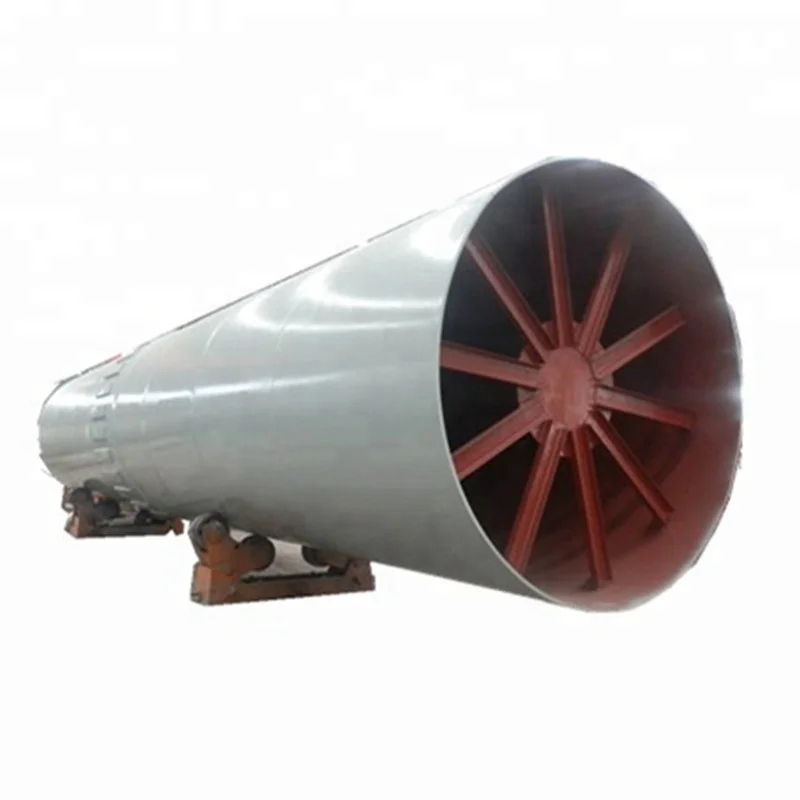
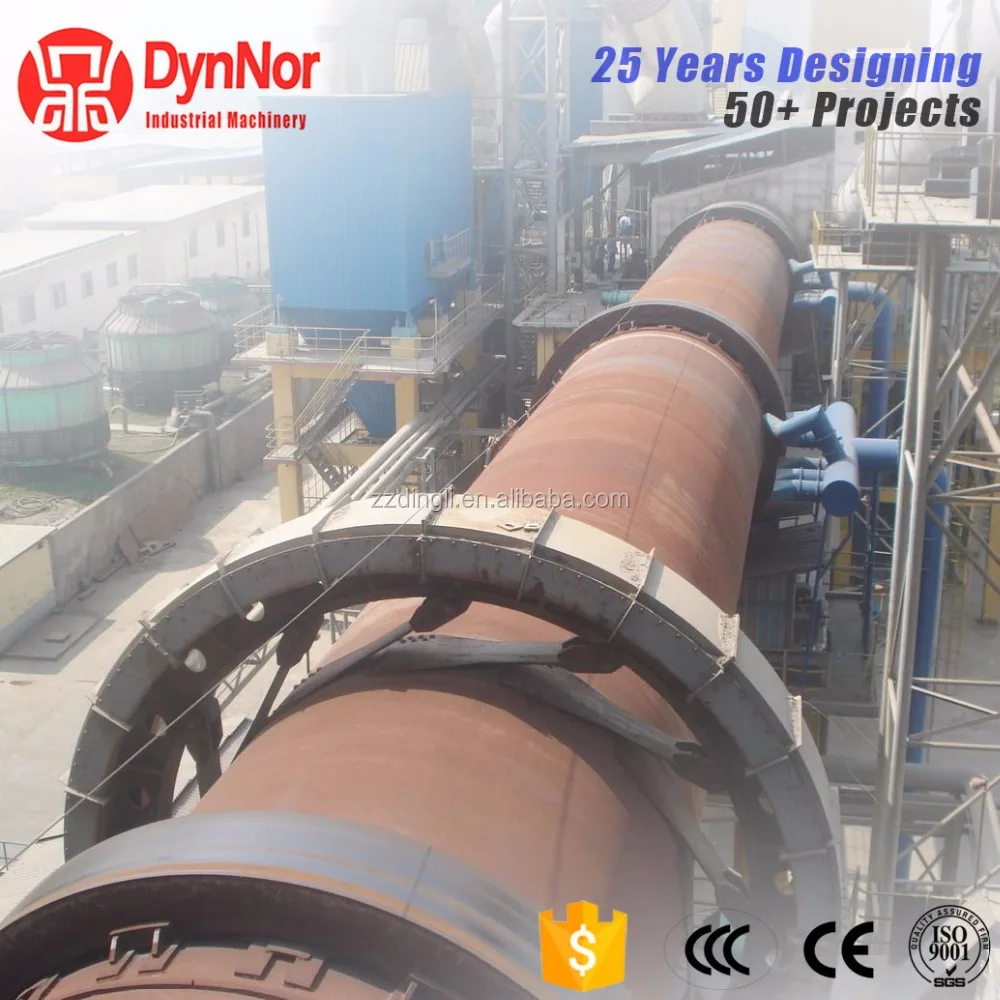
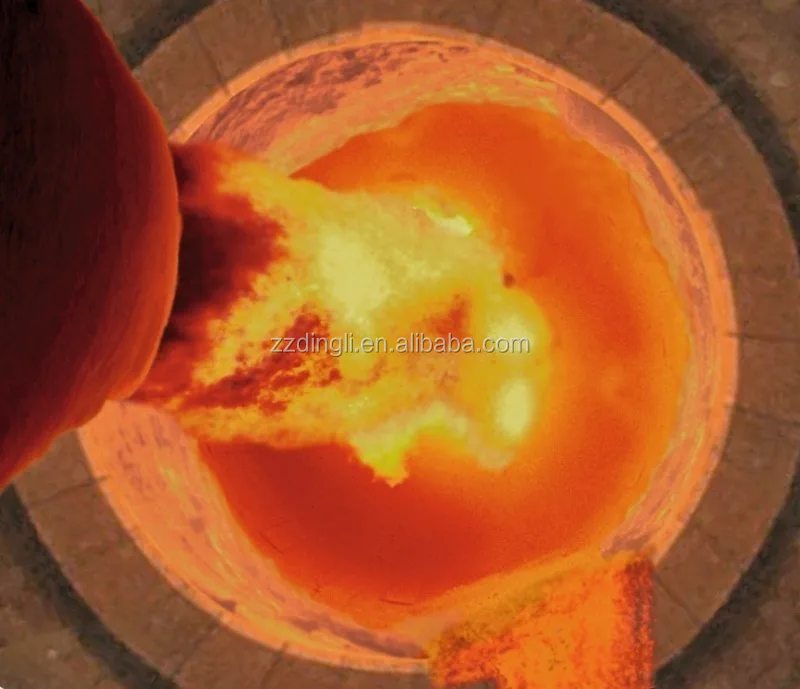
The rotary kiln consists of a cylinder made from steel plate, and lined with refractory brick. The cylinder slopes slightly (1–4°) and slowly rotates at a speed of 0.5-5 r/min. green batch is fed in at the upper end, and gradually moves downward to the other end of the kiln. At the other end fuel( gas, oil, or pulverized coal, coke) is blown in, producing a large concentric flame in the lower part of the kiln tube. As material moves under the flame, it reaches its peak temperature, before dropping out of the kiln into the cooler. Air is drawn first through the cooler and then through the kiln for combustion of the fuel. In the cooler the air is heated by the cooling clinker, so that it may be 400 to 800 °C before it enters the kiln, thus causing intense and rapid combustion of the fuel.

Preheaters
To minimize waste of fuel and improve heat efficiency, preheaters using exhaust gas from rotary kiln is critical to reduction of manufacturing cost.
· grate preheater
· the gas-suspension preheater.
Pre-calciner
The precalciner is a development of preheater. The philosophy is this: the amount of fuel that can be burned in the kiln is directly related to the size of the kiln. If part of the fuel necessary to burn the rawmix is burned outside the kiln, the output of the system can be increased for a given kiln size.
Accessary Equipment
Essential equipment in addition to the kiln and the preheater are:
· Cooler: rotary coolers, grate cooler
· Fuel mills: Direct firing, Indirect firing
· Fans: Fans account for most of the electric power consumed in the system, typically amounting to 10–15 Kw/h per ton of clinker.
· Exhaust gas cleaning system: Environmental regulations specific to different countries require that this be reduced to (typically) 0.1 g/m3, so dust capture needs to be at least 99.7% efficient. Methods of capture include electrostatic precipitators and bag-filters.
Control System
The objective of kiln operation is to make clinker with the required chemical and physical properties at maximum efficiency and lowest possible operating cost. The kiln is very sensitive to control operation; a poorly run kiln can easily double cement plant operating costs.
for efficient operation, steady conditions need to be maintained throughout the whole kiln system. The feed at each stage must be at a temperature such that it is "ready" for processing in the next stage. To ensure this, the temperature of both feed and gas must be optimized and maintained at every point. The external controls available to achieve this are few:
· Feed rate: this defines the kiln output
· Rotary kiln speed: this controls the rate at which the feed moves through the kiln tube
· Fuel injection rate: this controls the rate at which the "hot end" of the system is heated
· Exhaust fan speed or power: this controls gas flow, and the rate at which heat is drawn from the hot end to the cold end.
Typical Technical Data
| Model(m) | Dia.(m) | Length(m) | Slope(%) | Output(t/h) | Speed(r/min) | Power (kw) | Weight (t) | Remarks |
| Φ2.5×40 | 2.5 | 40 | 3.5 | 180 | 0.44-2.44 | 55 | 149.61 | suspension preheater |
| Φ2.5×50 | 2.5 | 50 | 3 | 200 | 0.62-1.86 | 55 | 187.37 | suspension preheater |
| Φ2.5×54 | 2.5 | 54 | 3.5 | 204 | 0.48-1.45 | 55 | 196.29 | suspension preheater |
| Φ2.7×42 | 2.7 | 42 | 3.5 | 320 | 0.10-1.52 | 55 | 198.5 | suspension preheater |
| Φ2.8×44 | 2.8 | 44 | 3.5 | 400 | 0.437-2.18 | 55 | 201.58 | with precalciner |
| Φ3.0×45 | 3 | 45 | 3.5 | 500 | 0.5-2.47 | 75 | 210.94 | suspension preheater |
| Φ3.0×48 | 3 | 48 | 3.5 | 700 | 0.6-3.48 | 100 | 237 | with precalciner |
| Φ3.2×50 | 3.2 | 50 | 4 | 1000 | 0.6-3 | 125 | 278 | with precalciner |
| Φ3.3×52 | 3.3 | 52 | 3.5 | 1300 | 0.266-2.66 | 125 | 283 | with precalciner |
| Φ3.5×54 | 3.5 | 54 | 3.5 | 1500 | 0.55-3.4 | 220 | 363 | with precalciner |
| Φ3.6×70 | 3.6 | 70 | 3.5 | 1800 | 0.25-1.25 | 125 | 419 | with precalciner |
| Φ4.0×56 | 4 | 56 | 4 | 2300 | 0.41-4.07 | 315 | 456 | with precalciner |
| Φ4.0×60 | 4 | 60 | 3.5 | 2500 | 0.396-3.96 | 315 | 510 | with precalciner |
| Φ4.2×60 | 4.2 | 60 | 4 | 2750 | 0.4-3.98 | 375 | 633 | with precalciner |
| Φ4.3×60 | 4.3 | 60 | 3.5 | 3200 | 0.396-3.96 | 375 | 583 | with precalciner |
| Φ4.5×66 | 4.5 | 66 | 3.5 | 4000 | 0.41-4.1 | 560 | 710.4 | with precalciner |
| Φ4.7×74 | 4.7 | 74 | 4 | 4500 | 0.35-4 | 630 | 849 | with precalciner |
| Φ4.8×74 | 4.8 | 74 | 4 | 5000 | 0.396-3.96 | 630 | 899 | with precalciner |
| Φ5.0×74 | 5 | 74 | 4 | 6000 | 0.35-4 | 710 | 944 | with precalciner |
| Φ5.6×87 | 5.6 | 87 | 4 | 8000 | max.4.23 | 800 | 1265 | with precalciner |
| Φ6.0×95 | 6 | 95 | 4 | 10000 | max. 5 | 950×2 | 1659 | with precalciner |


We Recommend
New Arrivals
New products from manufacturers at wholesale prices