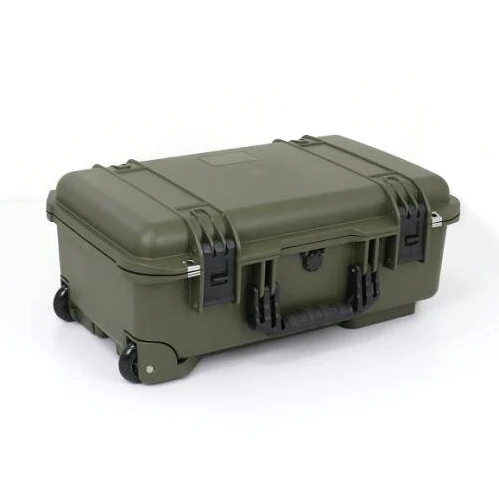
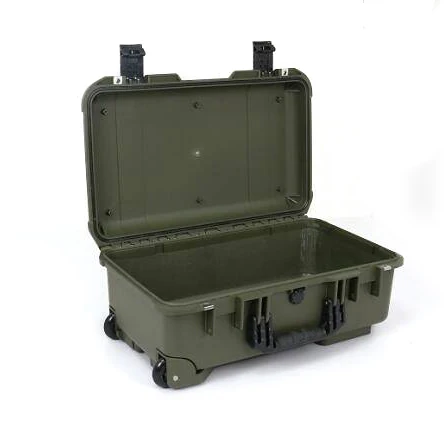
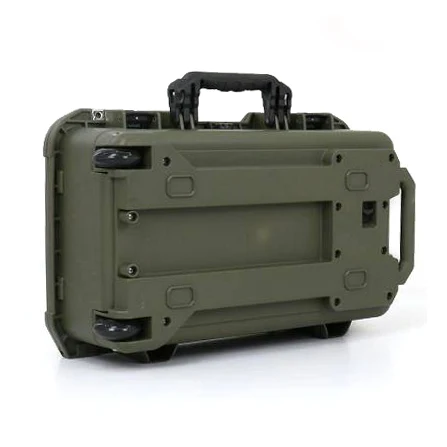
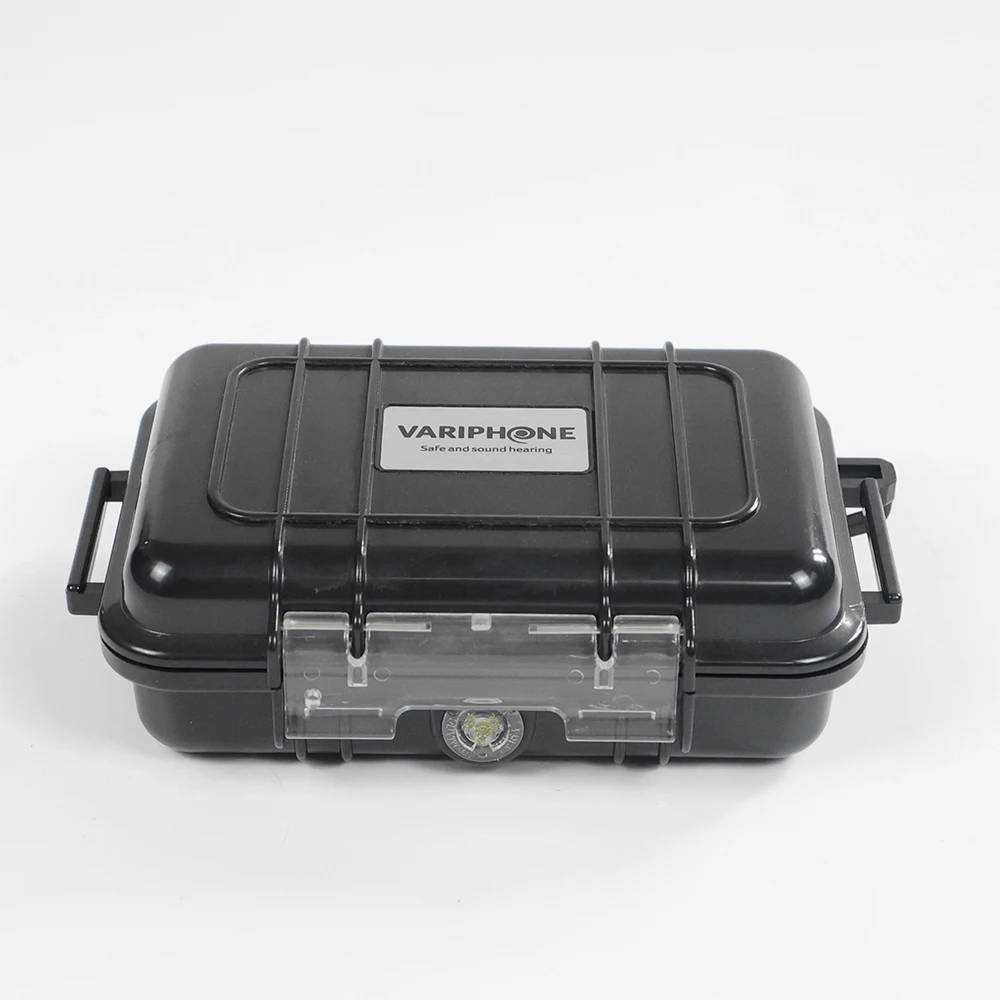
OEM ODM OBM Manufacturer Blow & Injection Mold Hard Aluminum Box Case for Tools Storage IP67
- Category: >>>
- Supplier: Shanghai Beyond Case Co. Ltd.
Share on (60759209200):
Product Overview
Description

Products Description
Frame | Aluminum | |
Style | Straight angle, Round angle, Round angle | |
Shell material | Surface: Aluminum, Plastic, PVC Fire-resistant, etc. Body: 5mm 8mm 12mm 18mm, 2mm 3mm 4mm, 4mm, Wooden, Aluminum, etc. Lining: Aluminum, Steel, Plastic, etc. | |
Color | Any color can be custom made | |
Inside | CNC EVA, EPE/Egg Foam+DIY Foam/Divider, Empty, etc. | |
Texture | Flat dotting stripe Orange, Flat dotting stripe Orange diamond, Flat, etc. | |
Board | Plywood, Alu-plastic composite, ABS | |
Manufacturing Technique

Fabric Color And Pattern Selection

Handle

Lock

Wheel


Related products
Company Profile

Building
-
Receptionist place
The receptionist of our company
Showroom
Some of our company's products are listed in cabinets.


Our Factory

Kaisipai
Our factory is located in Shangrao City, Jiangxi Province, with a history of 20 years.
It has five production lines and 36 sets of professional hard case Machines, covering an area of more than 5000 ㎡, 50 workers with many years of experience, 5 production lines, Complete production system for made hard shell case. The daily output can reach up to 10,000 pieces.
By the end of this year, we have cooperated with more than 500 companies in different industries.


Step 1: Design and Planning
Determine the size and dimensions of the aluminum box, considering its purpose and function.
Create a detailed design, including measurements, material thickness, and assembly methods.
Decide on any additional features like hinges, locks, or handles.
Create a detailed design, including measurements, material thickness, and assembly methods.
Decide on any additional features like hinges, locks, or handles.
Step 2: Material Selection
Choose the appropriate grade and thickness of aluminum sheet or plate for the box, based on its application and required strength.
Ensure the aluminum is free from defects and imperfections.
Ensure the aluminum is free from defects and imperfections.
Step 3: Cutting
Use a saw, laser cutter, or CNC machine to cut the aluminum sheets or plates according to the design specifications.
Ensure precise cuts to achieve accurate dimensions.
Ensure precise cuts to achieve accurate dimensions.


Step 4: Forming and Bending
Utilize a metal brake or press brake to bend the cut aluminum pieces into the desired box shape.
Follow the design plan to achieve the correct angles and curves.
Follow the design plan to achieve the correct angles and curves.
Step 5: Joining and Welding
Assemble the formed aluminum pieces together to create the box structure.
Use welding techniques, such as TIG (Tungsten Inert Gas) or MIG (Metal Inert Gas), to weld the seams securely.
Use welding techniques, such as TIG (Tungsten Inert Gas) or MIG (Metal Inert Gas), to weld the seams securely.
Step 6: Surface Treatment
Clean the box to remove any dirt, grease, or metal shavings from the manufacturing process.
Consider surface treatments like anodizing or powder coating for enhanced aesthetics and protection against corrosion.
Consider surface treatments like anodizing or powder coating for enhanced aesthetics and protection against corrosion.


Step 7: Cutting and Preparing Openings (if required)
If the box requires openings for vents, cables, or access points, carefully cut and prepare these areas using appropriate tools.
Step 8: Quality Control
Conduct a thorough inspection to ensure the box meets the design specifications and quality standards.
Check for any defects, welding issues, or deviations from the intended dimensions.
Check for any defects, welding issues, or deviations from the intended dimensions.
Step 9: Finishing Touches and Packaging
Apply any final touches, such as adding foam inserts or protective padding inside the box.
Package the finished aluminum box securely for shipping or delivery.
Package the finished aluminum box securely for shipping or delivery.

All of our mold and blade cutting tooling are selected from the best brands, and the raw materials are professionally tested to provide our customers with the most competitive products.
OUR MANAGEMENT TEAM IS MULTINATIONAL NATIVE SPEAKERS MANAGEMENT TEAM.
WELCOME TO BE ONE OF OUR TOP "VIP CUSTOMERS". WE BELIEVE THAT " THE QUALITY IS THE SOUL OF AN ENTREPRISE".
OUR MANAGEMENT TEAM IS MULTINATIONAL NATIVE SPEAKERS MANAGEMENT TEAM.
WELCOME TO BE ONE OF OUR TOP "VIP CUSTOMERS". WE BELIEVE THAT " THE QUALITY IS THE SOUL OF AN ENTREPRISE".
WELCOME TO CONTACT US!!!
"with us your MONEY in safe ; your BUSINESS in safe"
We had the honor to serve many of the famous companies allover the world such as:
"with us your MONEY in safe ; your BUSINESS in safe"
We had the honor to serve many of the famous companies allover the world such as:

Packing & Delivery
Packing Details : OPP bag + carton
Delivery Details : 30 days after order confirmation
Delivery Details : 30 days after order confirmation


① Inspection
We have very strict inspection standard to make sure every case is in best
condition for sale, any case with flaw will be removed, so you can be totally assured about quality.
② OPP bag + Carton
OPP bag will keep cases away from humidity, hard shell cartons will offer great protection to cases. We could also put on labels. On OPP bag and carton for easy recognition.
③ Loading
Our workers always carry cartons very carefully to make sure goods could be delivered to customers' hand excellent without damage.

FAQ
Q1: What grade and thickness of aluminum should we use for producing the cases, and how does it affect the case's performance and strength?
A1: The grade of aluminum, such as 6061 or 5052, will determine the material's mechanical properties, while the thickness will impact the case's structural integrity and load-bearing capacity.
A1: The grade of aluminum, such as 6061 or 5052, will determine the material's mechanical properties, while the thickness will impact the case's structural integrity and load-bearing capacity.
Q2: How do you prevent warping and distortion during the welding and forming processes?
A2: Warping and distortion can be challenging to manage during welding and forming. To minimize these issues, proper welding techniques, such as controlling heat input and using pre-fabrication fixtures, are crucial. Additionally, selecting the right welding process and ensuring consistent weld quality contribute to reducing warping and distortion.
A2: Warping and distortion can be challenging to manage during welding and forming. To minimize these issues, proper welding techniques, such as controlling heat input and using pre-fabrication fixtures, are crucial. Additionally, selecting the right welding process and ensuring consistent weld quality contribute to reducing warping and distortion.
Q3: What surface treatment options are available, and which one provides the best corrosion resistance for our aluminum cases?
A3: There are several surface treatment options for aluminum cases, including anodizing, powder coating, and painting. Among these options, anodizing provides the best corrosion resistance.
A3: There are several surface treatment options for aluminum cases, including anodizing, powder coating, and painting. Among these options, anodizing provides the best corrosion resistance.
Q4: How do you ensure consistent dimensional accuracy in the production of aluminum cases?
A4: Using precise cutting and forming tools and maintaining well-calibrated equipment help maintain dimensional accuracy.
A4: Using precise cutting and forming tools and maintaining well-calibrated equipment help maintain dimensional accuracy.
Q5: How do you solve the problems related to address issues related to welding defects, such as porosity and incomplete fusion?
A5: Addressing issues like porosity and incomplete fusion requires using clean, high-quality welding materials and selecting appropriate welding parameters. Adequate training for welders and proper supervision during the welding process are also essential to minimize such defects.
A5: Addressing issues like porosity and incomplete fusion requires using clean, high-quality welding materials and selecting appropriate welding parameters. Adequate training for welders and proper supervision during the welding process are also essential to minimize such defects.
Q6: How do you guarantee the overall quality of the aluminum case factory??
A6: Regularly reviewing and updating quality control procedures, conducting inspections at each production stage, and implementing feedback mechanisms to identify and address issues are effective ways to enhance overall quality control in the factory.
A6: Regularly reviewing and updating quality control procedures, conducting inspections at each production stage, and implementing feedback mechanisms to identify and address issues are effective ways to enhance overall quality control in the factory.
We Recommend
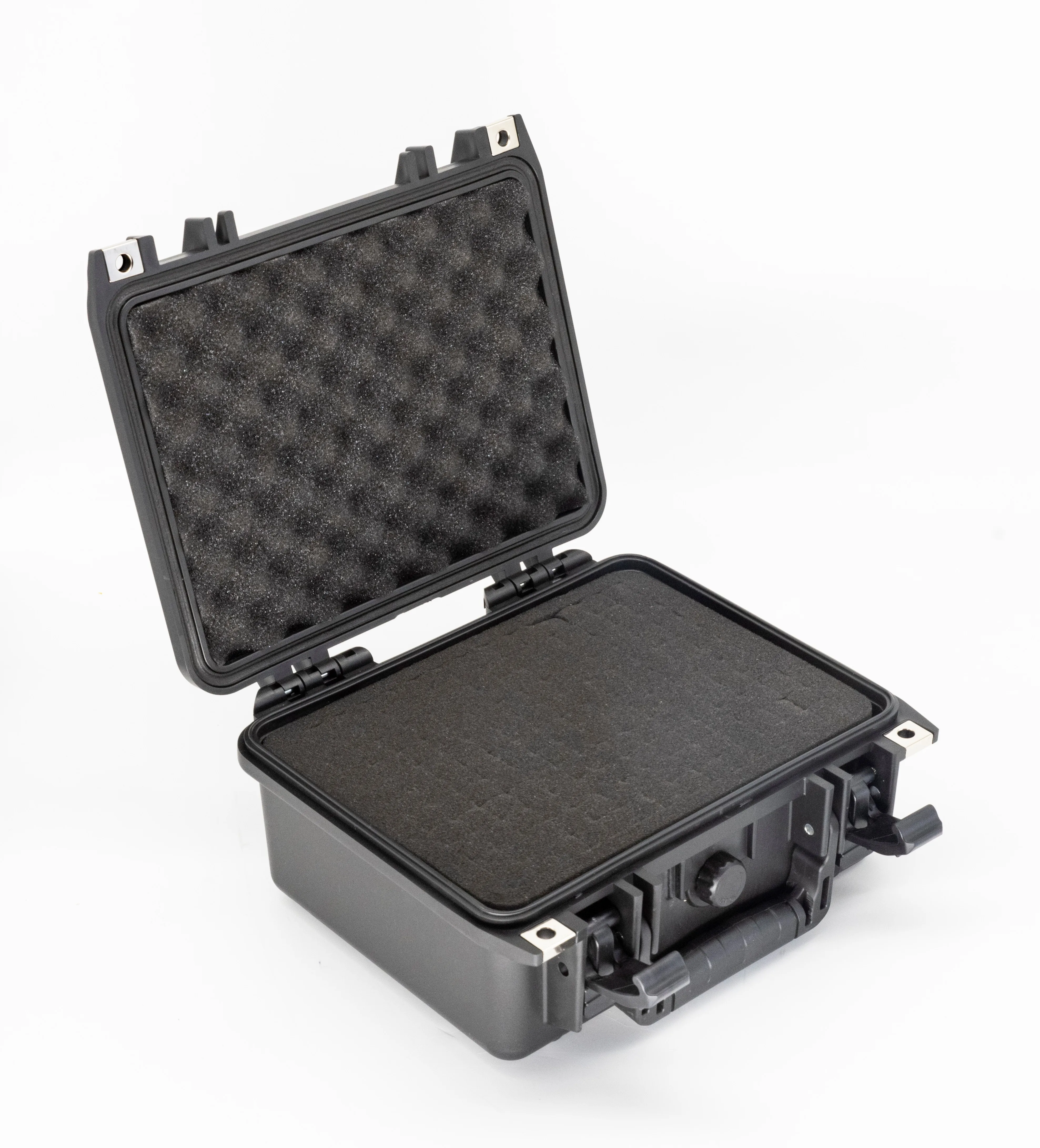

New Arrivals
New products from manufacturers at wholesale prices