DTEC CYD 5000 Moveable Magnetic Flaw Detector NDT testing machine circuit winding magnetizing method prod magnetizing method
- Category: >>>
- Supplier: Deity Testing Equipment Co. Ltd.
Share on (60787055145):
Product Overview
Description
Product Description
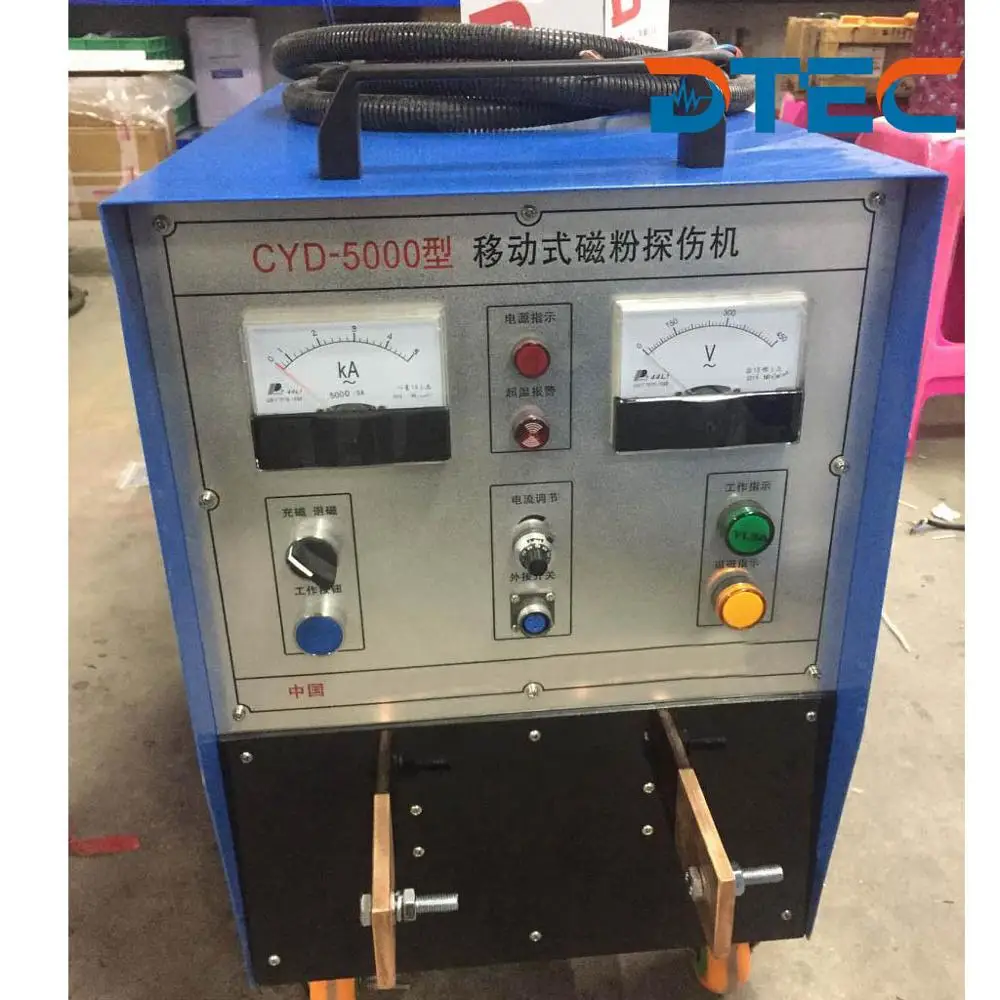
This equipment is suitable for magnetic particle testing. To inspect different shapes of parts made of ferromagnetic material. It can inspect the cracks, slag and other minor defects on the surface of parts near the surface caused by casting, forging, quenching, grinding, fatigue etc.
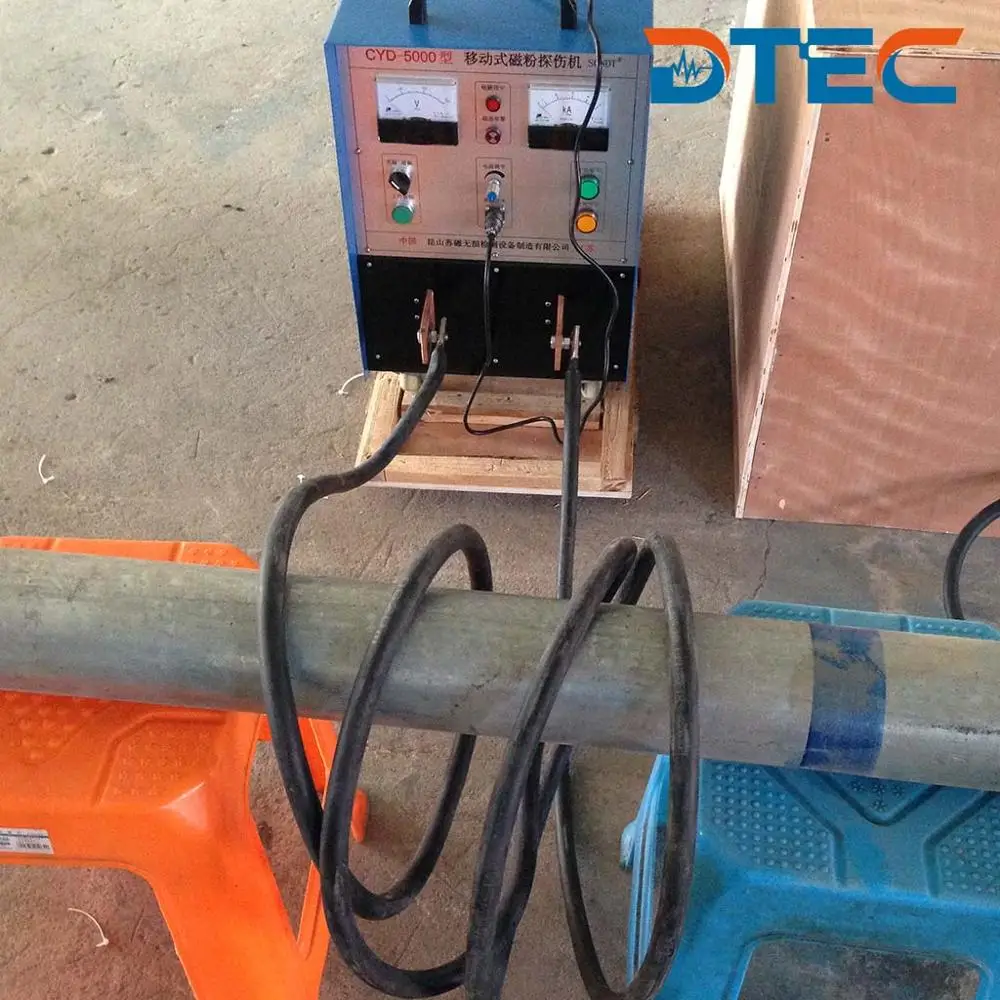
The equipment do the job of magnetization and AC attenuation demagnetization on samples; can be used as a continuous method and residual magnetic detection; can be used fixedly or on the scene. Together with the appropriate methods such as: strut method or winding method, so that the shaped area of parts can be appropriately magnetization. And it can do sectionally flaw detection to large parts .
The circuit adjust the size of SCR conduction angle to adjust the size of magnetization, demagnetization current. AC magnetization can control the power-off phase, making the residual magnetism stable. The use of integrated circuit control, the equipment safe and reliable. Equipment with small size, light weight, easy to carry, easy to operate and so on.
Specification
Model | CYD-5000 |
Magnetizing Current | 0-5000A continuously adjustable |
Usage Repetition | ≥20% |
Auto Magnetizing Current | 5000-0A continuously adjustable |
Min. Magnetizing Unit | 2GS |
Magnetizing Time | ≥3 Second |
Output Cable | 120mm2×3M×2 Copper Core Soft Cable |
Power | 380V 50HZ±10% 150A |
Dimension | 600x380x610mm(LxWxG) |
Packing Weight | 100KG |
Product Overview
- Operation and maintenance
This operation guide should be read carefully before use of this detector so that you may know its structure and technical performance well. Check if the power is in conformity with the requirements for the detector and connection is correct. Only when no error is found can the power may be switched on. For the first use or reuse after a long suspension check if the instrument is in good shape.
1. Operating procedures
(1) The power plug cord is connected to the socket of the instrument and the probe is connected to the output socket properly.
(2) When external power is switched on, the indicator lamp will flash, the control circuit will also be closed and the servo begins to work.
(3)The probe is brought to good contact with the work piece under detection and the magnetization and demagnetization switch is set onto the magnetization position and the switch on the probe is pressed. Then the instrument will magnetize the work piece with the work light on. When the switch is released, the main loop current will be cut off and the magnetization of the work piece will be suspended. The magnetizing current can be changed by the potentiometer for current regulation. When the potentiometer is placed at the minimum position, the output current will be the least (zero) and when it is at the maximum position, the output current will the most. If the detector is not in use, the switch should be turned off to cut off the power.
(4)For some particular work pieces as the residual magnetism on the work piece will affect the subsequent process or normal operation, it should be demagnetized by the following method: the magnetization and demagnetization switch is set onto the demagnetization position with the demagnetization indicator yellow light on and the button of the probe is pressed.
2.Trouble shooting
(1)For no indication of energization, non-operation or blown fuse, short circuit or overload may be the cause.
(2) The probe works after the switch is pressed, but no work indication is seen. The indicator lamp is out of order.
(3)The probe doesn’t magnetize with the work indicator light on. Check if the potentiometer for current regulation is placed at the minimum position, otherwise the main circuit or control circuit has failed.
(4)If power is switched on, magnetism is charged without pressing the switch. The control circuit or bilateral silicon-controlled switch may be broken.
Cautions
(1)Operating beat of the instrument: It is suggested that in continuous long-time operation magnetization time ≤3 s and off time≥5 s
(2)Before use check if the voltage meets the requirements for the instrument as excessively high or low tension will damage the instrument or affect fault detection.
(3)In operation the end face of the probe should be in good contact with the work piece to be detected before pressing the magnetization switch and then best magnetization effect will be achieved.
(4)The detector is equipped with sound no-load and over-current protective circuit, but it should not be operated under no load to reduce unnecessary temperature rise.
(5)The detector can work continuously. If partial overheating is found, it should be suspended from use. Reuse is possible after the cause is ascertained.
(6)The detector and its accessories should be used or kept in a clean, dry and anticorrosive environment.
(7)When repairing by yourself, watch out for the high-voltage danger in the machine.
(8)Power switch should not be turned on or off after the magnetization switch is pressed.
(9)The casing of the instrument must be earthed reliably.
(10) The instrument should be returned to our service center if the circuit fault is not repairable.
After-Sales Service
- 36 Months Quality Warranty from the day customers receive our goods;
- Offer customer video of machine installment,handle,operation if they need;
- If neccessory,we can provide on site adjustment and installment;
- Lifetime Technical support and solution offered by means of vedio,telephone call,or remote assistance via teamview;
- Free supply certain spare parts within warranty period;
- Free offer customer machine trainning in our factory,help to book hotel and air ticket in advacne;
- Arrange considerate and 100% satisfed customer entertainment for coming visitor.

We Recommend

New Arrivals
New products from manufacturers at wholesale prices