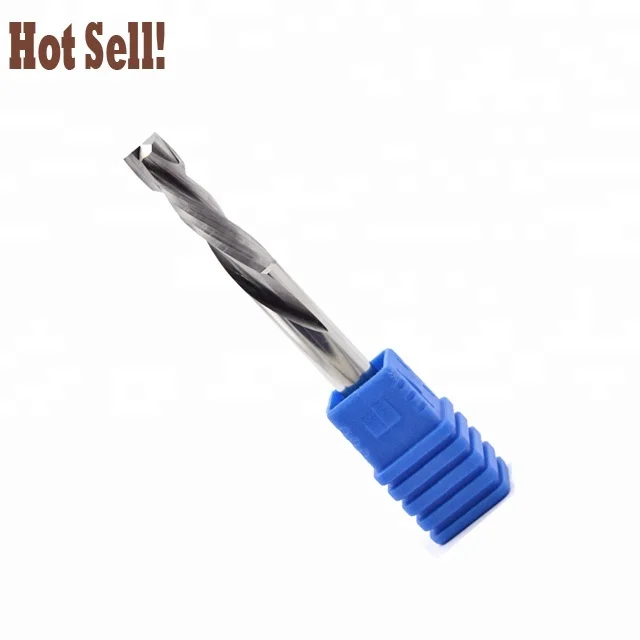
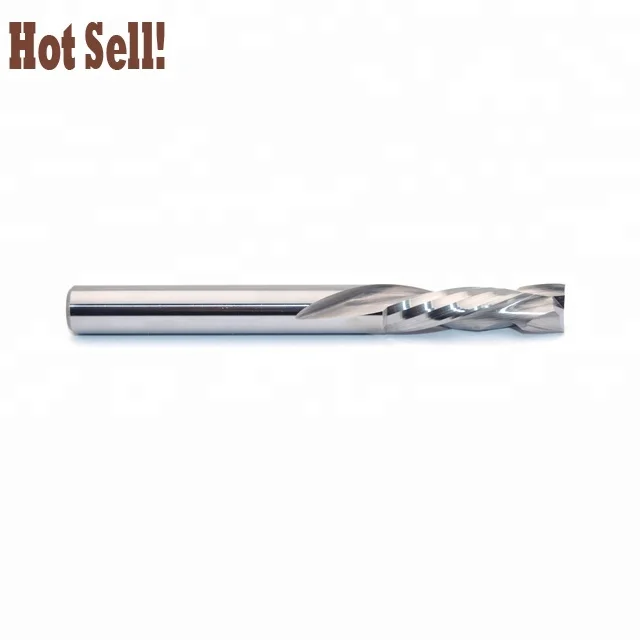
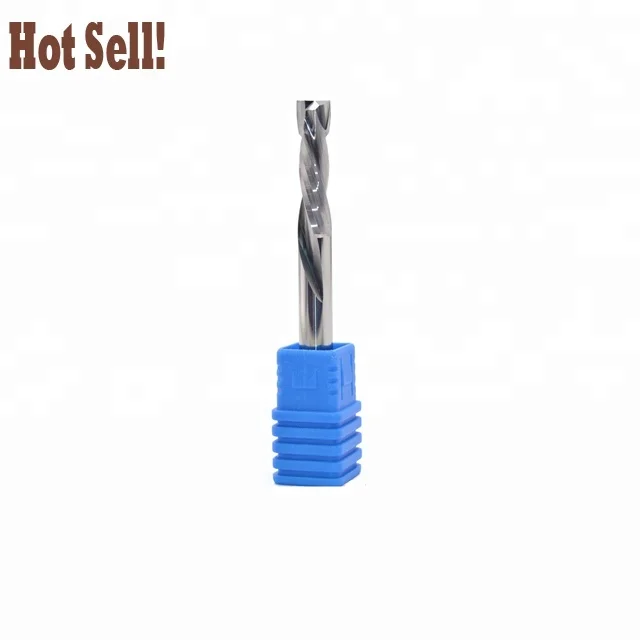
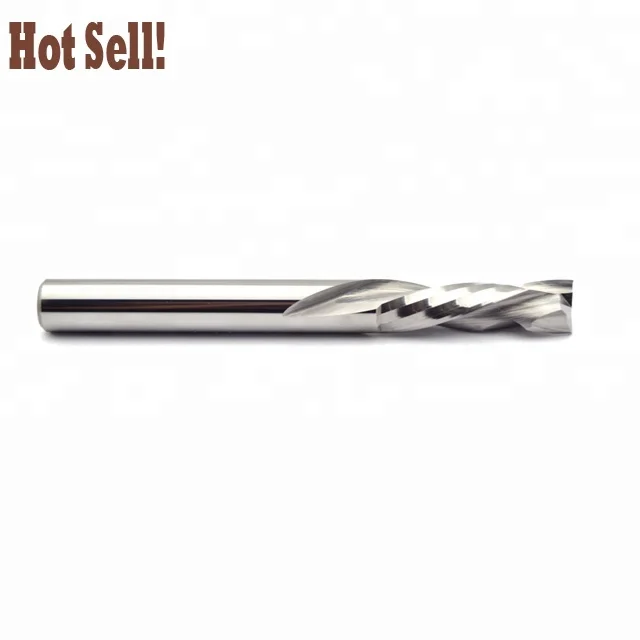
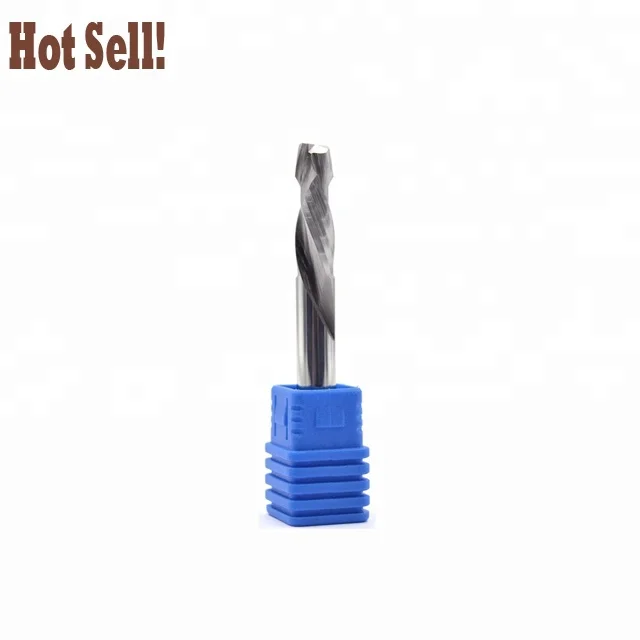
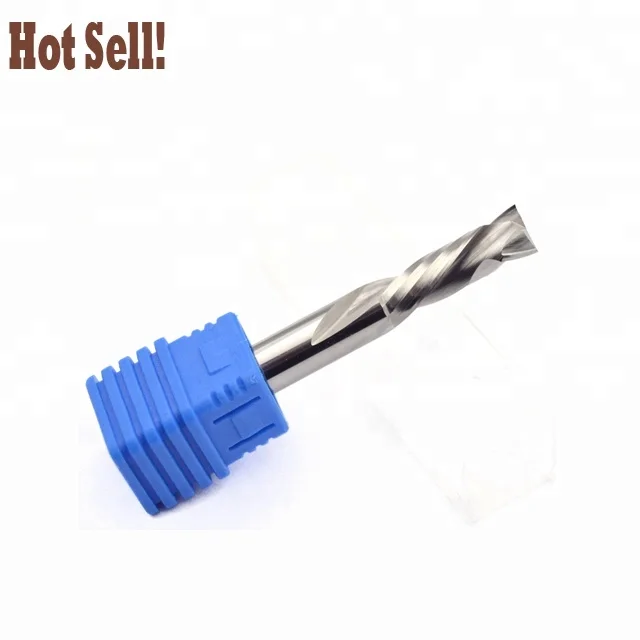
CNC upcut and downcut compression endmill tooling bits for woodworkers
- Category: >>>
- Supplier: Changzhou Jaca Imp&Exp Co. Ltd.
Share on (60792039399):
Product Overview
Description

Product Description
CNC upcut and downcut compression endmill tooling bits for woodworkers , Compression Wood End Mill Cutter Bits
Application(CNC upcut and downcut compression endmill tooling bits for woodworkers ):
1.CNC upcut and downcut compression endmill tooling bits for woodworkers ,applicable to Aluminum,Copper,Graphite,Plastics,Composite Material
2.Can be used for emulsion and micro-lubrication and dry processing.
3.Can be applied to general machinery industry, automobile industry and energy industry.
Advantage(CNC upcut and downcut compression endmill tooling bits for woodworkers ):
1.All of our tools are made with high grade, application specific grade materials specially formulated to provide the best performance possible. .
2.2 flutes wood milling cutter compression end mill, made of selected quality of ultra fine solid carbide grade under highly controlled production and quality inspection conditions to achieve quality and consistency in efficient cutting and longer life .
3.Ultra fine solid carbide rods are of the highest quality and sourced from Europe .
4.100% inspection.
5.Both OEM and ODM for end mills and package are available.
6.Short lead time.
Specification(CNC upcut and downcut compression endmill tooling bits for woodworkers ):
Part name: 2 flutes wood milling cutter compression end mill
Workpiece Hardness: HRC45,HRC50,HRC55,HRC60,HRC65
End mill diameter:0.5-20 mm
End mill length:50-200mm
HRC:

Coating:


Size:

Many carbide end mills can be reconditioned after use, and the performance restored "like new". JACA Tools Technologies has state of the art equipment, and is one of the few re grinders who can
successfully sharpen all the new geometries.

Our Services
OEM is Available!
Mobile/Whatsapp: +8613775100430
Welcome to be our Distributor in your area.
Free OEM Service is also available, can laser your logo on the shank of end mills, and print label for you.
Custom-tailor non-standard end mills. OEM service available. If you're interested in our products, please send drawing, specification or detailed size to us, we will laser your logo on the shank of end mills, and print label for you according to your requirements.

1.After get your enquriy, we will reply in 12 hours
2.Pls feel free to call me anytime
3.Sample order is welcome
4.Welcome to visit our factory, we will pick u up
5.Pls feel free to ask us price list
Technology
Our Machine:
We are the manufacture and wholesaler of cnc tools more than 10 years,manufacture machines
are Anca,Deckel,Walter.
-Anca machine for produce small diameter end mills
-Deckel machine for produce big diameter end mills
- Non-standard cutters made in Walter machine


Product main Features:
1. Competitive pricing
2. Made by world latest 5AXIS CNC tools grinder, promise the quality and precision of cutter.
3. Each end mill is inspected by measuring and inspected machine.
Packaging & Shipping

Packing:
1.use plastic box to protect each cnc machine cutting tools
2.use bubble wraps to fasten the cnc machine cutting toolss
3.use carton package with bubble wraps
Tips
Upcut or Downcut?
Many straight end mills or router bits come in two versions: upcut, where the waste from the cut is pulled upward and ejected out the top; and, downcut where the waste is actually being pushed down and back. If you’ve used a hand-held router, chances are you’ve mostly used upcut bits. If you’re making a mortise that will later house a tenon, for example, you certainly want to get the chips out of the way as you’re cutting. The same thinking holds true when using a CNC. You want to eject the chips as fast as you can.
However, there are some trade offs to be considered when using upcut mills on a CNC. For one thing, upcut bits are more likely to tear the top surface with the cutting edges because they’re pulling the wood fibers up while cutting. On laminated materials, such as plywood with a thin top veneer, that can matter a lot. It may not matter if you’re ultimately going to round over that top edge and/or apply solid wood edge, but in other situations, it might be a problem.
Another issue that’s different on a CNC than with a router is that the upward cutting action pulls the piece of wood you’re cutting off the table. If you’re not careful, that can cause the piece to move if it’s not firmly held down. So, in some situations that makes a downcut bit or mill the better choice. With a downcut mill, the advantage is that it’s pushing down on the piece you’re working, plus it cleanly cuts the top surface. The tradeoff is the waste is pushed back into the cut area instead of being ejected.
So how do you decide on an upcut vs. a downcut bit on a CNC?
If you’re cutting MDF or HDF you absolutely have to use an upcut bit. Otherwise, between the bit getting overheated and the fine paper dust-like waste being pushed back into the cut, there’s a high potential of starting a fire. I know because I’ve made the mistake of using the wrong bit at a slow speed, and the result was a near-fire situation with smoke pouring off the MDF board I was cutting – unnerving to say the least! (And yes, I ran to my dust collector barrel to make sure that I wasn’t starting a fire there, too.) You can bet that I’m careful about this detail now. My mantra: MDF = Upcuts.
As you can guess, when cutting solid wood, most of the time an upcut is the best solution. But not always. On a CNC, I use downcut bits almost exclusively when I’m cutting out solid-wood parts, because the top surface comes out perfect and the wood is held tighter the bed because the bit is pushing down as it’s cutting. But I have to run the CNC faster so that the chips and the bit don’t overheat. To do this, I usually take shallower cuts and multiple passes at higher speeds than I would use with an upcut bit, where I might take the opposite approach with slightly deeper cuts and fewer passes.
Compression Bits
Thanks to modern end mill and router bit design, you can now have your cake and eat it, too. Compression bits do both upcuts and downcuts at the same time. They have flutes that upcut on the bottom .250″ or so, and flutes for rest of the cutting length that are for downcutting. These are the cutting tool of choice for laminated materials such plywood. But you have to use them correctly. Your first pass needs to be slightly deeper than the upcut section of the bit, say .260″, then the remaining cutting area on the bit will push down the board and cleanly cut that top surface without tearing the thin top veneer layer. Also, if you cut all the way through the board, you get a bonus: The top cutters don’t tear out the bottom veneer layers because they are pulling the fibers inward. A win/win situation.
For solid woods, compression mills or bits can work just as well. But to get their major benefit you need to keep in mind the depth of that first pass. For very hard woods, .250″ might be too deep a cut. With other, softer, woods this may not be an issue. For MDF, which is notoriously hard on cutting tools, it just seems like such a waste using an expensive bit on such as abrasive material, so I stick with upcut bits.
We Recommend
New Arrivals
New products from manufacturers at wholesale prices