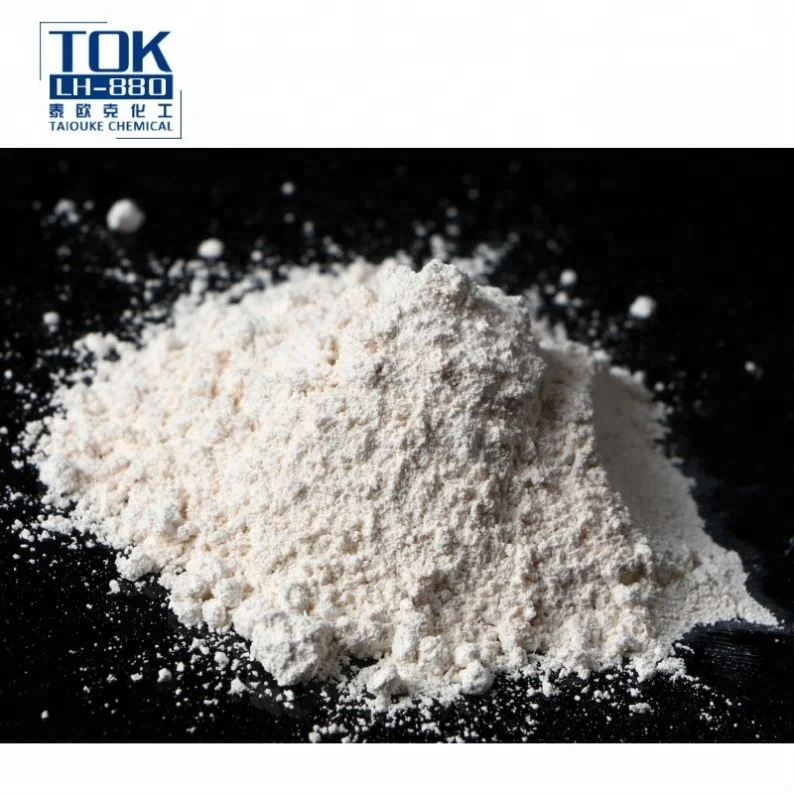
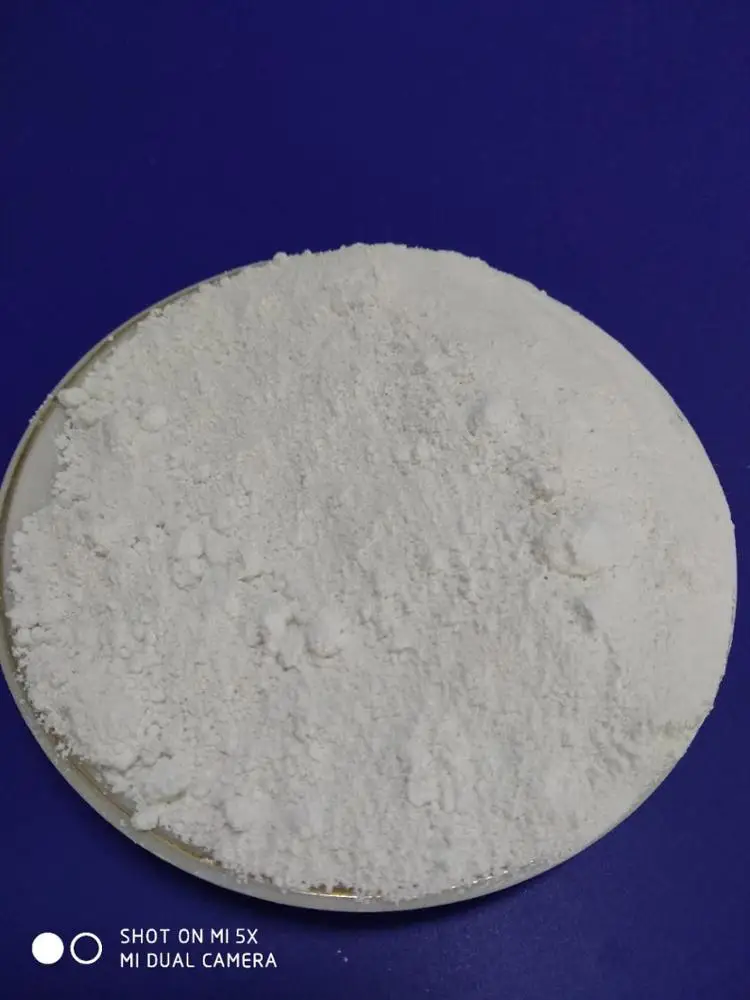
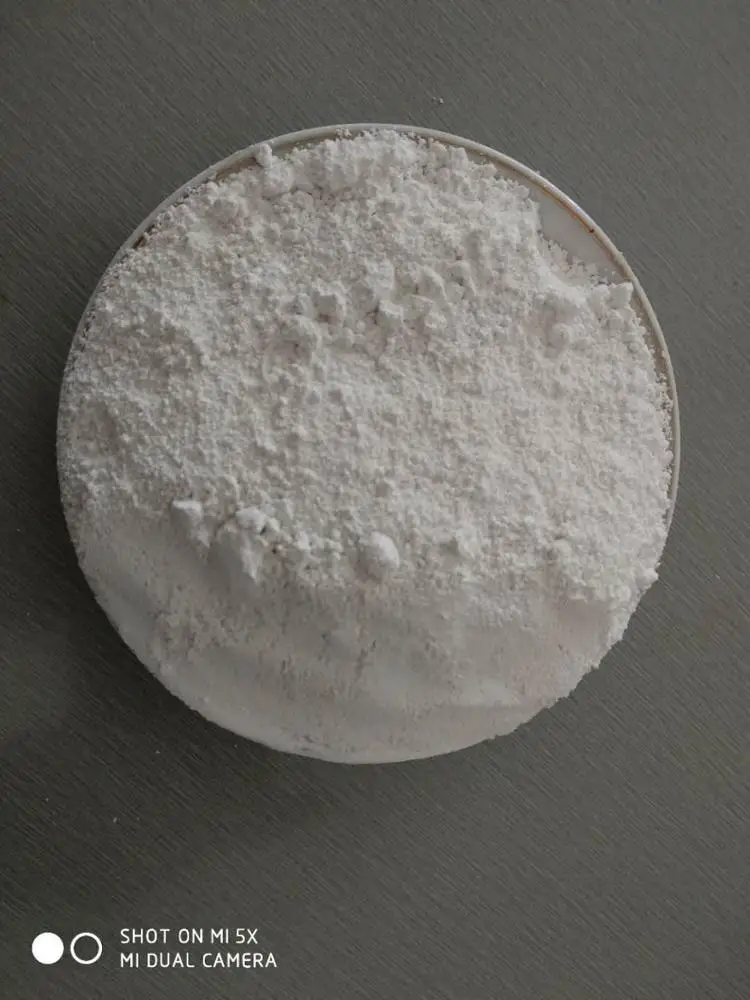
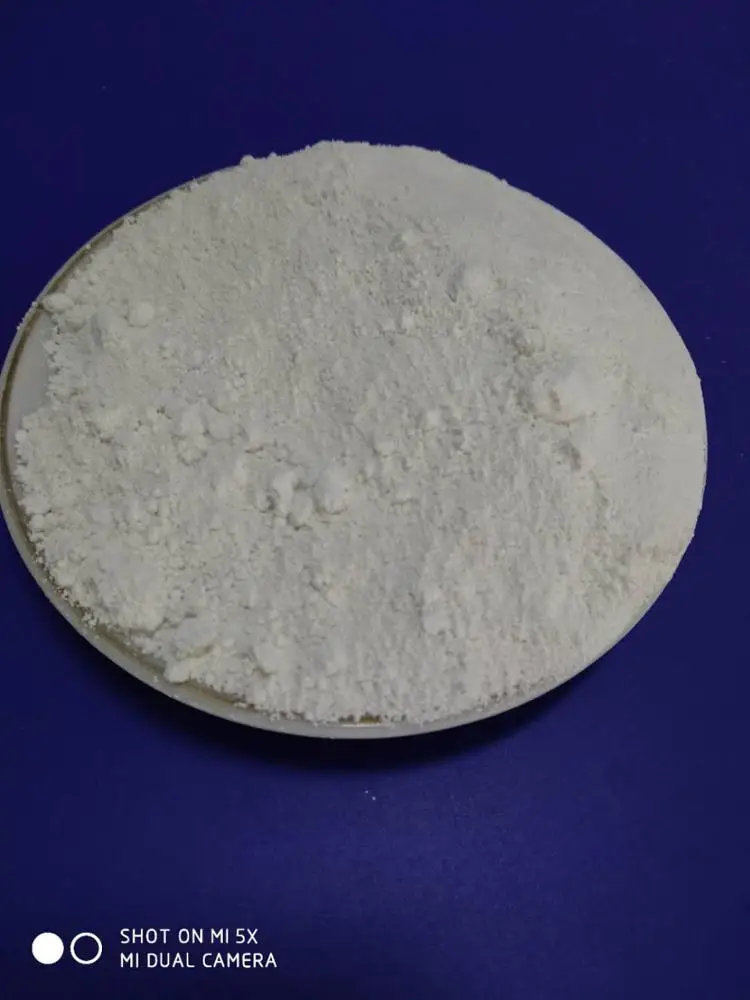
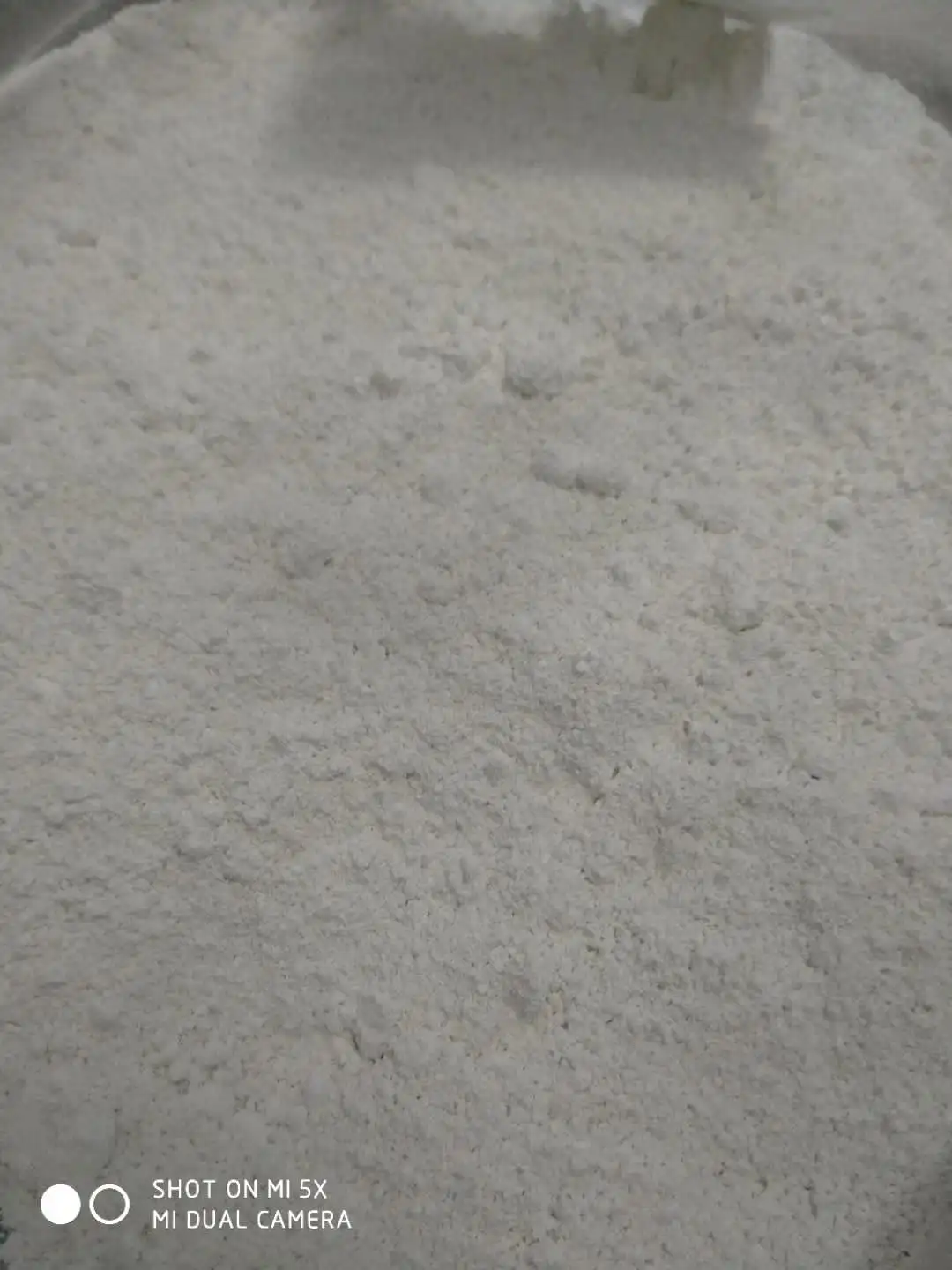
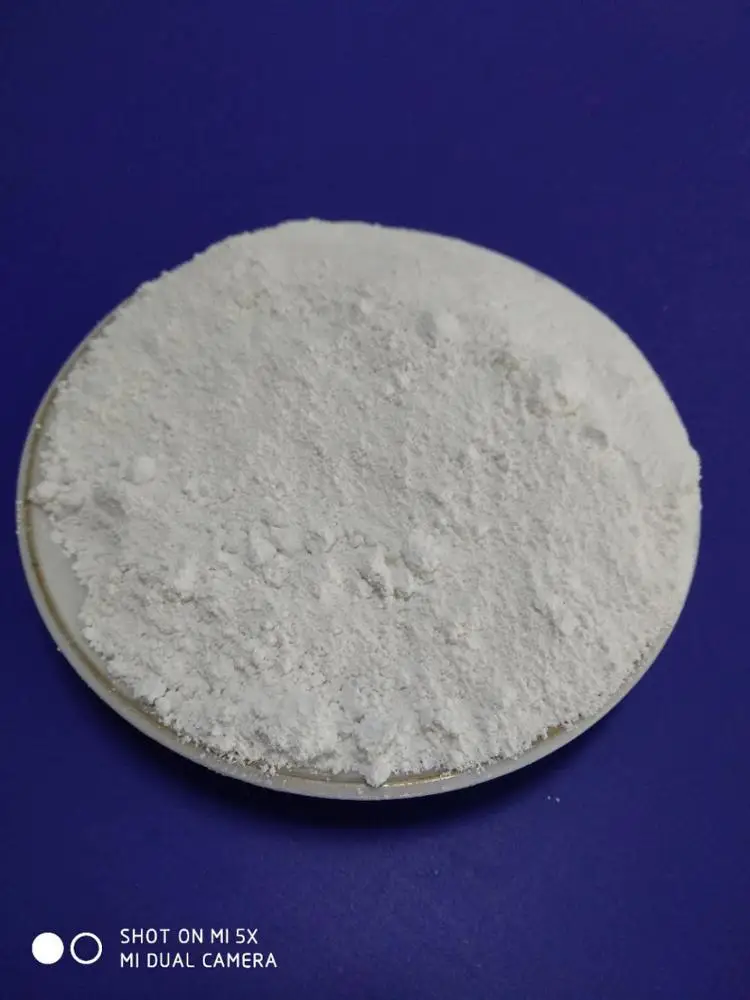
90% Whiteness And 25kg/package Weight Calcined Kaolin For Paint
- Category: >>>
- Supplier: Shenyang Tai Ou Ke Chemical Co. Ltd.
Share on (60798488523):
Product Overview
Description
Product Details
Kaolin Clay
Kaolin clay is also called "kaolin", commonly known as "porcelain clay". Composed of kaolinite containing more than 90%. Kaolinite is an important nonmetallic mineral, which is known as one of the four major nonmetallic minerals, together with mica, quartz and calcium carbonate. Kaolinite, a fine grained clay of pure texture, mainly composed of kaolinite or polyhalloysite, was first discovered in gaoling village near jingdezhen, China. Is mainly composed of less than 2 microns tiny sheet, fold, tubular flake minerals such as kaolinite cluster (kaolinite, dickite and nacrite, halloysite, etc.), the chemical formula which best characterizes the ideal for AL2O3-2 sio2-2 h2o, its main mineral compositions are kaolinite and much water kaolinite, in addition to the kaolinite mineral clusters, and the montmorillonite, illite and pyrophyllite, quartz and feldspar and other minerals associated. The chemical composition of kaolin contains a large amount of AL2O3, SiO2, a small amount of Fe2O3 and TiO2, as well as K2O, Na2O, CaO and MgO in the micro kaolinite structure diagram.
.
Product Introduction
Kaolin Clay
Kaolinite is a clay mineral, part of the group of industrial minerals, with the chemical composition Al2Si2O5(OH)4. It is a layered silicate mineral, with one tetrahedral sheet of silica (SiO4) linked through oxygen atoms to one octahedral sheet of alumina (AlO6) octahedra. Rocks that are rich in kaolinite are known as kaolin or china clay.
The name "kaolin" is derived from "Gaoling" ( pinyin: Gāolǐng; literally: "High Ridge"), a Chinese village near Jingdezhen in southeastern China's Jiangxi Province.The name entered English in 1727 from the French version of the word: kaolin, following François Xavier d'Entrecolles's reports on the making of Jingdezhen porcelain.
Kaolinite has a low shrink–swell capacity and a low cation-exchange capacity (1–15 meq/100 g). It is a soft, earthy, usually white, mineral (dioctahedral phyllosilicate clay), produced by the chemical weathering of aluminium silicate minerals like feldspar. In many parts of the world it is colored pink-orange-red by iron oxide, giving it a distinct rust hue. Lighter concentrations yield white, yellow, or light orange colors. Alternating layers are sometimes found, as at Providence Canyon State Park in Georgia, United States. Commercial grades of kaolin are supplied and transported as dry powder, semi-dry noodle or as liquid slurry.
Product Parameters
| \t | \t | \t | \t |
| \t | \t | \t | \t |
Product Details Show
Why Choose Us
About us
1, Many years of exported experiences.
Equipment & technology
2, Passed ISO 9002 certification.
Service
3, stable product quality , supply, OEM.
Product Processing
Product Packing
Main Products
Ligter Magnesium Oxide
Kaolin
Talc powder
Bentonite
Halogen-free Flame Retardent
Wollastonite
We Recommend
New Arrivals
New products from manufacturers at wholesale prices