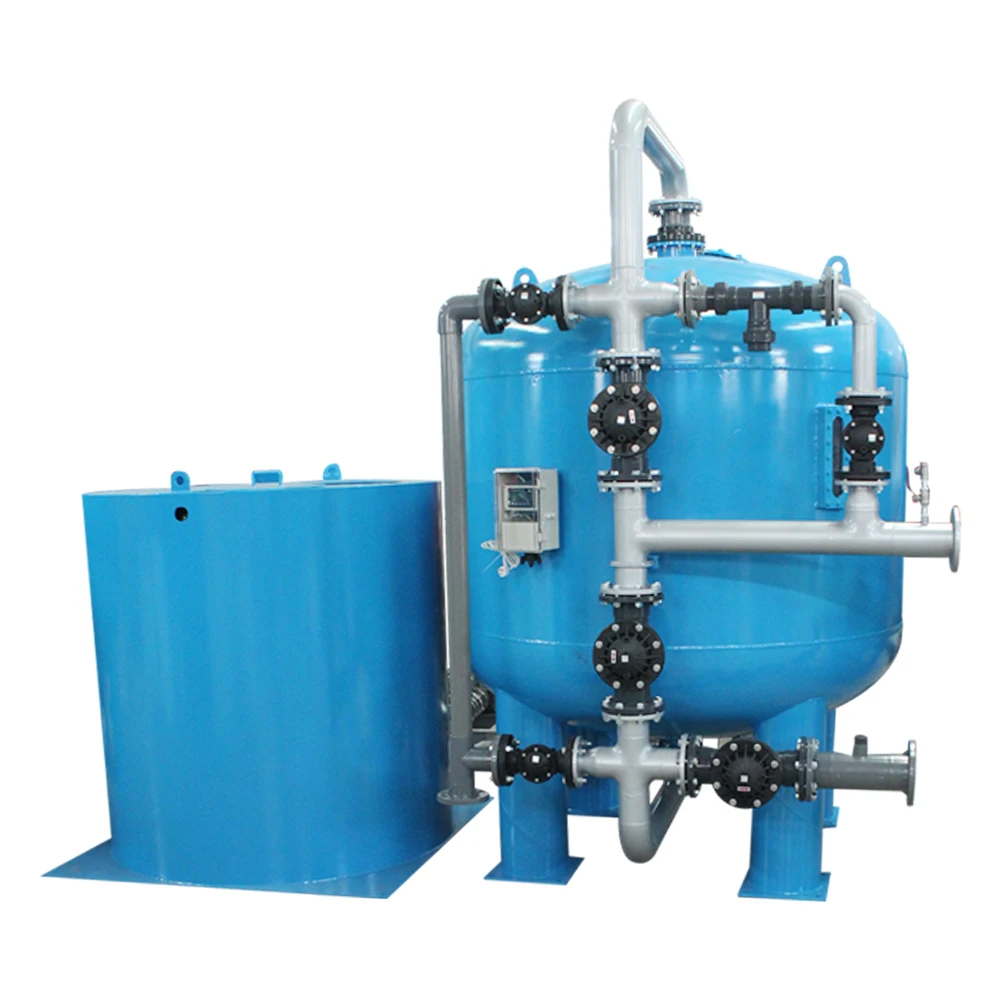
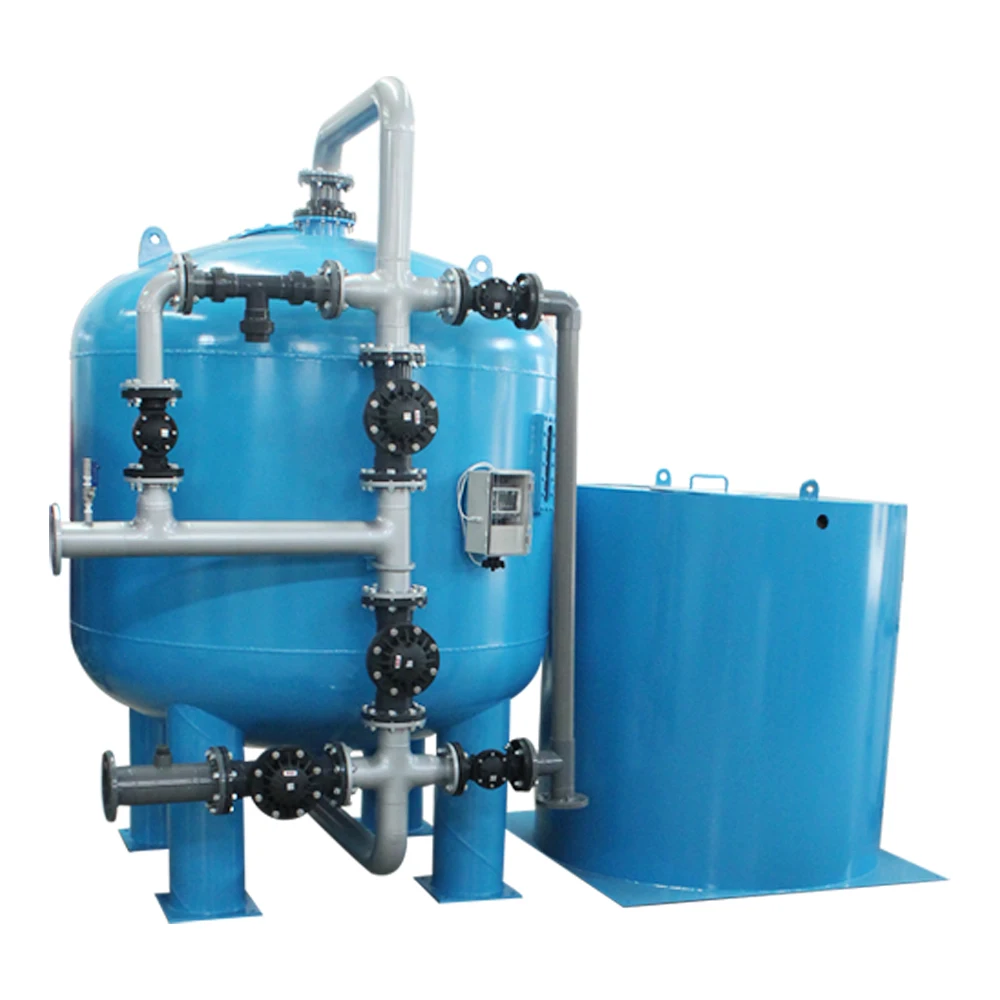
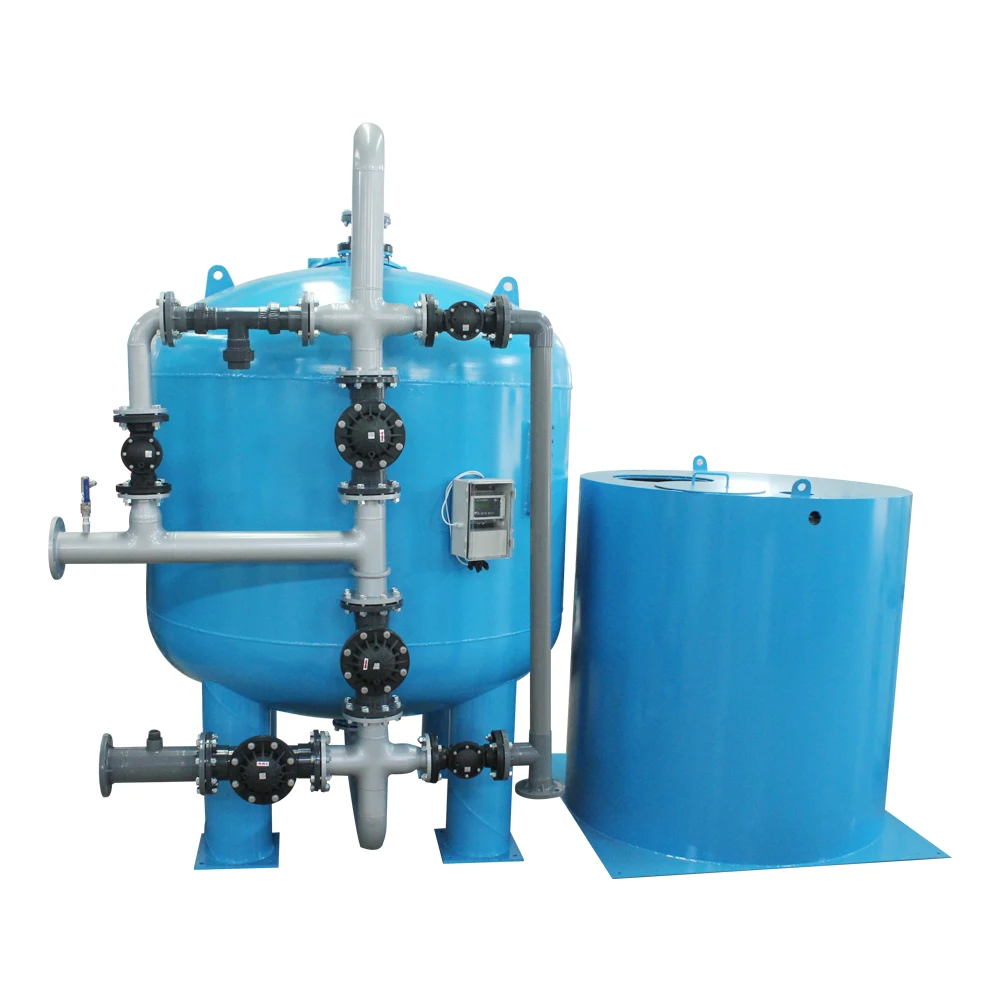
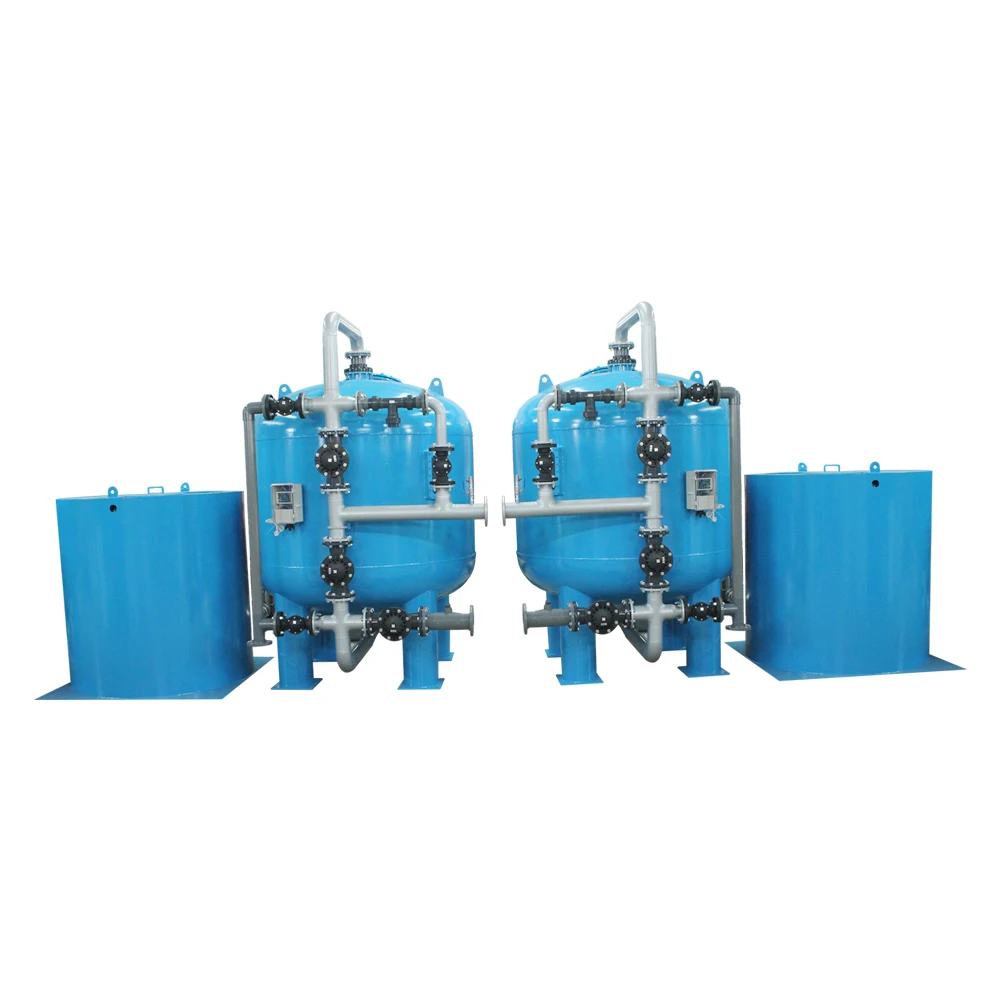
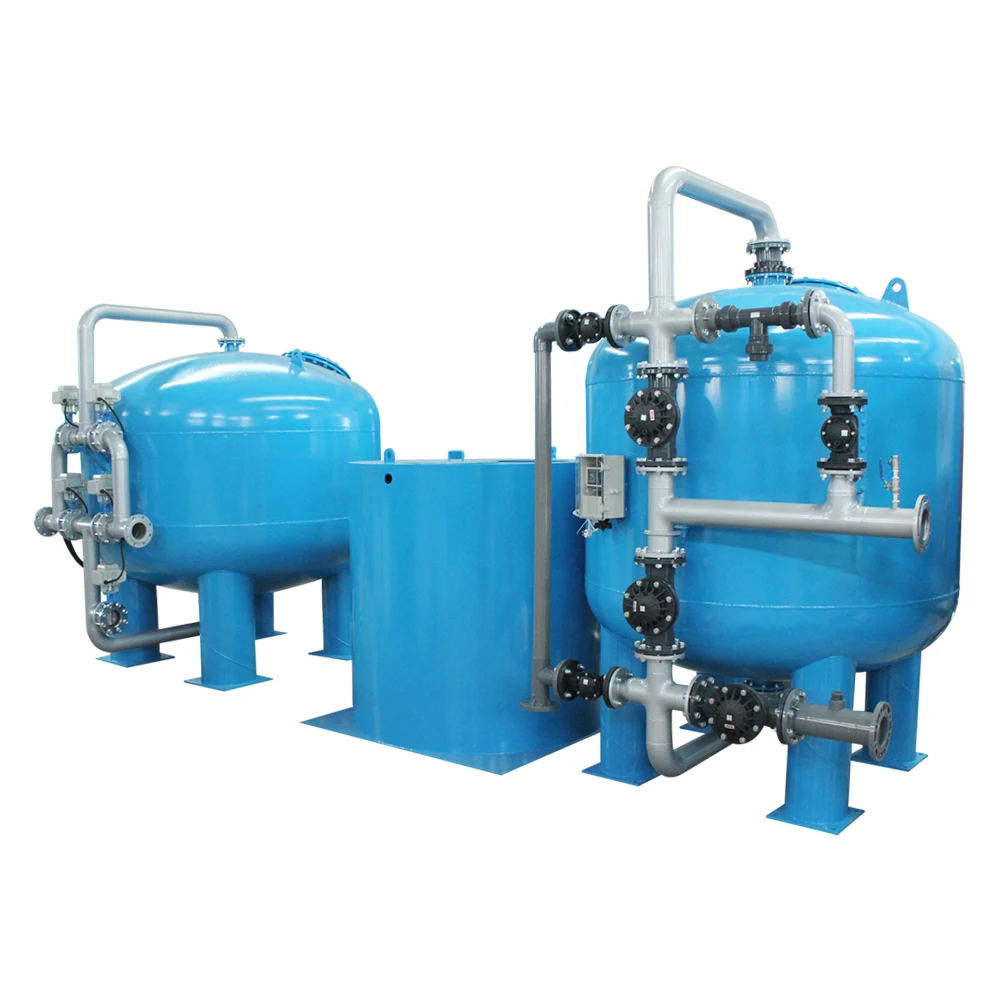
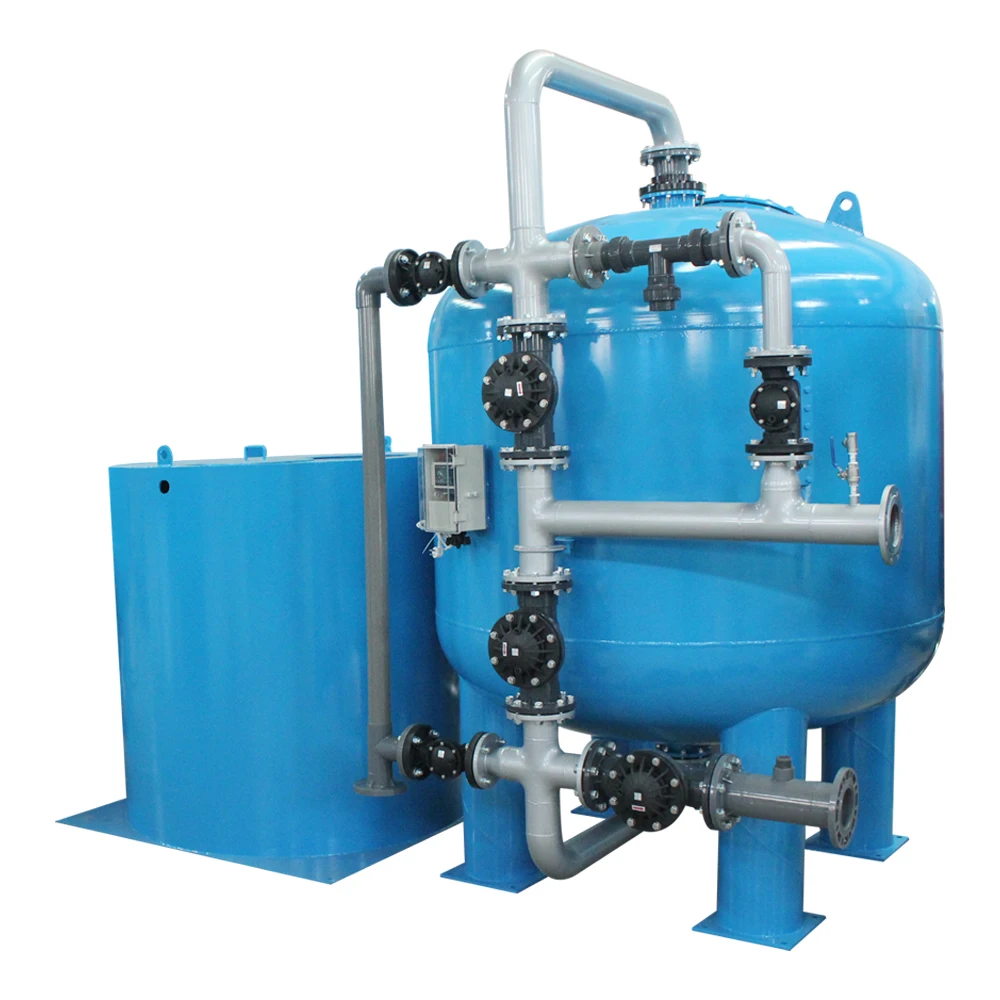
Diaphragm valves 50m3/hr twin alternative working water softener system to remove water hardness
- Category: >>>
- Supplier: Jiangsu YLD Water Processing Equipment Co. Ltd.
Share on (60805896955):
Product Overview
Description
Ion exchange resin type Water Softener
A water softener is a device about the size of a computer tower. It gets plumbed in to your house, usually underneath the kitchen sink, and it takes the water as it comes into the house and runs it through a pair of softening tanks, which remove the minerals from the water that cause limescale and soap scum.
Every so often, the machine flushes the minerals from the tanks by rinsing them through with salt water, which is why it needs to be kept topped up with blocks of salt. Aside from that, you don’t need to do anything to keep it running.

At the heart of a water softener is its ion-exchange resin. The resin consists of microscopic beads, and as the hard water passes through them, they trap the magnesium and calcium ions that are in it, so the water comes out totally soft. This is a fairly simple process that’s been in use for over ninety years.
The complexity of modern softeners comes in when the resin needs regenerating. This happens when the resin has trapped all the hardness minerals it can, and needs to be flushed through with salt water. The timing of the regeneration is crucial: too soon, and you waste water and salt; too late, and you risk hard water getting into your system.

Our design uses a water meter to judge when to regenerate. We use a displacement meter - the most accurate meter there is, and the one used by water companies to calculate your water bill. It avoids a common problem: most types of meter can’t measure the flow of water if it’s very slow, which happens whenever a loft tank or toilet cistern is filling up.
How Water Softeners Work
The best way to learn about how water softeners work is to book one of our demonstrations, you’ll be able to see softened water in action from your own tap.
In brief, water softeners are designed to remove calcium and magnesium (the cause of scale and scum) from hard water. They are intended to treat the whole house, so are installed where the water supply enters the premises.
Principles of Ion Exchange to Soften Water
Calcium and magnesium ions are atoms having a positive electrical charge, as do sodium and potassium ions. Ions of the same charge can be exchanged. In the ion exchange process, a granular substance (usually a resin) that is coated with sodium or potassium ions comes into contact with water containing calcium and magnesium ions. Two positively charged sodium or potassium ions are exchanged (released into the water) for every calcium or magnesium ion that is held by the resin. This “exchange or trade” happens because sodium or potassium are loosely held by the resin. In this way, calcium and magnesium ions responsible for hardness are removed from the water, held by the resin, and replaced by sodium or potassium ions in the water. This process makes water “soft.” Eventually, a point is reached when very few sodium or potassium ions remain on the resin, thus no more calcium or magnesium ions can be removed from the incoming water. The resin at this point is said to be “exhausted” or “spent,” and must be “recharged” or “regenerated.”

Ion Exchange
Water softening happens through a process called ion exchange, which uses an ion exchange resin. The resin comprises of tiny polymeric beads which are specially formulated so that they can be charged with certain ions. Calcium and magnesium, the causes of scale and scum from hard water, are referred to as ions, and as water passes through the resin, the calcium and magnesium ions swap places with the sodium ions on the resin. Sodium salts, unlike calcium and magnesium, are highly soluble so sodium does not cause scale or scum. When all the sodium ions have been exchanged for calcium or magnesium, the resin must be regenerated by recharging it with sodium ions. This is done by flushing the resin with salt solution (brine).

What is a Water Softener? The water softener is just a special type of "filter" that removes the calcium and magnesium in hard water by using plastic beads and cleans itself periodically by a process called “regeneration.”
Water softeners have three main components: A mineral tank, brine tank and control valve. Smaller capacity models combine the mineral tank and brine tanks into one cabinet, but the two tanks are still separated within the cabinet.
Larger flow capacity systems have separate stand alone mineral and brine tanks.
selection of water softener:
Softener equipment applies cation resin for softing raw water,its main target is to use cation resin to adsorp (main parts of ),encreasing the hardness of raw water.
1. Users can choose manual operation control system for saving cost.
2. If users using for 24 hours can accord to water using time choosing for rebirth
3. Uses can according to water quality requirement:first grade multi-media filter,which can remove mud,rust,colloid and suspension in water.Second grade activated carbon filter,which can remove color,olfactory,biochemistry organic in water and encrease the left oxygen value and pollution in water.Third grade equiped softener equipment.
4. Effluent water capacity achieves the water supply of national low-pressure bioler.
5. Time control- type;flow control- type.In working ,apply single-tank,double-tank and multi-tank etc. other varied combination method.When choosing,users can choose as their needs.In operation,it has not only automatic function,but also is manual operation.
Technoloty index and working
Water pressure:0.18-0.6Mpa
Working temperature:1°c-55°c
Hardness of raw water: <8mmol/L
Operation method:manual/automatic
Hardness of effluent water: ≤0.03mmol/L
water flow: 0.3-20 t/h
Rebirth method:time and fluid
Control method: time or flow
Working electric: 220V/50Hz
System automatic water softener widely used in steam bioler,heating bioler,exchanger,air conditioner, and other systems water softener,also used in hotel,restruant,office, and other life water treatment and food,drinking,wine,washing,textile,chemical,medicine and other industrial softener water treatment.


We Recommend
New Arrivals
New products from manufacturers at wholesale prices