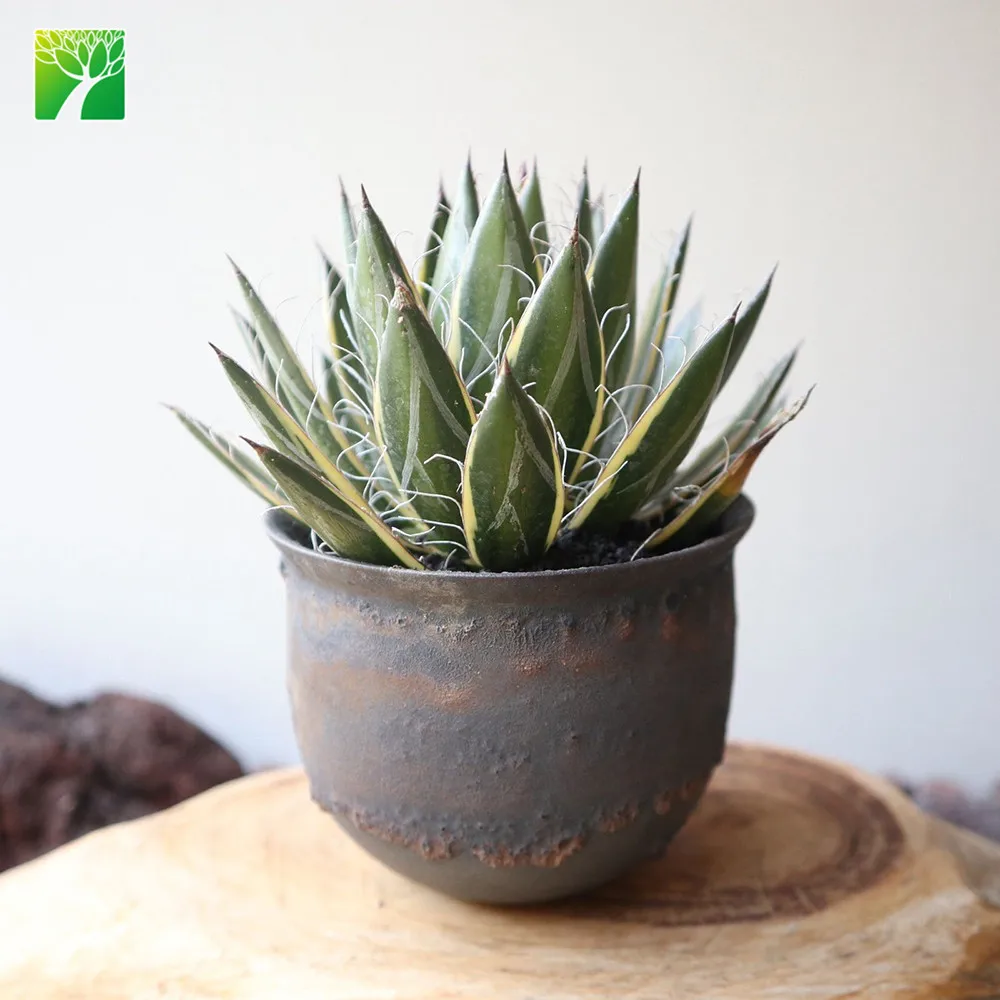
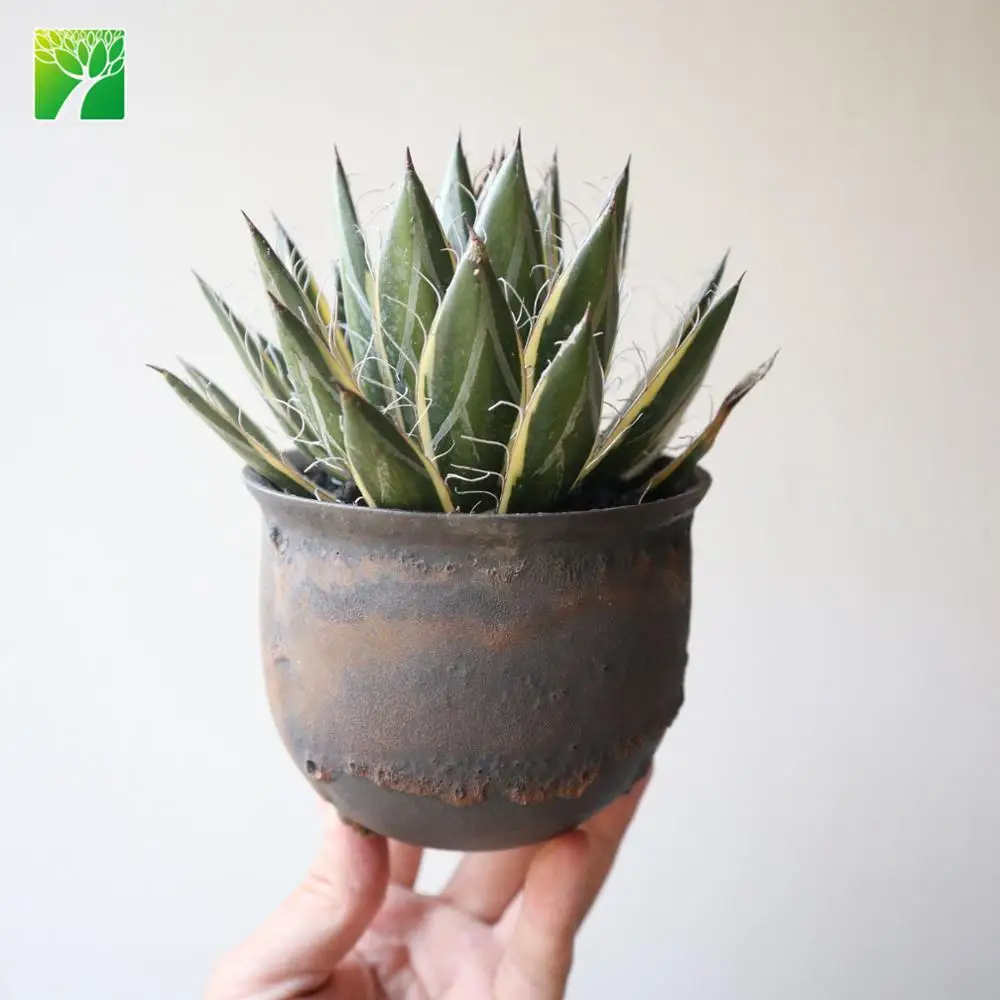
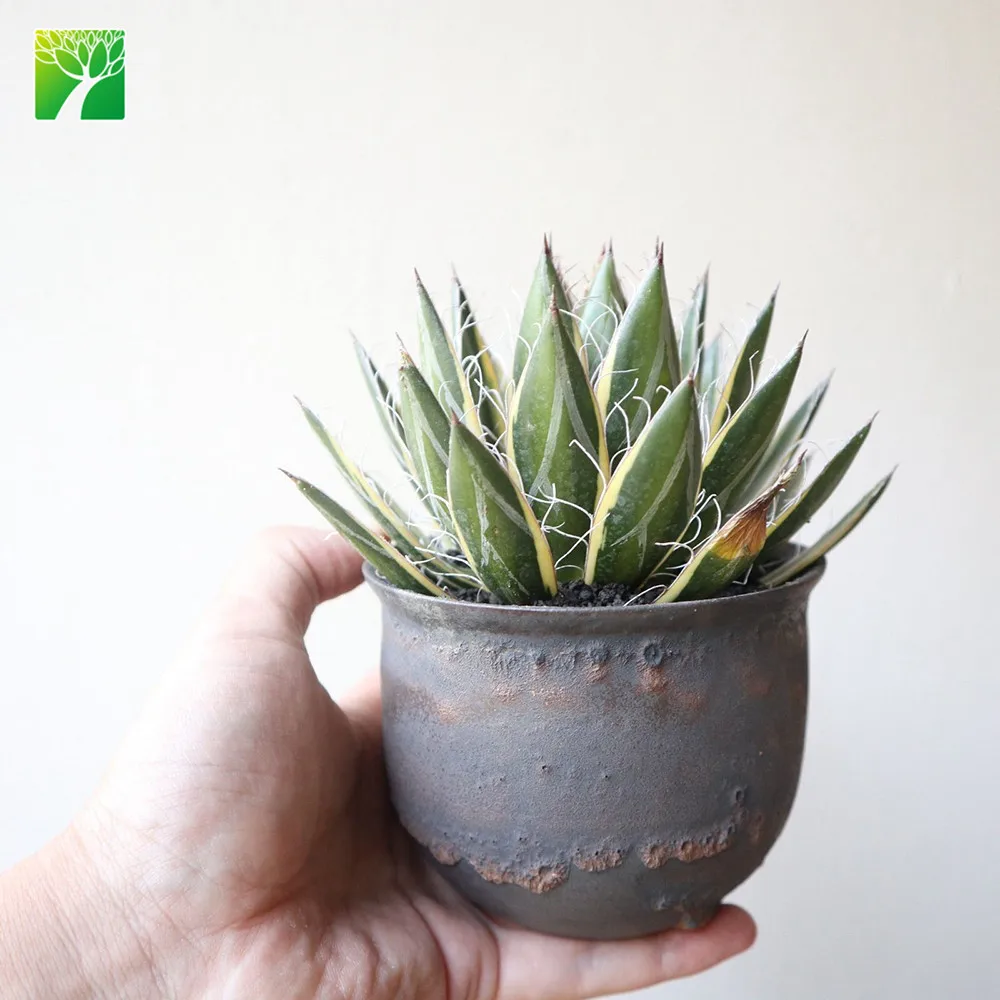
| \t Item: | \t Hot sale natural wedding succulent plants Agave filifera |
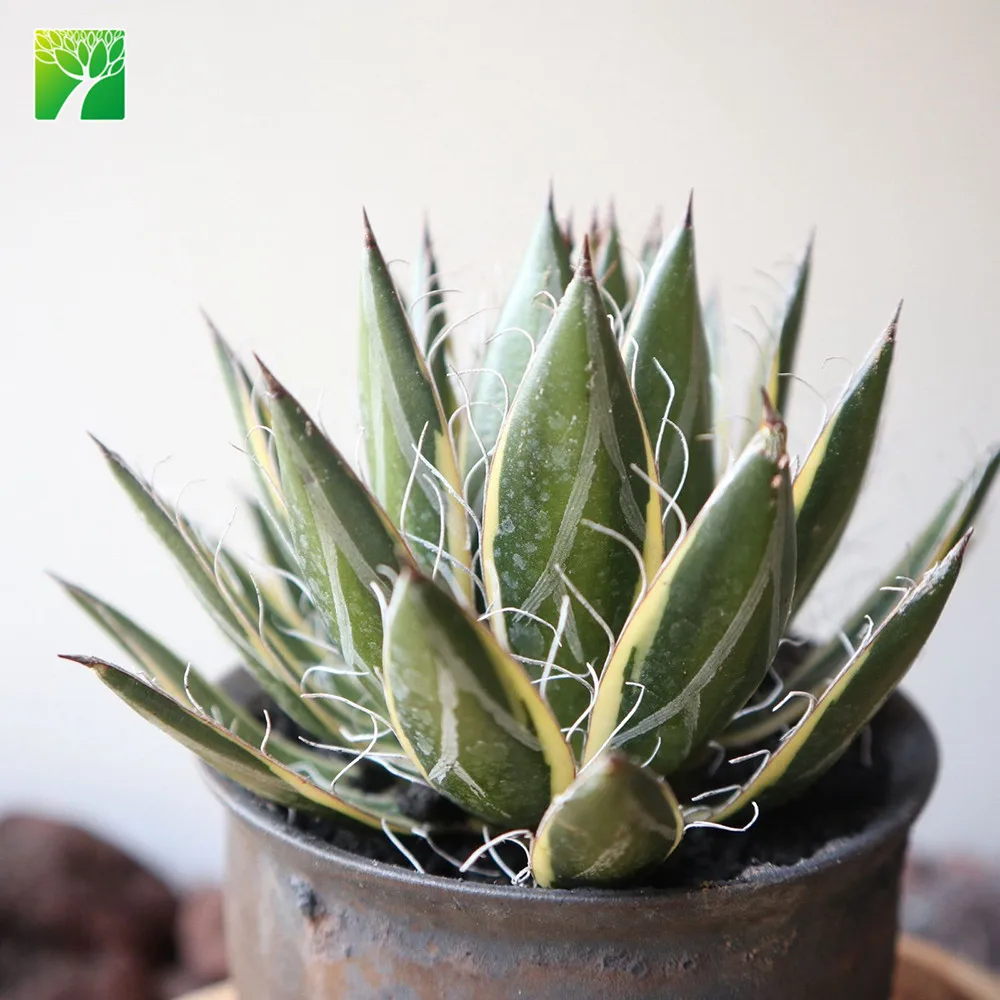
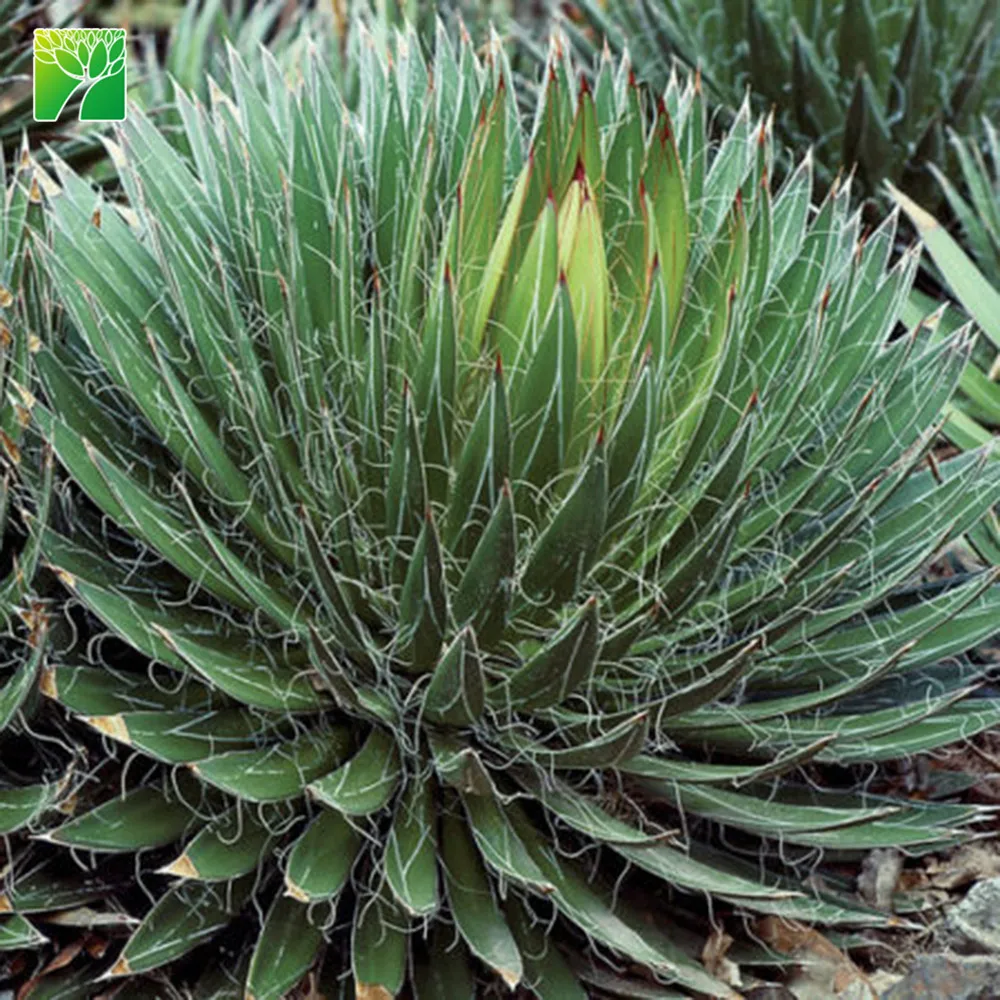
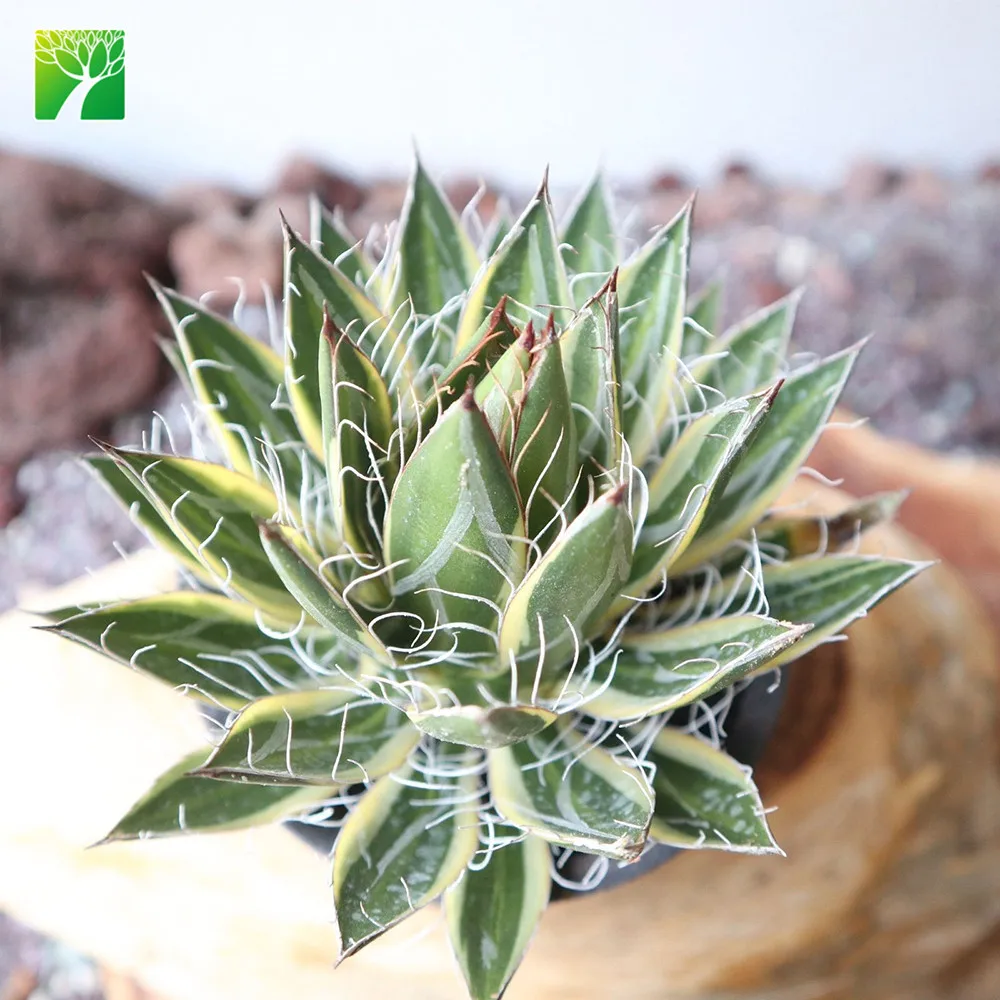
| \t Description: | \tAgave filifera is a small to medium sized agave that forms attractive rosette of leathery leaves each ending in a stout stiff spine. The leaves are dark green in colour with ornamental white threads along the edge. This agave will eventually throw up a flower stem 2,5 m at the end of which are purple and green blooms. However, the plant is mainly grown for the attractive rosette of leaves. The main rosette dies after blooming but usually new plantlets sprout from the base to start a new life cycle. It produces suckers freely.
|
| \t Rosettes: | \t Trunkless, dense, 30 to 65 cm across, with 60-100 thick filiferous leaves. |
| \t Leaves: | \t 15-30(-40) cm long, 2-4(-5) cm wide, straight, lanceolate, long-tapering to the apex, narrowed towards the base, broadest in middle, convex above and below from base to mid-blade, stiff, spreading and somewhat upcurved, leathery, smooth, shiny dark green with 2 or 3 bud-prints (white lines) on the surface. Margins pale, horny, splitting off as 5 or 6 long, thin threads. Terminal spine 1-2 cm, brown. later grey, openly grooved above, rounded below. |
| \t Inflorescence: | \t Spike, tapered, bottelbrush-like, up to 2,5 m tall flowers very dense through upper half of shaft set with long-caudate recurving bracts. |
| \t Flowers: | \t 3-3,5 cm long, bell-like, ascending-outcurving on thick short pedicels, greenish at first, later reddish. Ovary spindle-like, angulate, about 13-15 mm long. Tube and neck, grooved, funnelform. Tepals equal, 14 long and 4 mm wide, recurving, lanceolate, apiculate. Filaments 30-35 mm long, slender, reddish, with a high knee, anthers 7-12 mm long, reddish. |
| \t Remarks: | \t It is closely related to Agave schidigera, from which it is separable by its cespitose habit, its shorter thicker leaves convex beneath, and smaller flowers with a shorter tube. |
| \t Cultivation and Propagation: | \t It is an easy-to-grow plant often grown as a houseplant. |
| \t Growth rate: | \t Plants have a moderate growth rate and form clumps given the best conditions. |
| \t Soil: | \t They are tolerant of most soils, but do best in very well-drained, sandy or gravely soil. As ornamental they are also grown in containers where they stay much smaller than their outdoor brethren. In pots they need a very porous mix soil (e.g. 2 parts peat moss to 1 part loam to 1 part of pumice). |
| \t Exposure: | \t They do well in full sun or a lightly shaded area with afternoon shade. Plants cultivated outdoors are drought tolerant and takes blasting heat and full sun. |
| \t Watering: | \t It grows fairly fast in summer if provided with copious water but allows to dry thoroughly before watering again. During the winter months, one should only water enough to keep the leaves from shriveling. Avoid waterlogged conditions. |
| \t Fertilization: | \t They grows quickly if kept well nourished with a slow release fertilizer specifically formulated for cactus and succulents applied once or twice a year in the spring and summer (poor in nitrogen), including all micro nutrients and trace elements. |
| \t Hardiness: | \t It is theoretically hardy to -10° C , particularly when dry. Keep it in a cool area in winter and put it out on the balcony or patio in summer. It is damaged from early morning overhead watering in the winter. The water froze resulting in pockmarks on the leaves. |
| \t Scenography: | \t It is quite versatile. Because of its symmetrical form and relatively small size, this plant is very attractive when grown in pots. Plants can be grouped together or planted among boulders in a rock or cactus garden. It is great in small pots or nestled into a rock crevice.
They work well with perennials. |
| \t Traditional uses: | \t The sap of is fermented to make a light alcoholic Mexican drink called 'pulque'. Rope, food, soap and other products are also made from the fibers and pulp. |
| \t Propagation: | \t By suckers which often are found growing around the base of the plant, Remove the basal suckers (if available) in spring or summer and let the cuttings dry for a few days before inserting in compost or by seed. |
| \t Packaging: | \t hangtag, then each into individual carton box |
| \t Delivery period: | \t 15-30days after payment |