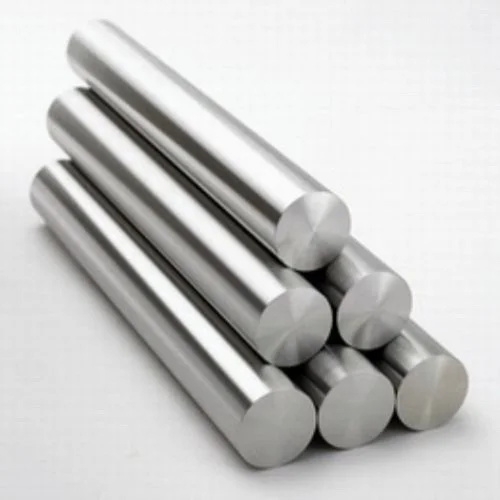
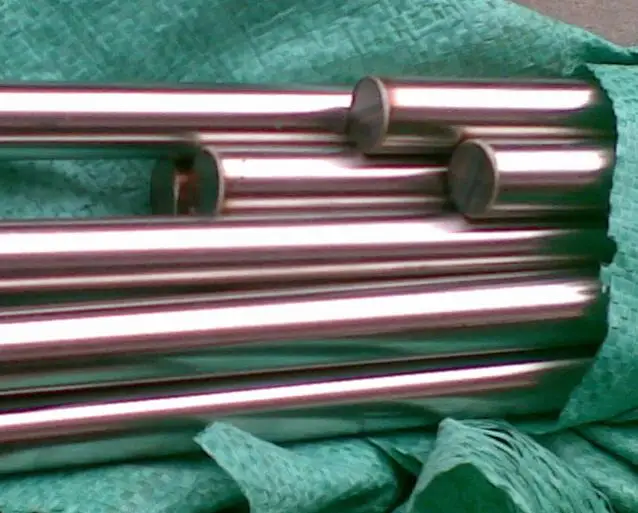
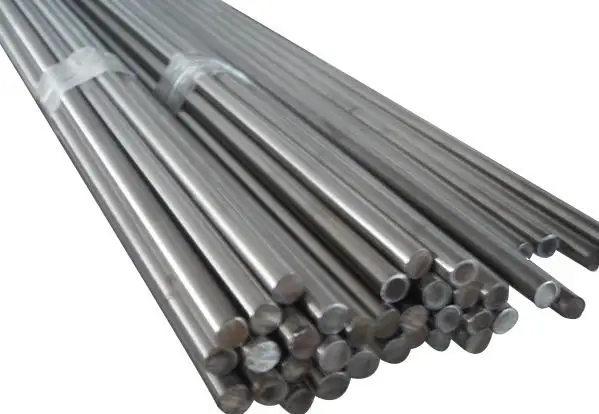
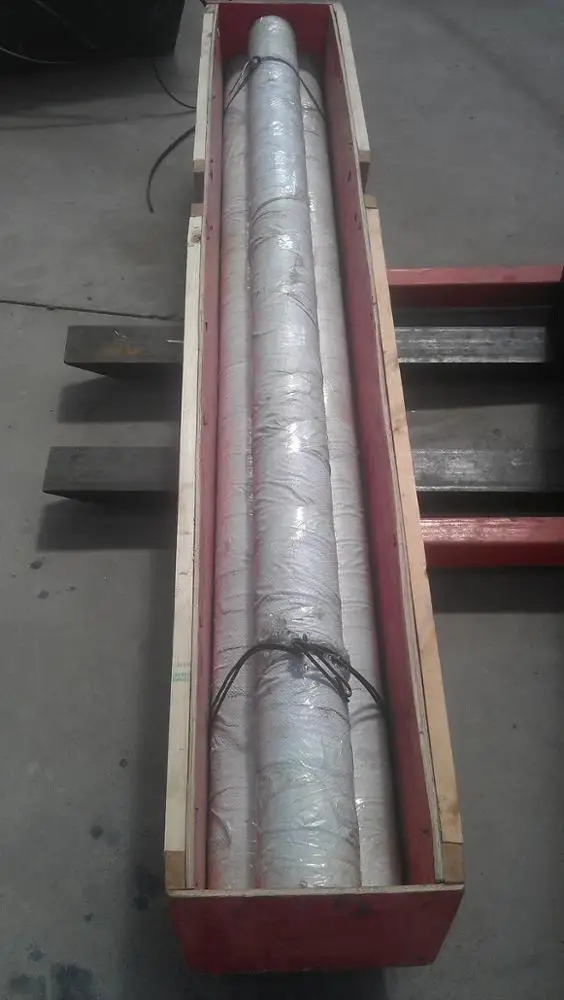
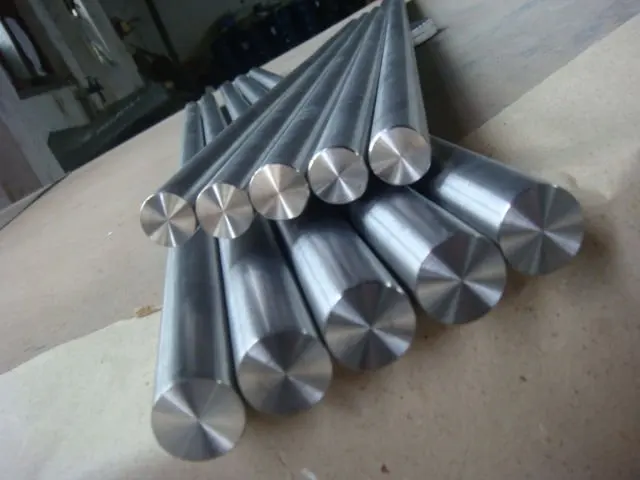
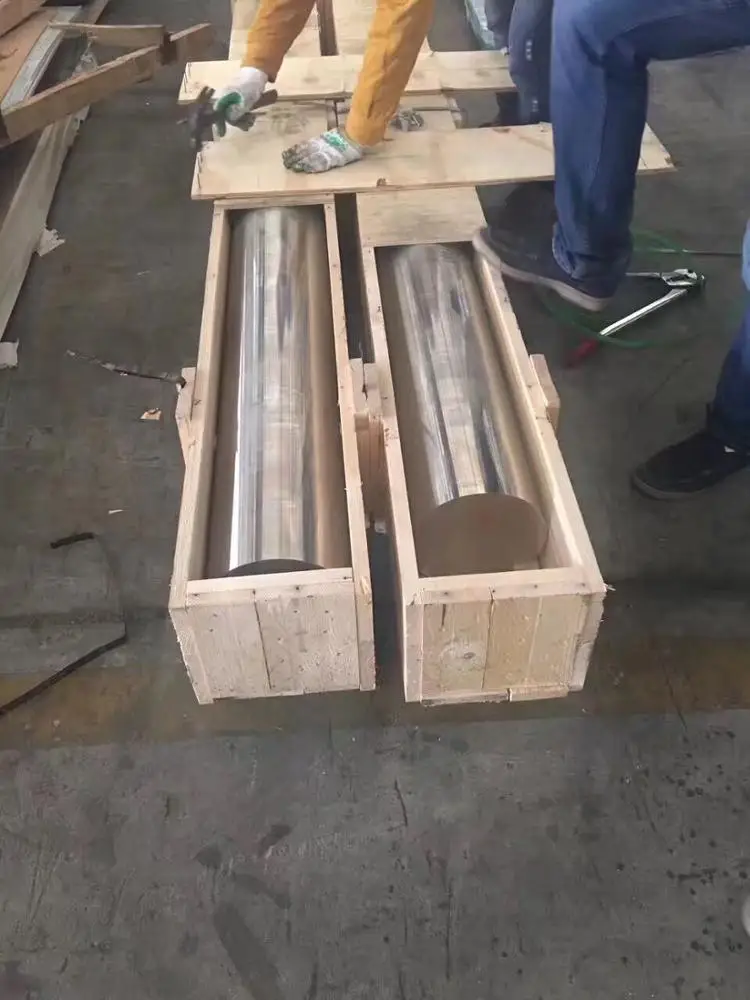
Standard Specification for Nickel alloy DIN 2.4360 Alloy 400 Monel 400 Round Steel Bars
- Category: Nickel >>>
- Supplier: Zhengzhou Huitong Pipe Fittings Co. Ltd.
Share on (60841154739):
Product Overview
Description
Standard Specification for Nickel alloy DIN 2.4360 Alloy 400 Monel 400 Round Steel Bars
Round Bar

Steel Round Bar
| Product Types | Round Bar | Square Bar | Hexagon Bar | Flat Bar |
| Surface | Black or Bright or Pickling White | |||
| Standard | SUS, AISI, DIN | |||
| Manufacture Technique | Hot Rolling, Cold-drawing | |||
| Diameter | 5~500mm | |||
| Length | As Per Client's Requirements. | |||
| Diameter Tolerance | H7 H9 H10 H11 | |||
| Material Standard | Nickel Alloy | ASTM/ASME SB 425 | Alloy 825 Incoloy 825UNS N08825 | |
| ASTM/ASME SB 446 | Alloy 625/UNS N06625 | |||
| ASTM/ASME SB164 | Monel 400/Alloy 400/UNS N04400 | |||
| ASTM/ASME SB 408 | Alloy 800HT Incoloy 800HT/UNS N08811, Alloy 800/Incoloy 800/UNS N08800, Alloy 800H/Incoloy 800H/UNS N08810 | |||
| ASTM/ASME SB 649 | Alloy 925/Incoloy 925/UNS N09925 Alloy 926/Incoloy 926/UNS N08926 Alloy 31/UNS N08031 | |||
| ASTM/ASME SB 166 | Alloy 600/Inconel 600/UNS N06600 Alloy 601/Inconel 601/UNS N06601 | |||
| ASTM/ASME SB160 | Alloy 200/UNS N02200 Alloy 201/UNS N02201 | |||
| ASTM/ASME SB 472 | Hastelloy C-276/UNS N10276 Alloy 926/Incoloy 926/UNS N08926 Alloy 31/UNS N08031,Alloy 20/N08020 Alloy C-22/Hastelloy C-22/N06022 Alloy 600/Inconel 600/UNS N06600, | |||
| ASTM/ASME SB 473 | Alloy 20/UNS N08020 | |||
| ASTM/ASME SB 574 | Hastelloy C-276/UNS N10276 | |||
| ASTM/ASME SB 637 | Alloy 718/Inconel 718/N07718 | |||
Stainless Steel | ASTM/ASME SA 276 | 304/SUS304/UNS S30400, 304L/UNS S30403, 316/UNS S31600 316Ti/UNS S31635, 316H/UNS S31609 316L/UNS S31603, 310S/UNS S31008 321/UNS S32100, 321H/UNS S32109 347/UNS S34700, 347H/UNS S34709 F51/S31803/2205, F53/S32750/2507 F55/S32760, F44/S31254/254SMO S31050/1.4466 F904L/N08904, | ||
| ASTM/ASME SA 479 | 304H/UNS S30409 | |||
Carbon Steel and Low Alloy Steel | ASTM/ASME SA 694 | F42, F46, F48, F50, F52, F56, F60, F65 F70 | ||
| ASTM/ASME SA 350 | LF2, LF3 | |||
| ASTM A105/ASME SA105 | ||||


FAQ
Q:How does your factory do regarding quality control?
A:Quality is priority. we always attach great importance to quality controlling from the beginning to the end.Mill Test Certificate is supplied with shipment. If needed, a Third Party Inspection is acceptable.
Q:May I have some samples before bulk order?
A:Yes, of course. samples are free but you have to pay the courier.
Q:Can we visit your Company?
A:Surely. Welcome to China and we will be honored to have a customer and friend.
Q:What is the payment terms?
A:T/T, L/C ,Western Union,etc.
Q:What's your delivery time?
A:For stocks, we can send the goods to loading port within 7 days after receiving your deposit.
For production period, it usually needs about 10days- 60days after receiving the deposit.
Q:Is it OK to mark my logo on your products?
A:Yes. OEM and ODM are available for us.
About Monel 400
UNS N04400
Other common names: Alloy 400
Monel 400 is a nickel-copper alloy (about 67% Ni – 23% Cu) that is resistant to sea water and steam at high temperatures as well as to salt and caustic solutions. Alloy 400 is a solid solution alloy that can only be hardened by cold working. This nickel alloy exhibits characteristics like good corrosion resistance, good weldability and high strength. A low corrosion rate in rapidly flowing brackish or seawater combined with excellent resistance to stress-corrosion cracking in most freshwaters, and its resistance to a variety of corrosive conditions led to its wide use in marine applications and other non-oxidizing chloride solutions. This nickel alloy is particularly resistant to hydrochloric and hydrofluoric acids when they are de-aerated. As would be expected from its high copper content, alloy 400 is rapidly attacked by nitric acid and ammonia systems.
Monel 400 has great mechanical properties at subzero temperatures, can be used in temperatures up to 1000° F, and its melting point is 2370-2460° F. However, alloy 400 is low in strength in the annealed condition so, a variety of tempers may be used to increase the strength.
In what forms is Monel 400 Available?
• Sheet
• Plate
• Bar
• Pipe & Tube (welded & seamless)
• Fittings (i.e. flanges, slip-ons, blinds, weld-necks, lapjoints, long welding necks, socket welds, elbows, tees, stub-ends, returns, caps, crosses, reducers, and pipe nipples)
• Wire
What are the characteristics of Monel 400?
• Resistant to seawater and steam at high temperatures
• Excellent resistance to rapidly flowing brackish water or seawater
• Excellent resistance to stress corrosion cracking in most freshwaters
• Particularly resistant to hydrochloric and hydrofluoric acids when they are de-aerated
• Offers some resistance to hydrochloric and sulfuric acids at modest temperatures and concentrations, but is seldom the material of choice for these acids
• Excellent resistance to neutral and alkaline salt
• Resistance to chloride induced stress corrosion cracking
• Good mechanical properties from sub-zero temperatures up to 1020° F
• High resistance to alkalis
Chemical Composition, %
| C | Mn | S | Si | Ni | Cu | Fe |
| .30 max | 2.00 max | .024 max | .50 max | 63.0 min | 28.0-34.0 | 2.50 max |
Corrosion Resistant Monel 400
Alloy 400 is virtually immune to chloride ion stress corrosion cracking in typical environments. Generally, its corrosion resistance is very good in reducing environments, but poor in oxidizing conditions. It is not useful in oxidizing acids, such as nitric acid and nitrous. Nevertheless, it is resistant to most alkalis, salts, waters, food products, organic substances and atmospheric conditions at normal and elevated temperatures.
This nickel alloy is attacked in sulfur-bearing gases above approximately 700° F and molten sulfur attacks the alloy at temperatures over approximately 500° F.
Monel 400 offers about the same corrosion resistance as nickel but with higher maximum working pressures and temperatures and at a lower cost due to its superior ability to be machined.
In what applications is Monel 400 used?
• Marine engineering
• Chemical and hydrocarbon processing equipment
• Gasoline and freshwater tanks
• Crude petroleum stills
• De-aerating heaters
• Boiler feed water heaters and other heat exchangers
• Valves, pumps, shafts, fittings, and fasteners
• Industrial heat exchangers
• Chlorinated solvents
• Crude oil distillation towers
Fabrication with Monel 400
Alloy 400 can easily be welded by gas-tungsten arc, gas metal arc or shielded metal arc processes using appropriate filler metals. There is no need for post weld heat treatment, however, thorough cleaning after welding is critical for optimum corrosion resistance, otherwise there is the risk of contamination and embrittlement.
Finished fabrications can be produced to a wide range of mechanical properties when proper control of the amount of hot or cold working and the selection of appropriate thermal treatments is done.
Like most other nickel alloys, Monel 400 is typically tough to machine and will work harden. However, excellent results can e obtained if you make the correct choices for tooling and machining.
ASTM Specifications
| Pipe Smls | Pipe Welded | Tube Smls | Tube Welded | Sheet/Plate | Bar | Forging | Fitting | Wire |
| B165 | B725 | B163 | B127 | B164 | B564 | B366 |
Mechanical Properties
Typical room temperature Tensile Properties of Annealed Material
Typical room temperature Tensile Properties of Annealed Material
| Product Form | Condition | Tensile (ksi) | .2% Yield (ksi) | Elongation (%) | Hardness (HRB) |
| Rod & Bar | Annealed | 75-90 | 25-50 | 60-35 | 60-80 |
| Rod & Bar | Cold-Drawn Stress Relieved | 84-120 | 55-100 | 40-22 | 85-20 HRC |
| Plate | Annealed | 70-85 | 28-50 | 50-35 | 60-76 |
| Sheet | Annealed | 70-85 | 30-45 | 45-35 | 65-80 |
| Tube & Pipe Seamless | Annealed | 70-85 | 25-45 | 50-35 | 75 max * |
*The ranges shown are composites for various product sizes and therefore are not suitable for specification purposes. Hardness values are suitable for specification purposes provided tensile properties are not also specified..
Alloy 400 Trivia
*Alloy 400 is slightly magnetic at room temperature.
*This alloy has a long history of use as a corrosion resistant material, dating back to the early 20th century when it was developed as an attempt to use a high copper content nickel ore. The nickel and copper contents of the ore were in the approximate ratio which is now formally specified for the alloy.
We Recommend



New Arrivals
New products from manufacturers at wholesale prices