- Home
- Categories
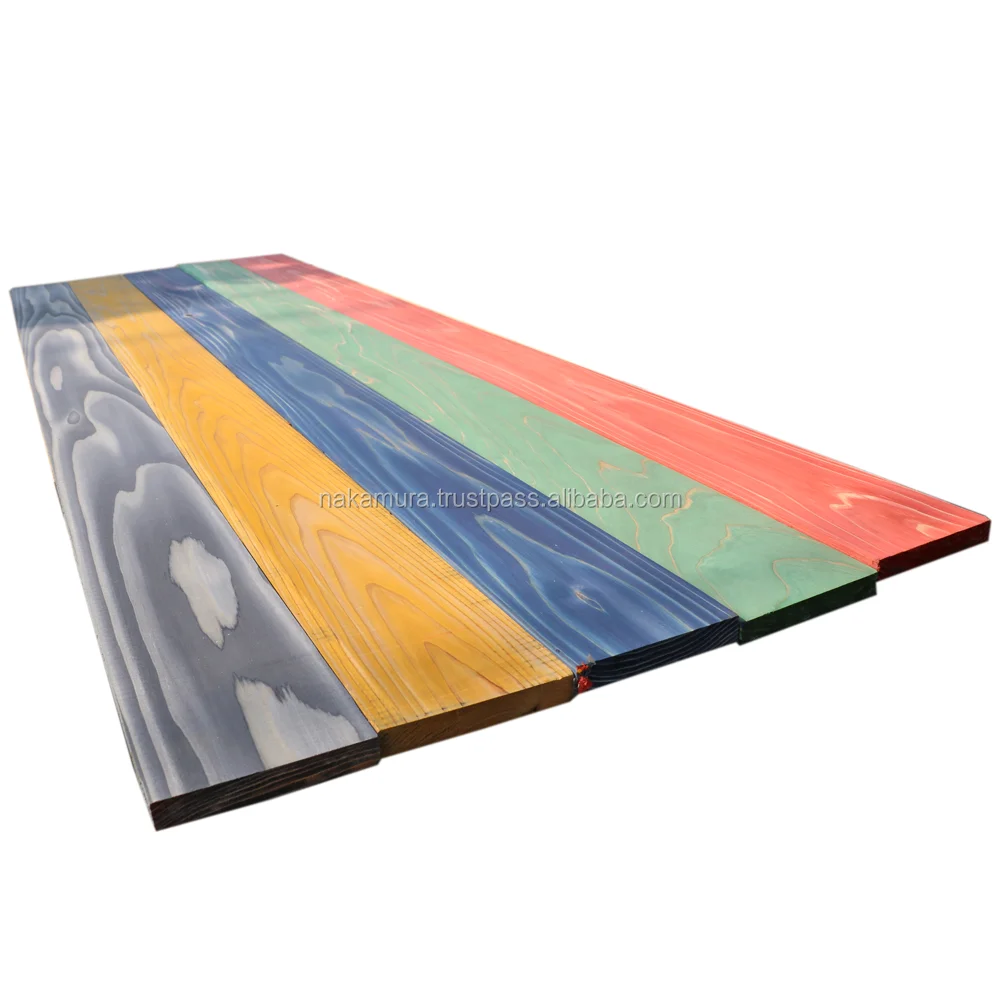
- Beautiful Dye Penetrated Hinoki wood Japanese cypress Solid Timber / Lumber
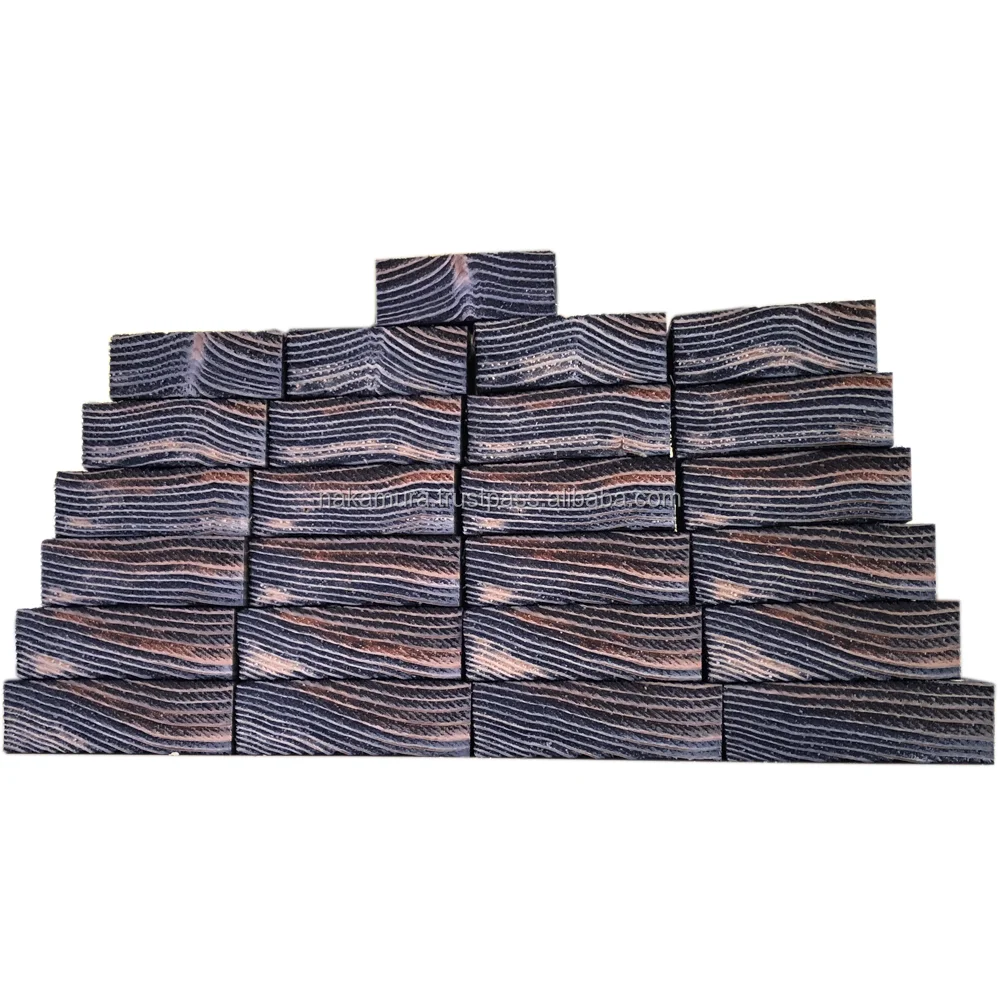
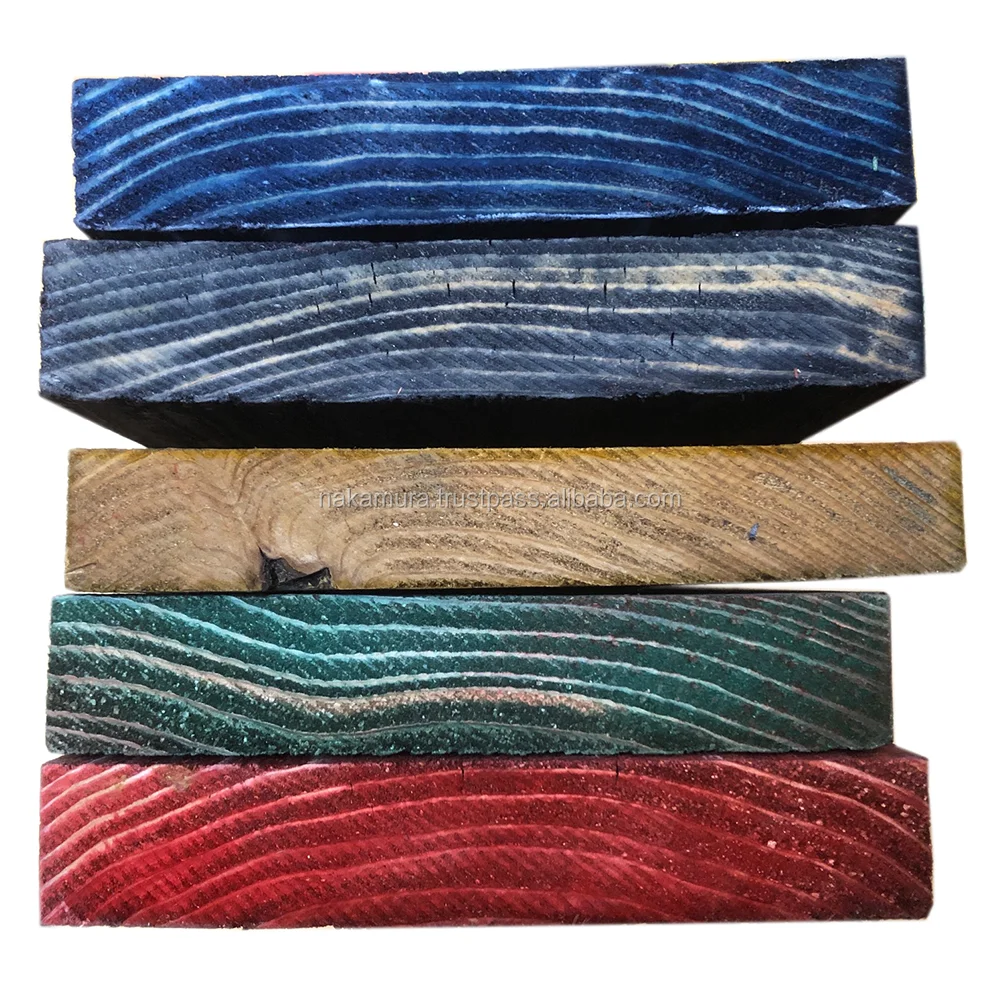
Beautiful Dye Penetrated Hinoki wood Japanese cypress Solid Timber / Lumber
- Category: >>>
- Supplier: NAKAMURA TSUKIITA INC.
Share on (62003012693):
Product Overview
Description
Product DescriptionBeautiful Dye Penetrated Hinoki wood Japanese cypress Solid Timber / Lumber
Home page : http;//www.tsukiita.jp
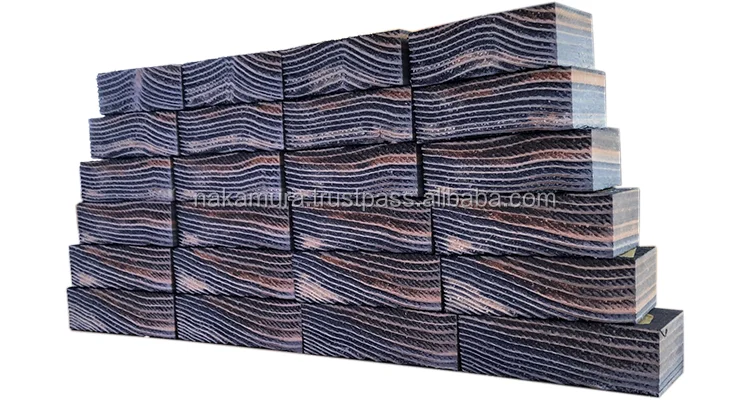
Beautiful Dye Penetrated Hinoki wood Japanese cypress Solid Timber / Lumber
100% DYE penetration wood is manufacturable depends on size & thickness.
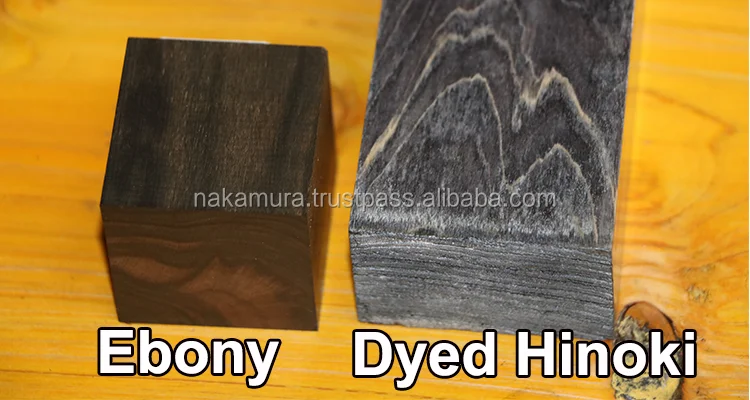
This dye penetrated wood will be substitute for endangered wood species.
Even if you scrape the surface, color remains unlike a normal pigment painted wood.
Home page : http;//www.tsukiita.jp
Instagram: https://www.instagram.com/nakamura_tsukiita/
What is Dye Penetrated Hinoki wood timber?
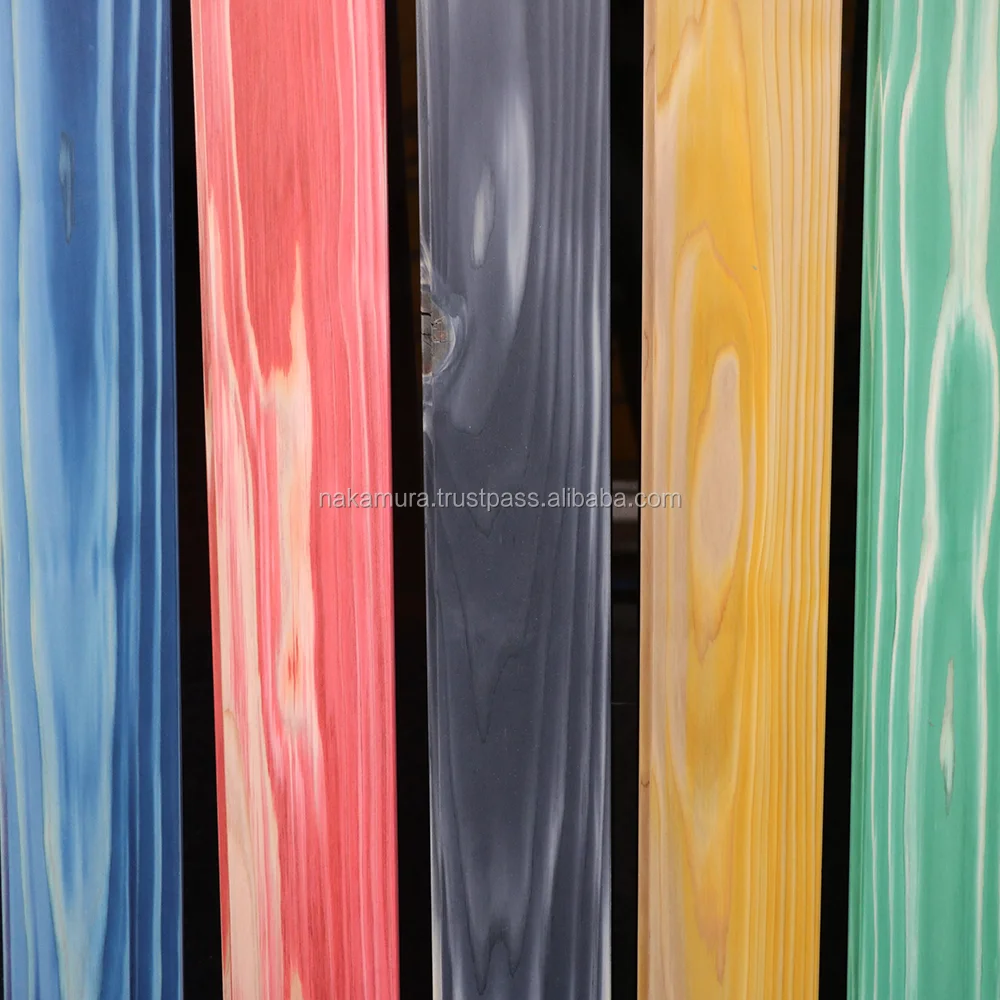
Please look as you can see the beautiful shade along the grain. This beauty is elevated by the perfection of Japanese craftsmanship. Our strict practices and thorough training ensures that we are able to achieve the highest quality product. Hinoki wood is known as a Japanese Cypress and Japanese cedar is known as a sugi which represents Japanese wood. It is admired for its natural beautiful shading. Hinoki and Sugi has been used for Japanese buildings, baths and more since ancient times because it is resistant to humidity and insect damage. It is known for its` familiar but pleasant natural aroma. By dyeing this traditional Japanese material, it has been reborn into something fresh and new with a decorative look. 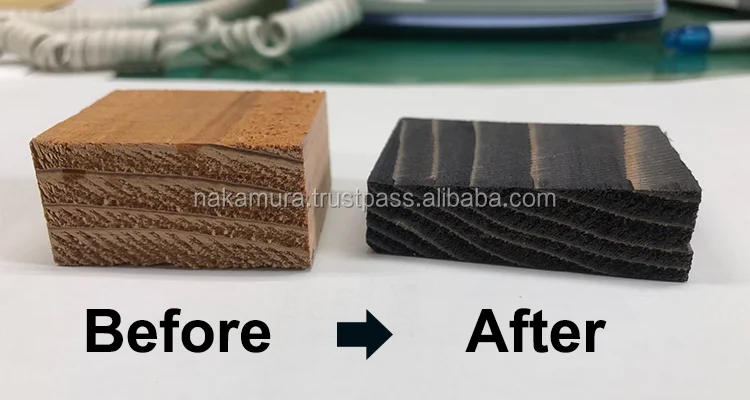
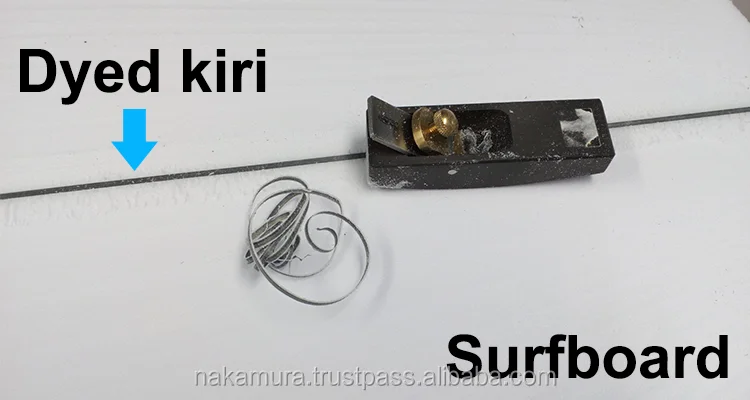
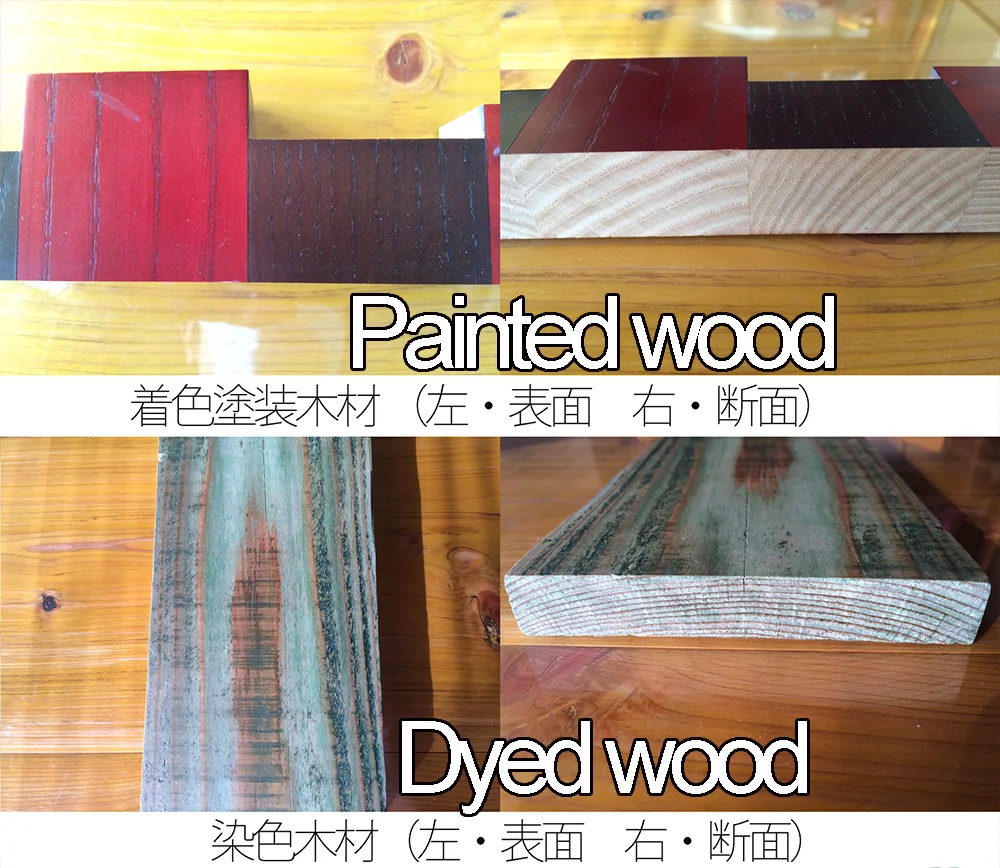
This wood is colored using a dye and unlike the other treatments to the wood by coloring on the surface by post-treatment with pigment based paint. And by doing so, the wood grain does not collapse and the natural texture remains. Thanks to the dye and our technology that penetrates into even the fibers, even if you scrape the surface with CNC router, woodturning lathe, thickness planer and so on, color remains unlike a normal pigment painted wood.
Dyed wood has a distinct difference from regular painted wood.(Wood colored by coating pigment on the surface of wood with a brush). Thanks to our special dying methods, our final product is filled with beautiful colors without impeding the natural grains of the wood. Also, since this is specially dyed to penetrate the surface of the wood, even if you plane the surface several times the shades of colors are still visible. Its` "natural vintage look" is kept intact which is one of the biggest features for this product. For example, dyed wood can even be made into a texture which resembles worn out jeans.
What's more, usually, pigment type paint is oily, so some people may cause allergic reaction. On the other hand, the dye penetrated wood uses a water-soluble dye which is harmless to human beings so it is safe.
In Japan, despite the fact that the forest area for the national land is 67%, which is the second largest forest power in the world, cheap imported wood or precious imported wood having unique colors such as evony, teak and some african wood etc have been pushing down the effective utilization of domestic timber. Meanwhile the acquisition of precious wood is becoming difficult year by year due to the log export restrictions of each country in order to prevent over logging. That is why we have started to focus more on domestic wood such as Japanese cedar and Hinoki wood which have not been utilized much and we have started dyeing them and offer wooden materials with such high added value. We believe that sooner or later this dye penetrated wood will be substitute for precious wood and endangered wood species.
Japanese wood species we dye
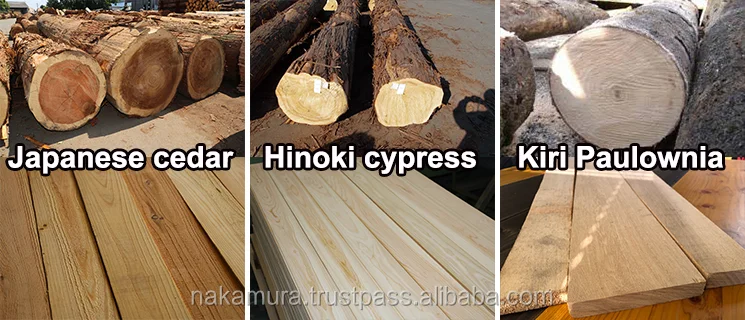
Wood species we currently dye is Japanese cedar, Hinoki wood (Japanese cypress) and Kiri Paulownia but we think that there are more wood species we can dye which we have not just tried yet.
Available colors
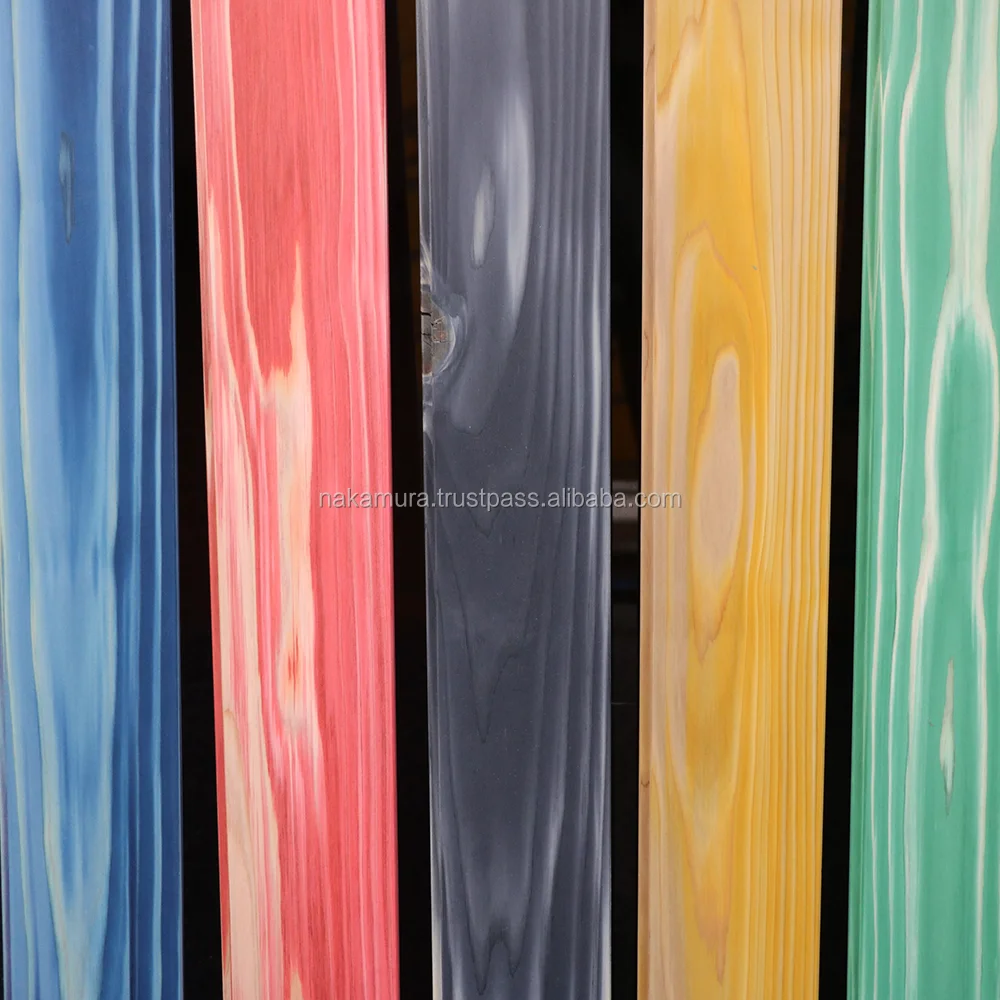
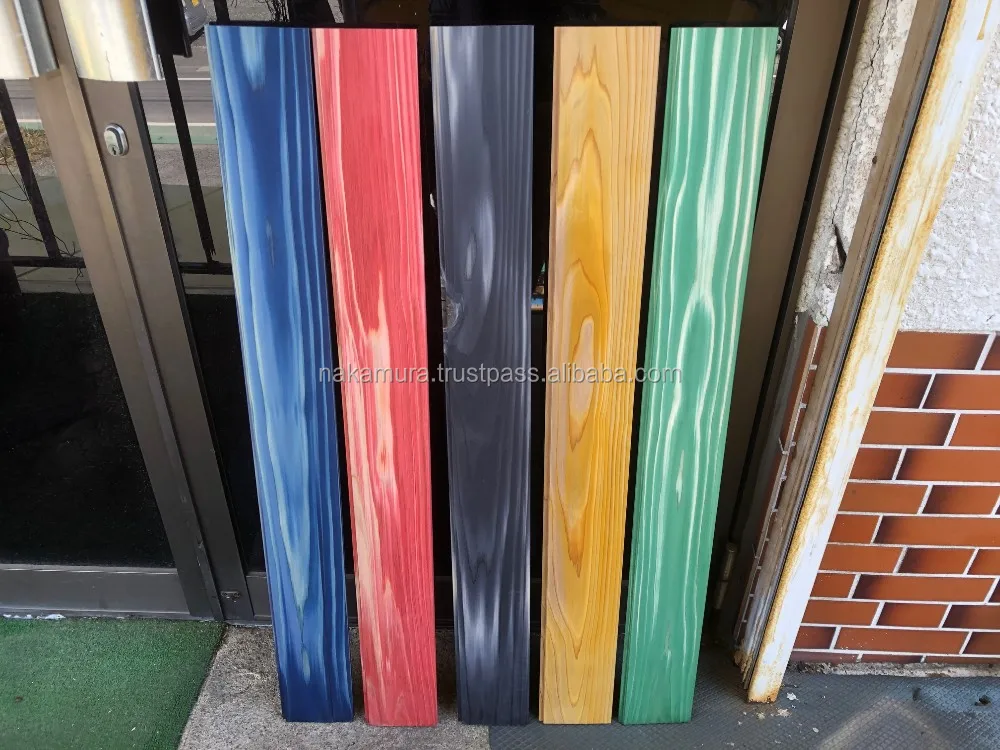
Blue, Red, Black, Yellow, Green
Other colors also can be produced as customer's request.
Manufacturing process
1.First, the freshly cut timber is air dried.
1.First, the freshly cut timber is air dried.
2.Then it is dried in a what is called a "kiln" (a furnace or oven for baking or drying) until its moisture content drops to at least 15%.
3.All timber is weighed before the dye injection.
4.Add a dye to boiling water and stir them until they are mixed properly.
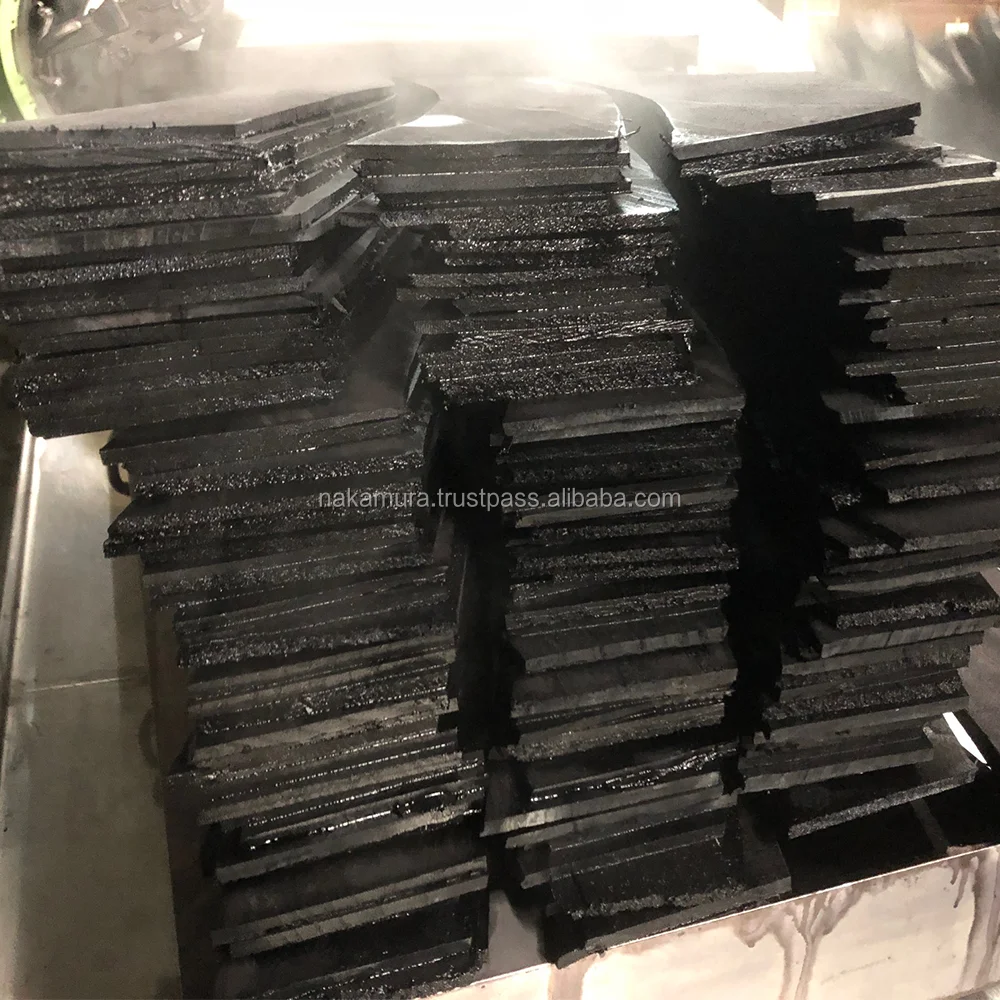
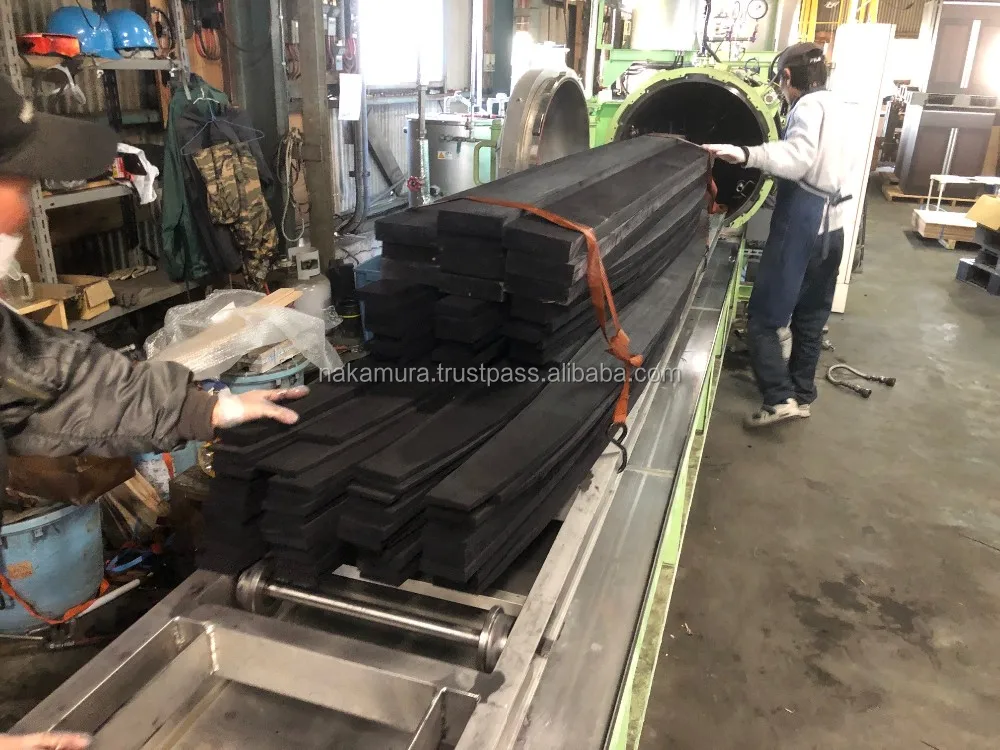
5.The timber is then put into a vacuumed sealed tank. Dyes will be injected to them using pressure for better absorption.
6.All injected timber is weighed to insure that the dye have been injected properly.
7 .Injected timber is air dried.
8.Then once again it is dried in the kiln until the wood has the proper moisture content.
9.As option, Urethane or Plane finish is applied depending on the customers` request.
Note
・The dye we use comes from a long-established manufacturer. It is usually used for dyeing clothes, so there are no side effects concerning health.
・Since there is a possibility that the dye may leach out, please do not put high temperature objects such as pots directly on the surface. If possible please prevent liquids spills. In case of such circumstances, please wipe immediately with a dry cloth.
・When cleaning, simply wipe with a dry cloth. Wiping with a damp or wet cloth may cause the dye to leach out a bit.
・To prevent from leaching out, coating is strongly recommended.
・Hinoki and Sugi are a coniferous tree so it is easier to get damaged compared to hardwood like walnut or oak. During normal usage, the surface may be prone to minor scratches. This is normal and adds a natural aging decorative look.
・Since wood is a natural material, the shades and grain of each board are different so please enjoy these natural features.
Usage Example
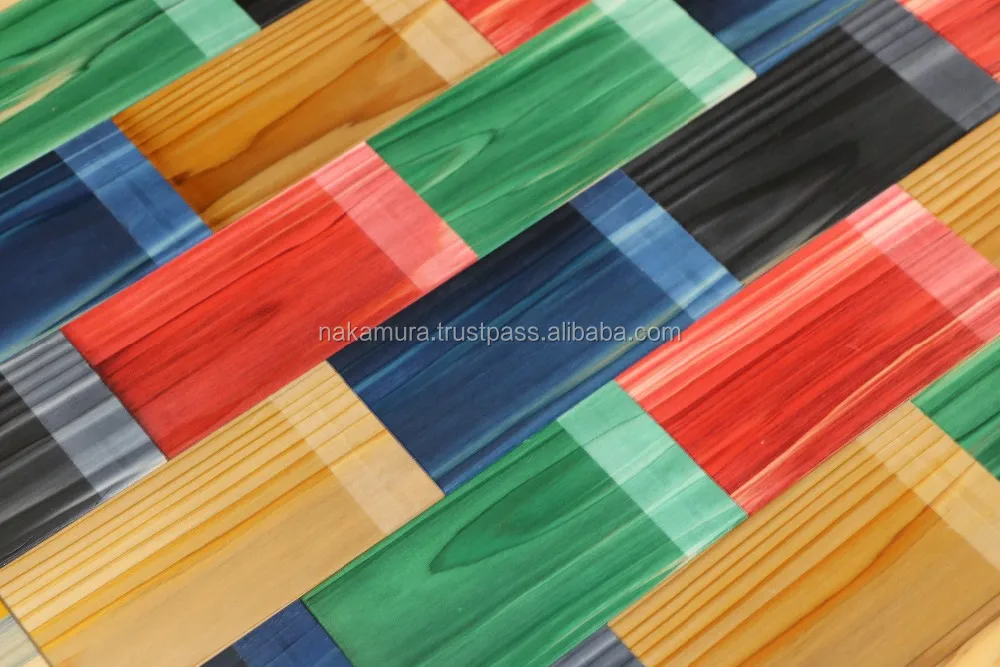
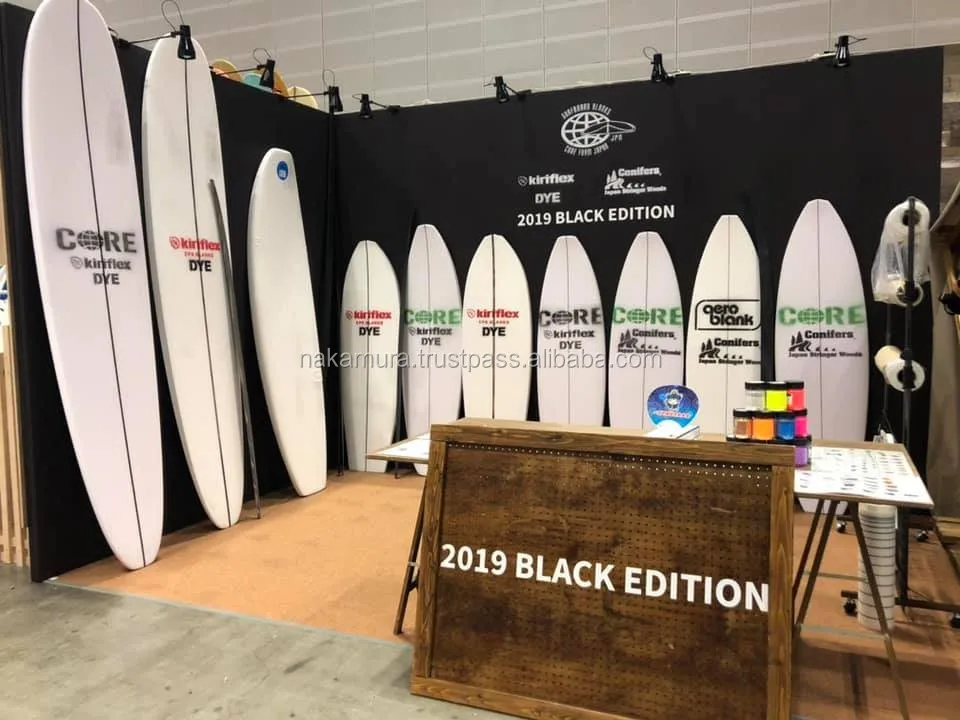
Below is just an example, furniture, wall paneling and surfboard. But depends on your idea, dye penetrated wood could be used for any wooden products such as flooring, snowboard, skateboard, gunstock and so on.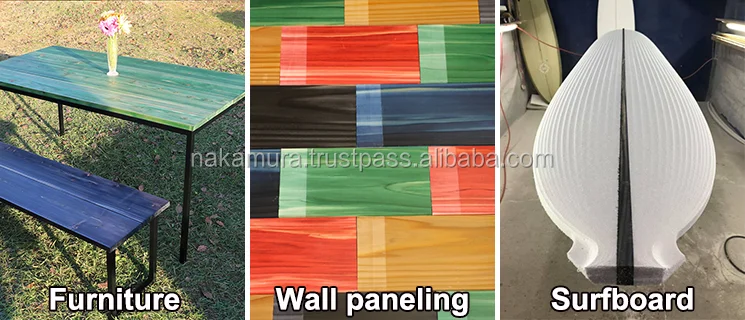
Detailed Images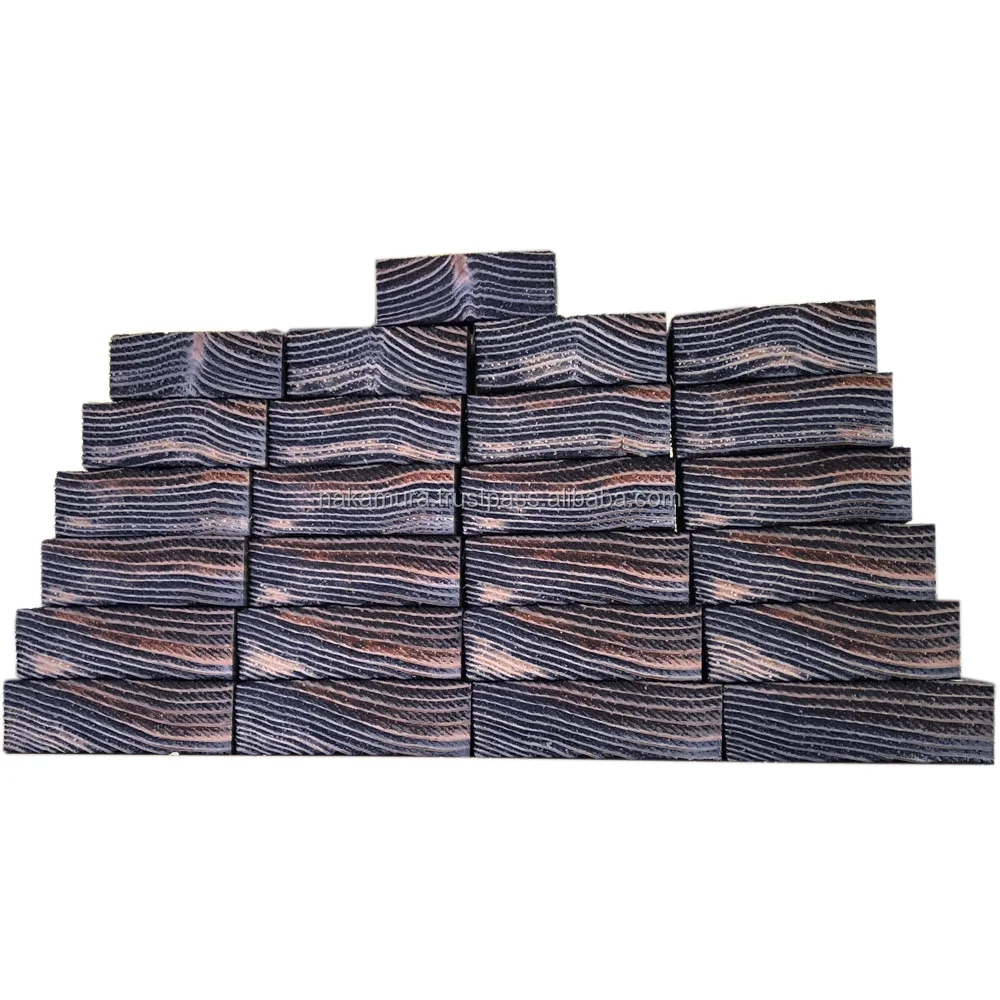

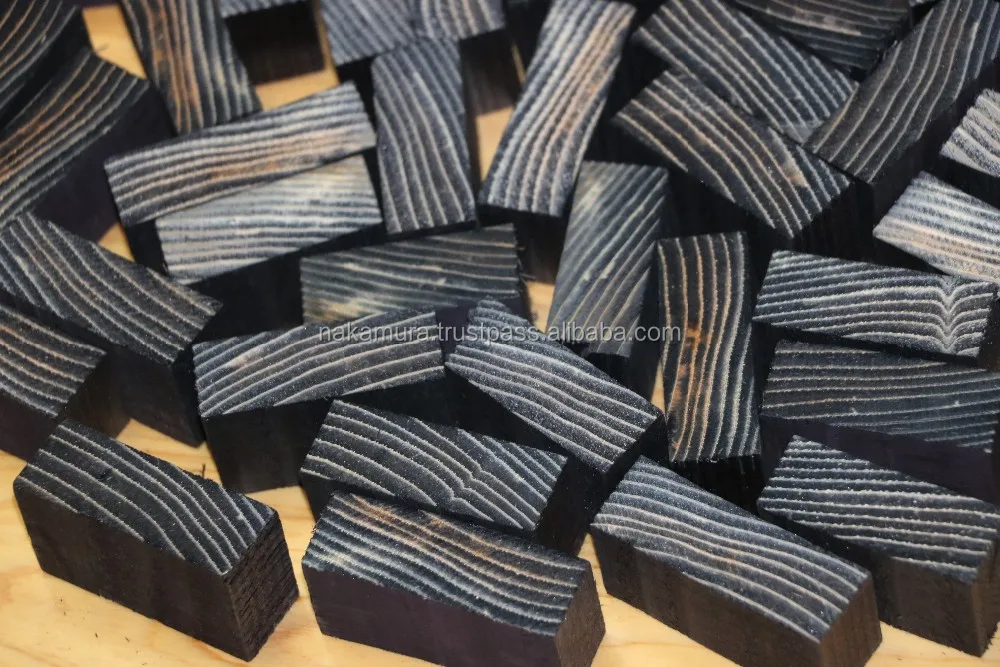
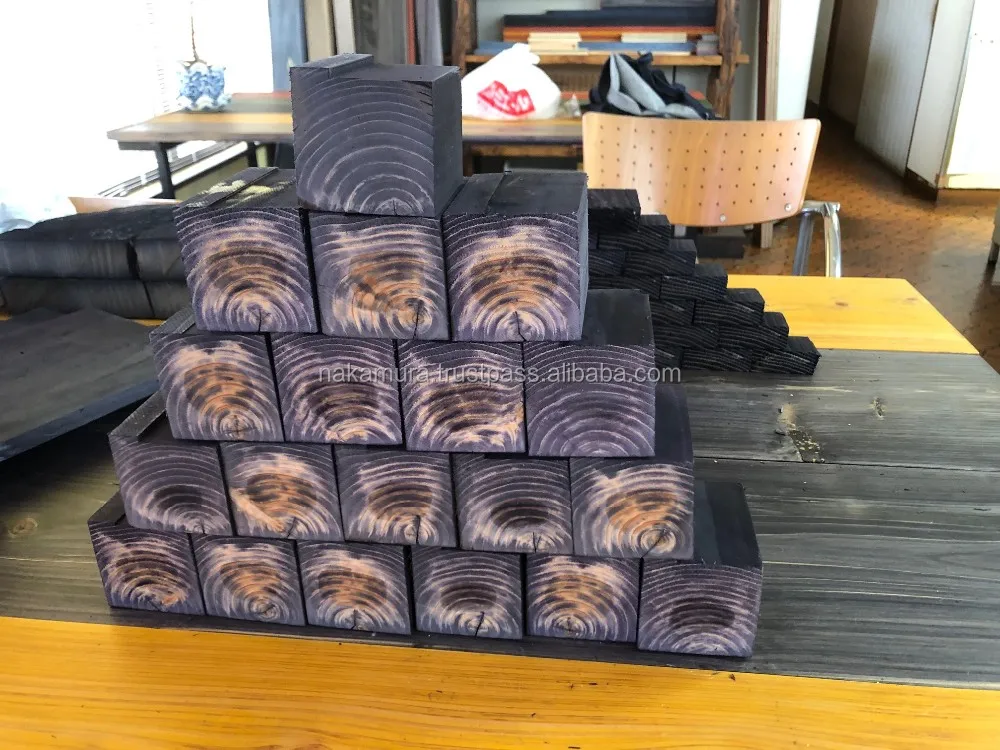
Dye penetrated Japanese cedar
Dye penetrated Japanese cedar
Dye penetrated Japanese cedar

Dye penetrated Japanese cedar
Dye penetrated Japanese cedar
Below photos are Hinoki wood and Kiri.
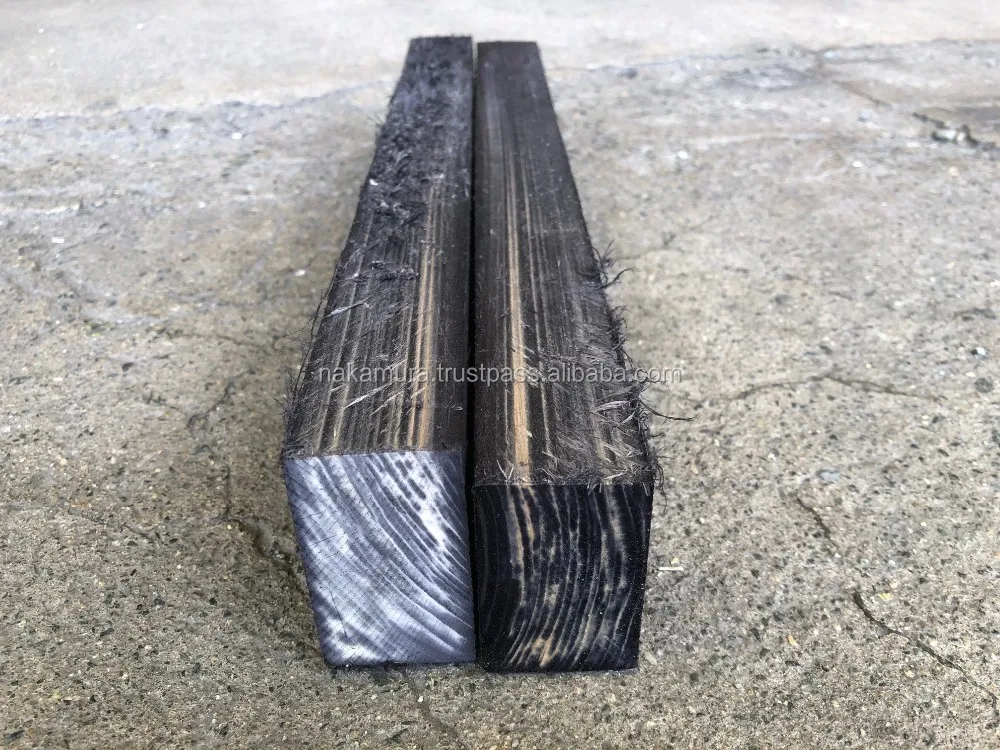
Dye penetrated Hinoki wood (Japanese cypress)
Dye penetrated kiri paulownia for stringer of surfboard (Please note that the dyeing process to Japanese cedar, Hinoki cypress and Kiri Paulownia as stringer and fins for surfboard companies other than kiriflex is required to be approved by kiriflex on contract with Japanese surfboard company "kiriflex"who is one of our client. )
Dye penetrated kiri paulownia for stringer of surfboard (Please note that the dyeing process to Japanese cedar, Hinoki cypress and Kiri Paulownia as stringer and fins for surfboard companies other than kiriflex is required to be approved by kiriflex on contract with Japanese surfboard company "kiriflex"who is one of our client. )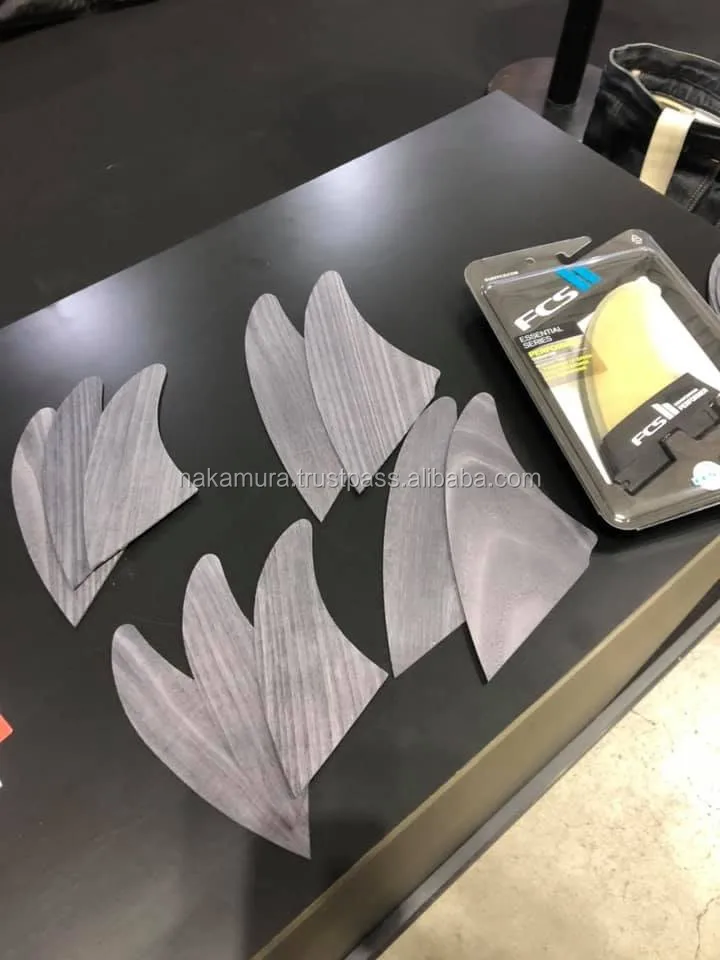
Dye penetrated kiri paulownia for stringer of surfboard (Please note that the dyeing process to Japanese cedar, Hinoki cypress and Kiri Paulownia as stringer and fins for surfboard companies other than kiriflex is required to be approved by kiriflex on contract with Japanese surfboard company "kiriflex"who is one of our client. )
Related products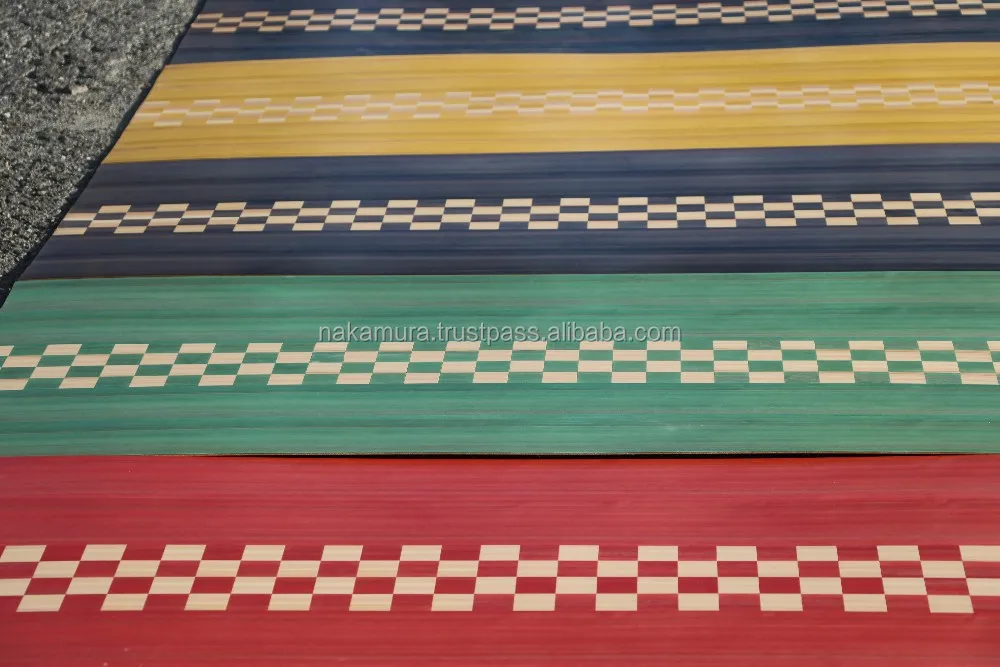
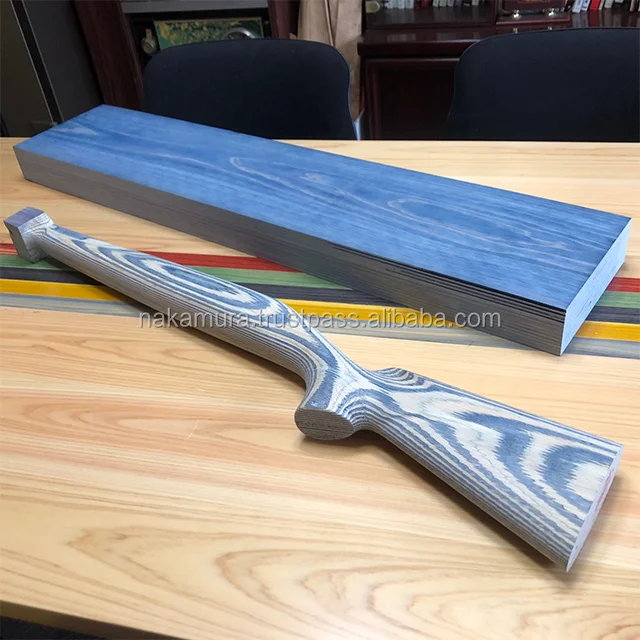
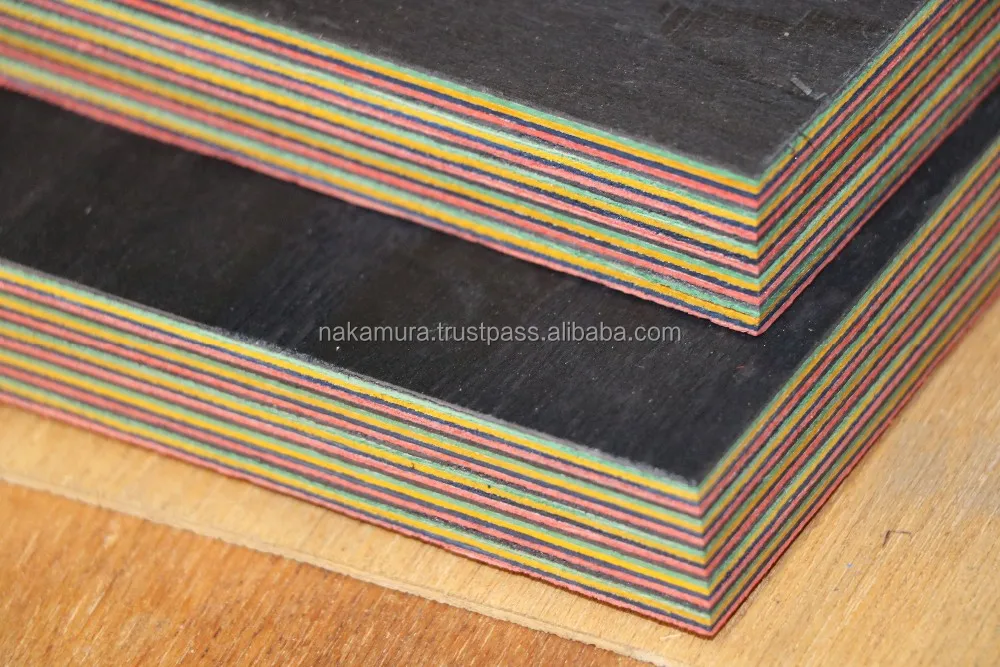
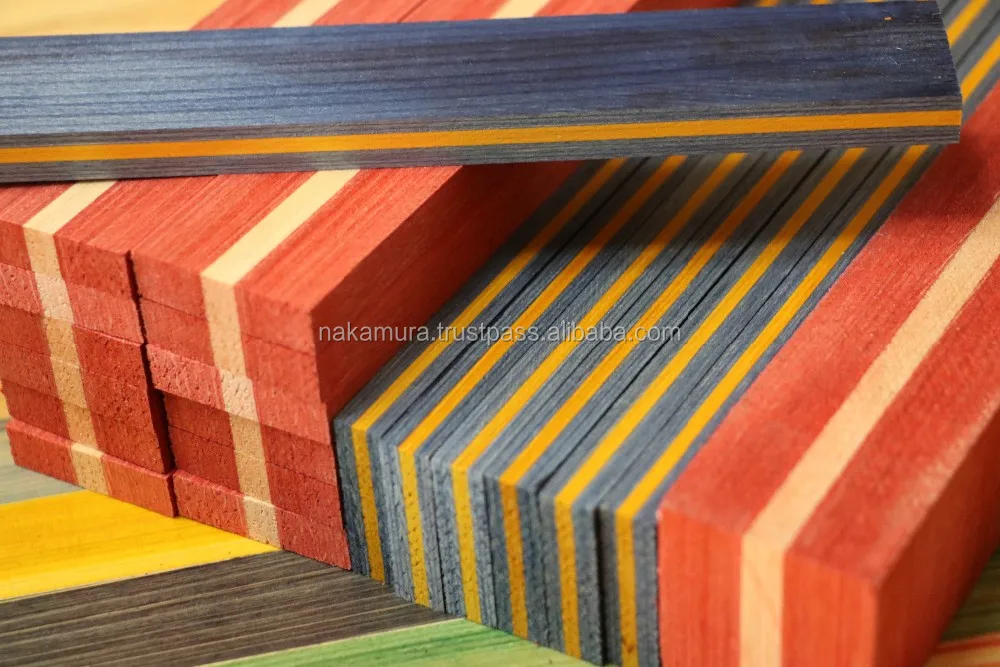
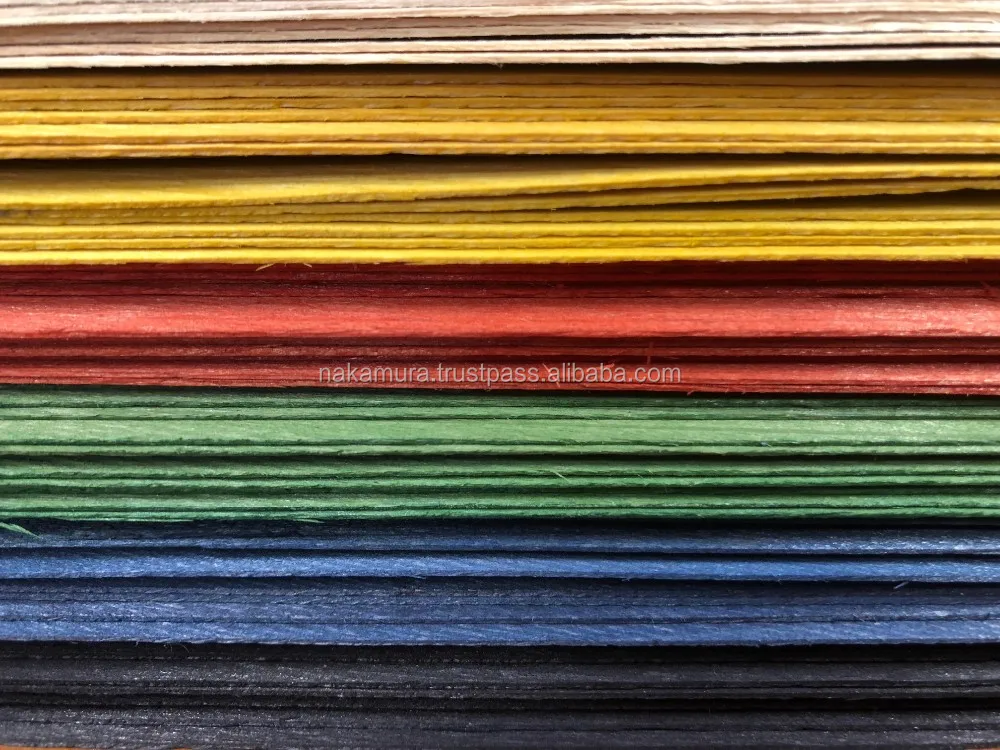
We supply not only dye penetrated wood but also we supply dyed veneer, dyed fancy plywood and dye laminated wood/blank. as similar products.
Dyed fancy plywood
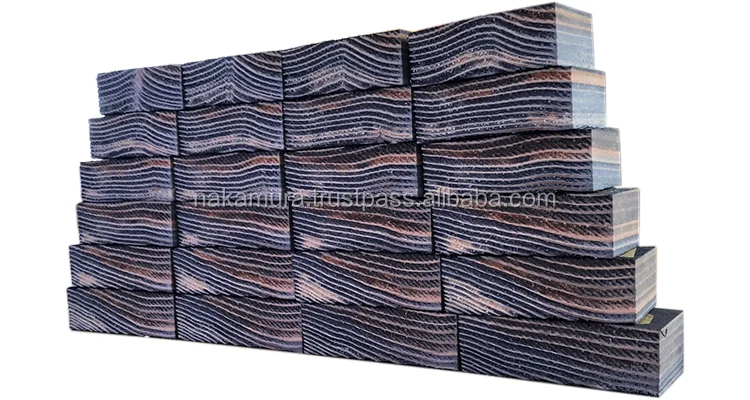
Dye laminated wood / blank
Dyed veneer
Packing & Delivery

These pictures were taken when shipping wood veneers by 40 feet container.
Certifications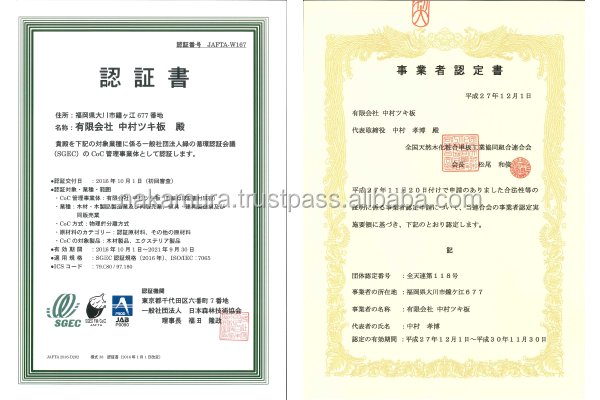
Company Information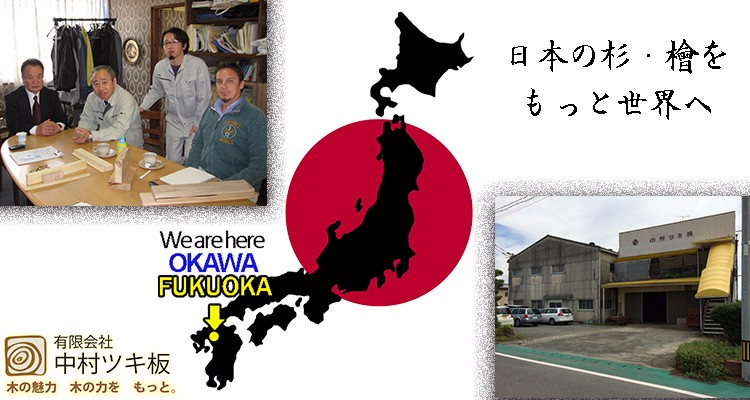
Nakamura Tsukiita INC. is located in Okawa city of Fukuoka prefecture. It is known as the industry hub for woodcraft and furniture making over 100 years. We are a professional manufacture of wood products and materials for building, furniture and more. The company started in 1967 and became a limited company in 1997.
We especially have strength in manufacturing and supplying hinoki cypress and Japanese cedar products, both of which are considered the typical species of tree in Japan for construction, such as fancy plywood, MDF, flooring, wall, log, timber, veneer and more.What's more, we can also supply original and useful products which are included in the wrought iron and dyed wood furniture, non-combustible cedar, anti-termite preservative wood, dyed lumber or veneer and dyed fancy plywood.
Aside from these products, we have also started to ship used products such as Household furniture, Office furniture, Sports goods, Stuffed animal, Toy, Kitchen utensils, Tableware, Clothes, Home appliances, Household goods, etc.by 40 ft container.
| Company Name | NAKAMURA TSUKIITA INC. |
| Established | August 1997 |
| Legal Owner | Takahiro Nakamura |
| Capital | 3,000,000JPY |
| TEL | +81-944-87-7060 |
| FAX | +81-944-87-8360 |
| Web | //www.tsukiita.jp |
| Address | 677 Kanegae, Okawa-city, Fukuoka-pref, 831-0008 JAPAN |
| E-mail | info*tsukiital.jp *→@ |
| Skype | shogo-nakamura1 |
| Viber | +81 90 6292 4832 |
| Main Products | Fancy Plywood, Fancy MDF, Wood Veneer, Log, Lumber, Flooring, Paneling, Dyed Lumber, Dyed Veneer, Fireproof Cedar, Anti-Termite Preservative Cedar, Furniture and more (Especially, we are good at supplying Hinoki wood and Japanese cedar) |
Do you know HINOKI cypress?
Binomial name: Chamaecyparis obtusa
Origin: Japan
Specific gravity: 0.40-0.54
Size: grows to approximately 40 meters tall, and 1 meter wide
Color: Heartwood is pale pink, Sapwood is white
Features: lemon-scent, highly rot-resistant, easy to manage with machinery, good dimentional stability after drying, absorbs toxic substances, Automates its own moisture levels, high durability etc.
Hinoki is one of the most elegant types of wood in Japan. This tree is a type of cypress that is considered sacred and only grows in this part of the world. Hinoki has been used since ancient times in Japan as a construction material to
build temples and shrines. The durability of hinoki continues to increase for about 200 years, even after it is cut.After 200 years, hinoki gradually returns to its original durability which takes about 1000 years. In fact, Horyuji temple, which is the oldest wooden structure in the world, was built using this wood about 1300 years ago, and 65% of it still remains today. In fact, amazingly it is said that you can smell the scent and even reuse the 1300 years old hinoki when planing. With this, the durability and the preservability of hinoki is considered the highest level in the world. In addition, hinoki is currently used as material for wall, flooring, bathtubs, table tennis blades, masu, furniture, chopping boards, sculptures and so on. All of these products/materials give a present atmosphere with its beautiful luster and distinctive aroma. This has an effect for you to feel relaxed, release stress, reduce tiredness, and stimulate the brain thanks to the natural aromatic properties of the chemicals alpha-pinene and borneo. For these reasons, we highly recommend using hinoki products. Below are some of the hinoki products we can supply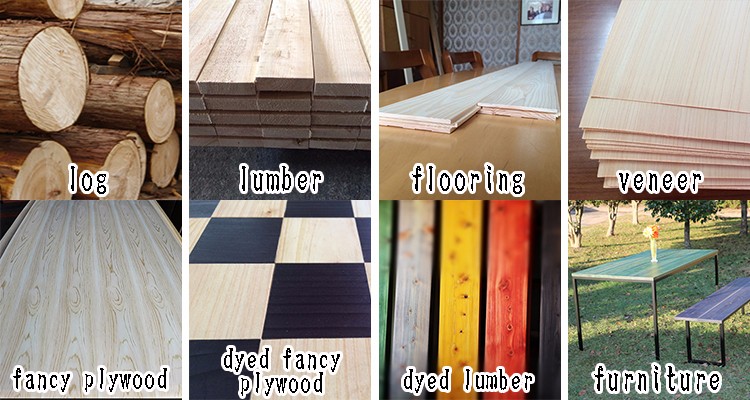
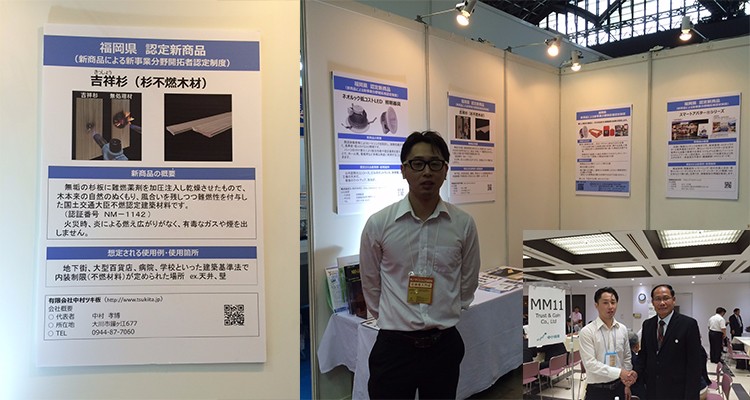
Exhibition
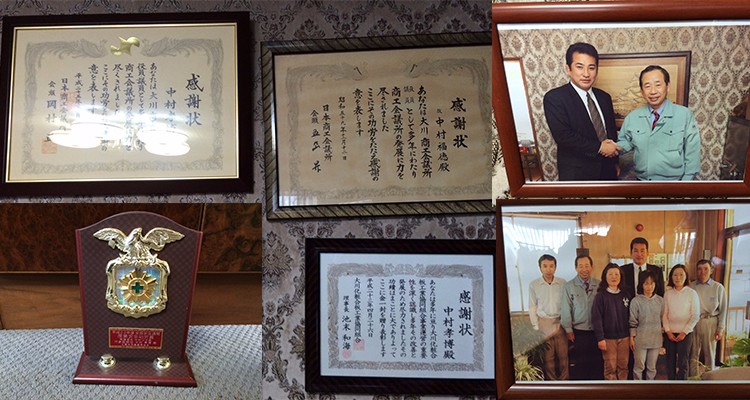
Award
Order Flow

We are looking forward to hear your inquiry.
We Recommend
New Arrivals
New products from manufacturers at wholesale prices