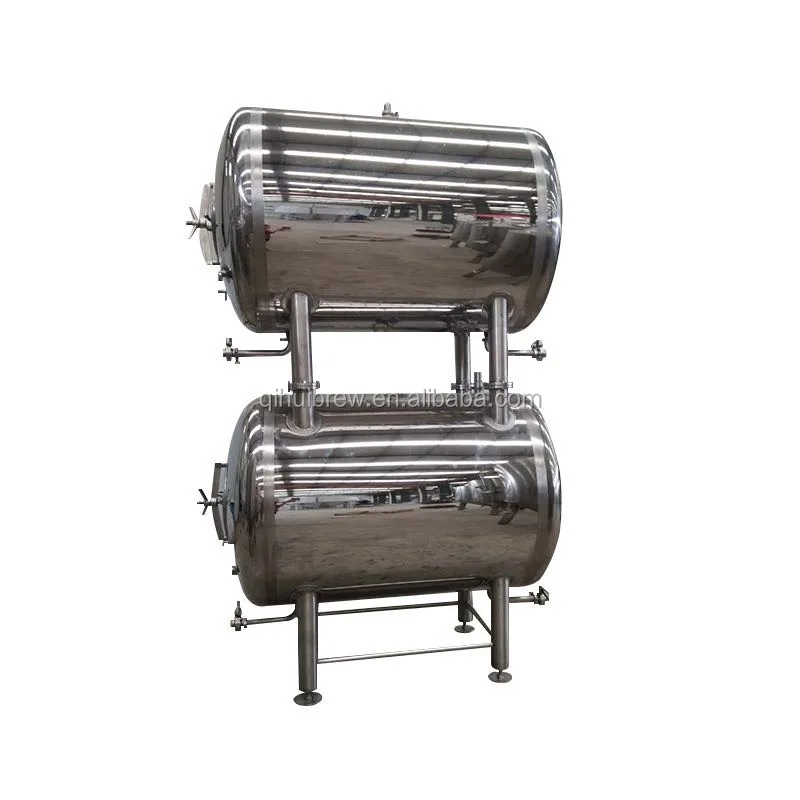
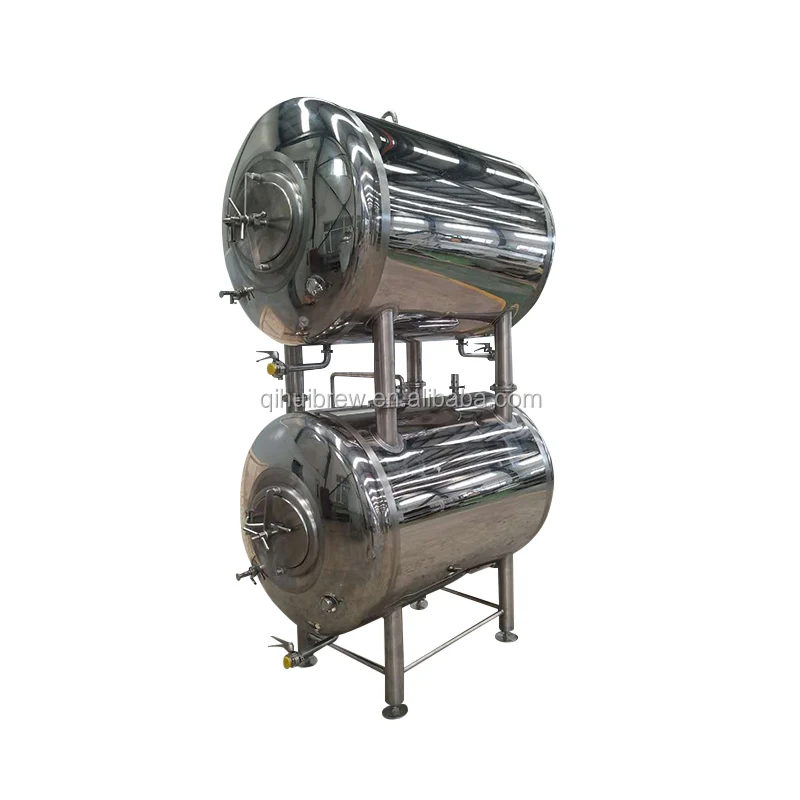
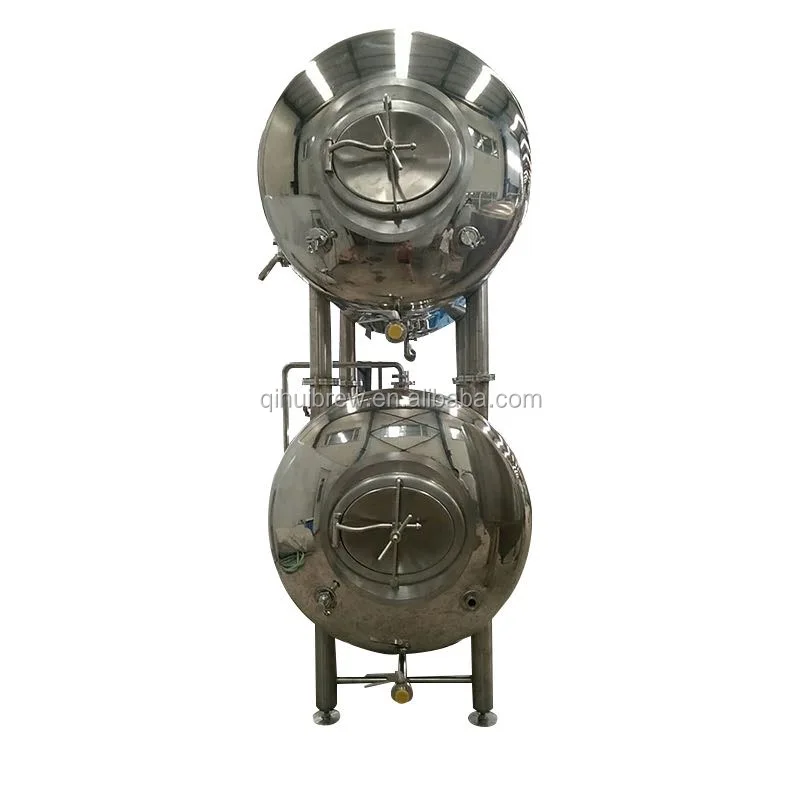
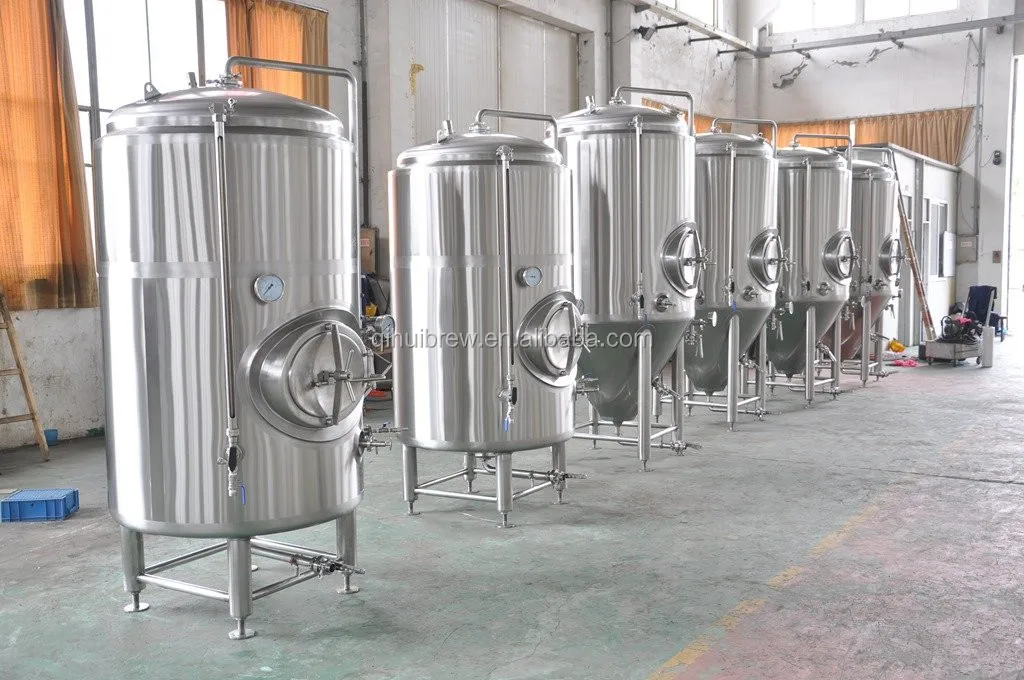
700l horizontal bright beer tank used brewery system
- Category: >>>
- Supplier: Jinan Qihui Beer Equipment Co. Ltd.
Share on (62009671630):
Product Overview
Description
700l horizontal bright beer tank used brewery system
Hello, my friend,
Welcome to Jinan Qihui brewing group, start your beer world.
Name | Components | Specification |
Grain Milling Unit | Rolling Miller | Double roller |
Brewhouse unit
| Mash/Lauter tun | Grain rake with VFD |
Kettle/Whirlpool Tun | Steam Jacket on bottom and side/direct gas fired heating/electric heating | |
Hot water tank | Steam Jacket heating/direct gas fired heating/electric heating | |
Heat exchanger | SUS304 plate | |
Fermentation unit |
Fermenter | Glycol cooling jacket on cone and bottom |
Bright beer tank |
Bright beer tank | Glycol cooling jacket on cone and bottom |
Glycol Chilling Unit
| Glycol Water Tank | Insulated conical top and sloped bottom |
Cold Water Tank | Dimple plate on side wall | |
Chiller |
| |
Control unit | Brewing and fermetation process Controlling | Manual button control panel or PLC control with touch screen for special |
CIP unit
| Caustic Tank | electric heating element inside |
Sterilization Tank |
| |
Transfer&Control |
| |
Others |
|
|
Two Decoction Mashing Process Steps
---Mash/kettle,lauter tun, whirlpool tun and hot water tank
Step1. Pump some hot water from the hot water tank into the mash/kettle tun, then add some cold water to make the water reach the suitable temperature of 37℃ for the raw material and control the water quantity (for 1000L brewing system, the water for raw material is 800L, the original wort concentration could reach 10 to 12 °P) .
Step 2. Start to add raw material(proteolysis): start the mixing system of the mash/kettle tun, put the milled barley into the mash/kettle tun, mix evenly, stop mixing, then begin to time; (if it is wheat type beer, add milled barley at first, mix evenly and then add the milled wheat, mix evenly; keep the temperature of adding raw material 37℃ for 20 minutes).
Step 3. Start mixing, open the steam valve, rise the temperature of the mash/kettle tun, control the speed of temperature rising by 1℃/min. When the temperature reaches to 53℃, stop mixing, keep this temperature for 60 minutes.
Step 4. After 60 minutes, pump 2/3 amount of the wort into the lauter tun, start the mixing of mash/kettle and steam valve again, heat the rest 1/3 wort until it is boiling and keep it boiling for 30 minutes. Switch off the steam valve, then pump the wort from the lauter tun back to the mash/kettle tun, make them mix evenly and make the temperature reach to 76-78℃.
Step 5. Pump 2/3 amount of the wort into the lauter tun again. Start the mixing and steam valve of the mash/kettle tun, heat the rest 1/3 wort until it is boiling. Switch off the steam valve, then pump the rest wort from the lauter tun into the mash/kettle tun, make them mix evenly and make the temperature reach to 76-78℃. Stop mixing and prepare to lauter the wort.
Step 6. Add some water in the lauter tun, control its level just submersing the sieve. Start the mixing motor, some related valves and mash pump, pump all the wort into the lauter tun, switch off the mash pump. Continue mixing for 5 to 8 minutes. After the wort being mixed evenly, stay for 10 to 15 minutes and prepare to flow back and lauter.
Step 7. Wort back flow: Pay attention to the time of staying, after the staying, begin to flow back the wort. Switch on the related valves and lauter pump, make the wort flow back in the lauter tun for 5 to 10 minutes. When the wort in the sight glass becomes bright, switch to some related valves and pump the wort into the mash/kettle tun.
Step 8. Determine the beer original wort concentration: after 20 minutes of lautering, take some sample to determine the beer original wort concentration.
Step 9. Prepare the water to wash the spend grain: switch on the heating valve of the hot water tank, rise the water temperature to 78℃.
Step 10. Wash the spend grain: Original wort lautering to the time when the spend grain begins to emerge, start to mix, add water to wash the spend grain, then stop mixing. When the new lauter bed formed, repeat the former lautering process. Usually wash the spend grain for twice to three times, pay attention the quantity of adding water.
Step 11. Mixture wort concentration determine: after twice to three times washing the spend grains, determine the mixture wort concentration.
Step 12: Remove the spend grain: after twice to three times of washing the spend grain and the mixture wort concentration reaching to the suitable value, stop lautering. Start the lauter scrape plate to push the spend grain to the spend grain door, open the spend grain door, using the rake to remove the spend grain manually.
Step 13. Cleaning: After removing all the spend grain, using clean water to clean the lauter tun, false bottom and racker, open the drain outlet of the lauter tun to discharge all the remained spend grains.
Step 14. Switch on the steam valve, rise the temperature of the mash/kettle tun, boil the wort. At the same time, start mixing, make the wort be heated evenly. When the wort has been boiling for 5 minutes, add biter hops. 10 minutes before finishing the boiling, add aroma hops. The total boiling time usually lasts for 60 minutes. After completing the boiling, whirlpool the wort and discharge the drain.
Step 15. Cool the wort through heat exchanger and add some suitable oxygen and pump the wort into fermenters.
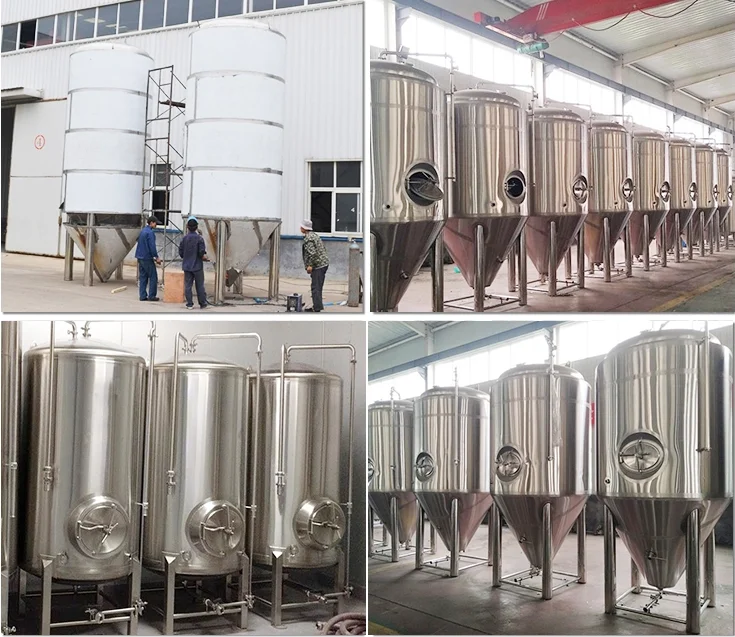
Product show:

Why choose QiHui as your supply of brewing systems?
1. Focus on quality 20 years
As one of Asia high-end craft beer brewing equipment manufacturer, he has the most professional design and manufacturing team. He has adhered to the craftsman’s spirit, insisted on the basis of learning and introducing new technologies to develop and innovate independently .Now he has established own unique brewery equipment product system, and there will be 2-3 new products to market every year.
2. Completed service
Pre-sale service::
According to customer requirements to provide one-stop brewing beer project solution: tailored process flow chart; site layout; cost-benefit analysis.
Production monitoring:
Equipment production will be strictly according to standards, timely communication with the customer production and other production conditions; to guide customers to prepare the venue; to help customers handle the relevant permit business procedures; equipment acceptance after the completion of timely and accurate delivery, contact the logistics do a good job Shipping matters.
After-sales service:
Our commitment to all tanks five-year warranty, life-long technical support. And send professional brewing engineers free on-site guidance to install debugging; to teach brewing beer brewing technology; provide a variety of brewing brewing formula; supply all kinds of beer brewing raw materials.

We Recommend
New Arrivals
New products from manufacturers at wholesale prices