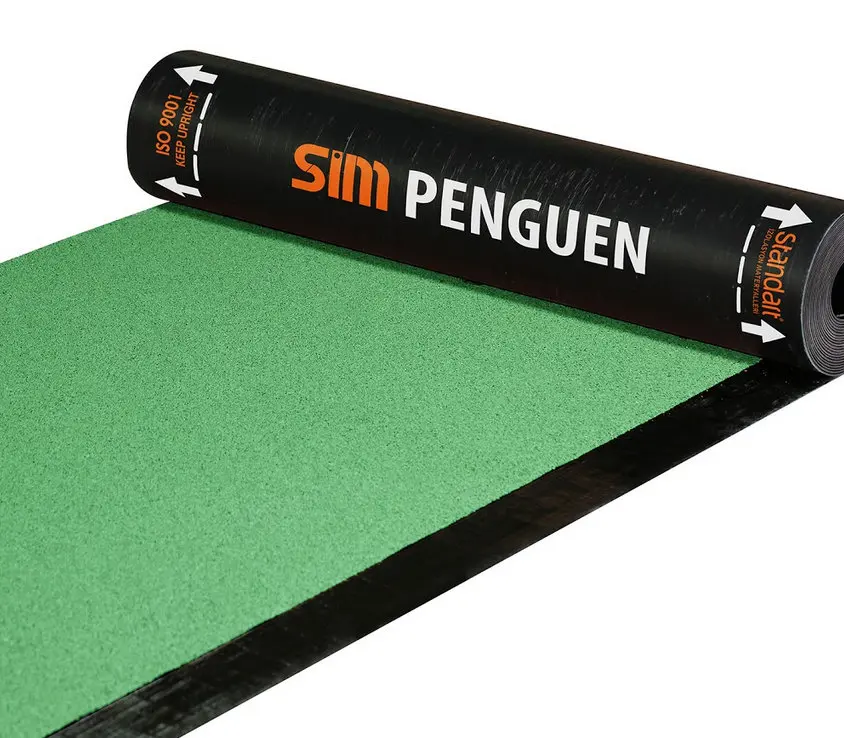
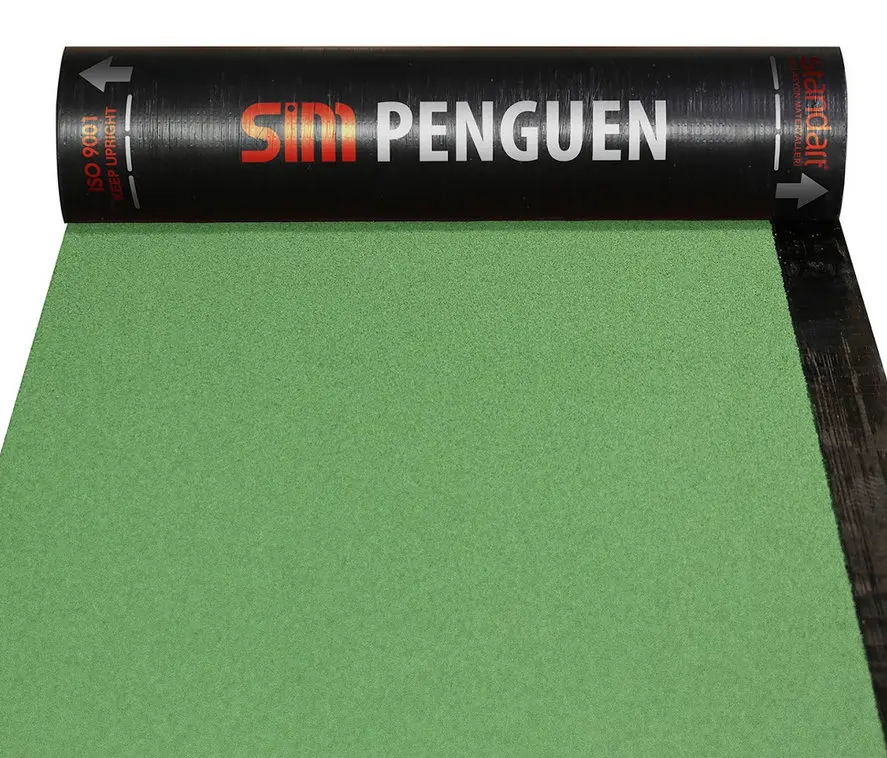
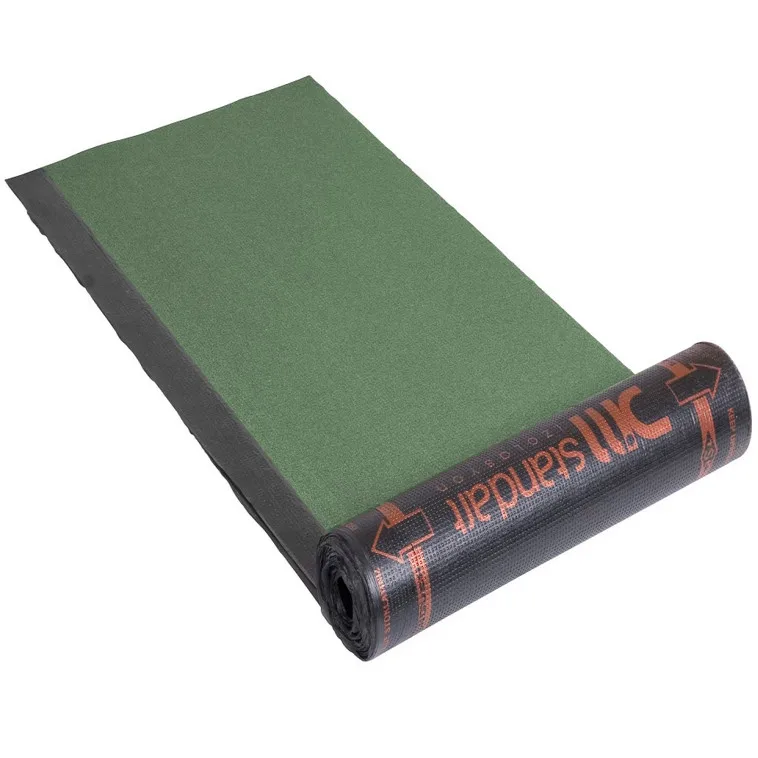
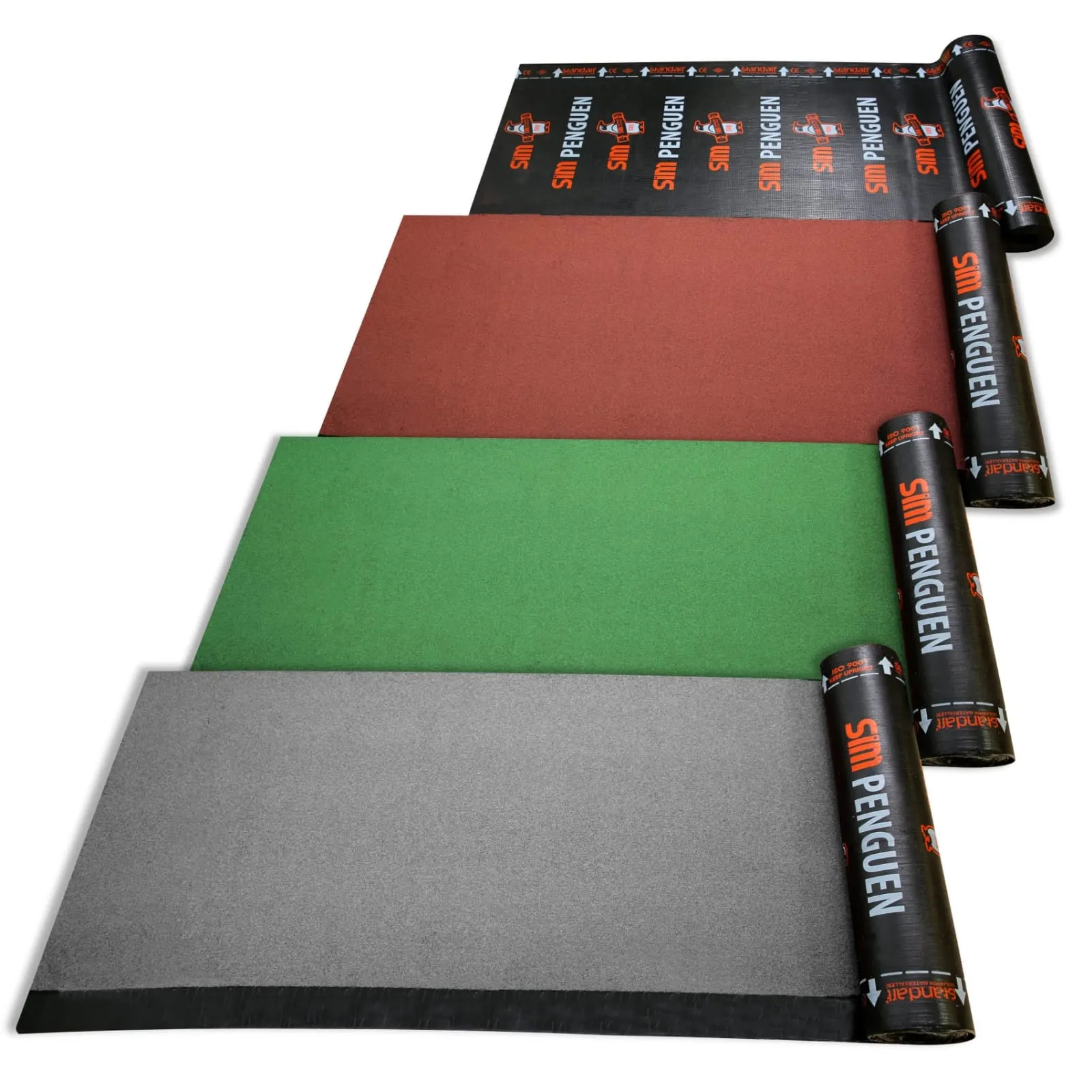
Polyester Reinforced Colored Mineral Stone Coated Waterproofing MembranePenguen Reflective Mineral Coated SF40 AR Y (3.5mm)
- Category: >>>
- Supplier: BALCIOGLU GRUP STANDART IZOLASYON VE YAPI MATERYALLERI SANAYI TICARET ANONIM SIRKETI
Share on (62017764993):
Product Overview
Description
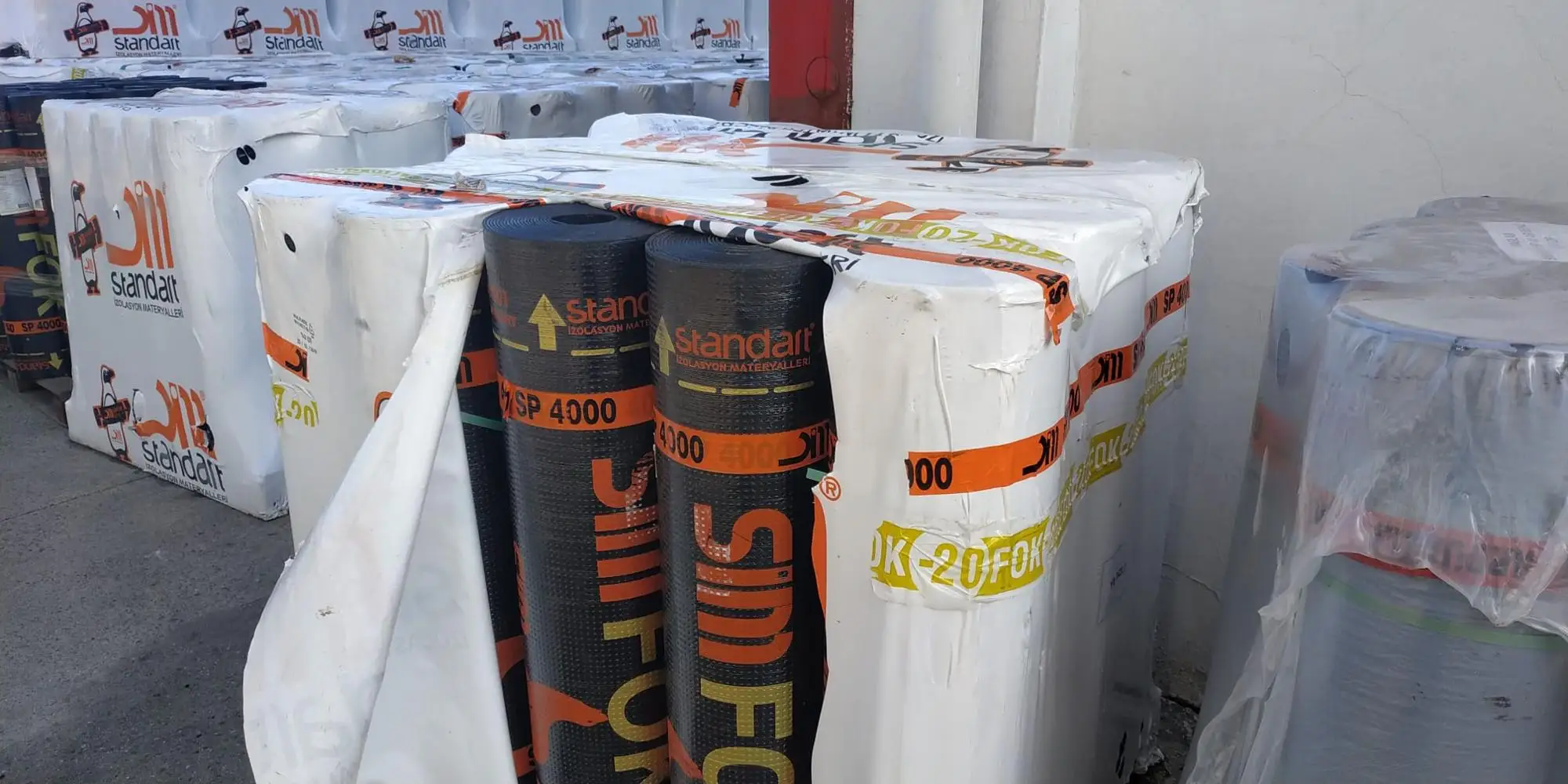
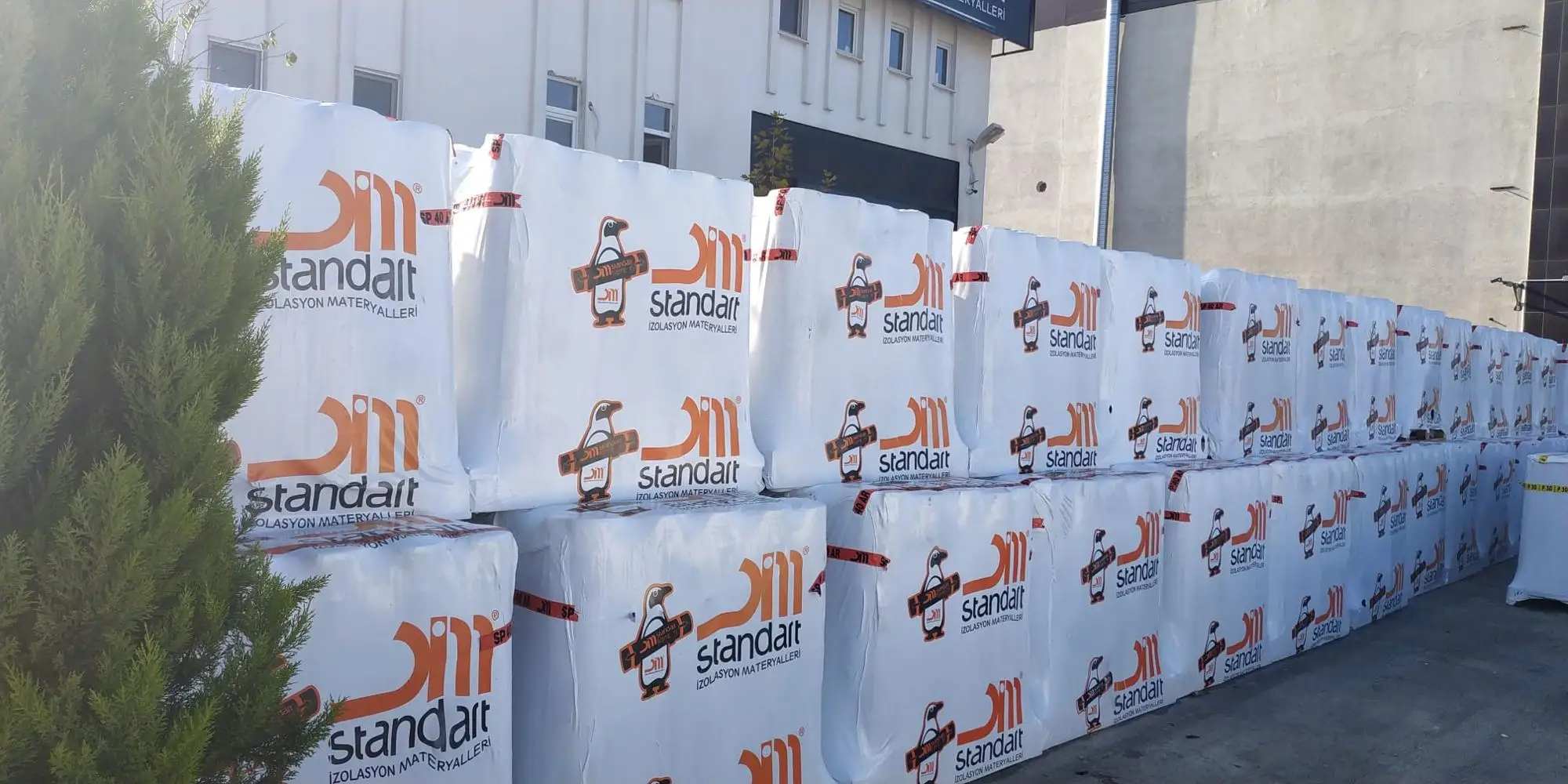
The rolls of bituminous membranes should be stored in vertical manner. Additionally during the transportation they should be placed vertically. Bituminous membranes should not placed in overlapping manner preventing the hevay load on the rolls. Membranes should be protected from freezing and sunlight (ultraviolet light). They should be kept away from heating sources. They must be protected from sudden temperature changes.
PENGUEN Series Waterproofing Membranes are plastomeric type that are the ideal preference for mild climate zone. In producing this type of membranes, APP (Atactic Polypropylene) with thermoplastic resin is used for to enhance of the bitum. Also incerasing, physical strength of the membranes being used glassfiber tissue and nonwoven polyester mat as a bearing and reinforcement system.
Properties
It protects its good adherence specialty after the application and it is certain solution for all waterproofing issues especially in the basement applications. It can be applied all different surfaces like wood, cement and metals. It has shown the property of enhanced elasticity against the transversal and longitudinal structural movement. It also stands against the building movements and structural expansion differencies. Our membranes neither dissolve or discharge in warm weather condition not cracked in the cold weather conditions and can be easily used with the help of blow torch. It is easily applied with cutting special cutters according to necessary sizes. It is suitable for using in dilatation, concrete structures, parapet turns and chimneys. They are durable same as building life is if they are applied correct way.
Application Areas
Bituminous membranes can be applied in all the areas where water can affect the structure like the walls which have contact with ground, foundations and layers with the ground. They can also be used in external walls which is below of the water level , balconies, terraces, bathrooms and toilets. Additionally they can be used in the structures for water reservoirs, artificial ponds or resting walls. It provides, in many details ovides better economical and aesthetic solutions.
Storage and Protection.
Description
It is APP (Atactic Polypropylene) modified, torch-on plastomeric waterproofing membranes with fiberglass or non-woven spunbond polyester felt; both sides are coated with polyethylene film or one side coated with polyethylene film, the other side is coated with silica sand, aluminum foil or natural or colored slate chippings (mineral stones).
Fields of Application
It is used in curtain walls, foundations, and projects with high tensile requirements, basement walls, balconies, terrace roofs, inclined roofs, water tanks, manmade ponds, retaining walls, concrete channels as well as bathrooms and any wet surfaces.
Features and Benefits
- Flexible and long lasting.
- Applicable on different kind of surfaces.
- Has high elongation and tensile strength.
- Resistant to aggressive effect of the soil.
- Easily applied to the details of dilation, edges of chimney and parapet returns etc.
Surface Preparation
Application substrate should be cleaned off loose pieces, oil and other chemicals. Surface defects are repaired with the suitable repair mortars, corners are chamfered with PH 55 bitumen fillet. It is recommended to use the B PR 100 as a primer on the application surface for accomplish application.
Application
10 cm overtopping shall be allowed for joints and 15 cm overtopping for ends by using welding torch. The surface coated with mineral stone on joints should be heated and minerals should be buried in to the bituminous surface by using trowel before welding the joints together. The transverse joints of the first layer covering should be aid down in an offset position. For the top layer, longitudinal and transverse joints of the first layer should be centered. Roof covers should be laid perpendicular to the slope from the point where the slope is lowest.
We Recommend
New Arrivals
New products from manufacturers at wholesale prices