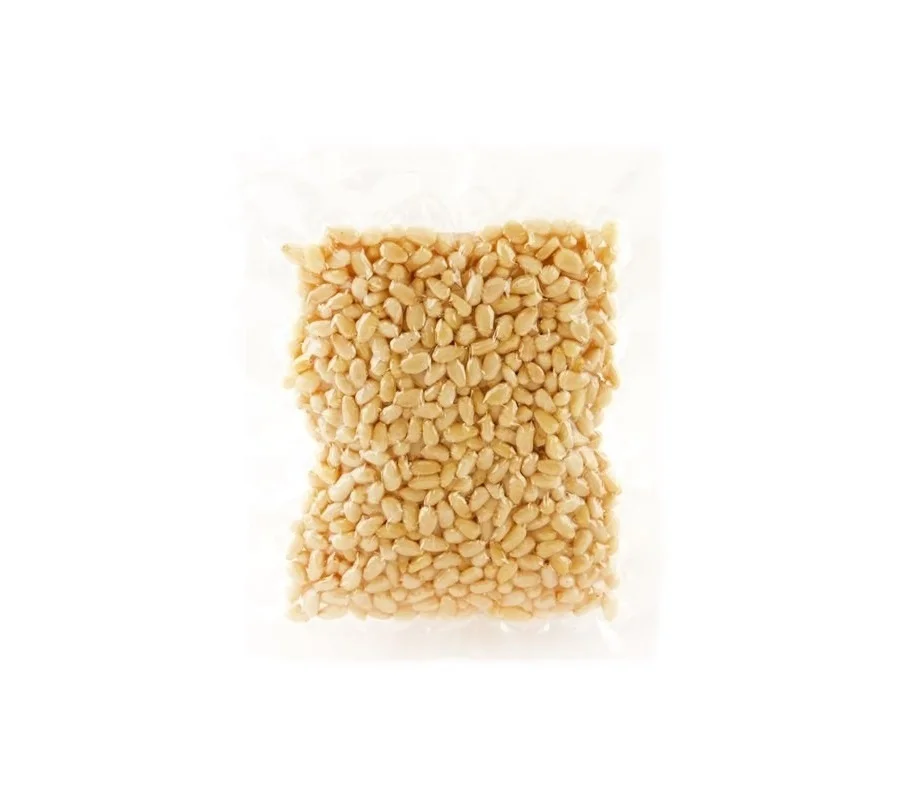
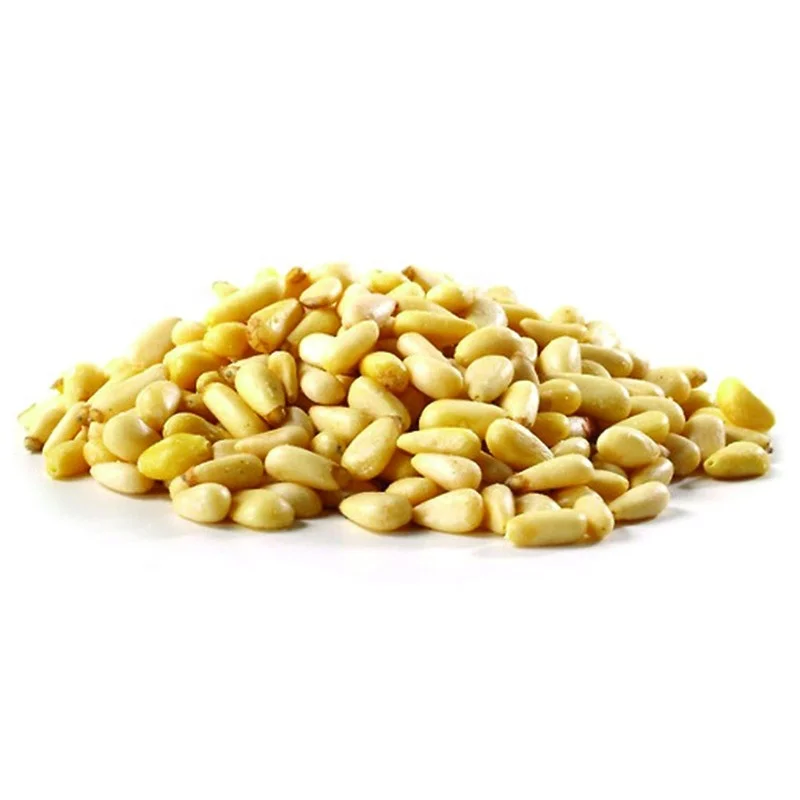
Nutritive and healing properties of nuts can be mostly explained by the qualitative composition of fats, proteins and other substances within them. Fat of pine nuts differs from other fats in its high content of polyunsaturated fatty acids, especially linoleic one. Pine nut is a generic name of seeds of different species of plants from the Pinus genus, or so called cedar pines producing edible seeds. In Russia the name "pine nuts" is usually used for the seeds of the Siberian cedar pine (Pinus sibirica). Pine nuts are small pale-yellow kernels with prominent taste; they are almost always sold free of shells. Their piquant taste becomes brighter after roasting, when they produce some oil.
Cultivation Type
Wild
Use
Eat
Calories (per 100 g)
673
Food Additive
No
Flavor
Original taste
Application
Pine nut contains a large number of unsaturated fatty acids, often eating pine nuts, can strengthen the body
A motherland of cedar is endless Siberian spaces where these grand trees grow up to now; some of them are 3,000 years old.
Caloric value Pine nuts contain a lot of fats and carbohydrates. Their caloric value is 673 kcal per 100 g of dry or raw product. Cedar pulp contains a bit less calories - 432 kcal per 100 g.