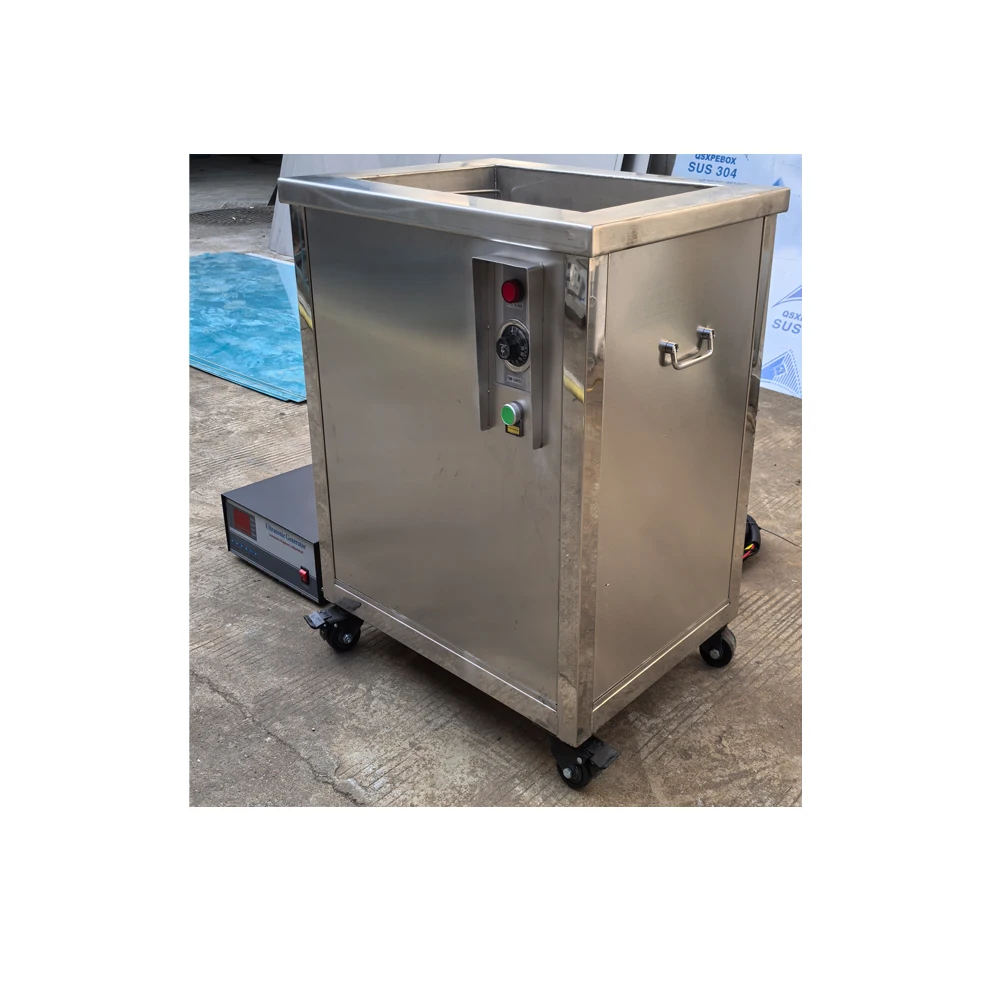
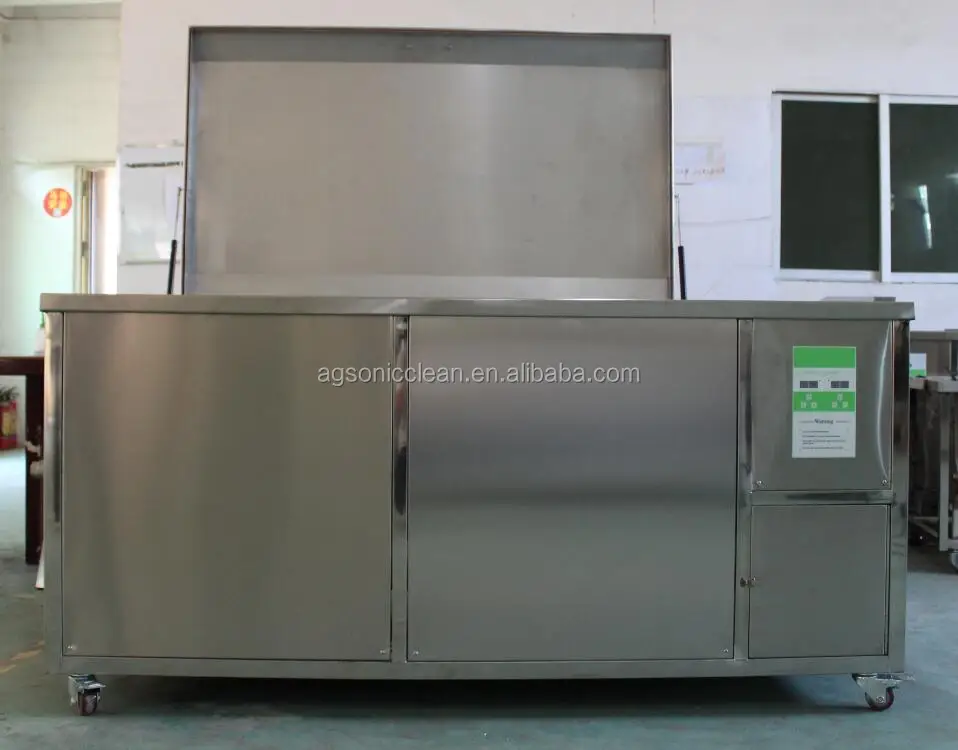
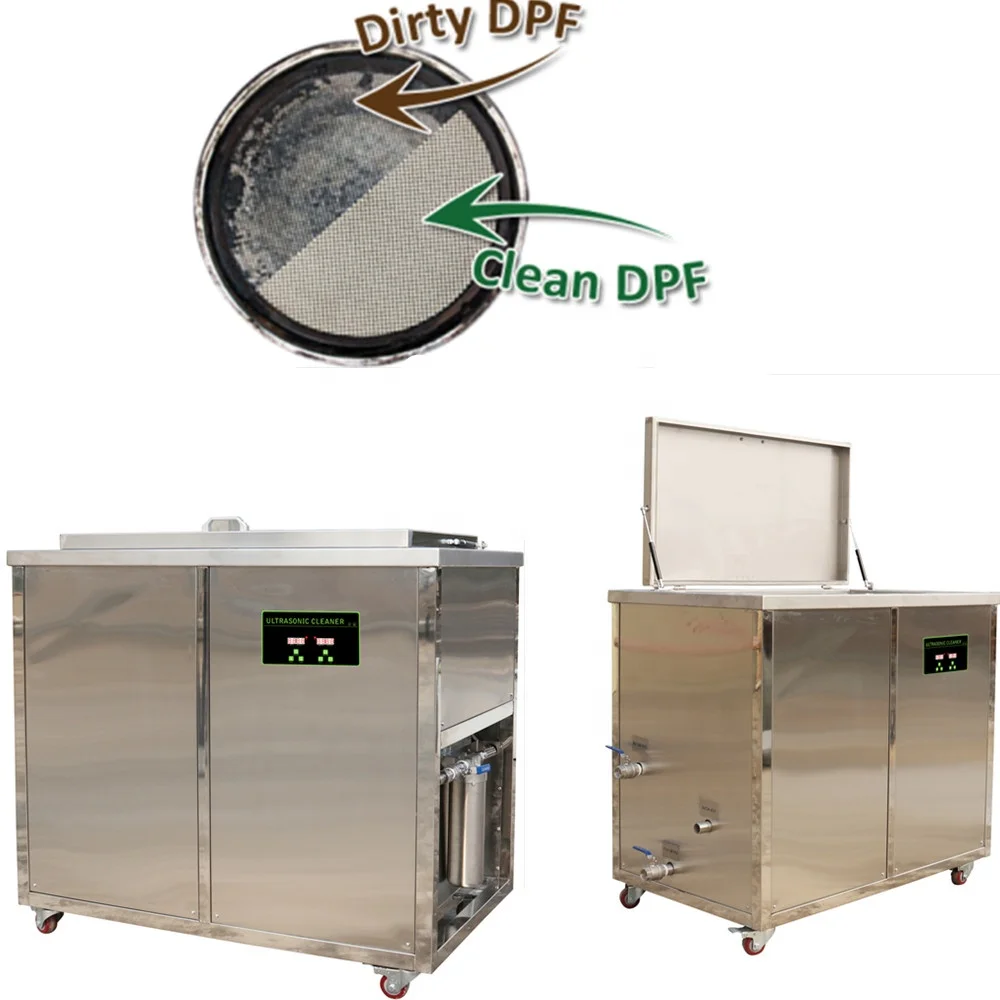
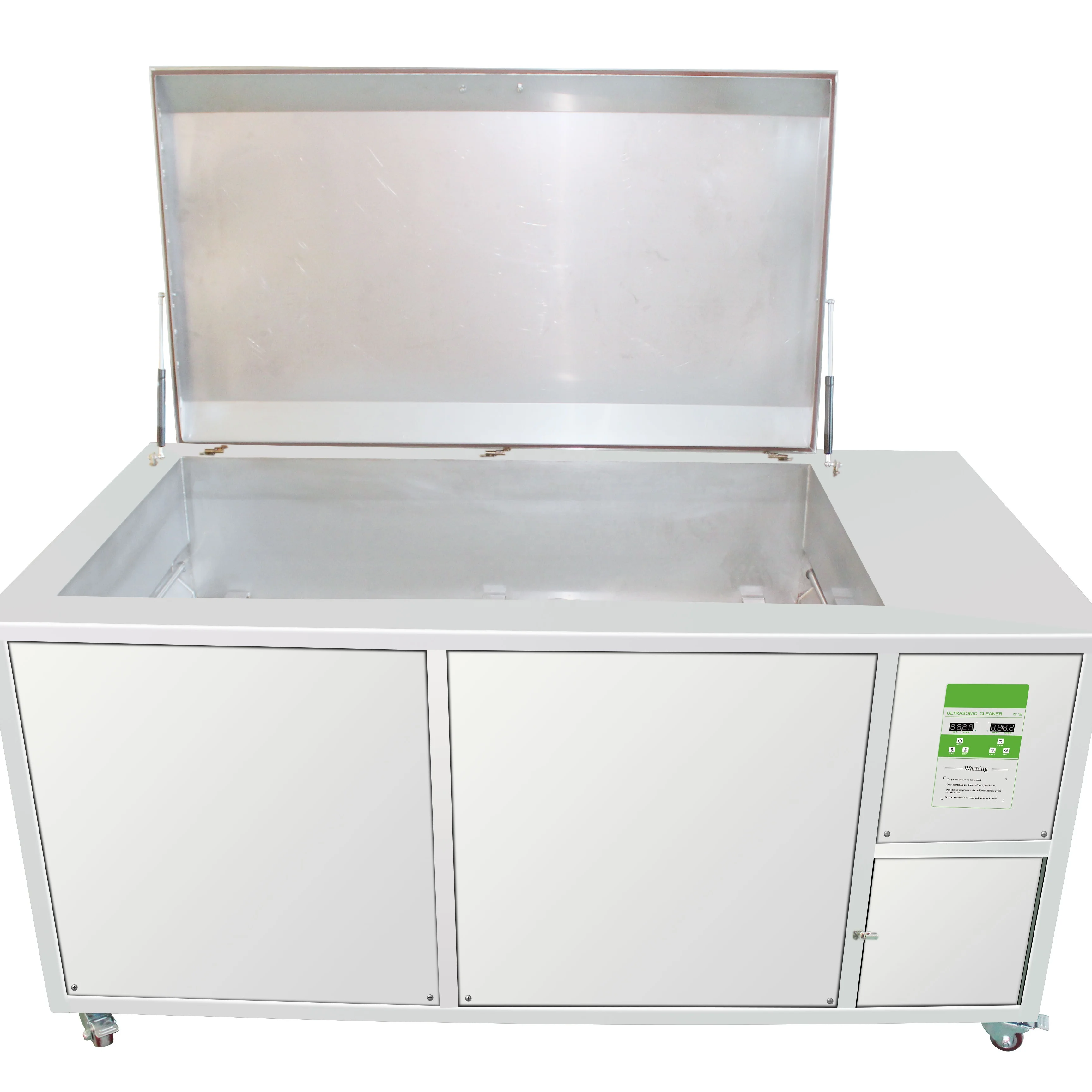
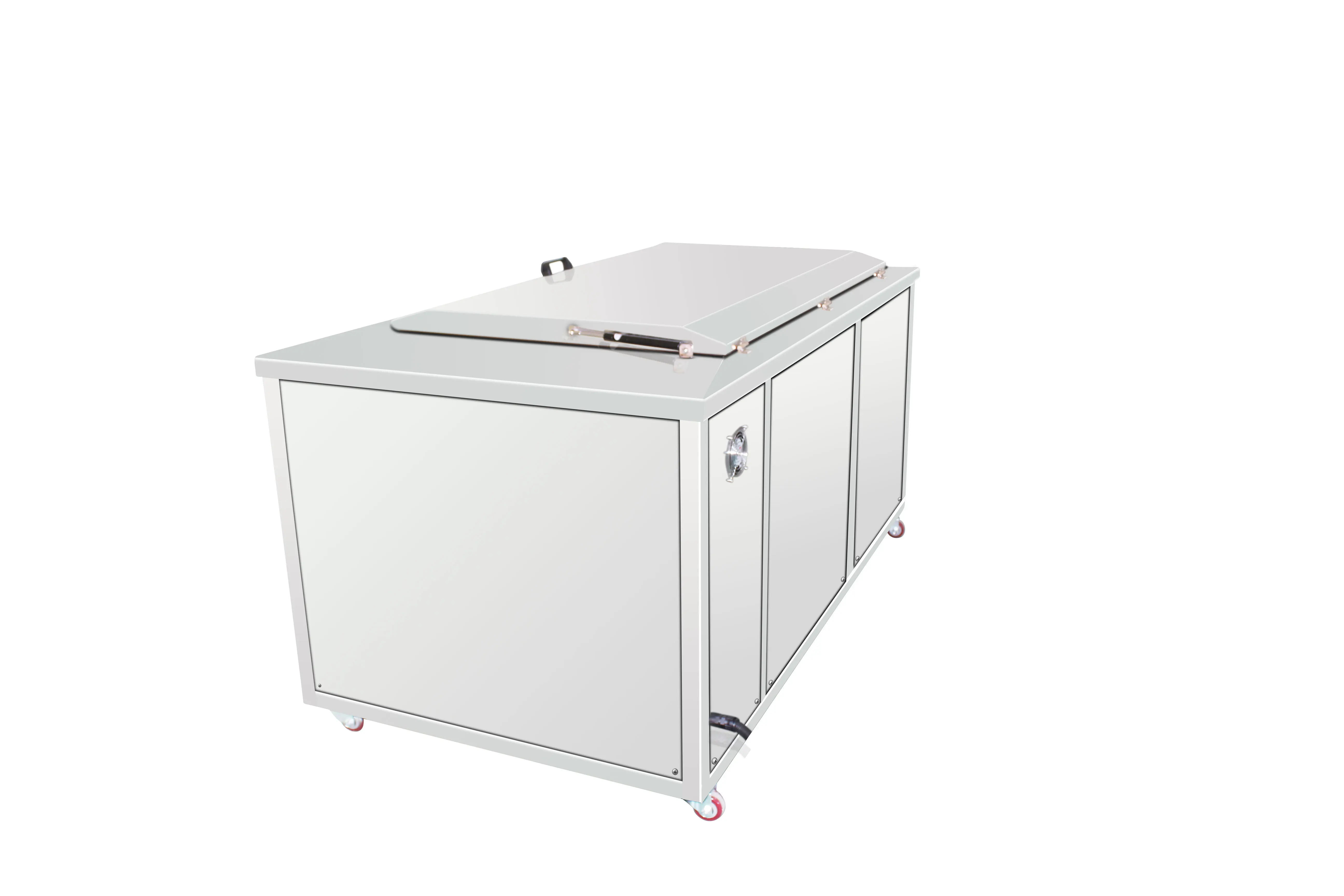
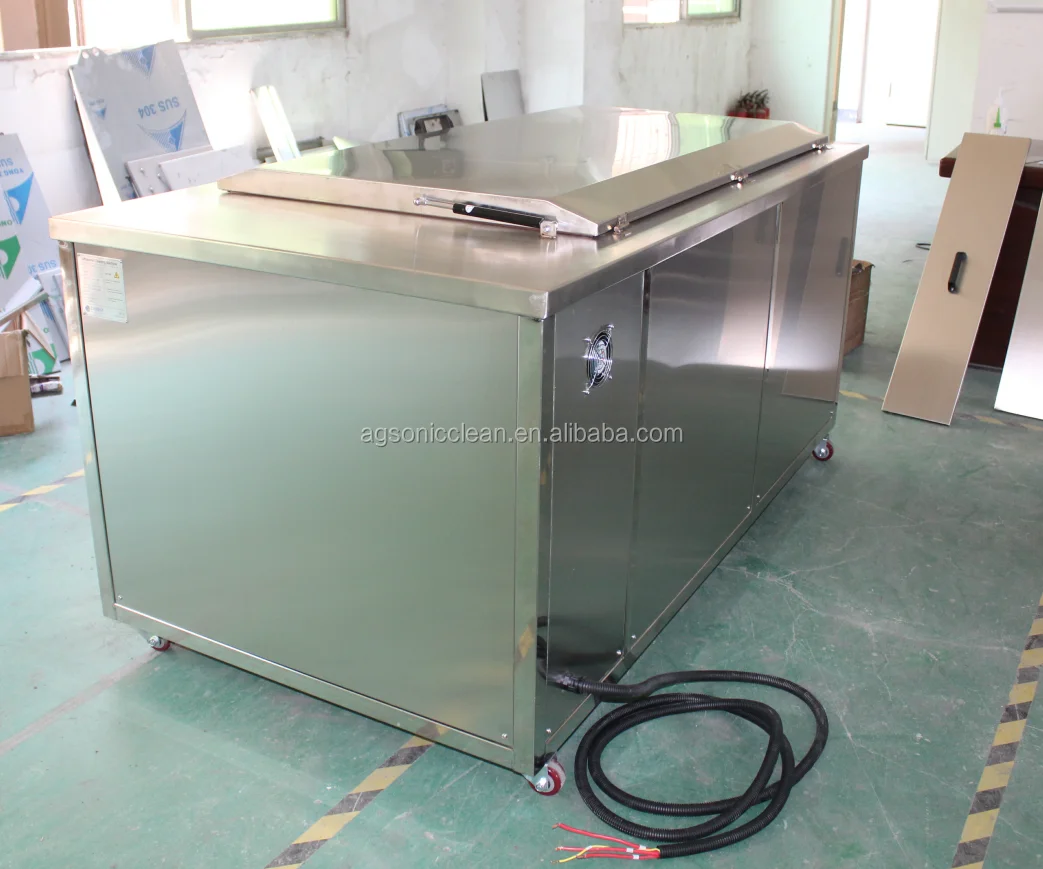
DPF Cleaning Machine Air Filter ultrasonic filter cleaning equipment To Clean 20 Units Each Round
- Category: >>>
- Supplier: Shenzhen Ag Sonic Technology Co. Ltd.
Share on (62027690880):
Product Overview
Description
Product Description
DPF Cleaning Machine Air Filter ultrasonic filter cleaning equipment To Clean 20 Units Each Round
Operating an Ultrasonic Filter Cleaner System
Ultrasonic cleaners are available in numerous sizes based on the capacity of the cleaning solution tank, and can range from tabletop models to industrial-sized floor models. Regardless of size they are equipped with ultrasonic generators that excite tank-mounted transducers that create millions of microscopic bubbles in the cleaning solution. These implode on contact with the filters being cleaned to blast away contaminants from any surface wetted by the ultrasonic cleaning solution. Depending on models, ultrasonic filter cleaning equipment such as available have timers, temperature controllers, sweep and degas options. Rinse stations and drying stations are also available for assembly line filter cleaning.
Here’s a simplified series of operation steps for ultrasonic filter cleaning equipment. Modifications can be made based on specific filter cleaning requirements.
1. Add water to the fill line of the ultrasonic cleaning tank and prepare the ultrasonic cleaning solution clean A4 diluted to 2-5% with water. This is formulated for cleaning stainless and carbon steel, copper, brass and plastic.
2. Turn on the ultrasonic cleaner and degas function to both mix and degas the solution. Degassing removes air trapped in the water, which inhibits the cleaning operation. If the cleaner does not have a degas function allow it to run until bubbles stop coming to the surface.
3. Once degassing is complete you’re ready to clean the filters. Set the temperature to about 70°C for metal filters or about 50°C for plastics and the timer to 10 minutes. Experience will tell you the optimum temperature and how much time is required for your particular filter cleaning operations.
4. Place the filters in the cleaning basket so they do not contact each other, lower them into the ultrasonic cleaning solution, turn the unit on and activate the sweep function if so equipped. This evenly distributes the cavitation action throughout the solution for more uniform cleaning.
5. At the end of the cleaning cycle remove and inspect the filters. If they appear clean, rinse and dry. Depending on filter design you can either air blow dry or place them into a drying oven.
6. Apply a filter coating if required. The filters are now ready for reuse.
Dpf Ultrasonic Cleaning Machine Truck Dpf Filter Cleaner
It’s efficient, clean, green and cost-effective.
Most importantly, it works.
A powerful cleaning solution is now as simple as soap, water and some mighty little bubbles.
Ultrasonic cleaning technology is fast, gentle and extremely powerful. It uses microscopic cavitation bubbles and specially
formulated eco-friendly solutions to search every crease and crevice and eliminate even stubborn or difficult-to-reach contaminants, including grease, dirt, hydrocarbons, metal
shavings, buffing/polishing compounds, carbon deposits, mold release and more.
How to Clean Filters with Ultrasonic Energy
Cleaning filters may be more cost effective than replacing
When filters – whether for air, water, oil, cooking range grease or other contaminants – become dirty an ultrasonic filter cleaner could be a very practical alternative to the cost of replacing them, especially for businesses that require frequent filter replacement. Granted, some types of filters do not lend themselves to refurbishing in filter cleaning equipment. Typically these are made out of fiber that traps particles so effectively that ultrasonic cleaning is impractical. In such cases the best choice may be discarding and replacing.
More suited for refurbishing in an ultrasonic filter cleaner are filters fabricated of metal or plastic mesh that capture and hold contaminants. An ultrasonic parts washer can be much more effective and less damaging than using a brush or high-velocity water sprays that no matter how diligently applied are not able to access all filters surfaces and may in fact damage the filter. Moreover an ultrasonic filter cleaner will cut filter cleaning time to minutes compared to the time required for manually cleaning filters.
Introduction
Ultrasonic cleaning is a technology that uses high frequency sound waves (ultrasonic: above the range of human hearing) to agitate an aqueous or organic medium (cleaning chemistry) that in turn acts on contaminations adhering to substrates like metals, plastics, glass, rubber and ceramics. Contaminants can be dust, dirty, oil, pigments, grease, polishing compounds, flux agents, fingerprints, soot wax and mold release agents, biological soil like blood, and so on
Application
Ultrasonic cleaning can be used for many applications, including plastic parts, bearing, bolts, rubber parts, internal parts, plastic injection molds, transmission parts, and final cleaning of all engine parts prior to assembly, the versatility of ultrasonic cleaning machine make them the perfect choice for automotive, medical, pharmaceutical, aerospace, engineering and many other industries
Ultrasonics efficiently removes:
carbons
varnishes and paints
petrochemicals
oil and grease
metal shavings
lubricants
rusts
carcinogens
polymers
Diesel Particulate Filter Cleaning
Cleaning filters may be more cost effective than replacing
When filters – whether for air, water, oil, cooking range grease or other contaminants – become dirty an ultrasonic filter cleaner could be a very practical alternative to the cost of replacing them, especially for businesses that require frequent filter replacement. Granted, some types of filters do not lend themselves to refurbishing in filter cleaning equipment. Typically these are made out of fiber that traps particles so effectively that ultrasonic cleaning is impractical. In such cases the best choice may be discarding and replacing.
Why Use DPF Cleaning ?
Anosonics is renowned for their professional cleaning service to the motor industry.
DPF Removal Regulation
“A missing diesel particulate filter (DPF), where one was fitted when the vehicle was built, is considered an incomplete emission control system and is therefore subject to an NCT failure under Item 2 “Exhaust Smoke (Diesel)” reason for failure (7). There is similar wording used in the reasons for failure
How does ultrasonic filter cleaning work?
Don’t replace filters when they become clogged with dirt, grease or other contaminants; ultrasonic cleaners can restore many types of filters to look and function like new. Ultrasonic parts washers are particularly effective for filters made of metal or plastic mesh; the gentle yet powerful process is much less damaging than traditional cleaning methods that use a brush and high-velocity chemical cleaning solutions. Ultrasonic cleaners use water based solutions that won’t damage filters yet reach every crack and crevice for the best possible clean. Ultrasonic cleaning uses a process called cavitation where microscopic bubbles form from ultrasonic waves, then implode on the part’s components; thereby vigorously yet gently scrubbing and cleaning surfaces and crevices. No matter how stubborn the build-up, your filters will be restored to full working capacity.
DPF Cleaning Machine with CE Ceramic Car DPF Ultrasound Cleaner Without Damage The Filter
We know that your reputation depends on cleaning filters effectively and efficiently. Ultrasonics International can help you choose the right kind of ultrasonic cleaner, training and support that you need for your business needs.
For more than two decades, Ultrasonics International has helped businesses improve profitability by providing their clients with ultrasonic cleaning equipment that feature the latest advancements in wave sweep technology. Our ultrasonic cleaning equipment has a reputation for reliability and longevity. Utilizing the proper ultrasonic cleaning equipment saves money and improves cleaning processes. Cleaning results will be measurably better and less time will be required to complete the cleaning process. Production numbers go up and labor hours go down dramatically because multiple parts can be addressed simultaneously.
Ultrasonics can clean a wide range of filters including:
extruders and pumps
filter elements
filter vessel assemblies
polymer pumps
spin and screen packs
valves
spinnerets
die plates
porous metal
pleated metal
woven screens
fiber metal felt
slotted wire
filters with alloys
Benefits of ultrasonics for filters:
Cleans delicate parts without damage
Cleans cracks and crevices that would be difficult to reach with the hand
Does not require line-of-sight for effective cleaning
Doesn’t use harsh chemical solvents that are dangerous for workers and the environment
Safe for aluminum, magnesium and zinc
Biodegradable cleaner
Clean multiple pieces at once without having to brush by hand – saves time and money
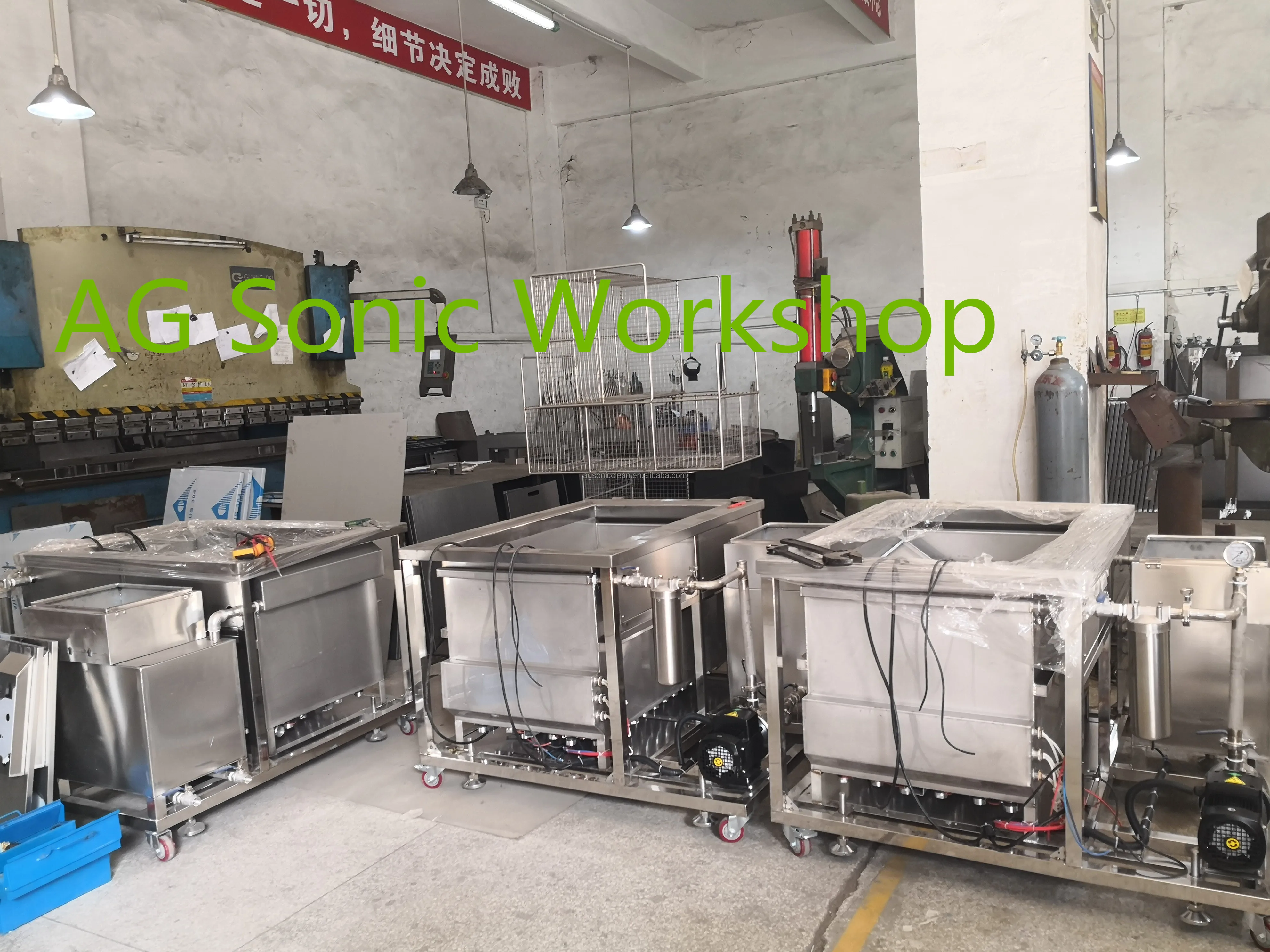
AG ultrasonic cleaning machine effectively and thoroughly clean all types of Filter Cleaning
ultrasonic tank models for your choice:
| Model | Tank size | Unit size | Volume | Ultrasonic power | Frequency | Heating power | Timer | Heater |
| LxWxH(mm) | LxWxH(mm) | (L) | (W) | (kHz) | (KW) | (MIN) | (℃) | |
| T-12S | 500x300x250 | 640x440x470 | 38 | 600 | 28/40 | 1.5 | 1-99 |
0-80 |
| T-18S | 500x350x350 | 640x490x570 | 61 | 900 | 1.5 | |||
| T-24S | 550x400x400 | 690x540x620 | 88 | 1200 | 3 | |||
| T-30S | 600x450x400 | 740x590x620 | 108 | 1500 | 3 | |||
| T-36S | 600x500x450 | 740x640x670 | 135 | 1800 | 4.5 | |||
| T-48S | 700x500x500 | 840x640x720 | 175 | 2400 | 6 | |||
| T-60S | 800x600x550 | 940x740x770 | 264 | 3000 | 7.5 | |||
| T-72S | 1000x600x600 | 1140x740x820 | 360 | 3600 | 9 |


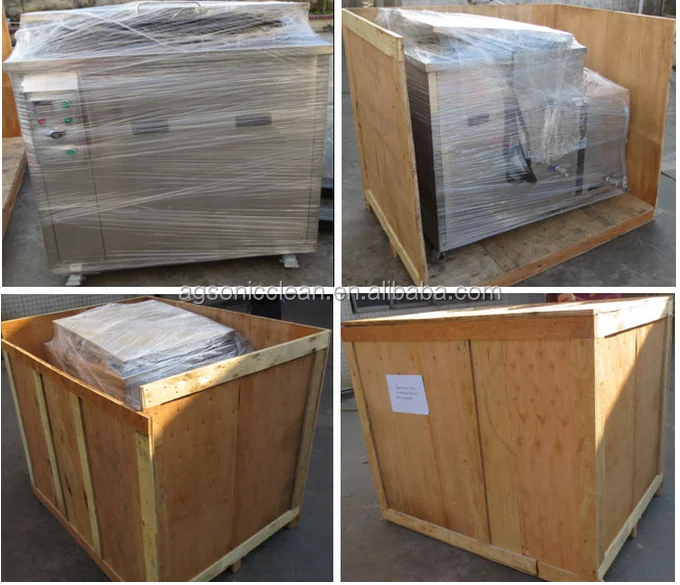
Packaging & Shipping
Our Services
Supply high quality product
Provide OEM&ODM service
One Year Warranty
24/7 response.
Technical support for all time.
Professional suggestion for your cleaning job.
Full inspection for every product we made.
Company Information
1. AG SONIC technology limited, which engaged in ultrasonic cleaner field for more than 10 years. And the main products are ultrasonic cleaner with different capacity.
2.Our engineer is engaged in the filed for more than 10 years, so we have improved PCB design for stable and durable industrial use. High quality product and good after-sales services are available from us.
3. Not only standard ultrasonic cleaner, any non-standard can be designed by engineer.
Suggestion and drawing are professional for you.
4. Welcome to visit our factory in Shenzhen, and we are appreciate for your suggestions and hope to conduct business cooperation.
AGSONIC Ultrasonics provides cleaners of many different varieties, as well as exclusive systems which are designed for specific purposes. Systems include:
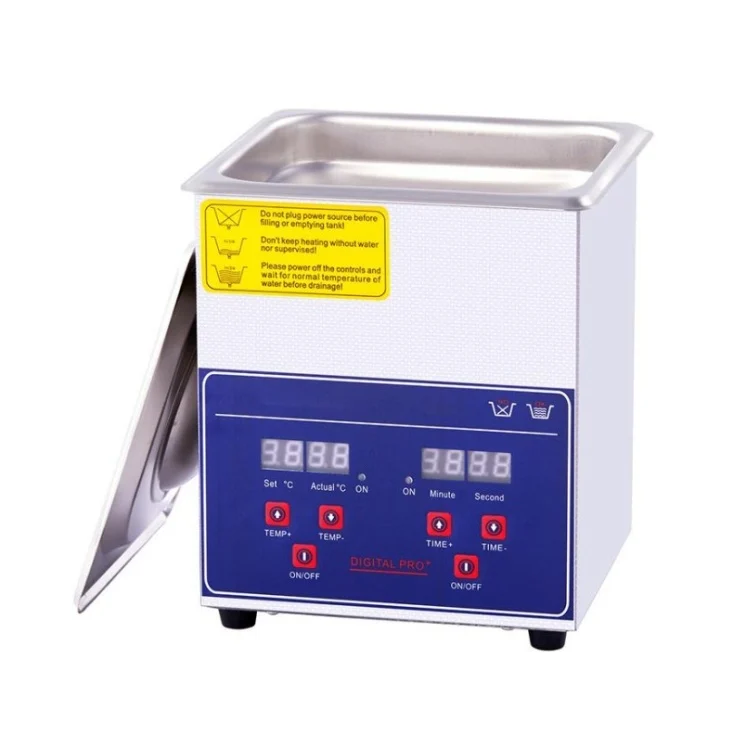
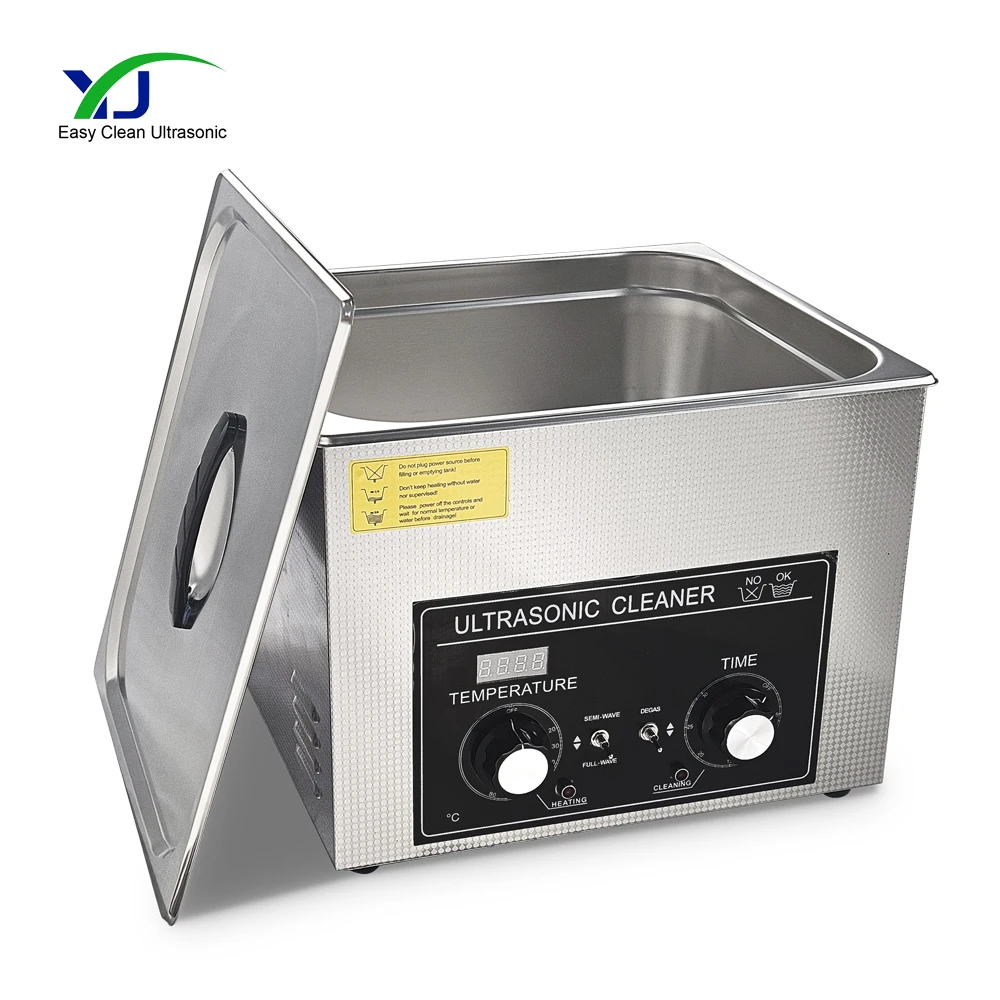
•Bench-top and table-top designs for smaller applications
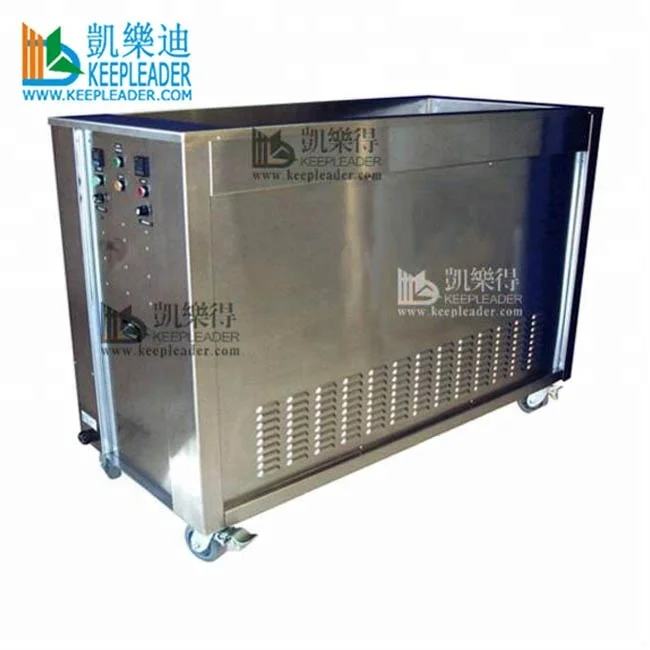
•Large cleaning tanks
•Multi-stage ultrasonic cleaners which include cleaning, rinsing, drying, or other processes
•Submersible systems to provide existing tanks with cleaning capabilities
•Industry-specific cleaners for aerospace and automotive parts cleaning applications
•Metal strip and wire cleaning machines
•Automated Systems: AGSONIC offers 4 different types of automated systems


FAQ
How do I perform the foil test?
Cut three small pieces of aluminum foil about 4" x 8" each. Fold each piece over a rod that you will use to suspend the foil in the tank. A clothes hanger works well. Your cleaner should be filled with an ultrasonic cleaning solution, degassed, and brought up to normal operating temperature. Suspend the first "square" in the center of the tank and the other two a couple of inches from each end of the tank. Make sure that the tank is filled to the fill line, and turn on the ultrasonics for about one minute. Remove the foil and inspect: All three pieces of aluminum foil should be perforated and wrinkled to about the same degree.
Why must baskets be used?
Items being cleaned should never be placed directly on the tank bottom. Transducers (which produce the ultrasound) are sometimes bonded to the bottom of the tank. Items resting directly on the tank bottom can damage the transducers and/or reduce cavitation. Additionally, a tray or beaker will position the item within the optimal cleaning zone of the tank. The tray or beaker will also hold the load together and allow for easy, no-touch removal, draining and transport of the items to the next step in the cleaning process
Why choose ultrasonic cleaning machine to clean our engine block and engine parts?
Clean intricate and difficult to reach areas easily
A major challenge of any cleaning system is the difficulty faced in tackling tiny spaces, intricate geometries, and difficult to reach surfaces, ultrasonic cleaning penetrates even blind holes and small apertures, that previously had hit-and miss success rates, the uniform agitation of the cleaning solution ensures that the cleaning action penetrates even hard to reach areas that previously required specialized brushes and other complicated cleaning devices with no real guarantee of a successful and consistent cleaning outcome, various factors go into determining which combination of an ultrasonic unit and chemical solution is suited to your particular requirement
For effective cleaning the ultrasonic cleaning machine must use the right of cleaning chemistry,operate at the right temperature and use the correct frequency, the part to be cleaned the contaminant to be removed and the degree of soil, determine this, our years of experience advising manufacturing and maintenance clients on the right process for their cleaning needs help us identify the exact product combo that you need, just send AG SONIC email or call us, and we’ll guide you to the right solution quickly
Ultrasonic technology uses absolutely no harmful chemicals.
No fumes. No strong odors. No dangerous or expensive chemical disposal. Reduced risk.
The technology is remarkable, but the process is easy. More efficient and effective than chemical processes, the machines are as simple to use as a dishwasher, with no hand labor or supervision necessary.
How do ultrasonic machines work?
Ultrasonic tanks generate high frequency sound waves through the use of transducers and electronic ultrasonic wave generators. Typical transducers are made from piezoelectric crystals which convert electrical energy into mechanical / sound wave energy because piezoelectric crystals change geometric size when electrical voltage is applied.
We Recommend
New Arrivals
New products from manufacturers at wholesale prices