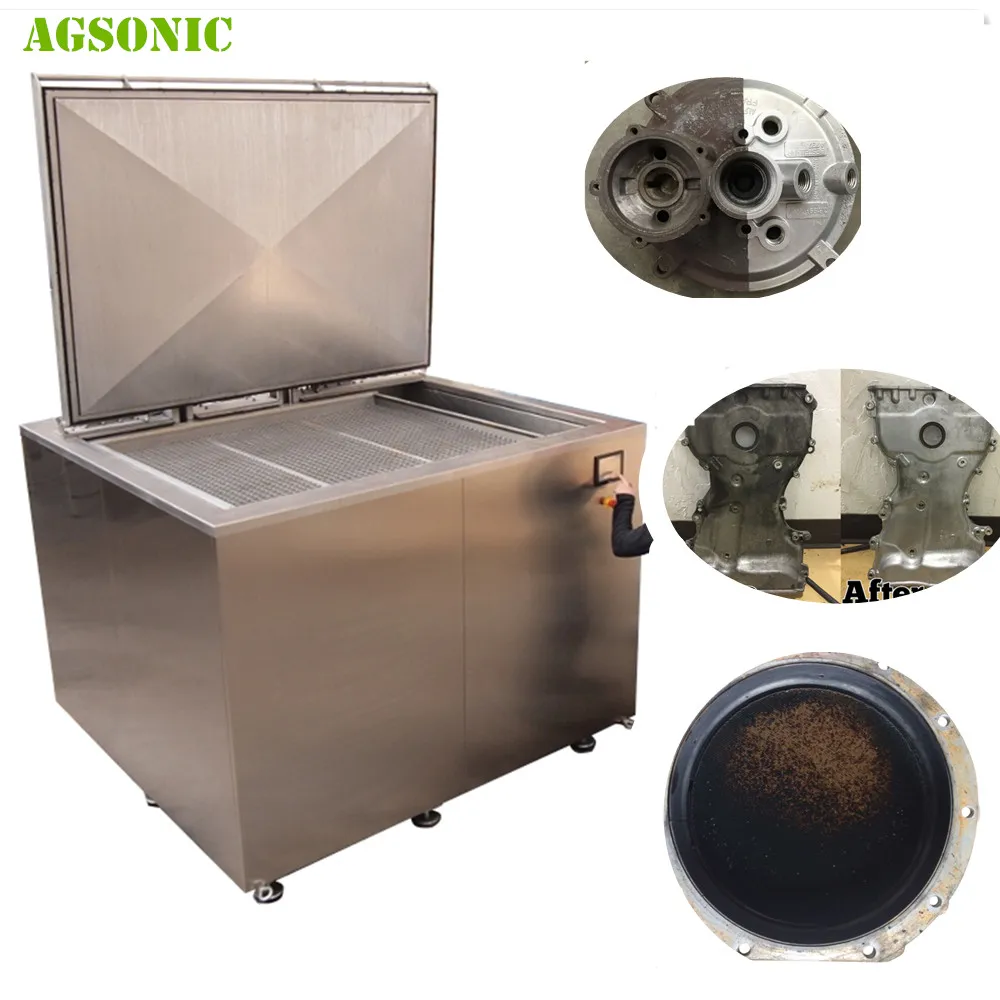
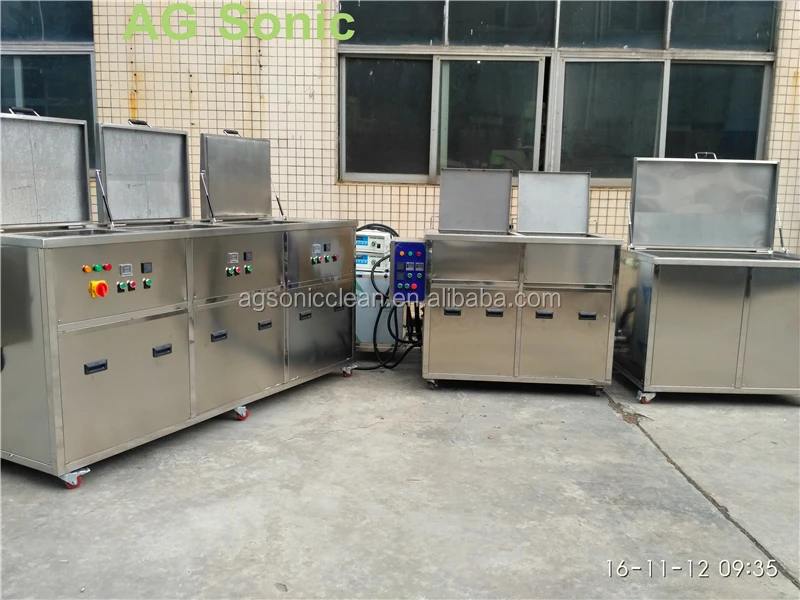
Engine Block Car Parts Clean Large Industrial Ultrasonic Engine Cleaner
- Category: >>>
- Supplier: Shenzhen Ag Sonic Technology Co. Ltd.
Share on (62038476225):
Product Overview
Description
Product Description
Auto Parts Cleaning machine
We are manufacturing and supplying of Automotive Ultrasonic Cleaners. We offer a wide range of ultrasonic cleaners. These are Single or Multistage Ultrasonic Cleaners, which are both manually operated & fully automated systems. Further, the machine is widely used and appreciated by our clients due to its professional dependability and user friendliness.
Large Industrial Ultrasonic Cleaning Machine For Engine Block Car Parts Cleaning
Large Ultrasonic Cleaners
AGSONIC Ultrasonics manufactures large ultrasonic cleaners for the cleaning of heavy and big components with light or heavy contamination. Large tanks are usually required to clean parts such as:
Plastic Injection Molds
Aerospace components
Large batches of smaller parts
Bulk rebuilding of firearms
Heat Exchangers
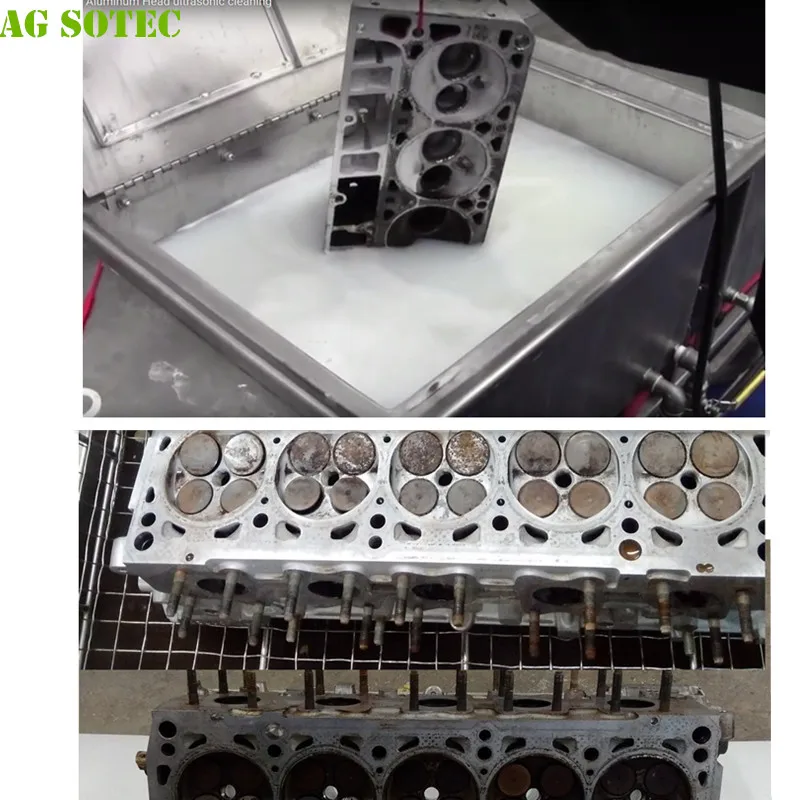
Engine blocks
What do I need to consider when purchasing a large ultrasonic cleaner?
When dealing with large liquid volumes and ultrasonic cleaners, there are several considerations:
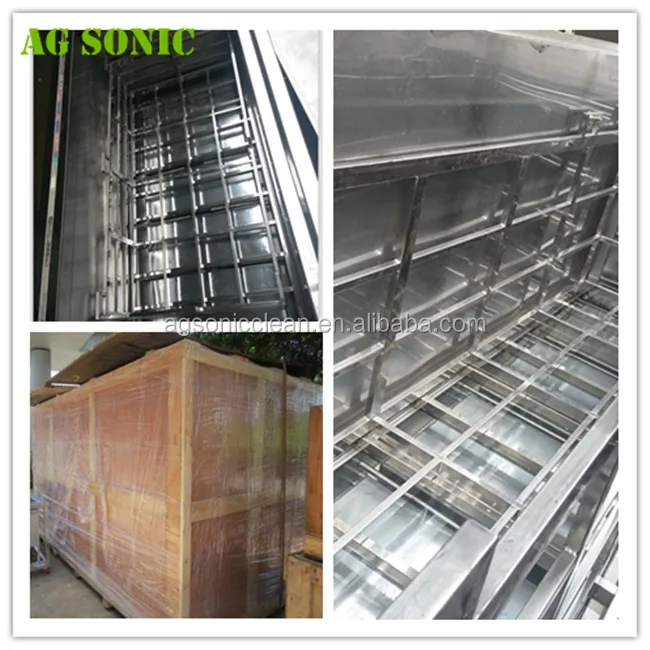
Tank Integrity: The tank needs to be able to withstand the pressure of the liquids and the weight of the parts being cleaned. This requires a specific tank design that moves the stress points away from welded edges.
Ultrasonic Power: There needs to be enough ultrasonic power to provide the cleaning performance you need.
Ultrasonic Frequency: The frequency chosen will usually be in the low frequency range when cleaning heavy parts, or AGSONIC's patentedCROSSFIREMultiple Frequency Ultrasonic System operating at 25 and 40kHz.
Heating Systems: Large tanks may require extended time to heat to operatio
Auto Parts Cleaning machine
We are manufacturing and supplying of Automotive Ultrasonic Cleaners. We offer a wide range of ultrasonic cleaners. These are Single or Multistage Ultrasonic Cleaners, which are both manually operated & fully automated systems. Further, the machine is widely used and appreciated by our clients due to its professional dependability and user friendliness.
Ultrasonic Cleaning system Design:
Considerations in the design of any cleaning system include the contaminants on the part(s), the required cleanliness level, the geometry and material of the part(s), the quantity to be processed, and the previous system design and layout (if applicable). The part geometry, production rate, and cleaning time required will determine the size of the cleaning system, once the overall process has been decided
Ultrasonic cleaning machines work on the principle of agitating cleaning solvents using high frequency sound waves, the ultrasonic agitation creates millions of microscopic bubbles that implode releasing vast quantities of energy, this action, know as cavitations, dislodges any contaminant stuck to the surface of a part, ultrasonic cavitations thoroughly cleans every surface in contact with the cleaning fluid
While ultrasonic cleaning is the perfect deep cleaning solution for engine parts, choosing the right combination of cleaning machine and its cleaning chemistry can get a bit tricky, need help in selecting, these are several basics you need to know, this is where we come in, call AG and our engineer will help you select the right cleaning machine and machine chemistry
The cleaning scope of AG Engine block ultrasonic cleaning machine
Suitable for all types of engine parts
AG engine block ultrasonic cleaning machine effectively and thoroughly clean all types of engine parts
01: Automotive: thoroughly removes carbon deposits, grease, and other types of dirty and contaminants from carburetor, exhaust manifolds, cylinder blocks, 2-stroke and 4 stroke motorcycle engines, snow machines, ATV cylinders and heads, and more.
02: Marine: Suitable for inboard and outboard motors, the cleaning chemistry is both thorough and gentle on the aluminum parts reducing the risk of future corrosion
03: Aircraft: The high performance demands of aircraft engines establish the need for an intensive cleaning process that will restore the engine part to near original condition, our engine block ultrasonic cleaning machine easily, thoroughly, and safely clean both large and small parts, turbine blades, fuel nozzles, generator components, brakes and other parts that require periodic cleaning are all effectively and thoroughly cleaned using the ultrasonic cleaning process
Choosing the right combination for your specific situation can be challenging if this is your first time, just send email to AG SONIC, we will quickly help you identify the optimum product and cleaning chemistry combo
Why choose ultrasonic cleaning machine to clean our engine block and engine parts?
Clean intricate and difficult to reach areas easily
A major challenge of any cleaning system is the difficulty faced in tackling tiny spaces, intricate geometries, and difficult to reach surfaces, ultrasonic cleaning penetrates even blind holes and small apertures, that previously had hit-and miss success rates, the uniform agitation of the cleaning solution ensures that the cleaning action penetrates even hard to reach areas that previously required specialized brushes and other complicated cleaning devices with no real guarantee of a successful and consistent cleaning outcome, various factors go into determining which combination of an ultrasonic unit and chemical solution is suited to your particular requirement
Ultrasonic tank models for your choice:
| Model | Tank size | Unit size | Volume | Ultrasonic power | Frequency | Heating power | Timer | Heating temperature |
| LxWxH(mm) | LxWxH(mm) | (L) | (W) | (kHz) | (KW) | (MIN) | (℃) | |
| T-12S | 500x300x250 | 640x440x470 | 38 | 600 | 28/40 | 1.5 | 1-99 |
0-80 |
| T-18S | 500x350x350 | 640x490x570 | 61 | 900 | 1.5 | |||
| T-24S | 550x400x400 | 690x540x620 | 88 | 1200 | 3 | |||
| T-30S | 600x450x400 | 740x590x620 | 108 | 1500 | 3 | |||
| T-36S | 600x500x450 | 740x640x670 | 135 | 1800 | 4.5 | |||
| T-48S | 700x500x500 | 840x640x720 | 175 | 2400 | 6 | |||
| T-60S | 800x600x550 | 940x740x770 | 264 | 3000 | 7.5 | |||
| T-72S | 1000x600x600 | 1140x740x820 | 360 | 3600 | 9 |
4. How to Specify Ultrasonic FrequencyUltrasonic frequency is produced by generator-powered transducers bonded to the bottom of the tank. They vibrate in kilohertz (kHz or thousands of cycles per second) above the hearing range, which is approximately 20 kHz.Most ultrasonic cleaners operate between 35 and 45 kHz. This frequency range is well suited to the vast majority of cleaning tasks. Sample prep is often accomplished with units operating at 37 kHz. An example of an ultrasonic unit especially designed for sample prep is microprocessor-controlled
How the System Operates:
The system operates in the following manner:
- Parts are placed into the tank using the included stainless steel basket or other holding fixture.
- Once submerged, the START button is pressed, and the cover is closed. The ultrasonic system turns on, and the filter system turns off automatically. Parts are cleaned with the CROSSFIRE ultrasonic system at this time.
- The system will automatically turn off upon completion of the cycle.
- Operators can then return when the parts are clean.
The cover is opened and the batch of parts is placed onto the basket rest. Dripping liquids are directed back to the ultrasonic cleaning tank


Packaging & Shipping
Packing and Shipping:
| Packing , loading, delivery time | |
| Packing unit | 1set/wooden case |
| Packing method | Export wooden case |
| Loading port | Shenzhen |
| Delivery time | About 15 working days |
| Minimum Order Quantity | 1set |
| Transport method | By express company / air / sea |

Our Services
Supply high quality product
Provide OEM&ODM service
One Year Warranty
24/7 response.
Technical support for all time.
Professional suggestion for your cleaning job.
Full inspection for every product we made.
Company Information
1. AG SONIC technology limited, which engaged in ultrasonic cleaner field for more than 10 years. And the main products are ultrasonic cleaner with different capacity.
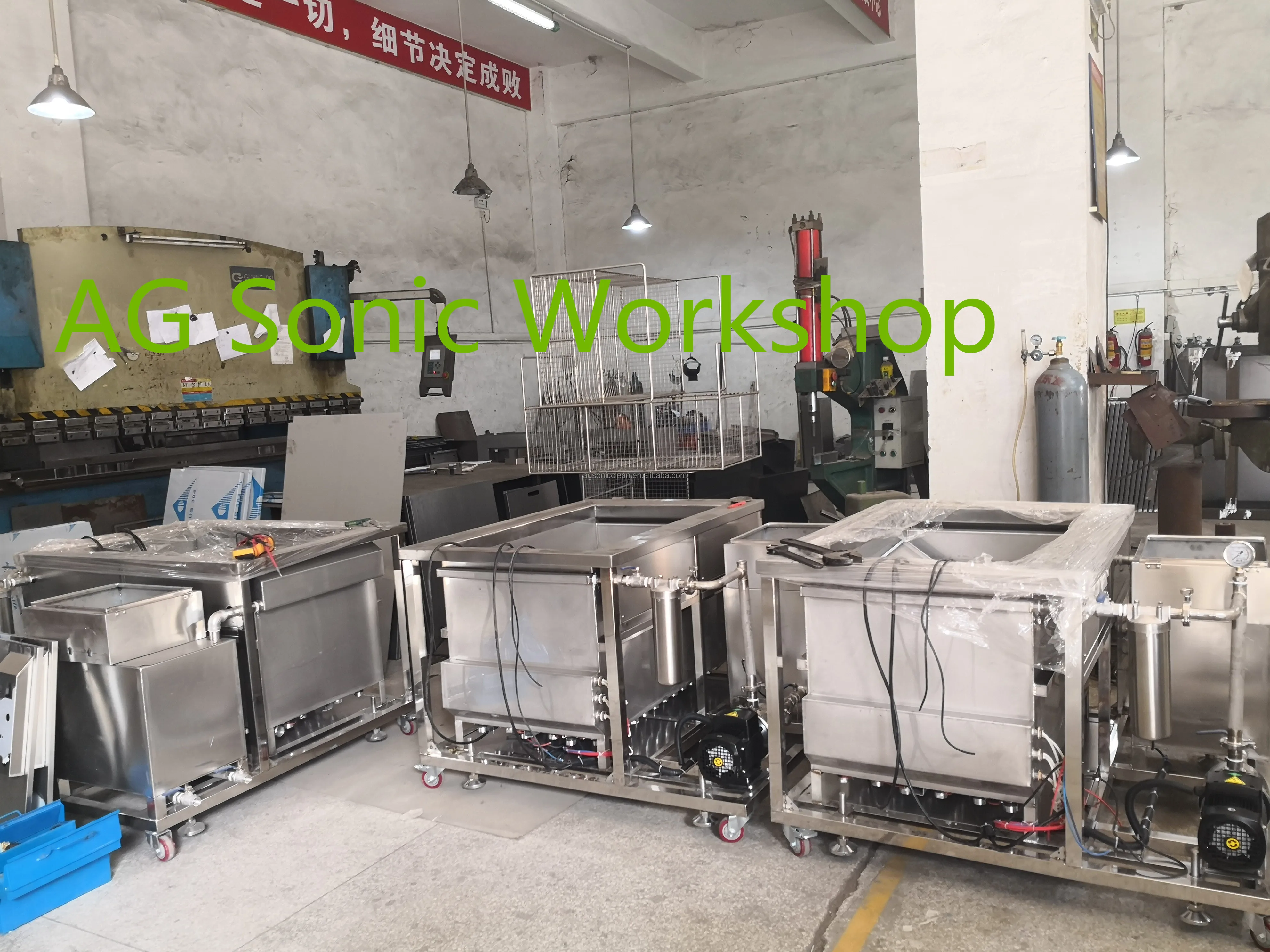
AGSONIC has been manufacturing ultrasonic parts cleaners for years, providing manufacturers with the highest-quality systems available. We are dedicated to manufacturing systems of many types and styles which include small table-top systems, large single-tank systems for injection molds are other large parts, strip and metal tape washers, aerospace parts washers, multi-stage machines which include cleaning, rinsing, and drying, automation systems, and custom equipment designed specifically for your needs. If you are in need of an ultrasonic cleaner, you will find what you are looking for at AGSONIC .


FAQ
Ultrasonic Frequency and Watt Density
Ultrasonic energy occurs when sound waves are introduced into a solution such as water via a package that includes one or more ultrasonic generators and corresponding ultrasonic transducers.
The sound waves create microscopic bubbles of solution during periods of positive pressure, which implode and release a burst of energy during periods of negative pressure. This process is called cavitation. It is cavitation that enhances the separation of soils from substrates, often making ultrasonic cleaning faster, gentler, and more effective than other methods. Imploding bubbles travel wherever the solution goes, allowing cleaning activity even within complex part geometries and micro-parts.
When cleaning with ultrasonics the frequency of the sound waves is matched to the application. Frequencies range from 20 kHz to 170 kHz and above. The most commonly recommended ultrasonic frequency is 40 kHz. It is considered the “universal frequency” because it is generally safe for use in most applications and will produce the most intense cavitation energies to remove the most common types of contaminants (oil, grease, metal chips) from the widest range of substrates.
When should you consider adding ultrasonics to a cleaning process?
Usually, the answer is whenever parts are not getting clean enough using the current method. Ultrasonics become a viable purchase when cleaning issues are negatively impacting productivity, quality and/or the bottom line. Effective cleaning with ultrasonics has been proven in a wide range of industries ranging from microscopic medical devices to reconditioned locomotive shafts, from aerospace parts to parts prior to coating, and more.
Ultrasonics can be included in a new cleaning process or sometimes can be retrofitted into an existing process. In many cases, rejects due to residue on parts can be virtually eliminated with the addition of ultrasonics into clean and/or rinse stations in a properly-configured parts cleaning line.
Best Ultrasonic Cleaners for Auto Parts And Car Engine
Ultrasonic cleaner for engine parts are available in different size and versions that are suitable for the variety of needs – including the clean up of your car engine parts.
Here we provide our best reviews on top selling ultrasonic cleaners for car engine parts. Just check them out and get one as per your requirement.
For effective cleaning the ultrasonic cleaning machine must use the right of cleaning chemistry,operate at the right temperature and use the correct frequency, the part to be cleaned the contaminant to be removed and the degree of soil, determine this, our years of experience advising manufacturing and maintenance clients on the right process for their cleaning needs help us identify the exact product combo that you need, just send AG SONIC email or call us, and we’ll guide you to the right solution quickly
Ultrasonic technology uses absolutely no harmful chemicals.
No fumes. No strong odors. No dangerous or expensive chemical disposal. Reduced risk.
The technology is remarkable, but the process is easy. More efficient and effective than chemical processes, the machines are as simple to use as a dishwasher, with no hand labor or supervision necessary.
How do ultrasonic machines work?
Ultrasonic tanks generate high frequency sound waves through the use of transducers and electronic ultrasonic wave generators. Typical transducers are made from piezoelectric crystals which convert electrical energy into mechanical / sound wave energy because piezoelectric crystals change geometric size when electrical voltage is applied.
We Recommend
New Arrivals
New products from manufacturers at wholesale prices