
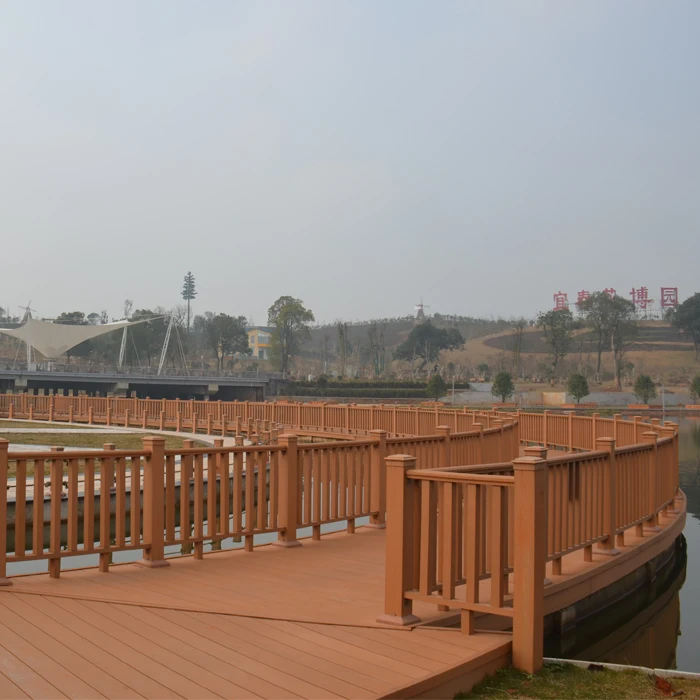
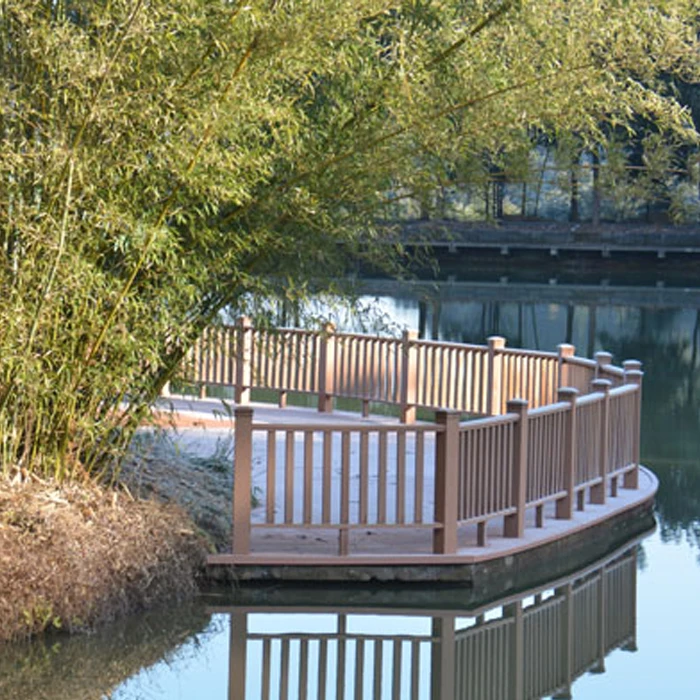
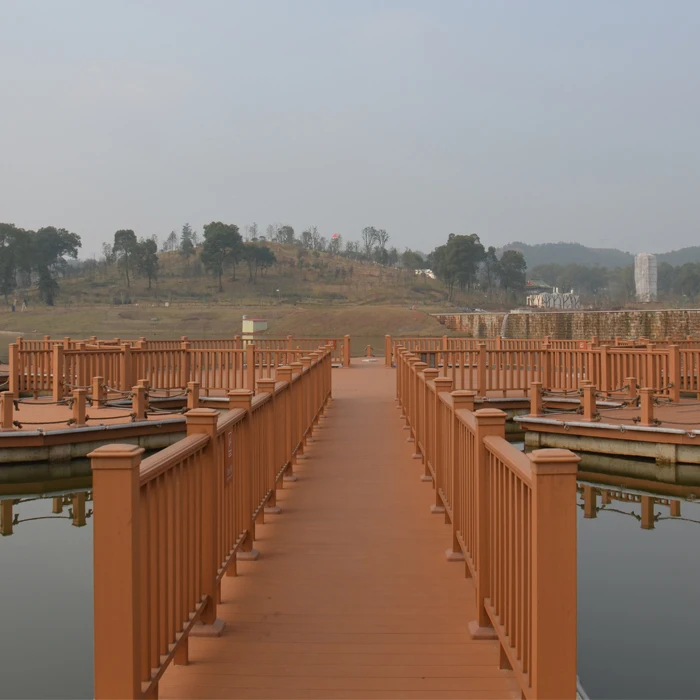
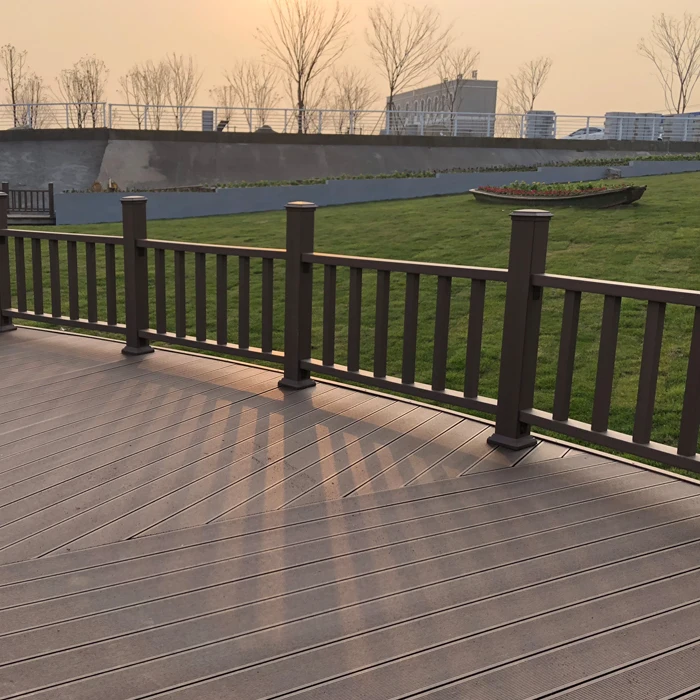
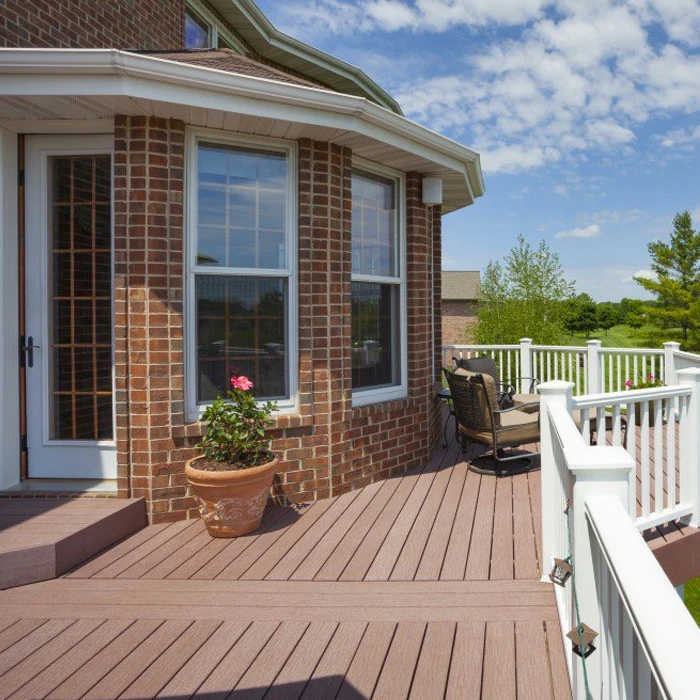
Outdoor home and garden patio easy installation customized size composite wood wpc railing
- Category: >>>
- Supplier: Anji Adisi Import & Export Co. Ltd.
Share on (62038702011):
Product Overview
Description
Outdoor home and garden patio easy installation customized size composite wood wpc railing
Projects


All advantages in overview
• Environmentally friendly
• Easy to maintain
• No painting or oiling necessary
• Do not crack or splinter
• Kind to bare feet
• Non-slip surfaces
• Resistant to the effects of weathering and temperature fluctuation
• Easy to assemble
• Naturally attractive appearance

FAQ
1. What is WPC?
WPC stands for “wood-plastic composite” which is a composite material that combines the qualities of timber with the advantages of plastics.
This is a high quality, thermo-plastically processed mixture of wood fibres and plastic components. WPCs are usually produced from up to 80% wood fibres combined with plastics such as polyethylene (PE) and polypropylene (PP) together with additives, including bonding agents, anti-UV agents and colour pigments.
WPC products are widely used for outdoor decking. According to the German nova-Institute, sales of these products currently represent 6% of the patio decking market.
As an ecologically responsible alternative to tropical hardwoods, WPC is likely to become increasingly popular in future.
2. How is WPC made?
All the products in our WOODDECK® range are made from 55% natural wood fibres and 35% environmentally-friendly plastics and 10% additives. We use the timber from white poplar. This wood is of a particularly high quality and strength in our region. As for the plastic component, we only use high quality, pure and untreated polyethylene.
Our WOODDECK® products are manufactured by means of thermoplastic extrusion. During this process, the white poplar fibres are coated with the plastic at high temperature and pressure to form a compact mass with a hollow-chamber profile. The production process is standardized to ensure that our WPC products are of a consistently high quality, with excellent material density and durability.
These have a natural appearance thanks to the wood powser component, while the plastic ensures they have a long lifespan and are easy to maintain. As we use white poplar fibres, our WOODDECK® WPC products actually have a smell of wood.
3. Timber and WPC boards in comparison
Life span | 3 - 5 years | 15 - 25 years |
Care and maintenance | Regular painting and oiling of the boards or even replacement is necessary | Minimal care, maintenance-free |
Resistance to weathering | - Absorb moisture - Can rot without regular maintenance - Can crack and splinter - Swell and shrink in accordance with weather conditions | - Resistant to weathering and temperature fluctuations - Almost indestructible - Do not crack or splinter - Retain their form and are durable |
Colourfastness | Go grey due to lack of UV resistance | Good UV resistance, good colourfastness |
Appearance | Visible screw fastenings | No visible screw fastenings, invisible mountings |
Environmental aspects | Trees felled to provide the necessary timber | Use of wood residue from the timber-processing industrye |
We Recommend
New Arrivals
New products from manufacturers at wholesale prices