Hot Selling Washing Polishing Machine JPS-40A 10l Ultrasonic Cleaner
US $35.25-$41.50
Share on (62047548762):
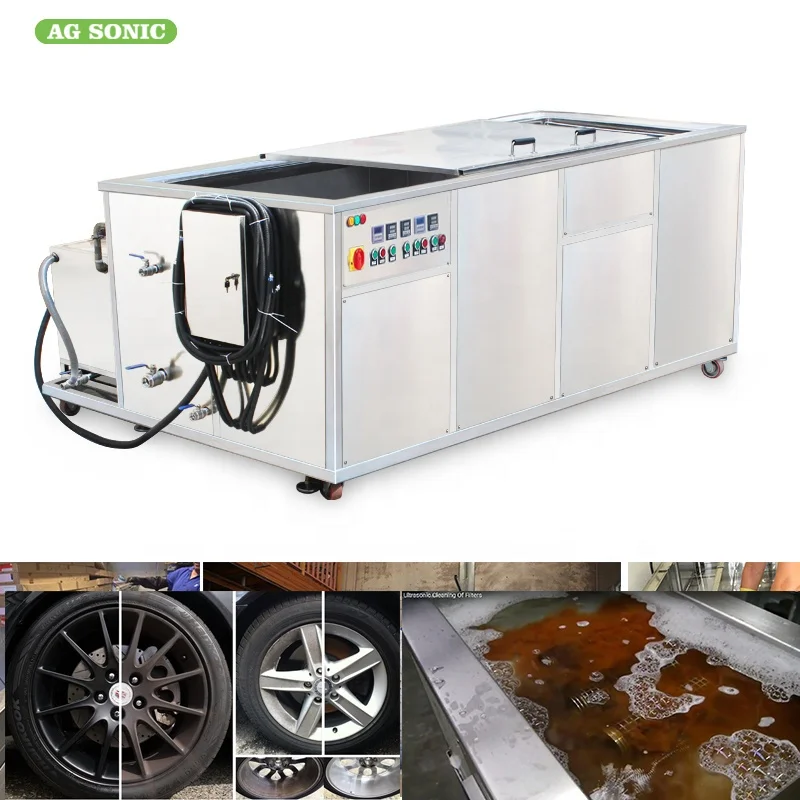
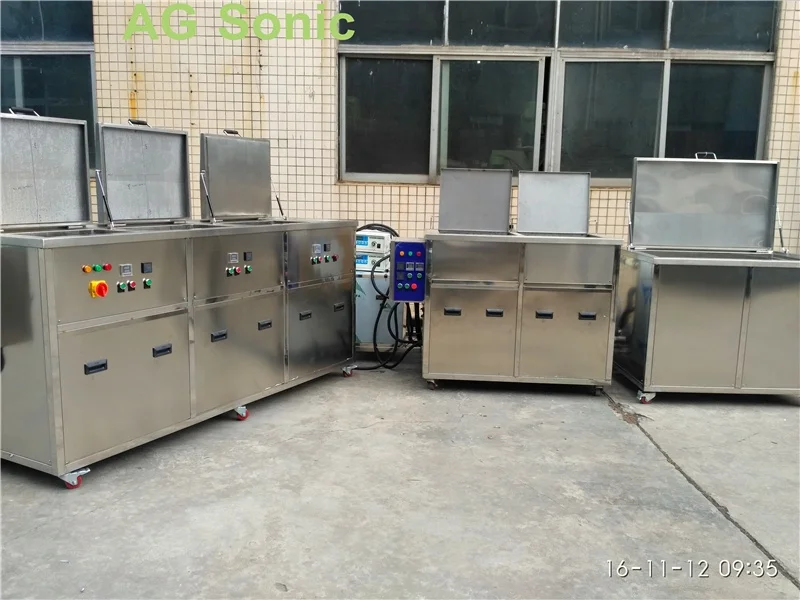
Auto Parts Cleaning machine
We are manufacturing and supplying of Automotive Ultrasonic Cleaners. We offer a wide range of ultrasonic cleaners. These are Single or Multistage Ultrasonic Cleaners, which are both manually operated & fully automated systems. Further, the machine is widely used and appreciated by our clients due to its professional dependability and user friendliness.
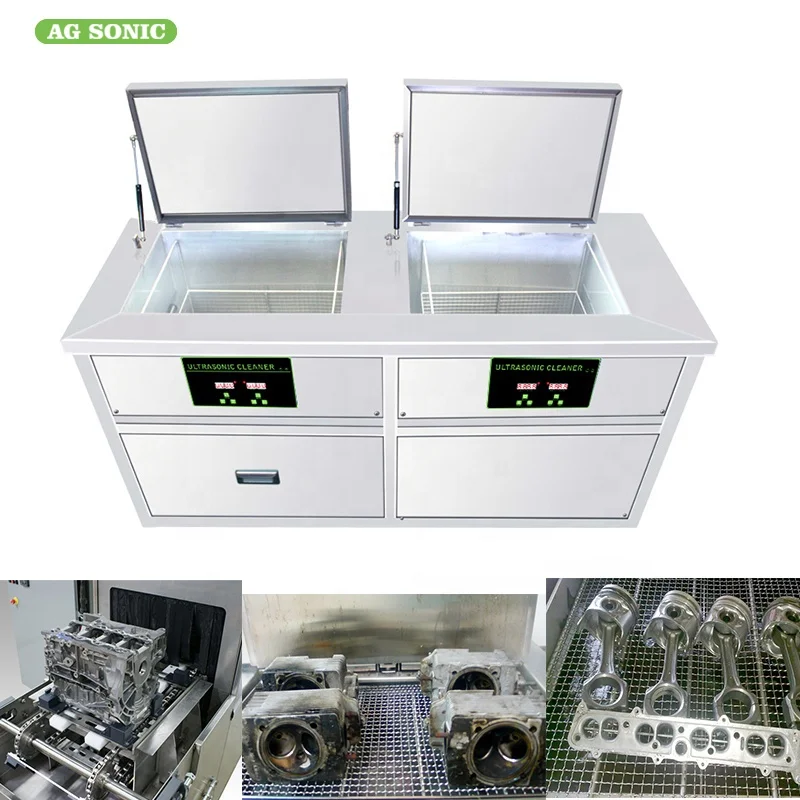
Large Industrial Ultrasonic Cleaning Machine For Engine Block Car Parts Cleaning
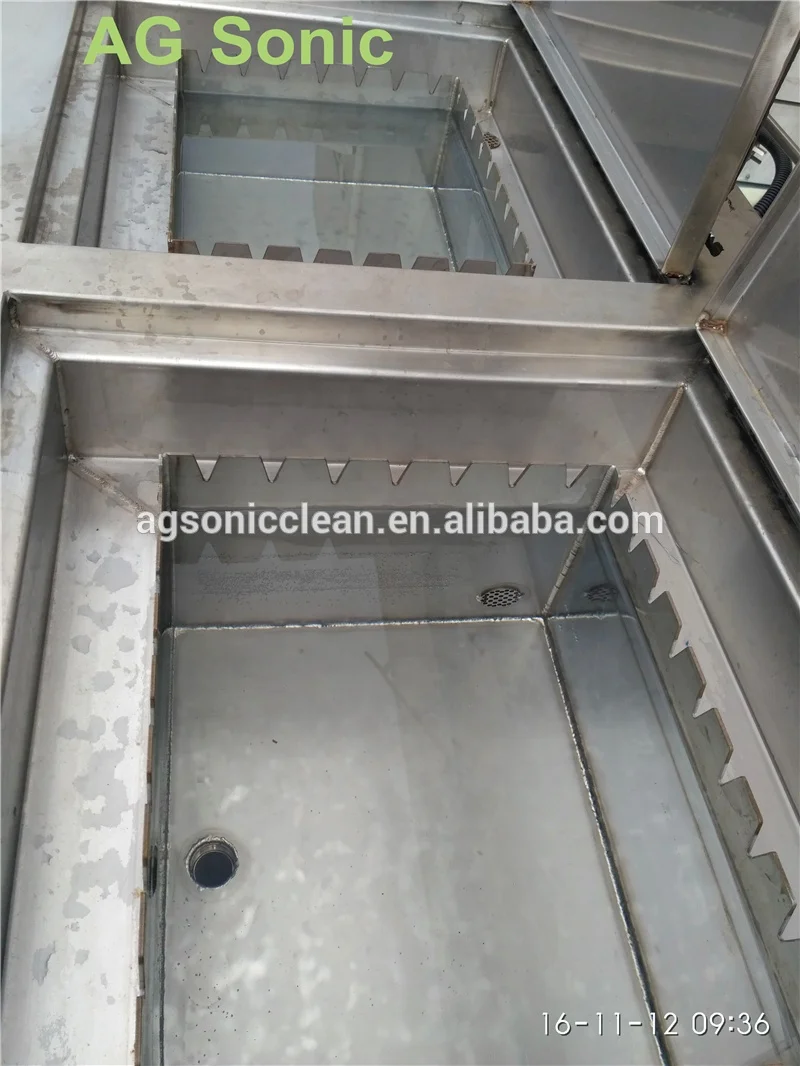
Stainless Steel Automotive Ultrasonic Cleaner 40Khz Auto Parts Ultrasonic Cleaning Bath
Ultrasonic Bath Cleaner Automotive Ultrasonic Cleaner For Auto Parts
Frequency and cleaning
Until the last 5 years, ultrasonic cleaning was typically limited to the lower end of the ultrasonic spectrum—20 and 30 kHz for magnetostrictive systems and 25 and 40 kHz for piezoelectric systems. Recently, manufacturers have developed systems that will operate at frequencies well above 100 kHz. These higher frequencies are less aggressive on sensitive substrates and can clean contamination levels down to the submicron range. They can be ideal for applications such as cleaning a fragile disk drive or semiconductor components but lack the power required for typical precision industrial applications. The primary frequency range for the typical industrial process continues to be 20-40 kHz.
Saved more than 20 labor hours and minimized employee chemical exposure.
AGSONIC wasn’t the cheapest or the most expensive. They had an excellent product for the money and a commitment to customer service. AGSONIC is very easy to work with, even from 2,000 miles away. The retrofit and all other support needs have been handled in a very responsive manner. AGSONIC ’ dependability and service are part of our operational success. As far as our employees and management are concerned, our AGSONIC units are here to stay. For any future needs, AGSONIC is our 1 choice.
– Customer feedbaack Aerospace.
Why an Ultrasonic Cleaner is Ideal for Aircraft Parts
In three words: thorough, safe and fast. Contaminants missed by manual cleaning are usually those deep in crevices and on other surfaces impossible to reach. Moreover, highly finished mold surfaces can be scratched or otherwise damaged by manual processes. Large molds can be difficult to maneuver, further risking damage during manual cleaning. And the longer it takes to clean the molds the greater the risk of damage.
Ultrasonic cleaning action solves all three issues.
It is thorough because it reaches all mold surfaces immersed in a biodegradable water-based ultrasonic cleaning solution. It is safe because while the cleaning action can be termed “violent” it occurs so fast that highly polished injection mold surfaces are not damaged during the cleaning process. By fast we mean 10 to 15 minutes although large complex molds may require a longer cleaning cycle.
Aircraft Parts Cleaning by Cavitation Action
Cavitation action is described as the implosion of countless minute bubbles against surfaces of products immersed in the cleaning solution. Bubbles are created when generator-powered transducers bonded to the ultrasonic cleaner tank vibrate at ultrasonic frequencies measured in thousands of cycles per second or kilohertz (kHz).
Selecting the cleaning equipment is governed to a large extent by the size of molds being cleaned. Ultrasonic cleaners are available ranging from small benchtop units to industrial-sized floor-mounted equipment that can be fitted for automated cleaning and rinsing cycles. But do select a cleaner with a heater, timer and sweep mode.
The process is fairly straight forward regardless of equipment size. Here’s a simplified description that can be modified based on your specific operations:
1.Fill the ultrasonic cleaner with water but allow room for cleaning solution displacement due to the size of the molds being cleaned. Add the proper amount of biodegradable cleaning solution concentrate. Ask the scientists at Tovatech to recommend the correct formulation based on the type of contaminants you are removing and what the mold itself is made of.
2.When you are ready to clean place the injection molds in the cleaner basket. Take care that they do not contact each other. If you are cleaning large parts you may suspend them in the cleaning solution so they do not contact the tank bottom. Some industrial cleaners are equipped with bottom racks to support products being cleaned.
3.Set the heater to 65 C and timer from 10 to 60 minutes depending on the degree of contamination. Activate the sweep mode to assure uniform distribution of cavitation and promote uniform cleaning then lower the molds into the solution. With experience you will establish optimum cleaning conditions.
4.At the end of the cycle remove the molds and inspect. When satisfied, rinse them with fresh hot water and allow them to dry or blow them dry with compressed air. Note that intricate configurations and cavities may trap water that should be removed by adding an electric drying oven to your setup.
Rinsing tip: You’ll want to thoroughly remove cleaning solution residues. Complex shapes may call for a spray rinse or, in certain cases, rinsing by cavitation in an ultrasonic rinse tank.
How to Clean Large Aircraft Parts
Complex Aircraft Parts require careful cleaning.
Complex Aircraft Parts represent substantial investments by plastic injection molding companies which, in order to protect their investments, must establish cleaning procedures to remove a variety of stubborn contaminants. These include burned on residues, oils, flashing and grease that if allowed to remain will result in product rejection by the quality control department. Hand scrubbing with solvents simply does not do the job. In addition to being time consuming, manual cleaning introduces potential health hazards for personnel and solvent disposal challenges. The solution is using an ultrasonic cleaner instead of scrubbing in a solvent-based parts washer
Ultrasonics: The ONLY Way to Clean with Confidence
Regardless of the source of the dirt or contamination, AG Ultrasonic Cleaning Systems are designed to accommodate a wide variety of uses in diverse industries. Fast, effective and efficient, our machines will allow you to clean virtually any type of part or component. The following is just a short list of the many different types of items that have been cleaned using our systems.
3 Aircraft Parts Ultrasonic Cleaner Specification :
| Model No. | T-2060 |
| Ultrasonic tank size(mm) | 730 x 480 x 760 mm |
| Rinsing tank size(mm) | 730 x 480 x h760 |
| Capacity | 266L |
| Ultrasonic power | 3600W |
| Heating power | 9KW |
| Transducer numbers | 60pcs |
| Ultrasonic frequency | 28khz or 40khz |
| Timer | 0~30min adjustable |
| Heater | 20~80C adjustable |
| Material | Stainless steel 304 |
| Power supply | AC220V, 3phase , AC380V/415V 3phase |
| Optional | Filtration system |
4. How to Specify Ultrasonic FrequencyUltrasonic frequency is produced by generator-powered transducers bonded to the bottom of the tank. They vibrate in kilohertz (kHz or thousands of cycles per second) above the hearing range, which is approximately 20 kHz.Most ultrasonic cleaners operate between 35 and 45 kHz. This frequency range is well suited to the vast majority of cleaning tasks. Sample prep is often accomplished with units operating at 37 kHz. An example of an ultrasonic unit especially designed for sample prep is microprocessor-controlled
The system operates in the following manner:
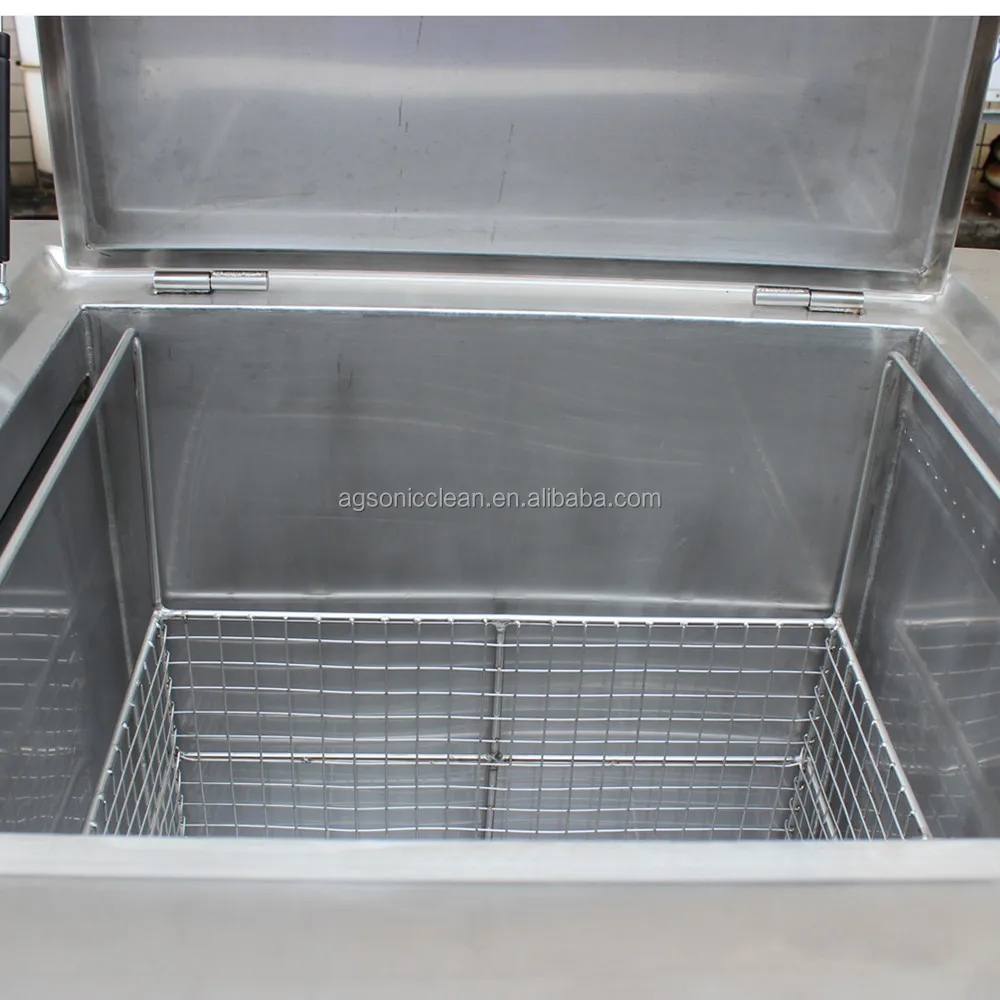
The cover is opened and the batch of parts is placed onto the basket rest. Dripping liquids are directed back to the ultrasonic cleaning tank


Packing and Shipping:
| Packing , loading, delivery time | |
| Packing unit | 1set/wooden case |
| Packing method | Export wooden case |
| Loading port | Shenzhen |
| Delivery time | About 15 working days |
| Minimum Order Quantity | 1set |
| Transport method | By express company / air / sea |

Supply high quality product
Provide OEM&ODM service
One Year Warranty
24/7 response.
Technical support for all time.
Professional suggestion for your cleaning job.
Full inspection for every product we made.
1. AG SONIC technology limited, which engaged in ultrasonic cleaner field for more than 10 years. And the main products are ultrasonic cleaner with different capacity.
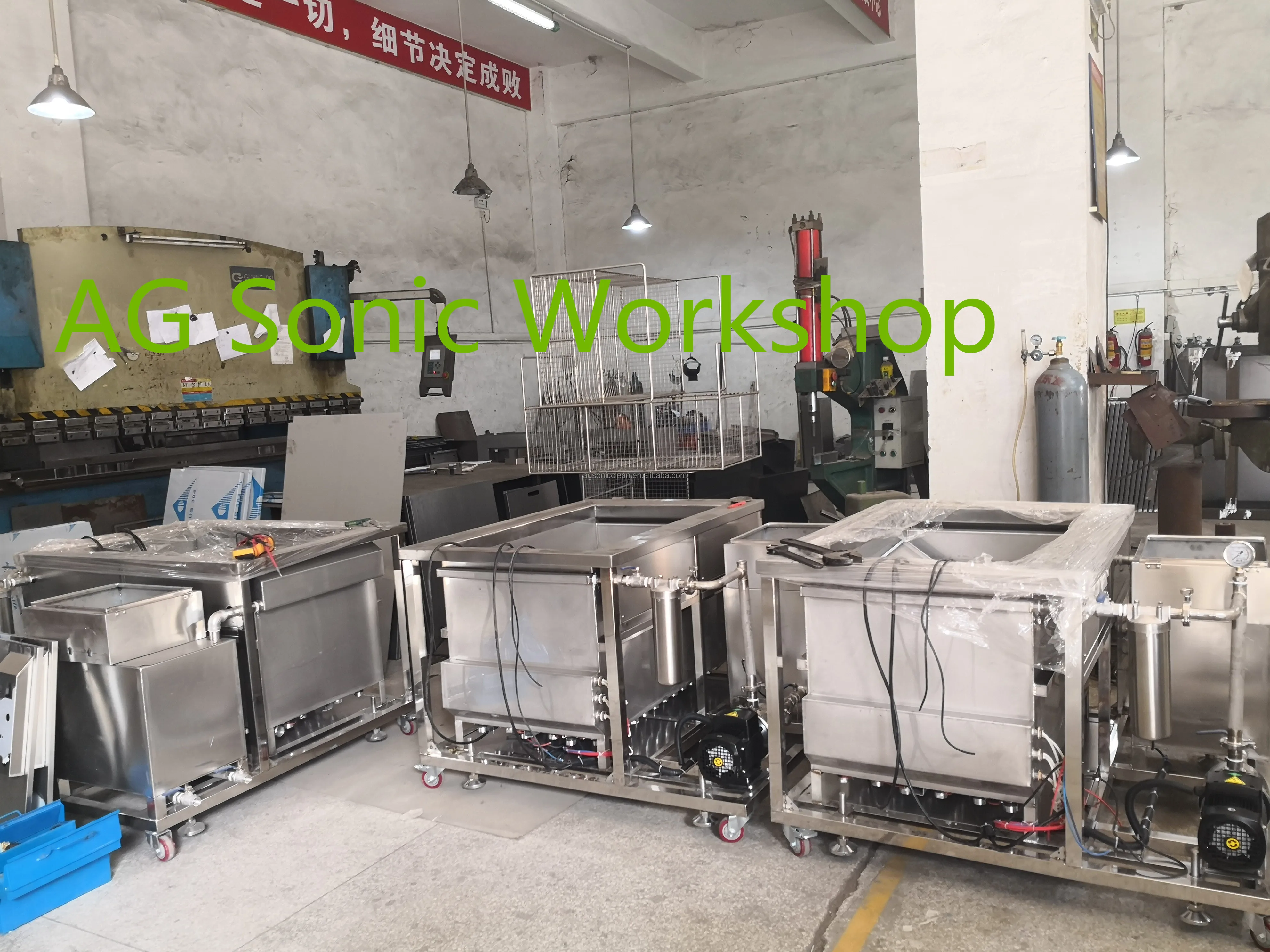
AGSONIC has been manufacturing ultrasonic parts cleaners for years, providing manufacturers with the highest-quality systems available. We are dedicated to manufacturing systems of many types and styles which include small table-top systems, large single-tank systems for injection molds are other large parts, strip and metal tape washers, aerospace parts washers, multi-stage machines which include cleaning, rinsing, and drying, automation systems, and custom equipment designed specifically for your needs. If you are in need of an ultrasonic cleaner, you will find what you are looking for at AGSONIC .


Ultrasonic Frequency and Watt Density
Ultrasonic energy occurs when sound waves are introduced into a solution such as water via a package that includes one or more ultrasonic generators and corresponding ultrasonic transducers.
The sound waves create microscopic bubbles of solution during periods of positive pressure, which implode and release a burst of energy during periods of negative pressure. This process is called cavitation. It is cavitation that enhances the separation of soils from substrates, often making ultrasonic cleaning faster, gentler, and more effective than other methods. Imploding bubbles travel wherever the solution goes, allowing cleaning activity even within complex part geometries and micro-parts.
When cleaning with ultrasonics the frequency of the sound waves is matched to the application. Frequencies range from 20 kHz to 170 kHz and above. The most commonly recommended ultrasonic frequency is 40 kHz. It is considered the “universal frequency” because it is generally safe for use in most applications and will produce the most intense cavitation energies to remove the most common types of contaminants (oil, grease, metal chips) from the widest range of substrates.
When should you consider adding ultrasonics to a cleaning process?
Usually, the answer is whenever parts are not getting clean enough using the current method. Ultrasonics become a viable purchase when cleaning issues are negatively impacting productivity, quality and/or the bottom line. Effective cleaning with ultrasonics has been proven in a wide range of industries ranging from microscopic medical devices to reconditioned locomotive shafts, from aerospace parts to parts prior to coating, and more.
Ultrasonics can be included in a new cleaning process or sometimes can be retrofitted into an existing process. In many cases, rejects due to residue on parts can be virtually eliminated with the addition of ultrasonics into clean and/or rinse stations in a properly-configured parts cleaning line.
Best Ultrasonic Cleaners for Auto Parts And Car Engine
Ultrasonic cleaner for engine parts are available in different size and versions that are suitable for the variety of needs – including the clean up of your car engine parts.
Here we provide our best reviews on top selling ultrasonic cleaners for car engine parts. Just check them out and get one as per your requirement.
For effective cleaning the ultrasonic cleaning machine must use the right of cleaning chemistry,operate at the right temperature and use the correct frequency, the part to be cleaned the contaminant to be removed and the degree of soil, determine this, our years of experience advising manufacturing and maintenance clients on the right process for their cleaning needs help us identify the exact product combo that you need, just send AG SONIC email or call us, and we’ll guide you to the right solution quickly
Ultrasonic technology uses absolutely no harmful chemicals.
No fumes. No strong odors. No dangerous or expensive chemical disposal. Reduced risk.
The technology is remarkable, but the process is easy. More efficient and effective than chemical processes, the machines are as simple to use as a dishwasher, with no hand labor or supervision necessary.
How do ultrasonic machines work?
Ultrasonic tanks generate high frequency sound waves through the use of transducers and electronic ultrasonic wave generators. Typical transducers are made from piezoelectric crystals which convert electrical energy into mechanical / sound wave energy because piezoelectric crystals change geometric size when electrical voltage is applied.


New products from manufacturers at wholesale prices