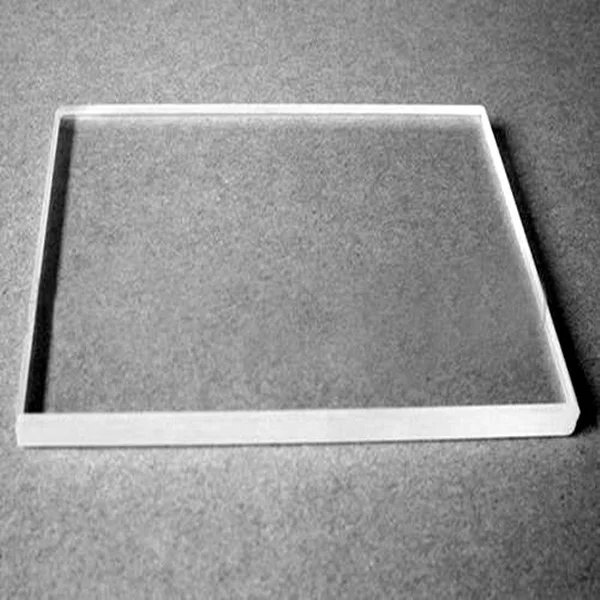
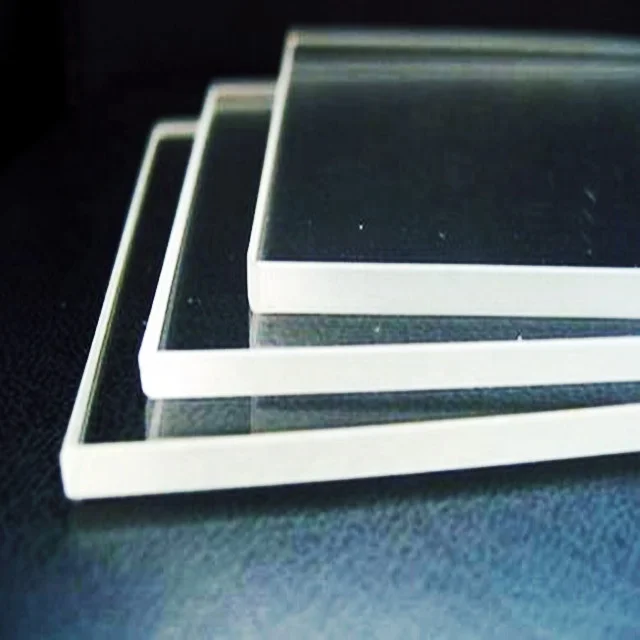
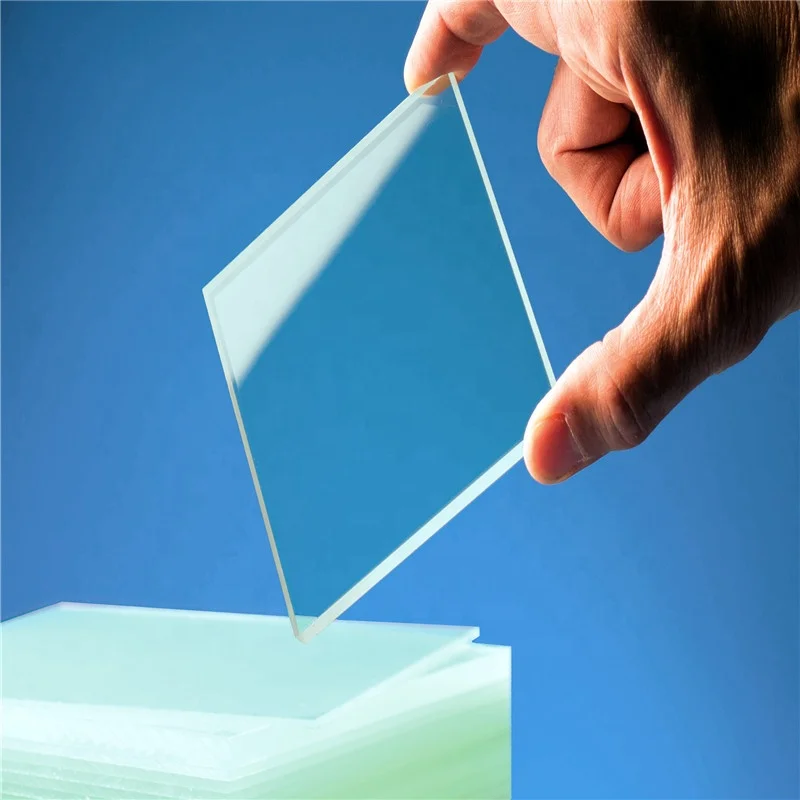

custom 0.2mm~2mm borosilicate glass sheet
- Category: >>>
- Supplier: Xinyu Xu Tking Glass Co. ltd.
Share on (62063016010):
Product Overview
Description
Product Description
Introduction:
A particularly low coefficient of thermal expansion is what makes BOROFLOAT® glass remarkably resistant to high temperature levels. Our borosilicate glass is proven to stand up to high and fluctuating temperatures typical of applications such as high-performance lamps, cinema projectors and inspection panels for chemical reactors. Even with applications where rapid cooling down from higher temperatures is the requirement, BOROFLOAT® glass easily passes the test. For example, the temperature difference between a hot panel center and a cold panel edge.
Outstanding thermal resistance
Very good temperature stability
Excellent resistance to thermal shock
Can be thermally toughened
Can be thermally shaped (3D)
Exceptionally high transparency
High transparency in visible and near IR & UV range of wavelengths
Outstanding visual quality and optical clarity
Low inherent fluorescence and solarisation tendency
Thermal properties
Coefficient of Linear Thermal Expansion (C.T.E.) α (20 - 300 °C)\t3.25 x 10-6 K-1 *
Specific heat capacity cp (20 - 100 °C)\t0.83 kJ/(kg·K)-1
Thermal conductivity λ (90 °C)\t1.2 W/(m·K)-1
* According to ISO 7991.
Maximum operating temperatures
For short-term usage (< 10 h)\t500 °C
For long-term usage (≥ 10 h)\t450 °C
Viscosity of BOROFLOAT® 33
Working Point (104 dPas)\t1270 °C
LITTLETON temperature / Softening Point (107,6dPas)\t820 °C
Annealing Point (1013 dPas)\t560 °C
Strain Point (1014,5 dPas)\t518 °C
Transformation temperature (Tg)\t525 °C
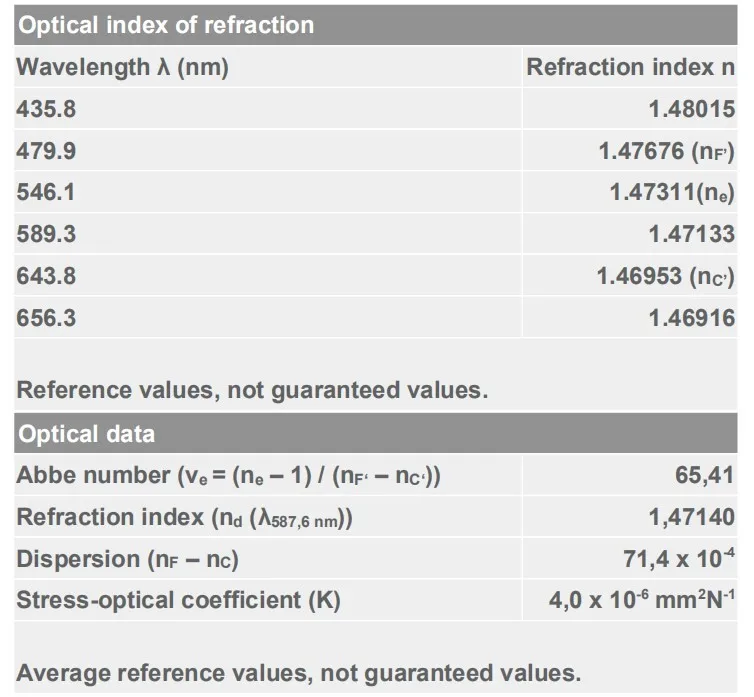
Thickness | 0.2mm 0.3mm 0.5mm 0.7mm 1.1mm 1.7mm ect.. |
Heat resistant | 500℃ |
Shape | Flat |
Structure | Solid |
Size | customized |
Material | Material |
Detailed Images
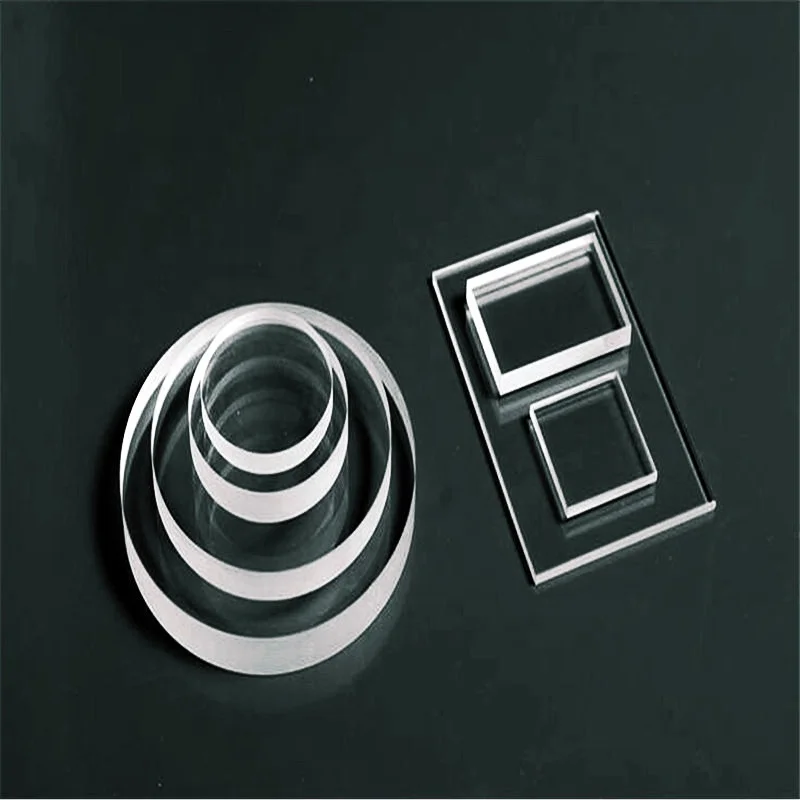
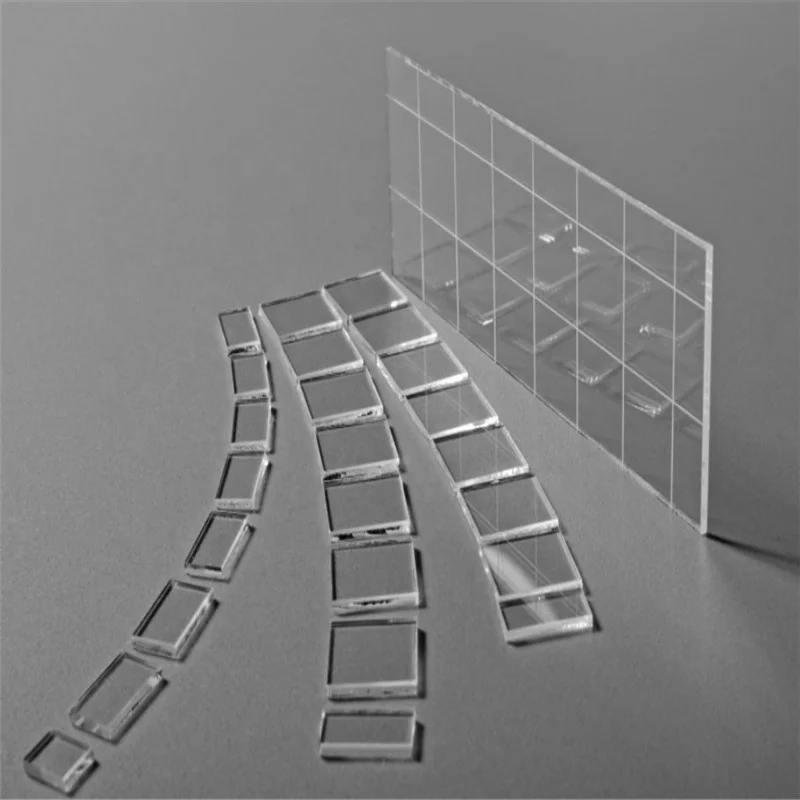
Different Glass Wafer
Optical lens
Spotlight glass disc
Optical filter
Cover glass
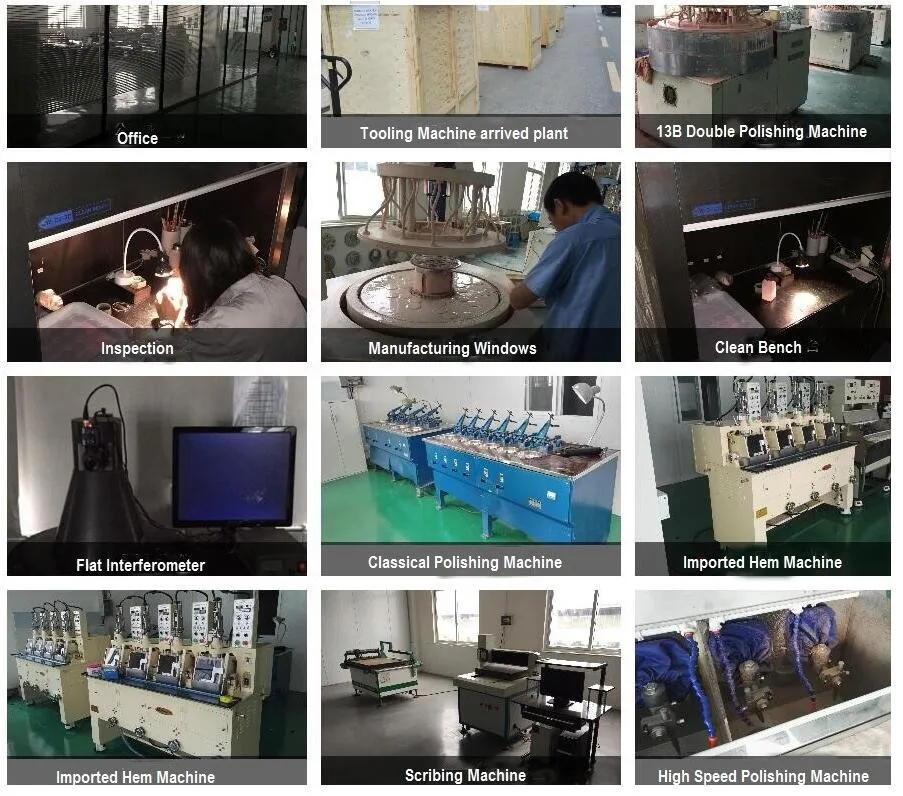
Our Company
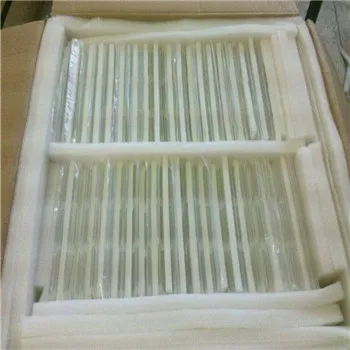
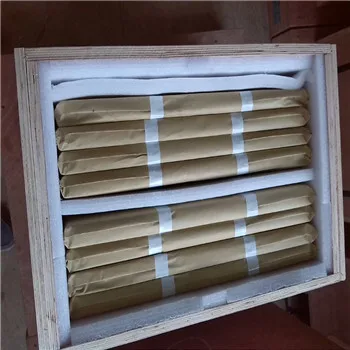
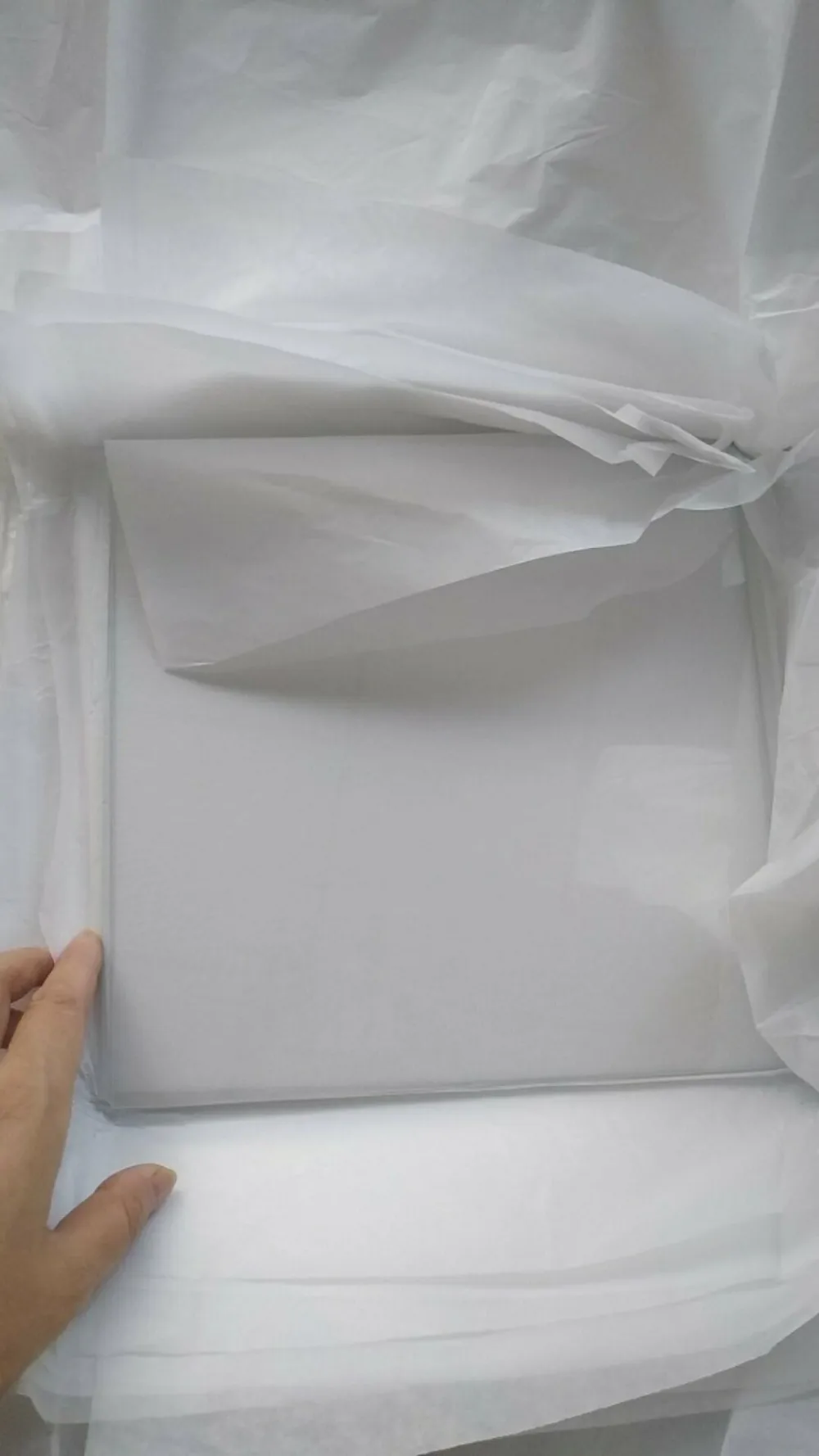
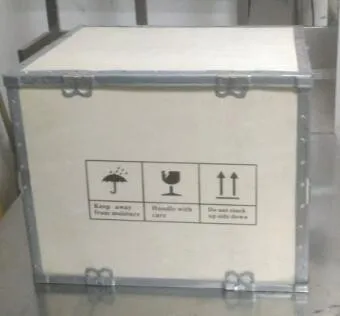
Packing & Delivery
Contact us

Tel:86+13414986564
Skype : yinhuanspring
Sales manager:Spring Lin
.

We Recommend



New Arrivals
New products from manufacturers at wholesale prices