Leaching &solvent extraction& electrowinning for copper oxide ore
- Category: >>>
- Supplier: Hunan Chmm Metallurgy Engineering Co. Ltd.
Share on (62068839164):
Product Overview
Description
Leaching &solvent extraction& electrowinning for oxide copper
The process mainly comprises three essential steps: leaching, solvent extraction and electrowinning.

Typical copper heap leach/solvent extraction/electrowinning flowsheet
1. Leaching: Cu2+ (or Cu+) from the copper-containing minerals dissolves into the lixiviant (H2SO4solution), to produce the pregnant leach solution (PLS), the PLS will also contain other impurities, such as Fe, Al, Co, Mn, Zn, Mg, Ca, etc., The PLS is fed to the solvent-extraction circuit, the leach residue contains gangue or waste minerals will be disposed of in tailings dams or dumps.
1.1) Heap leaching: Heap leaching is used to treat oxides and lower-grade secondary sulfide ores, containing up to ~2% Cu, it is the most important method of hydrometallurgical copper extraction. Copper-containing ore material is crushed to a uniform particle size (typically 12-50 mm), often agglomerated, and then stacked on heaps. The H2SO4- containing lixiviant is applied to the surface of the heap, the solution trickles through the heap and dissolves copper minerals. The Cu2+-rich PLS is collected on a sloped impermeable surface beneath the heap and directed to a PLS pond. Copper is recovered from the PLS by SX and electrowinning, producing metallic copper. The acid-rich raffinate from SX is returned to the heap for further leaching. For management of the grade of the PLS that is fed forward to SX, a recirculating intermediate leach solution (ILS) system is employed.
1.2) Agitating leaching: following crushing and milling, the material is leached in stirred tanks. Finely ground ore is kept in suspension in the lixiviant by agitating the slurry mechanically or pneumatically. The slurry then reports to a solid-liquid separation, usually a counter-current decantation (CCD) circuit, in which some further leaching can take place. The eventual recovery of acid-soluble copper is usually above 98% of the readily acid-soluble minerals, generating a PLS that contains 2-12 g/L Cu. Ore high in chrysocolla will need extended leach times as this mineral has slow leach rates because the copper is removed from within the residual silica matrix.
Agitating leaching is a capital-intensive technique for these ores, but copper recovery can approach 100% in a time frame of hours, rather than the months or years of the percolation leaching techniques.
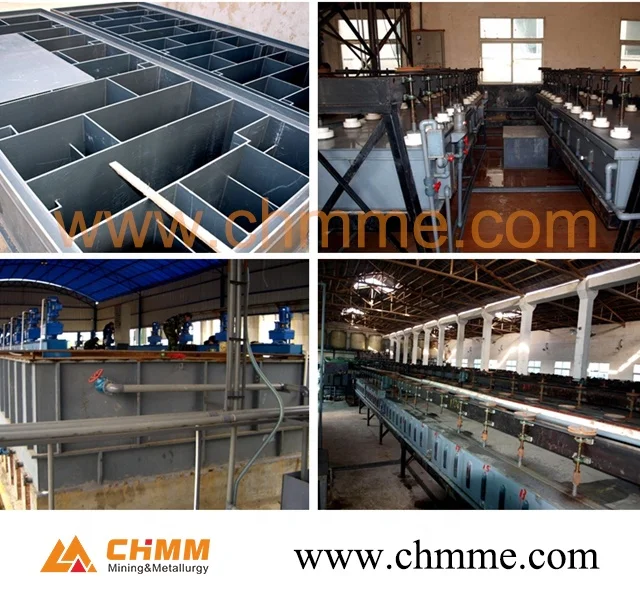
2. Solvent extraction (SX): copper is selectively loaded into an organic solvent which contains an extractant that reacts selectively with copper over other metal cations present in the PLS, the raffinate is higher in acid and is returned to the leach circuit as the lixiviant. In the strip step, copper is stripped from the loaded organic solvent into the advance electrolyte from which copper is electrowon, the stripped organic solvent is recycled to the extraction step.

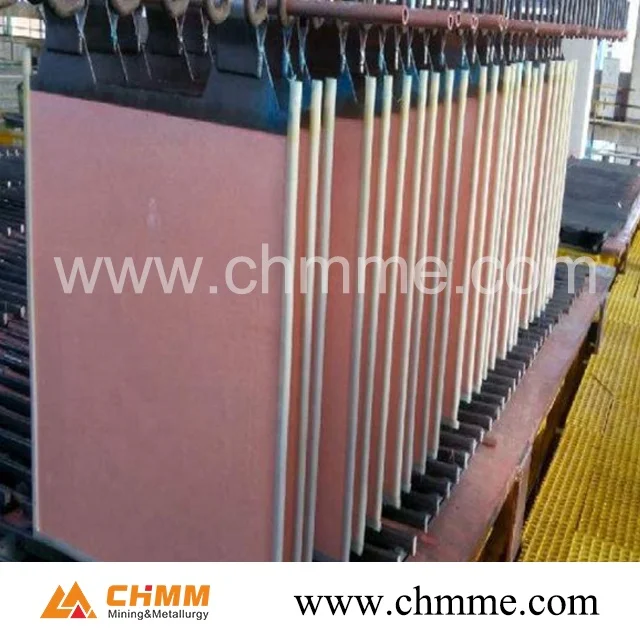
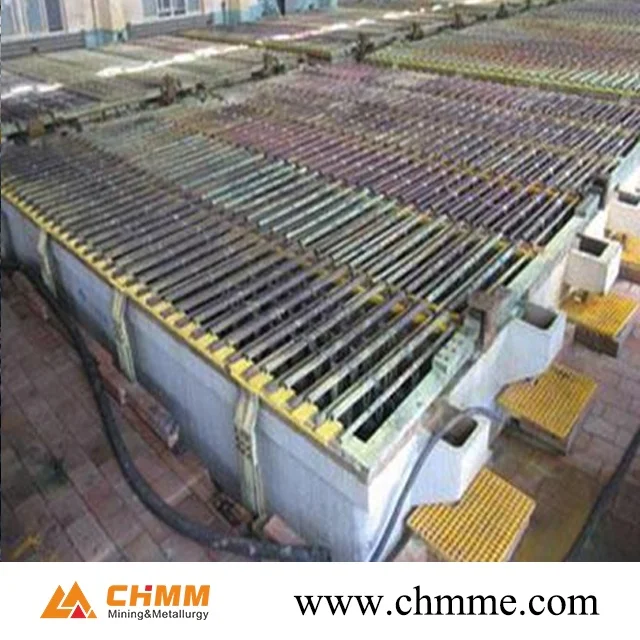
3. Electrowinning (EW): Cu2+ in the electrolyte from SX is reduced to copper metal at the cathode by the application of a DC electrical current. Sulfuric acid produced at the anode of the electrowinning cell, is returned to the SX circuit in the copper-depleted spent electrolyte to strip more copper from the loaded organic solvent.


We Recommend
New Arrivals
New products from manufacturers at wholesale prices