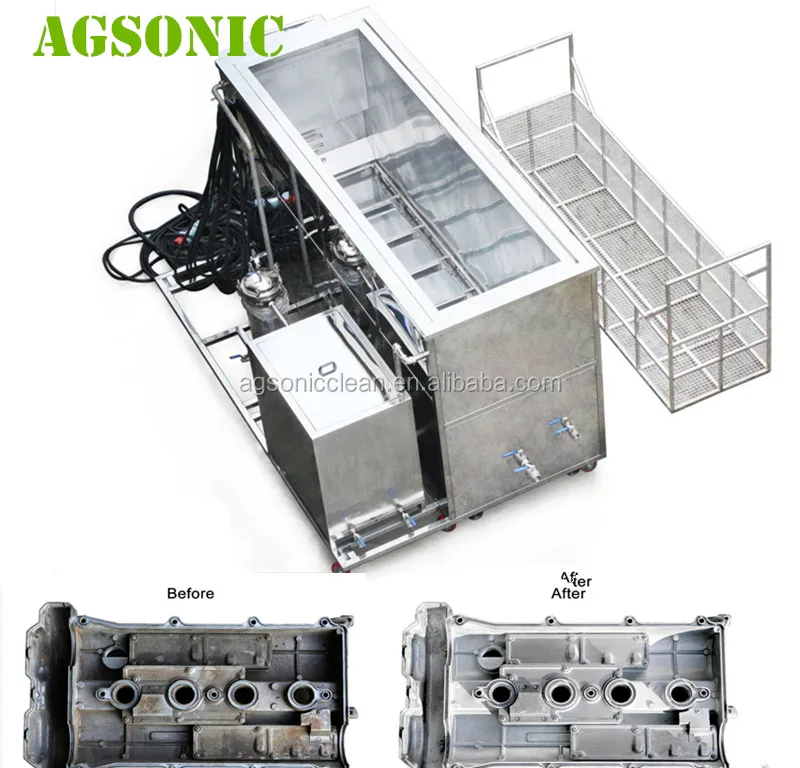
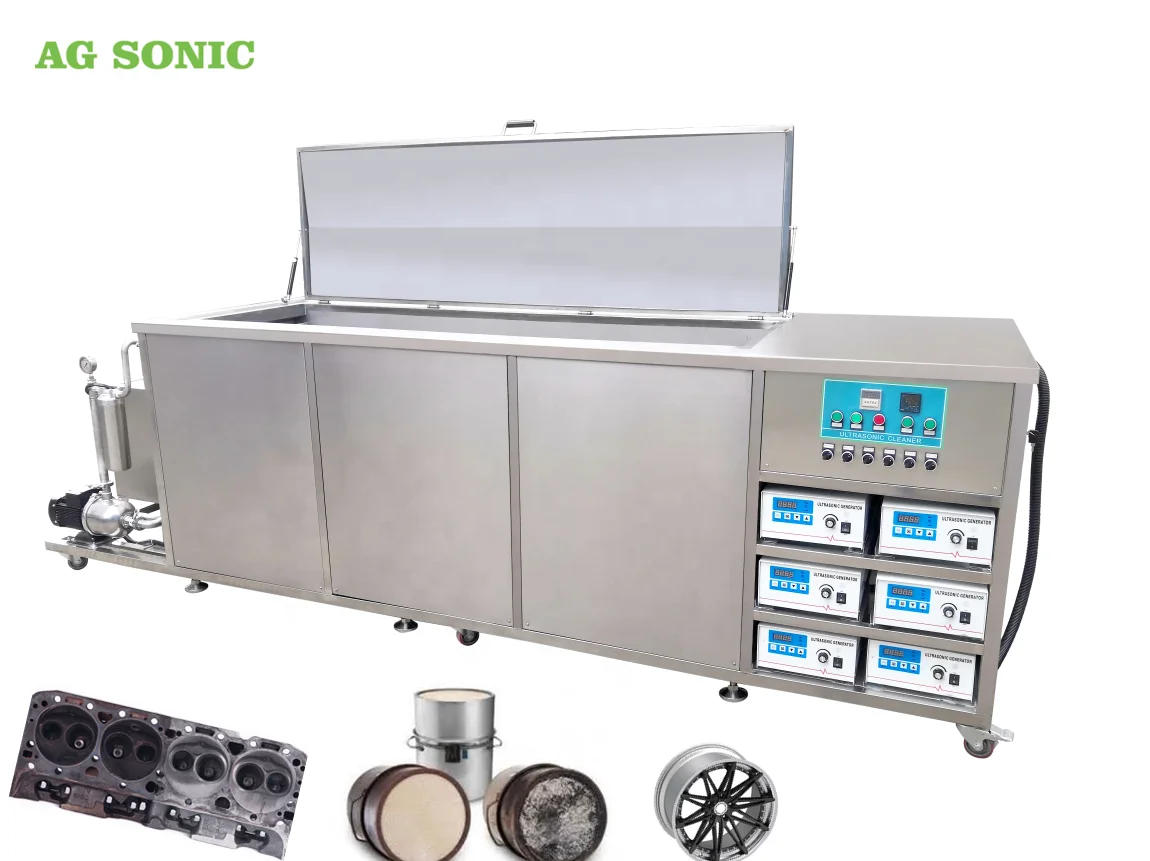
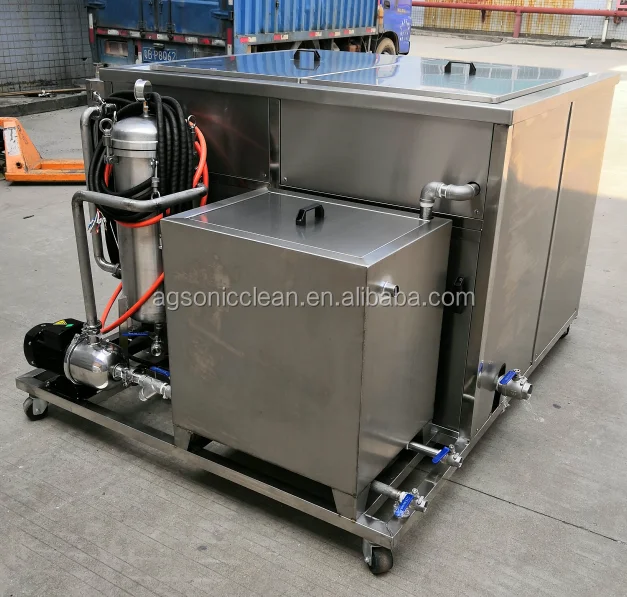
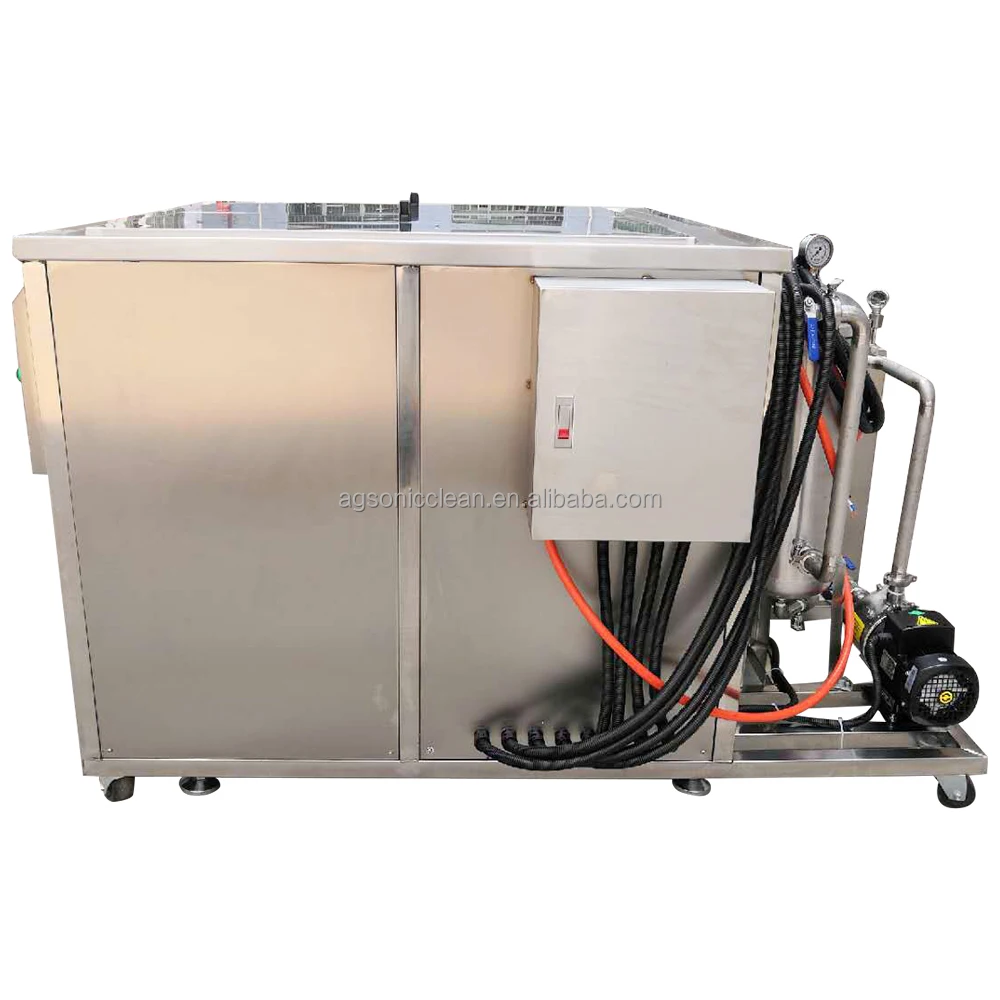
Dpf Industrial Ultrasonic Cleaner For Radiator Truck Dpf Filters Engine Carbon Cleaning Machine
- Category: >>>
- Supplier: Shenzhen Ag Sonic Technology Co. Ltd.
Share on (62087340282):
Product Overview
Description
Product Description
Dpf Industrial Ultrasonic Cleaner For Radiator Truck Dpf Filters Clean
How to Clean Filters with Ultrasonic Energy Engine Carbon Cleaning Machine
Operating an Ultrasonic Filter Cleaner System
Ultrasonic cleaners are available in numerous sizes based on the capacity of the cleaning solution tank, and can range from tabletop models to industrial-sized floor models. Regardless of size they are equipped with ultrasonic generators that excite tank-mounted transducers that create millions of microscopic bubbles in the cleaning solution. These implode on contact with the filters being cleaned to blast away contaminants from any surface wetted by the ultrasonic cleaning solution. Depending on models, ultrasonic filter cleaning equipment such as available have timers, temperature controllers, sweep and degas options. Rinse stations and drying stations are also available for assembly line filter cleaning.
Here’s a simplified series of operation steps for ultrasonic filter cleaning equipment. Modifications can be made based on specific filter cleaning requirements.
1. Add water to the fill line of the ultrasonic cleaning tank and prepare the ultrasonic cleaning solution clean A4 diluted to 2-5% with water. This is formulated for cleaning stainless and carbon steel, copper, brass and plastic.
2. Turn on the ultrasonic cleaner and degas function to both mix and degas the solution. Degassing removes air trapped in the water, which inhibits the cleaning operation. If the cleaner does not have a degas function allow it to run until bubbles stop coming to the surface.
3. Once degassing is complete you’re ready to clean the filters. Set the temperature to about 70°C for metal filters or about 50°C for plastics and the timer to 10 minutes. Experience will tell you the optimum temperature and how much time is required for your particular filter cleaning operations.
4. Place the filters in the cleaning basket so they do not contact each other, lower them into the ultrasonic cleaning solution, turn the unit on and activate the sweep function if so equipped. This evenly distributes the cavitation action throughout the solution for more uniform cleaning.
5. At the end of the cleaning cycle remove and inspect the filters. If they appear clean, rinse and dry. Depending on filter design you can either air blow dry or place them into a drying oven.
6. Apply a filter coating if required. The filters are now ready for reuse.
Ultrasonics efficiently removes:
- carbons
- varnishes and paints
- petrochemicals
- oil and grease
- metal shavings
- lubricants
- rusts
- carcinogens
- polymers
Ultrasonics can clean a wide range of filters including:
- extruders and pumps
- filter elements
- filter vessel assemblies
- polymer pumps
- spin and screen packs
- valves
- spinnerets
- die plates
- porous metal
- pleated metal
- woven screens
- fiber metal felt
- slotted wire
- filters with alloys
Benefits of ultrasonics for filters:
- Cleans delicate parts without damage
- Cleans cracks and crevices that would be difficult to reach with the hand
- Does not require line-of-sight for effective cleaning
- Doesn’t use harsh chemical solvents that are dangerous for workers and the environment
- Safe for aluminum, magnesium and zinc
- Biodegradable cleaner
- Clean multiple pieces at once without having to brush by hand – saves time and money
Fllter Ultrasonic Cleaner Specifications:Ultrasonic Cleaning and Drying
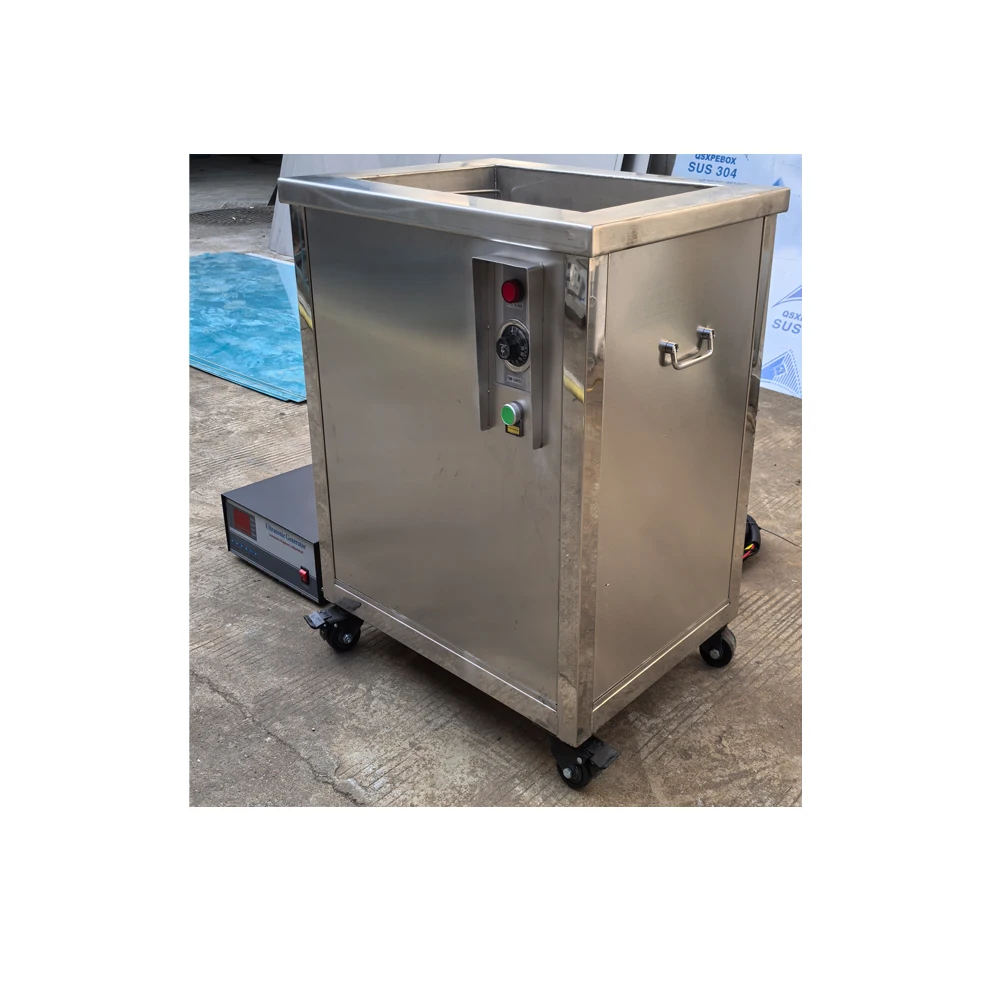
| Specifications for ultrasonic cleaner T-90S | |
| Model | T-90S |
| Tank capacity | 540L |
| Tank size | 1000x800x700mm |
| Unit size | 1140x940x920mm |
| Tank material | 2mm SUS304 |
| Ultrasonic power | 4500W |
| Heating power | 12KW |
| Timer | 1-99min adjustable |
| Heater | 0-80c adjustable |
| Frequency | 28/40khz |
| Control | External generator, more stable |
| Optional | Oil filter system, pneumatic lift, rinsing tank, etc. |
| Voltage | 110V, 1phase; 220V, 3phases/220V, 1phase; 380V, 3phases |
| Warranty | 1 year |
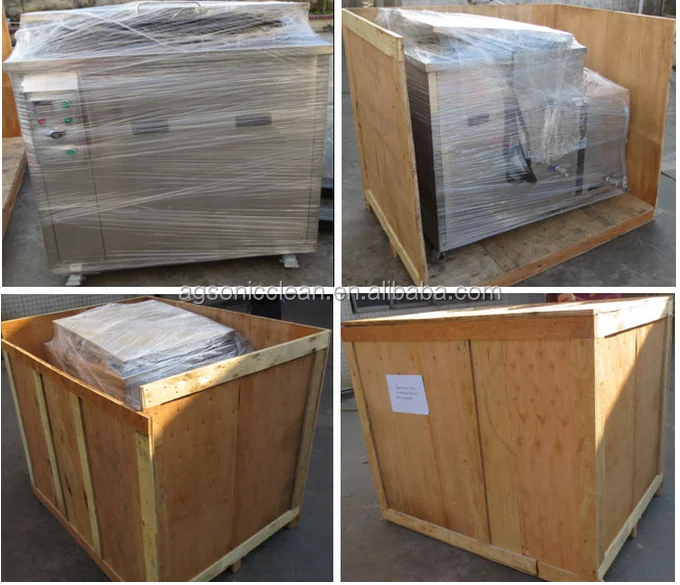
| Packing | 1unit/wooden case |
Features:
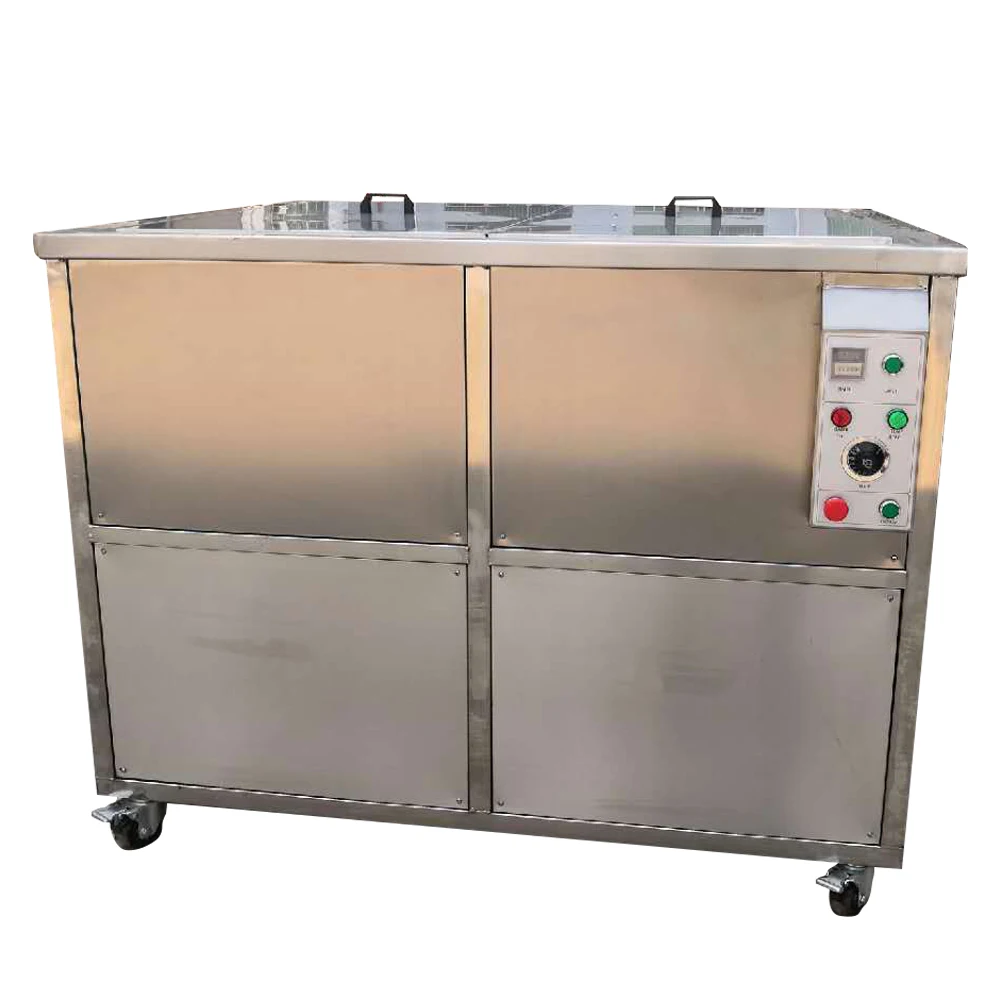
- Tank materail is SUS304 with 2mm thickness, Human hand argon welded, Sturdy and durable resistance to high tempearture
- 50W industrial transducers, outstanding cleaning effects
- Built-in generator
- Power adjustable, choose different power according to different cleaning objects
- Digital timer: 1~99mins timer adjustable. continious working for long time.
- With memory function, no need to reset time and temperature every time.
- 20~80C adjustable, powerful heating panel, faster cleaning
- Industry use power cord, more safer.
- Can bear 100~200KG cleaning objects
- Accessories: Machine with stainless steel basket, drainage, lid, movable castors
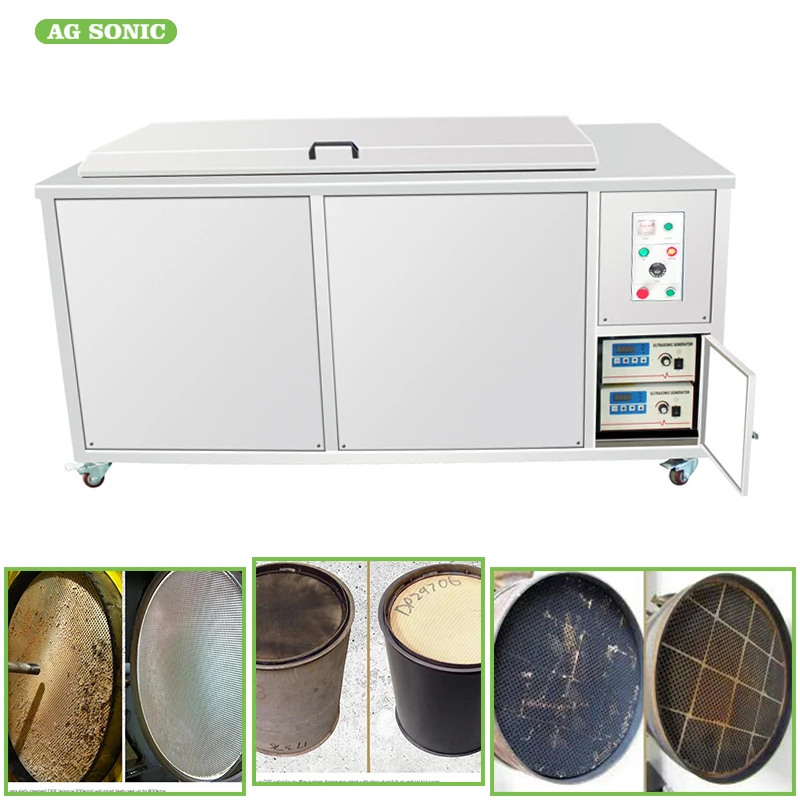
Diesel Particulate Filter Ultrasonic Cleaning Effect
Features of the machine:
• Low maintainence machine
• Heavy duty cleaning systems
• Chemical friendly- SS Rust proof body
• Industrial guage farication, build to last
• One year warrenty on any manufacturing defect
• Completely customized to suit the cleaning requirement
• Less human interfearance and less scope of error
• Accurate and uniform cleaning everytime
How the System Operates:
The system operates in the following manner:
- Parts are placed into the tank using the included stainless steel basket or other holding fixture.
- Once submerged, the START button is pressed, and the cover is closed. The ultrasonic system turns on, and the filter system turns off automatically. Parts are cleaned with the CROSSFIRE ultrasonic system at this time.
- The system will automatically turn off upon completion of the cycle.
- Operators can then return when the parts are clean.
- The cover is opened and the batch of parts is placed onto the basket rest. Dripping liquids are directed back to the ultrasonic cleaning tank
- What is Ultrasonic Cleaning


Packaging & Shipping
Our Services
Supply high quality product
Provide OEM&ODM service
One Year Warranty
24/7 response.
Technical support for all time.
Professional suggestion for your cleaning job.
Full inspection for every product we made.
Company Information
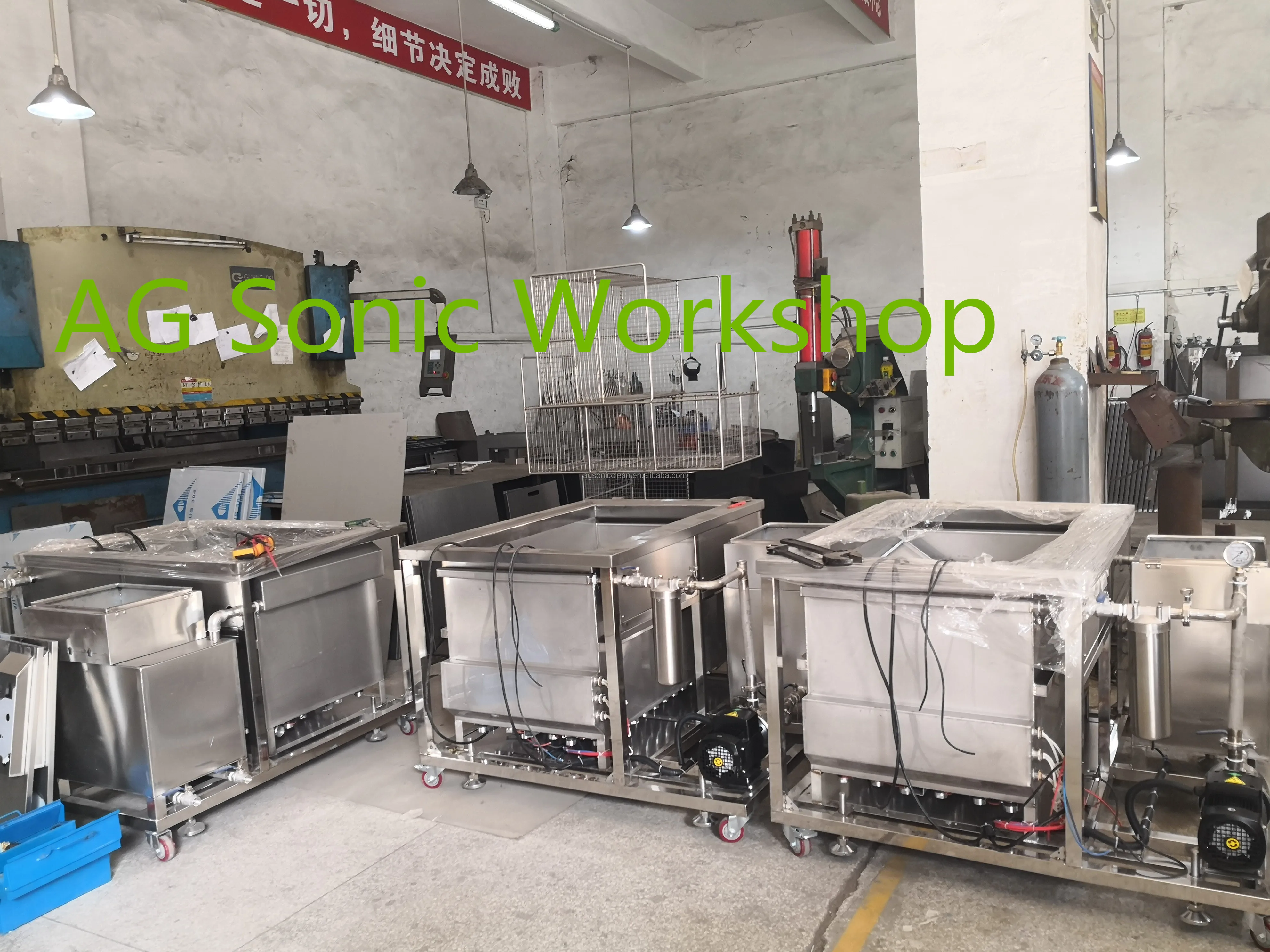
1. AG SONIC technology limited, which engaged in ultrasonic cleaner field for more than 10 years. And the main products are ultrasonic cleaner with different capacity.
2. AG SONIC is an original ultrasonic manufacturer with R&D, production and sales teams. Our engineer is engaged in the filed for more than 20 years,


FAQ
How do I perform the foil test?
Cut three small pieces of aluminum foil about 4" x 8" each. Fold each piece over a rod that you will use to suspend the foil in the tank. A clothes hanger works well. Your cleaner should be filled with an ultrasonic cleaning solution, degassed, and brought up to normal operating temperature. Suspend the first "square" in the center of the tank and the other two a couple of inches from each end of the tank. Make sure that the tank is filled to the fill line, and turn on the ultrasonics for about one minute. Remove the foil and inspect: All three pieces of aluminum foil should be perforated and wrinkled to about the same degree.
Why must baskets be used?
Items being cleaned should never be placed directly on the tank bottom. Transducers (which produce the ultrasound) are sometimes bonded to the bottom of the tank. Items resting directly on the tank bottom can damage the transducers and/or reduce cavitation. Additionally, a tray or beaker will position the item within the optimal cleaning zone of the tank. The tray or beaker will also hold the load together and allow for easy, no-touch removal, draining and transport of the items to the next step in the cleaning process
Why choose ultrasonic cleaning machine to clean our engine block and engine parts?
Clean intricate and difficult to reach areas easily
A major challenge of any cleaning system is the difficulty faced in tackling tiny spaces, intricate geometries, and difficult to reach surfaces, ultrasonic cleaning penetrates even blind holes and small apertures, that previously had hit-and miss success rates, the uniform agitation of the cleaning solution ensures that the cleaning action penetrates even hard to reach areas that previously required specialized brushes and other complicated cleaning devices with no real guarantee of a successful and consistent cleaning outcome, various factors go into determining which combination of an ultrasonic unit and chemical solution is suited to your particular requirement
For effective cleaning the ultrasonic cleaning machine must use the right of cleaning chemistry,operate at the right temperature and use the correct frequency, the part to be cleaned the contaminant to be removed and the degree of soil, determine this, our years of experience advising manufacturing and maintenance clients on the right process for their cleaning needs help us identify the exact product combo that you need, just send AG SONIC email or call us, and we’ll guide you to the right solution quickly
Ultrasonic technology uses absolutely no harmful chemicals.
No fumes. No strong odors. No dangerous or expensive chemical disposal. Reduced risk.
The technology is remarkable, but the process is easy. More efficient and effective than chemical processes, the machines are as simple to use as a dishwasher, with no hand labor or supervision necessary.
How do ultrasonic machines work?
Ultrasonic tanks generate high frequency sound waves through the use of transducers and electronic ultrasonic wave generators. Typical transducers are made from piezoelectric crystals which convert electrical energy into mechanical / sound wave energy because piezoelectric crystals change geometric size when electrical voltage is applied.
Ultrasonic cleaning guide
The cleaning effect is the greatest by combining 3 elements, that are chemical power, physical power and temperature, and it can perform the quality improvement, shortened time for cleaning, production efficiency improvement.
The ultrasonic cleaning of physical cleaning power is focused and explained here.
Principle of the ultrasonic cleaning
The ultrasonic cleaning is thought that cavitations, straight current and acceleration generally act the cleaning object and can clean. In those, it explain about cavitations as example of single frequency ultrasonic here because the cleaning effect by cavitations is the biggest in low frequency ultrasonic.
What is Cavitation
1.The water pressure (sound pressure) of the liquid changes when liquid is irradiated by ultrasonic wave.
2.This sound pressure grows big than static pressure, and a expanding force acts when sound pressure became negative pressure (decompression), and the gas which cleaning fluid breaks off and can dissolve in cleaning fluid becomes a nucleus, and there is almost the cavity of the vacuum. This phenomenon is called cavitations.
3.Because positive and negative pressure of the sound pressure are repeated in turn, and the cavity gradually grows up and it cannot endure compression of the positive pressure at last, and it is crushed instantly and becomes extinct, but a liquid molecule clashes at this time and produces by a big crash force
We Recommend
New Arrivals
New products from manufacturers at wholesale prices