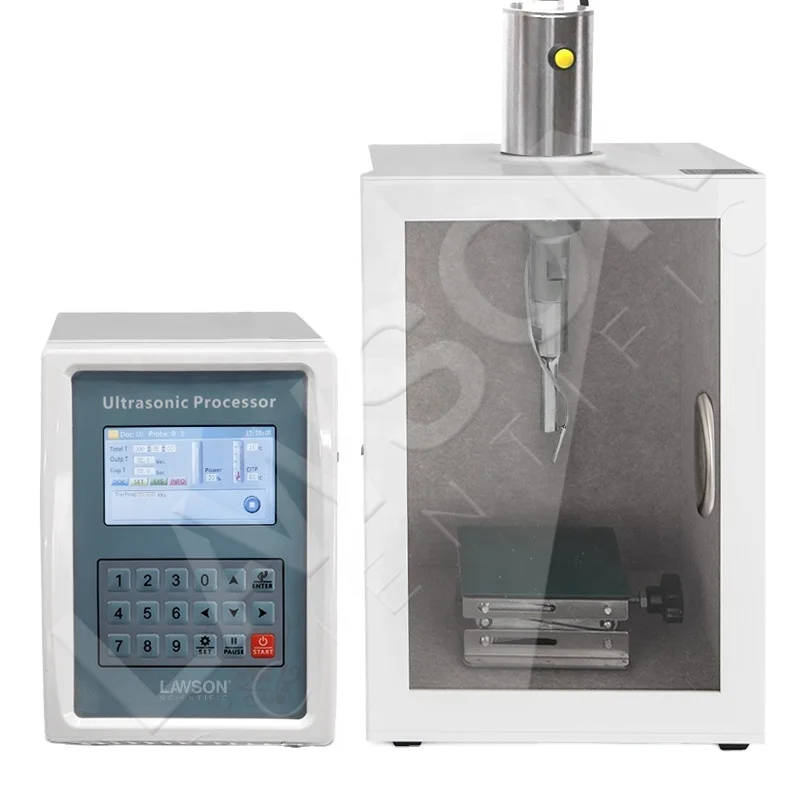
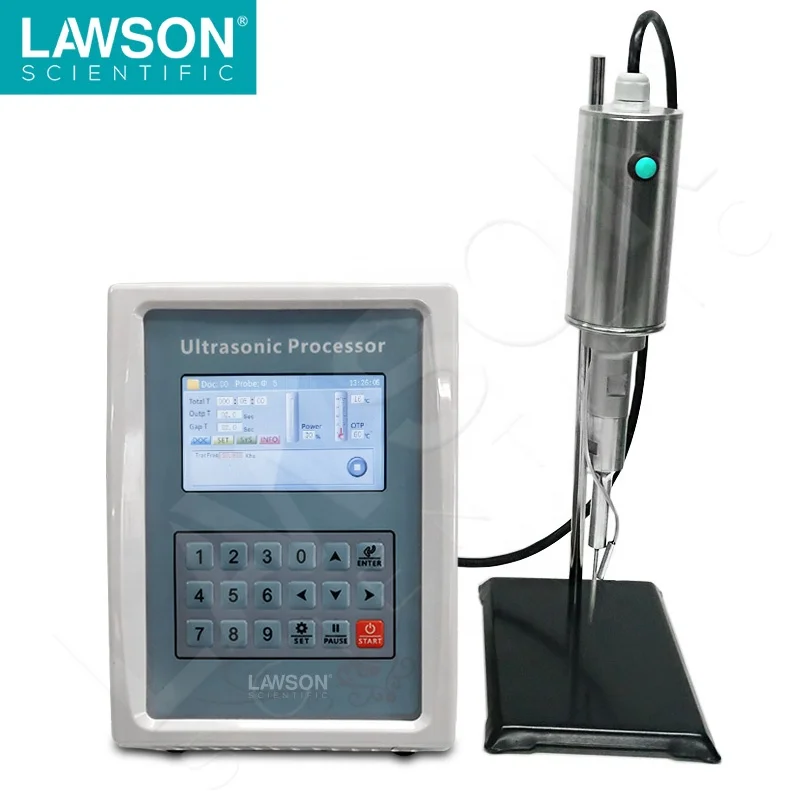
University ultrasonic sonicator homogenizer Cell Crusher for dispersing ,herbal extration,homogenizing CBD tissue breakingUP 400
- Category: >>>
- Supplier: Ningbo Lawson Smarttech Co. Ltd
Share on (62143851135):
Product Overview
Description
Medical Ultrasonic Homogenizer,Ultrasonic Sonicator Price,Ultrasonic Cell Crusher
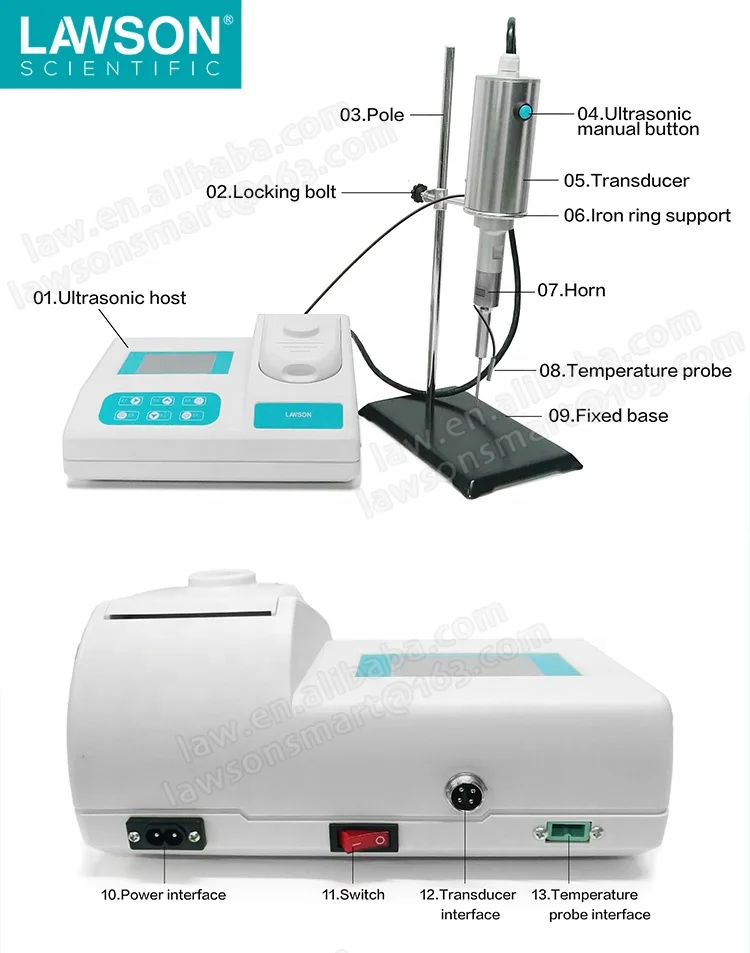
-These machines are controlled by microcomputers
-The microcomputer regulates the ultrasonic frequency for more reliable operation
-The machine will automatically give a warning signal if it malfunctions
-Protective container prevents contamination and keeps noise level low during operation
-Large touch screen (TFT) is easy to read
-Very wide range for power adjustment: the power level can be set between 1 and 99.9%, giving users control for more sensitive applications
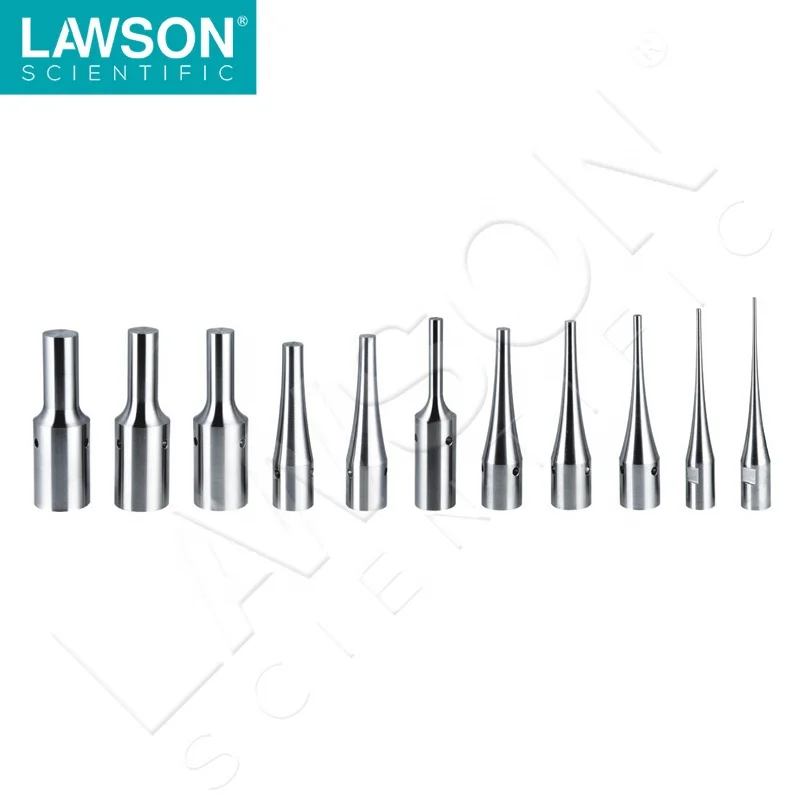
-Various sizes of ultrasonic poles can be purchased: very small-diameter probes can concentrate the power in very small volume samples (excellent for cell disruption of very small samples); larger-diameter probes are necessary for larger samples (especially useful for forming homogenous mixtures of larger volumes)
Features:
Ultrasonic Sonicator are controlled by microcomputers
The microcomputer regulates the ultrasonic frequency for more reliable operation
The machine will automatically give a warning signal if it malfunctions
Protective container prevents contamination and keeps noise level low during operation
Very wide range for power adjustment: the power level can be set between 1 and 99.9%, giving users control for more sensitive applications
Various sizes of ultrasonic poles can be purchased: very small-diameter probes can concentrate the power in very small volume samples (excellent for cell disruption of very small samples); larger-diameter probes are necessary for larger samples (especially useful for forming homogenous mixtures of larger volumes)
*It can be used to break the efficient cell wall of plant cell tissue and extract more specific substances.
It has been widely used in crushing and extraction of cann420.
Our company's self-innovated nano-emulsification technology has developed a CBD product that can be dissolved in water to solve the water solubility problem of CBD. It is expected that the solubility will increase by more than 200 times, and the bioavailability will increase from 13%-19% to 70%-80%. The clarity and bioavailability are much higher than those of internationally available products.
Applications
Biological / Biotech
Sonication is an ideal tool for lysing bacteria, yeast and tissue cells for the extraction of protein,DNA, RNA, and cellular
components. DNA shearing (ChIP Assay) is a very common application.
Pharmaceutical
Cell disruption is common in analytical, quality control, and R & D labs to perform numerous functions from mixing and degassing of analytical samples, to cracking open tablets for dissolution tests. Liposomes and emulsions are easily formed by Sonication for microencapsulation purposes in the production of creams and lotions.
Chemical
Sonication accelerates both physical and chemical reactions, creating new fields of research.Major advances in sonochemistry include chemical synthesis of catalysts and new alloys, catalyzing organo-metallic reactions, micro-encapsulation of protein and hydrolyzing esters. The use of sonication provides greater yields, increases overall efficiency, and saves energy.
Industrial
Industrial uses include forming emulsions, catalyzing reactions, extracting compounds, and reducing particle size. Continuous, in-line Flocells and special ultrasonic horns are available for processing larger volumes. Sonication is being used in the Paint and Pigment industry to disperse dyes and inks and in the Ceramic industry to degas slips and create denser castings.
Environmental
Sonication is used by environmental testing labs to process soil and sediment samples.Sonication takes just 8-10 minutes per sample versus 4-18 hours by soxhlet extraction, it uses half the solvent and improves contaminant yields. Both single and dual horn systems are available. If the sample load is high, then a Dual Horn system is recommended because it allows you to process two samples simultaneously.
Sonication is an ideal tool for lysing bacteria, yeast and tissue cells for the extraction of protein,DNA, RNA, and cellular
components. DNA shearing (ChIP Assay) is a very common application.
Pharmaceutical
Cell disruption is common in analytical, quality control, and R & D labs to perform numerous functions from mixing and degassing of analytical samples, to cracking open tablets for dissolution tests. Liposomes and emulsions are easily formed by Sonication for microencapsulation purposes in the production of creams and lotions.
Chemical
Sonication accelerates both physical and chemical reactions, creating new fields of research.Major advances in sonochemistry include chemical synthesis of catalysts and new alloys, catalyzing organo-metallic reactions, micro-encapsulation of protein and hydrolyzing esters. The use of sonication provides greater yields, increases overall efficiency, and saves energy.
Industrial
Industrial uses include forming emulsions, catalyzing reactions, extracting compounds, and reducing particle size. Continuous, in-line Flocells and special ultrasonic horns are available for processing larger volumes. Sonication is being used in the Paint and Pigment industry to disperse dyes and inks and in the Ceramic industry to degas slips and create denser castings.
Environmental
Sonication is used by environmental testing labs to process soil and sediment samples.Sonication takes just 8-10 minutes per sample versus 4-18 hours by soxhlet extraction, it uses half the solvent and improves contaminant yields. Both single and dual horn systems are available. If the sample load is high, then a Dual Horn system is recommended because it allows you to process two samples simultaneously.

| Model(Ultrasonic Sonicator) | UP-650 |
| Frequency (KHz) | 19.5~20.5KHz |
| Ultrasonic Power(W) | 650W |
| Stochastic Rangechangeable Pole (ø) | Φ6mm |
| Range-changeable Pole (ø) | Φ3,8,10mm |
| Crash Capacity (ML) | 0.5~500 |
| Duty ratio | 1~99% |
| Temperature probe | yes |
| Voltage (V) | 220/110V 50Hz/60Hz |
| Mainframe Weight(kg) | 5.6 |
| Total package weight(kg) | 8.8 |
| supply chassis Size(mm) | 270*210*140 |
| Packing Size(mm) | 420*380*380 |
Models | UP-250 | UP-400 |
Work | Automatic, Manual | Automatic, Manual |
Ultrasonic power(W) | 5-250 | 5-400 |
Operating Frequency(KHz) | 19-25 | 19-25 |
Handling capacity(ml) | 0.5-100 | 0.5-300 |
Ultrasonic time(min) | 1-99min | 1-99min |
Random horn(Φ mm) | 3 | 6 |
Temperature control | Ultrasound protection alarm | |
Power source | 220V/ 50Hz(110V Can be customized) | |
Optional horn(Φ mm) | 2.3,6 | 3,8 |


| Ultrasonic generator | single |
| Vibration System (Transducer Assembly) | single |
| Soundproof box | /Optional |
| Power cable | root |
| Special wrench (for disassembling the horn) | set |
| Temperature probe | /Optional |
| User's Guide | a part |
| Certification | a part |
| Warranty Card | a part |

Biological / Biotech
Sonication is an ideal tool for lysing bacteria, yeast and tissue cells for the extraction of protein,DNA, RNA, and cellular
components. DNA shearing (ChIP Assay) is a very common application.
Pharmaceutical
Cell disruption is common in analytical, quality control, and R & D labs to perform numerous functions from mixing and degassing of analytical samples, to cracking open tablets for dissolution tests. Liposomes and emulsions are easily formed by Sonication for microencapsulation purposes in the production of creams and lotions.
Chemical
Sonication accelerates both physical and chemical reactions, creating new fields of research.Major advances in sonochemistry include chemical synthesis of catalysts and new alloys, catalyzing organo-metallic reactions, micro-encapsulation of protein and hydrolyzing esters. The use of sonication provides greater yields, increases overall efficiency, and saves energy.
Industrial
Industrial uses include forming emulsions, catalyzing reactions, extracting compounds, and reducing particle size. Continuous, in-line Flocells and special ultrasonic horns are available for processing larger volumes. Sonication is being used in the Paint and Pigment industry to disperse dyes and inks and in the Ceramic industry to degas slips and create denser castings.
Environmental
Sonication is used by environmental testing labs to process soil and sediment samples.Sonication takes just 8-10 minutes per sample versus 4-18 hours by soxhlet extraction, it uses half the solvent and improves contaminant yields. Both single and dual horn systems are available. If the sample load is high, then a Dual Horn system is recommended because it allows you to process two samples simultaneously.
Sonication is an ideal tool for lysing bacteria, yeast and tissue cells for the extraction of protein,DNA, RNA, and cellular
components. DNA shearing (ChIP Assay) is a very common application.
Pharmaceutical
Cell disruption is common in analytical, quality control, and R & D labs to perform numerous functions from mixing and degassing of analytical samples, to cracking open tablets for dissolution tests. Liposomes and emulsions are easily formed by Sonication for microencapsulation purposes in the production of creams and lotions.
Chemical
Sonication accelerates both physical and chemical reactions, creating new fields of research.Major advances in sonochemistry include chemical synthesis of catalysts and new alloys, catalyzing organo-metallic reactions, micro-encapsulation of protein and hydrolyzing esters. The use of sonication provides greater yields, increases overall efficiency, and saves energy.
Industrial
Industrial uses include forming emulsions, catalyzing reactions, extracting compounds, and reducing particle size. Continuous, in-line Flocells and special ultrasonic horns are available for processing larger volumes. Sonication is being used in the Paint and Pigment industry to disperse dyes and inks and in the Ceramic industry to degas slips and create denser castings.
Environmental
Sonication is used by environmental testing labs to process soil and sediment samples.Sonication takes just 8-10 minutes per sample versus 4-18 hours by soxhlet extraction, it uses half the solvent and improves contaminant yields. Both single and dual horn systems are available. If the sample load is high, then a Dual Horn system is recommended because it allows you to process two samples simultaneously.


We Recommend
New Arrivals
New products from manufacturers at wholesale prices