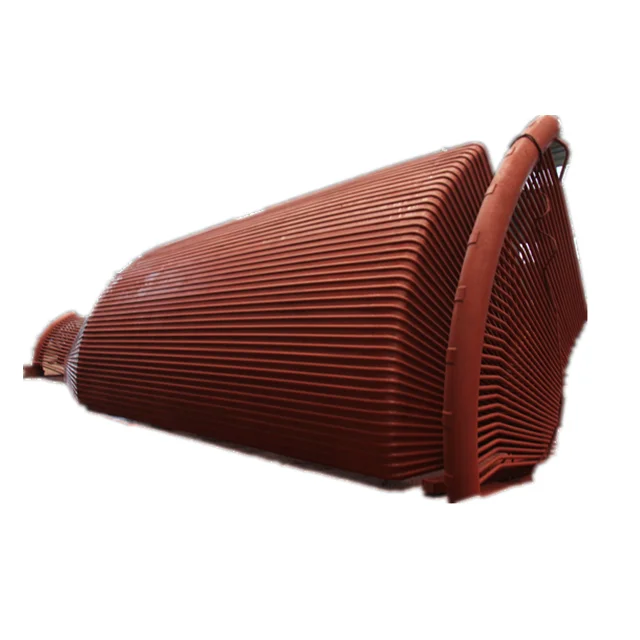
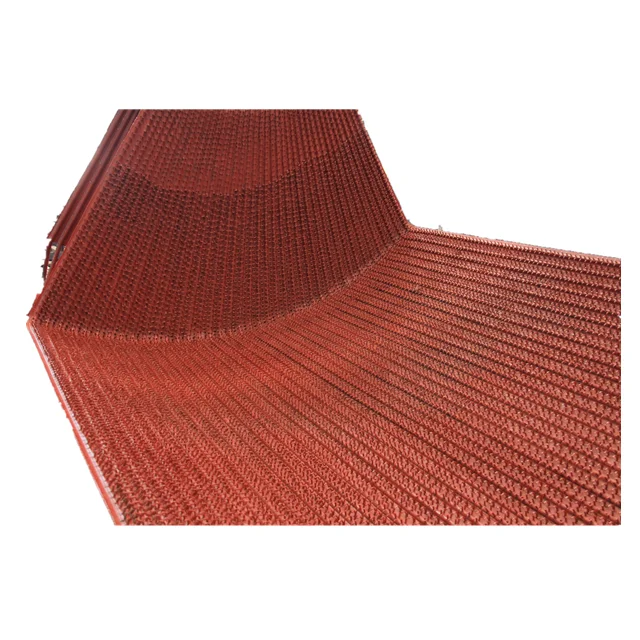
Industrial Boiler Bed Dust Collector Cyclone Separator Circulating Fluidized
- Category: >>>
- Supplier: Zhangjiagang Hua Dong Boiler Co. Ltd.
Share on (62169341377):
Product Overview
Description
Product Description
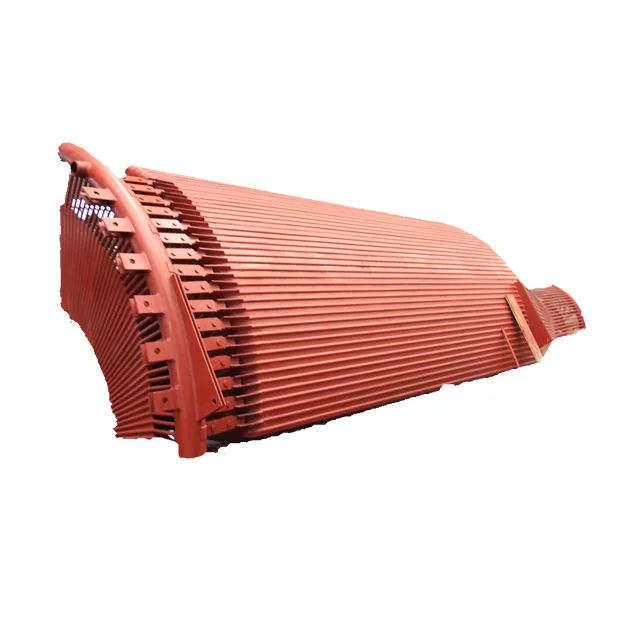
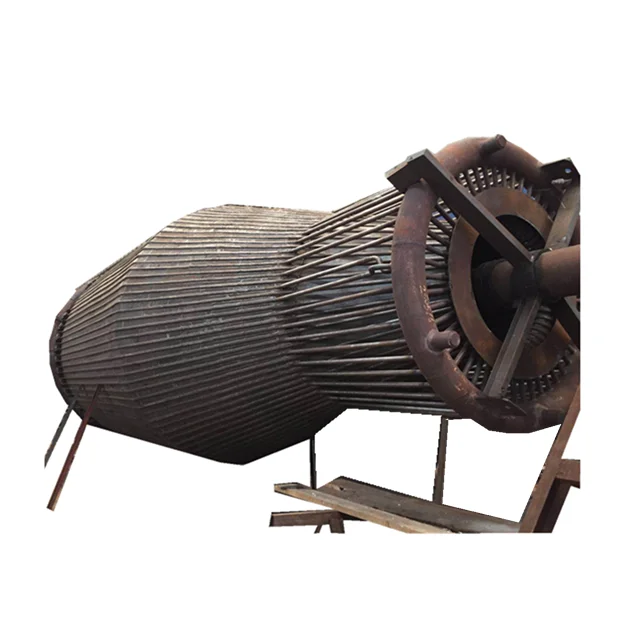
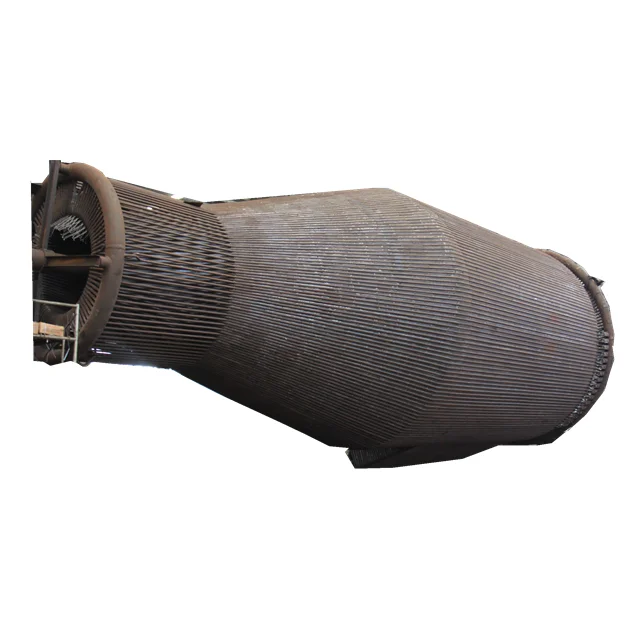
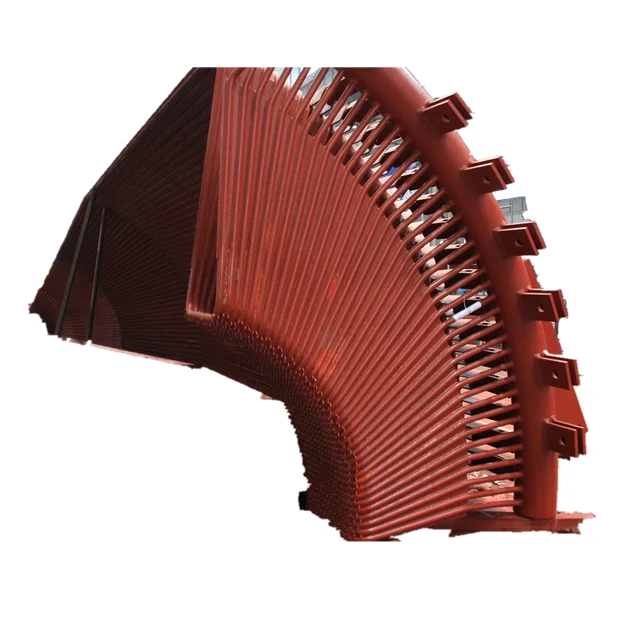
A high speed rotating (air)flow is established within a cylindrical or conical container called a cyclone. Air flows in a spiral pattern, beginning at the top (wide end) of the cyclone and ending at the bottom (narrow) end before exiting the cyclone in a straight stream through the center of the cyclone and out the top. Larger (denser) particles in the rotating stream have too much inertia to follow the tight curve of the stream and strike the outside wall, falling then to the bottom of the cyclone where they can be removed. In a conical system, as the rotating flow moves towards the narrow end of the cyclone the rotational radius of the stream is reduced, separating smaller and smaller particles.
Product Description
Cyclonic separation can eliminate particulates, such as dirt and dust, from a stream of air, gas or liquid. Engineers sometimes call these tornadic dust busters centrifugal separators. That's because at the root of these machines is something called centrifugal force.
| \t | \t |
| \t | \t |
| \t | \t |
| \t | \t |
Advantage
Although there are four commonly used cyclone separators, their operating principles based on that of the conventional cyclone, are very similar. In the conventional cyclone, the gas enters a cylinder tangentially, where it spins in a vortex as it proceeds down the cylinder.
A cone section causes the vortex diameter to decrease until the gas reverses on it and spins up the center to the outlet pipe or vortex finder.
We Recommend
New Arrivals
New products from manufacturers at wholesale prices