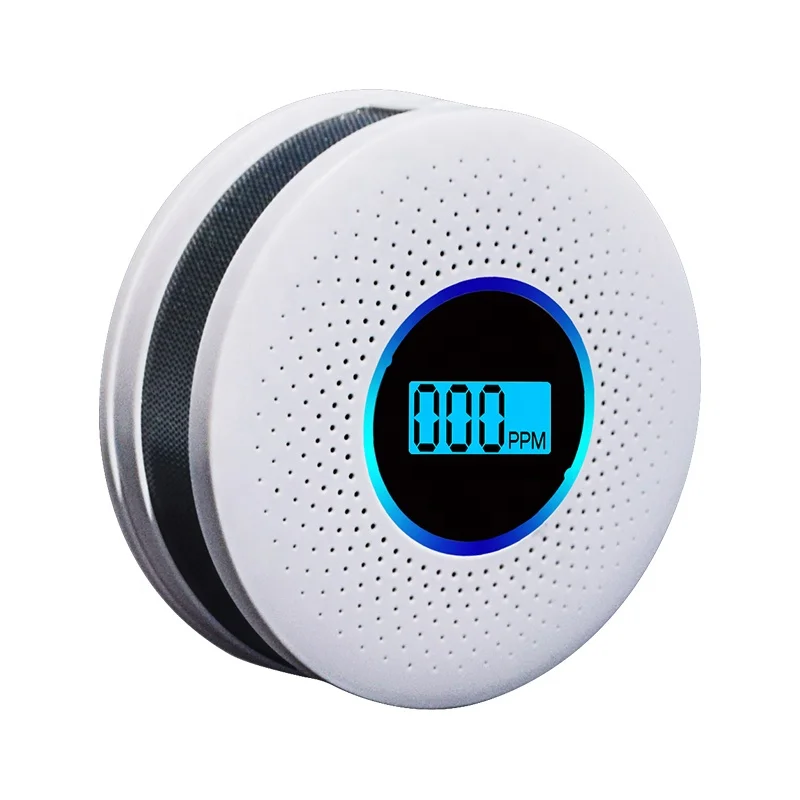
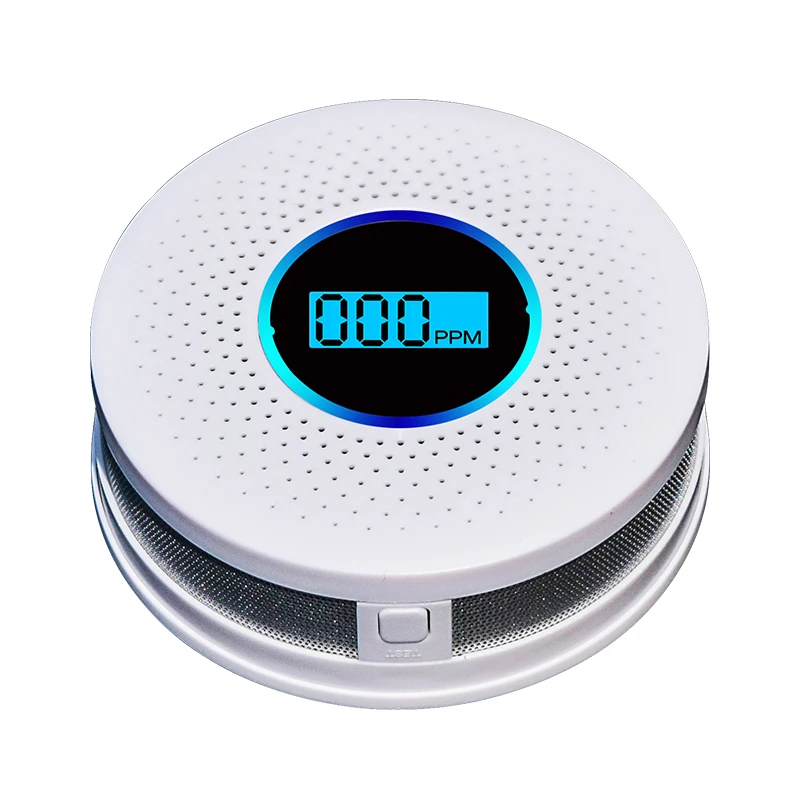
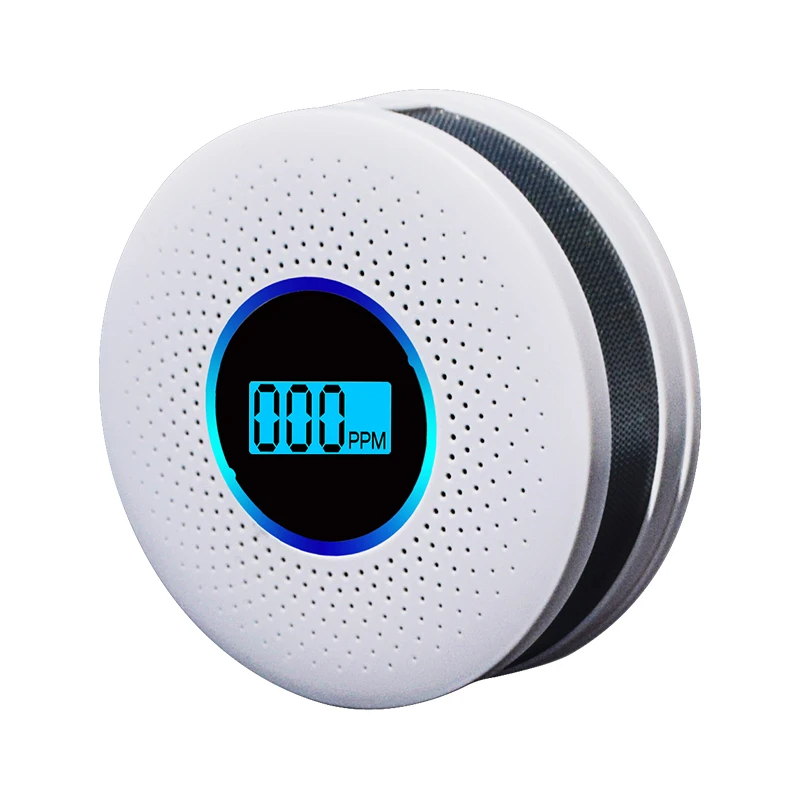
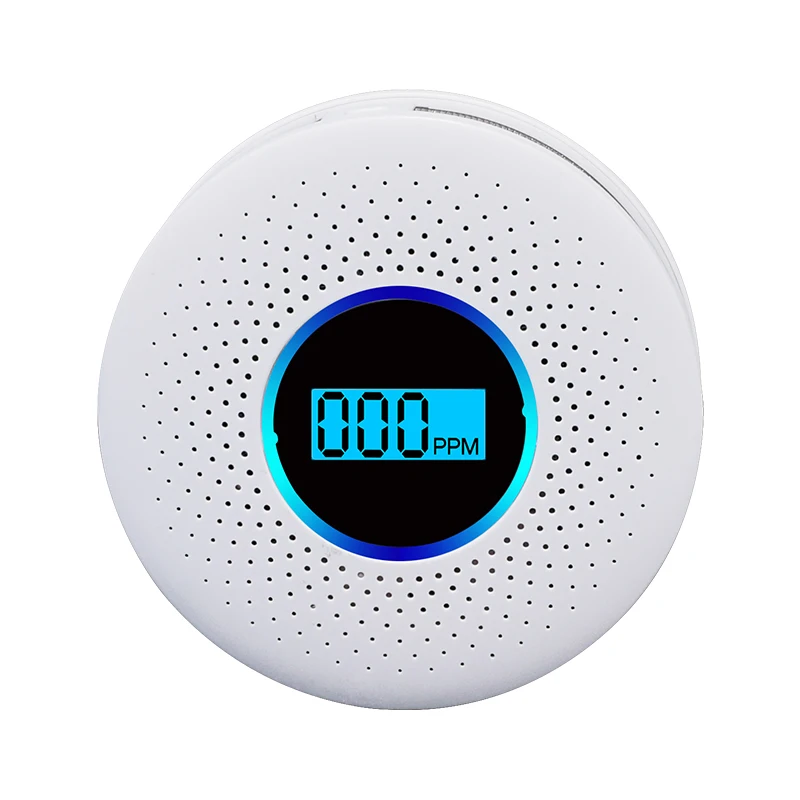
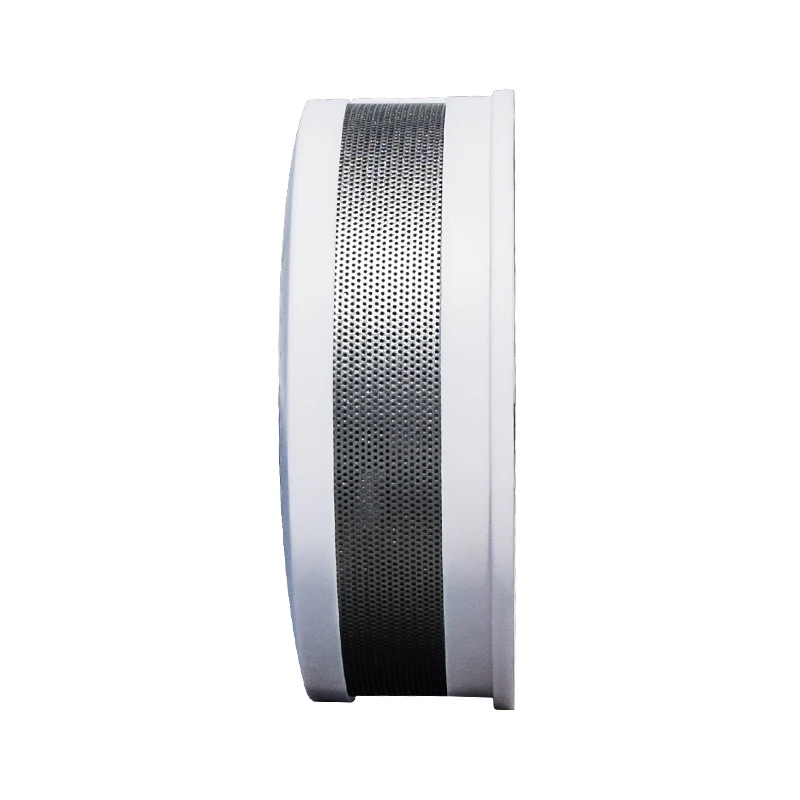
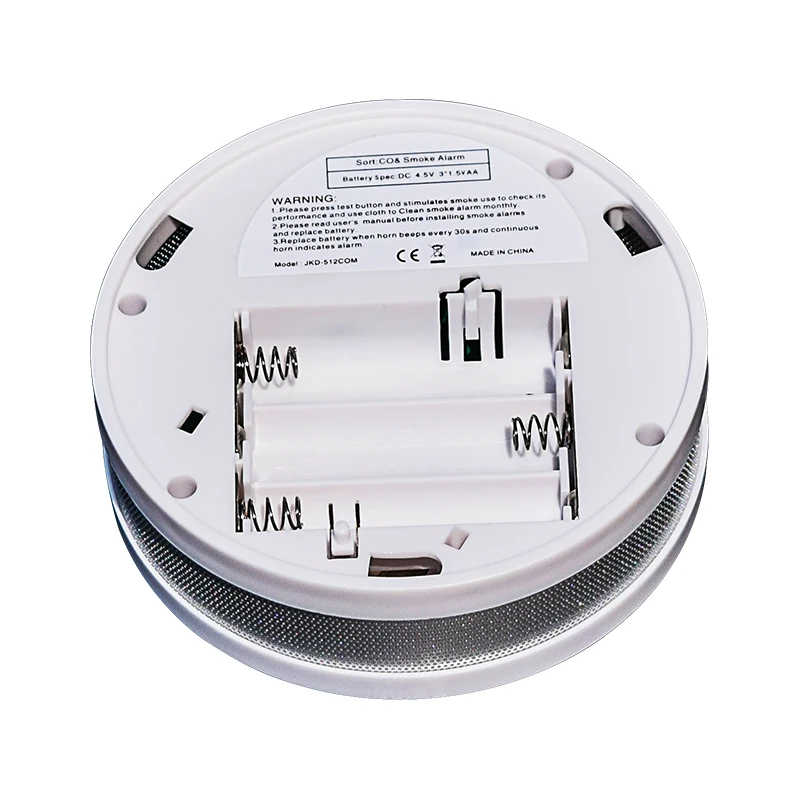
A security instrument 2 in 1 living room smoke and carbon monoxide detector fire alarm
- Category: >>>
- Supplier: Anhui Huarong Technology Co. Ltd.
Share on (62189782285):
Product Overview
Description
Product Description
security instrument 2-in-1 living room smoke and carbon monoxide detector fire alarm


Smoke & CO Detector Technical Specifications
Item Number | JT-COSA521B |
Operating Voltage | DC 4.5V (3*1.5V AA battery) |
Standby Current | ≤35μA |
Alarm Current | ≤20mA |
Sensor Type | Infrared Photoelectric Sensor & Electrochemical CO sensor |
Alarm Type | Sound & Flash Alarm with LCD Indicate PPM |
Alarm Sound | ≥85dB(A) alarm signal @1M |
Installation | Ceiling Mounted or Wall Installation |
Sensitivity | 50ppm CO concentration within 60~90 minutes 300ppm CO concentration within 3 minutes |
Operating Temp. | -10℃ ~ +50℃ (14℉ ~ 122 ℉) |
Humidity Range | ≤ 95% RH non-condensing |
Material | ABS Flame retardant plastic |
Dimension | 105mm (dia). x 38mm (H) |
Compliant | EN14604, EN 50291, UL217, UL 2034 |

Packaging & Shipping
The Smoke & CO Detector is well packed for international export

Packing List of Smoke & CO Alarms
Gift Box | 1 PC/ Gift Box; 116x116x45mm Smoke & CO Detector x1 User Manual x1 Screw with plastic screw plug x2 |
Outer Carton | 60 PCS/CTN, 610x285x250mm |
Delivery of Smoke & CO Alarms
Sample order will be ready for delivery within 7 working days.
Bulk order will be ready for delivery in 15 days or as negotiated.
FAQ
Q: What is Carbon Monoxide (CO)?
A: Carbon Monoxide (CO) is colorless, odorless, tasteless, poisonous gas that is a common by-product of incomplete combustion. You cannot see it, taste it or smell it but CO can kill quickly with little warning. Carbon Monoxide (CO) is known as the “silent killer” because humans cannot tell when they are around it, but it is very dangerous and deadly.
The carbon monoxide detector is a device that can alert homeowners of a CO leak and escape a potentially life threatening situation.

Q: Where should we install carbon monoxide alarms?
A: It is very important to install carbon monoxide alarms near or in each separate sleeping area. For added protection, placement of an additional carbon monoxide alarm at least 15-20 feet away from the furnace or fuel burning heat sources is recommended. Also, install carbon monoxide alarms at least 10 feet from sources of humidity like bathrooms and showers. In two story houses, install one carbon monoxide alarm on each level of the home. If you have a basement, carbon monoxide alarm placement is recommended at the top of the basement stairs.


Q: What is the proper way to do a carbon monoxide alarm test?
A: It is important to test your CO alarms regularly, and it is best to test at least monthly. If your alarm has replaceable batteries they should be changed at least every 6 months.
Press and hold the Test Button on the front of the alarm until the alarm sounds. Be sure you hold the button down long enough to active the test.


Q: Is there anywhere we shouldn't install carbon monoxide alarms?
A: Do not install carbon monoxide alarms in garages, kitchens, furnace rooms, or in any extremely dusty, dirty, humid, or greasy areas. Do not install alarms in direct sunlight, or areas subjected to temperature extremes. These include unconditioned crawl spaces, unfinished attics, un-insulated or poorly insulated ceilings, and porches. Carbon monoxide alarms should not be installed in outlets covered by curtains or other obstructions. Do not install in turbulent air-near ceiling fans, heat vents, air conditioners, fresh air returns, or open windows. Blowing air may prevent carbon monoxide from reaching the CO sensors.
Q: How many carbon monoxide alarms should we have in our home?
A: It is recommended that you should have a carbon monoxide alarm centrally located outside of each separate sleeping area in the immediate vicinity of the bedroom. For added protection, you should have additional carbon monoxide alarms in each separate bedroom and on every level of your house, including the basement. Some states now require that you have a carbon monoxide alarm in each bedroom of the house. If you install only one carbon monoxide alarm in your home, locate it near or in your bedroom.
Q: What should we do when the carbon monoxide alarm sounds?
A: Silence the alarm. Move everyone immediately to fresh air-outdoors or by an open door or window. Do a head count to check that all persons are accounted for. Call your emergency services, fire department, or 911 and tell them your carbon monoxide alarm has triggered. Do not re-enter the premises or move away from the open door or window until the emergency services responder has arrived, the premises have been aired out, and your carbon monoxide alarm remains in its normal condition.


Q: What should we do to prevent Carbon Monoxide (CO) poisoning?
A: The only safe way to detect CO in your home is with a CO alarm.
· Properly equip your home with carbon monoxide alarms on every level and in sleeping areas.
· Every year have the heating system, vents, chimney and flue inspected by a qualified technician.
· Regularly examine vents and chimneys for improper connections, visible rust and stains.
· Install and operate appliances according to the manufacturer's instructions.
· Never use a gas range/stove to heat the home.
· Never leave your car idling in a closed garage or use fuel-powered appliances or tools in enclosed, attached areas such as garages or porches. Carbon monoxide can seep into your home through vents and doors.
Q: What are the symptoms of Carbon Monoxide poisoning?
A: The symptoms of carbon monoxide poisoning are important to be able to recognize. It prevents the blood from bringing oxygen to cells, tissues, the brain and organs, when CO enters the body. Common symptoms and effects on healthy adults at various carbon monoxide concentrations.
Carbon Monoxide Level in PPM (Parts per Million) | Resulting Conditions / Effects on Humans |
50 | Permissible exposure limit (PEL) for eight hours (OSHA) |
200 | Possible mild frontal headache in two to three hours |
400 | Frontal headache and nausea after one to two hours; occipital headache (back of head) after two to three hours |
800 | Headache, dizziness and nausea in 45 minutes; collapse and possible death in two hours |
1600 | Headache, dizziness, and nausea in 20 minutes; collapse and possible death in one hour |
3200 | Headache and dizziness in five to 10 minutes; unconsciousness and danger of death in 30 minutes |
6400 | Headache and dizziness in one to two minutes; unconsciousness and danger of death in 10 to 15 minutes |
12,800 | Immediate unconsciousness; danger of death in one to three minutes |
Payment Term
Flexible & Safe payment via TT, L/C, T/T, Western Union, MoneyGram or as agreed.
Our Services
Sufficient Production Capacity
Flexible MOQ Mixture & Fast Delivery
OEM and ODM Service
24Hr Online Service
More than 21-Year Experience in Security Industry
Company Information
Founded in 1998, Anhui Huarong Technology Co., Ltd. is a professional supplier of security devices.
With more than 21 years of manufacturing expertise;
Production lines cover fire alarms, smoke detectors, gas & CO detectors, PIR detectors, CCTV surveillance, smart building & home, as well as social emergency system, etc.


We Recommend
New Arrivals
New products from manufacturers at wholesale prices