Polyethylene uncoupling waterproof membrane UM503 for ceramic and stone tile
- Category: >>>
- Supplier: Weifang Berry Waterproof Material Co. Ltd.
Share on (62191065713):
Product Overview
Description
Product Description
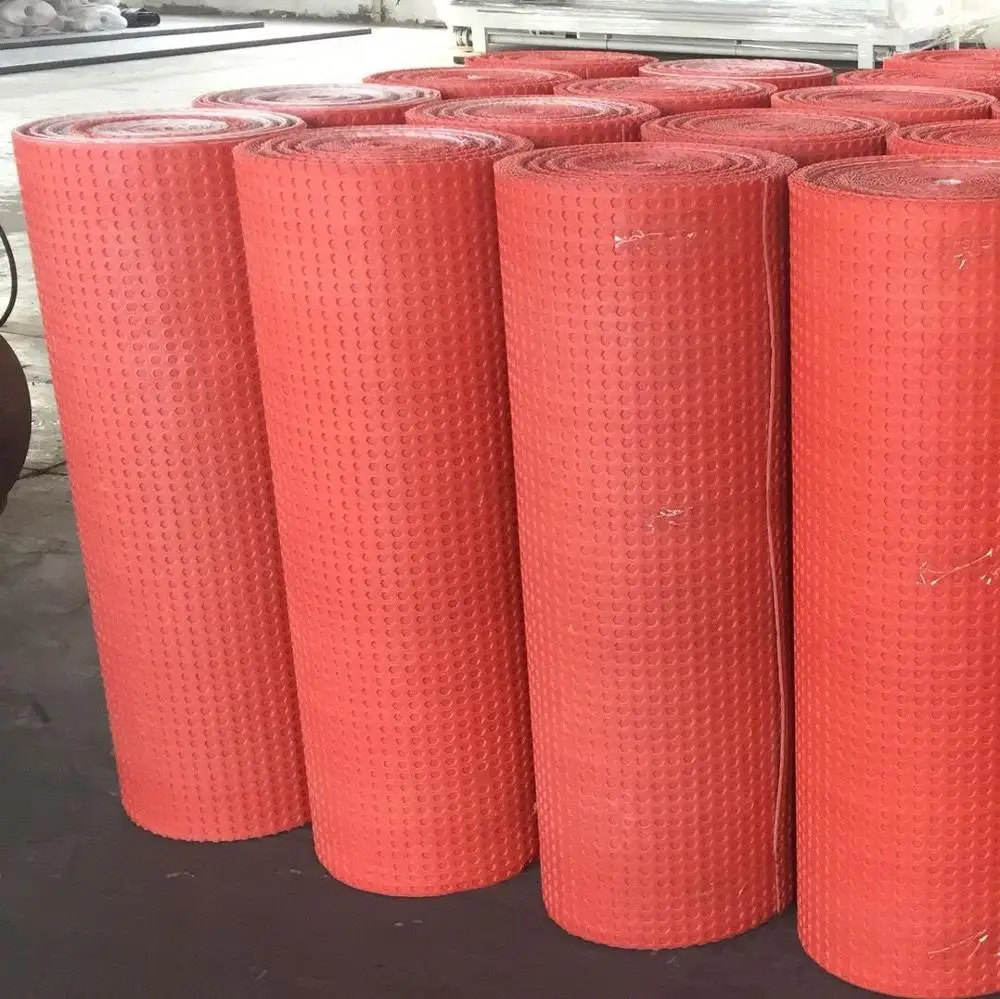
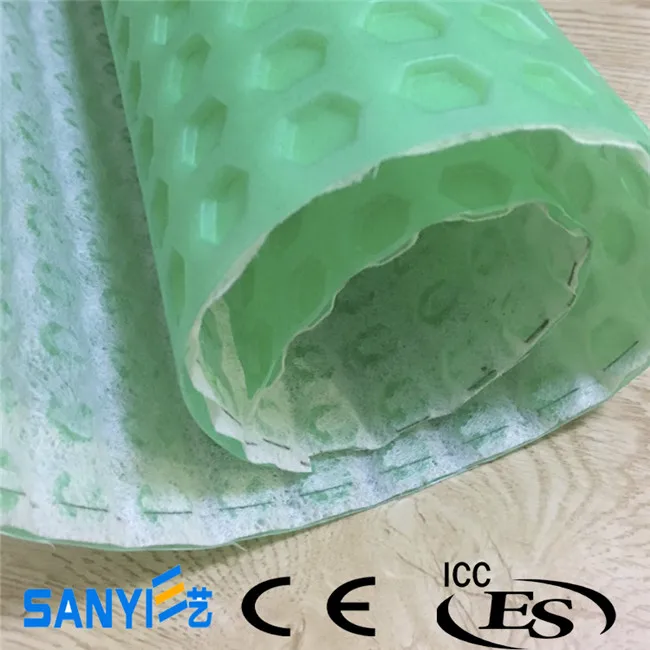
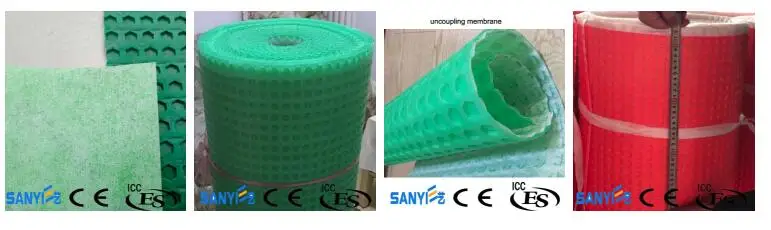
Blosam uncoupling membrane is specifically designed to allow the installation of ceramic and stone tile over any even and load-bearing substrate and an underlayment for ceramic and stone tile.
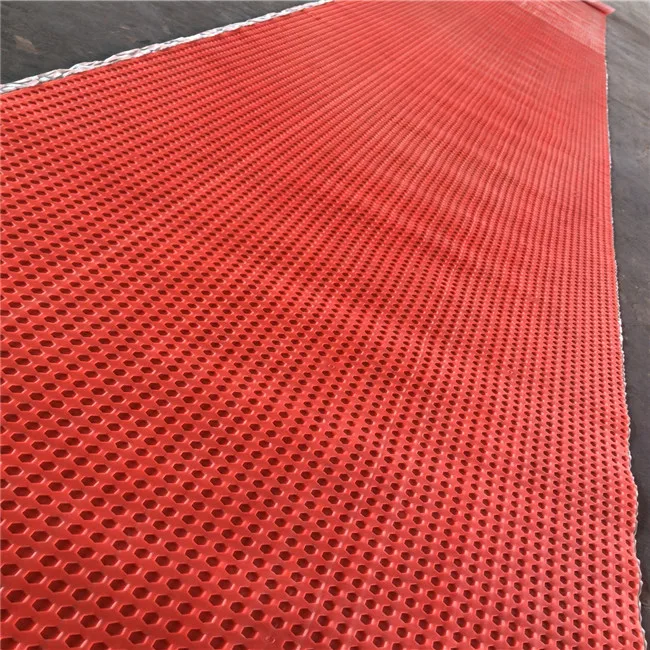
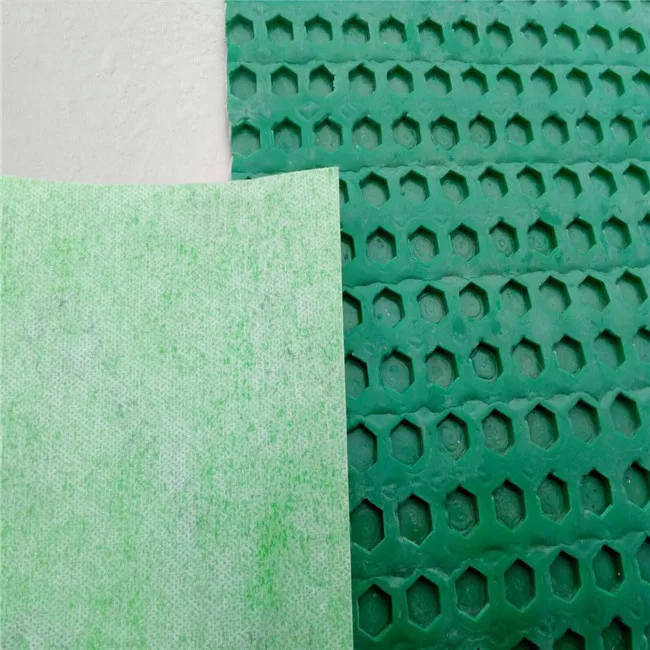
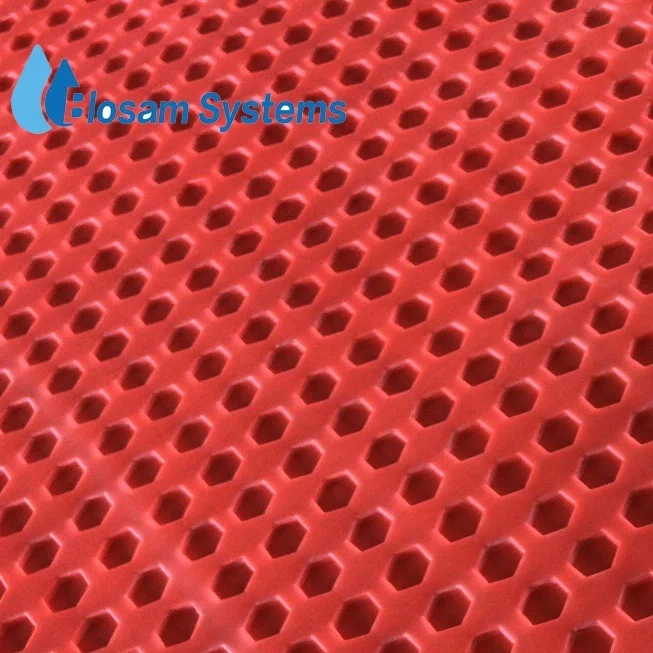
This plastic membrane system geometrically configured to provide air space between the tile and the substrate to allow independent movement between the two and limit the transfer of the stresses." BLOSAM UM503 is a polyethylene membrane with a grid structure of square cavities, each cut back in a dovetail configuration, and an anchoring fleece laminated to the underside. The anchoring fleece is embedded in thin-set mortar to provide a mechanical bond to the substrate. Tile is installed over UM503 using the thin-bed method in such a way that the mortar becomes mechanically anchored in the square, cutback cavities of the matting. Designed specifically for ceramic tile and dimension stone installations, UM503 serves as an uncoupling layer, waterproofing membrane, and vapor management layer that accommodates moisture from beneath the tile covering. Further, UM503 performs all these functions while still providing adequate support/load distribution for the tile covering. The combination of these four essential functions allows for the successful installation of tile over a wide range of substrates, including plywood/ OSB, concrete, gypsum, heated floors, etc..
The integration of this uncoupling, waterproofing, load-distribution, and vapor management functions makes consistent results viable.
Product | Uncoupling membrane |
Material | Polyethylene(PE)film; Polypropylene(PP)nonwoven |
Roll Size | 1mx30m/1mx20m/1mx10m |
Weight | 550g/sgm |
Thickness | 3.0mm |
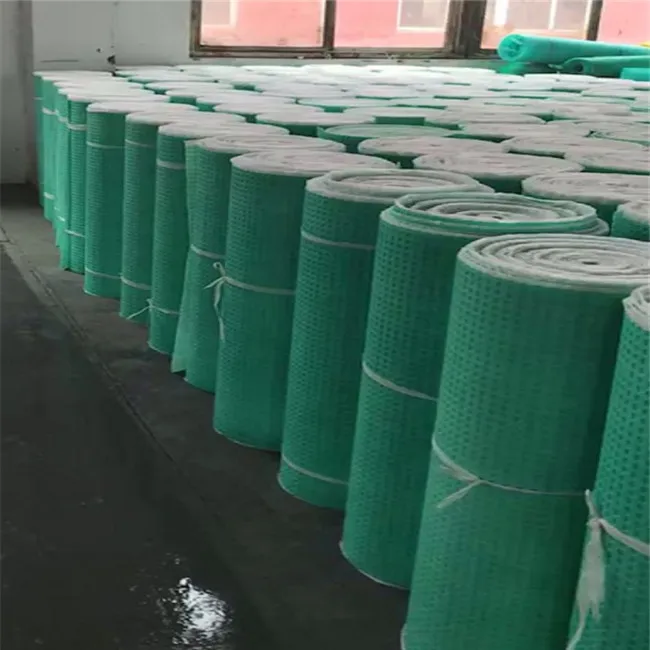
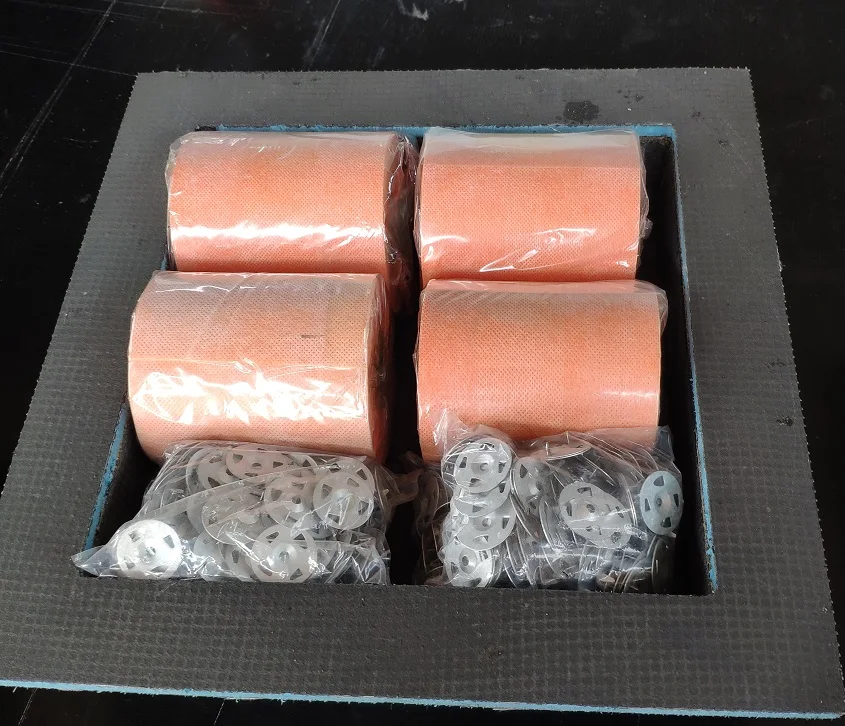
Packing | Wrapped in plastic film |
Color | Orange; Yellow; Green; Blue; or others |
Product Features
A. Uncoupling
It provides uncoupling through its open rib structure, which allows for in-plane movement that effectively neutralizes the differential movement stresses between the substrate and the tile, thus eliminating the major cause of cracking and delaminating of the tiled surface.
B.Waterproofing
It provides reliable waterproofing in interior and exterior applications. Its polyethylene composition protects the substrate from moisture penetration, which is particularly important in today's building environment where most substrates are moisture sensitive.
C.Vapor management
The distinguishing feature of this uncoupling membrane is the existence of free space created by the configured channels on the underside of the matting. The free space provides a route for excess moisture and vapor to escape from the substrate that could otherwise cause damage to the tile layer above. Thus, it effectively manages moisture beneath the tile covering.
D.Load-distribution
It is virtually incompressible within the tile assembly, the advantages of uncoupling are achieved without sacrificing point load distribution capabilities. The ability of membrane installations to support and distribute heavy loads while preserving the integrity of the tiles surface has been verified through extensive laboratory and field testing, including applications exposed to vehicular traffic.
Date Sheet
Waterproof Membrane for Thin-set Ceramic Tile and Dimension Stone Installation complying with ANSI108.10 of USA.
Property | Test method | Requirement | Performance |
Fungus and micro-organism resistance | The membrane shall not support mold growth | Pass | |
Seam strength | ASTM D751 | 16 lb/2 in width | 36 lb/2 in width |
Breaking strength | ASTM D751 | 170 psi | 1084 psi |
Dimensional stability | ASTM D1204 | 0.7% maximum length change | Pass |
Waterproofness | ASTM D4068 | No moisture penetration | Pass |
7-day shear strength | ASTM C482 | 50 psi | 87 psi |
7-day water immersion | ASTM C482 | 50 psi | 77 psi |
4-week shear strength | ASTM C482 | 50 psi | 96 psi |
12-week shear strength | ASTM C482 | 50 psi | 90 psi |
100-day water immersion | ASTM C482 | 50 psi | 120 psi |
Water vapor permeance | ASTM E96 | 0.75 perms |
Detailed Images
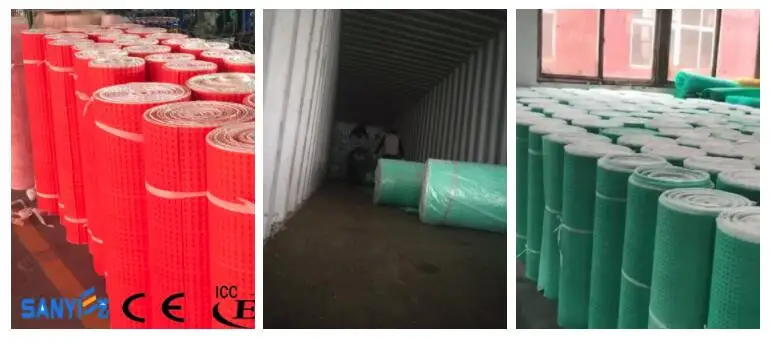
Packing&Delivery
Installation

Test Criterion
1. The uncoupling membrane must achieve 50 PSI or greater shear bond strength in seven days per the test method in ANSI A 118.12.
2. Meet the TCNA requirements of "Point Loading" and "Fungus/microorganism resistance".
3. Vapor transmission and shears, evaluating the stress/strain relationship between uncoupling membranes and other membranes which are flat.
Tiling with an uncoupling membrane
The use of uncoupling membranes has become more common in recent years due to the variety of problems that it can overcome. There are many different types of uncoupling membranes available which either have added features or should be used for certain situations so it is always important to speak to the supplier before commencing.
Problem
1. Shrinkage/expansion of a substrate
Newly-laid screeds and concrete contain relatively large amounts of water and as this evaporates, the screed will shrink to compensate for the resulting volume loss.
All substrates will shrink and expand naturally due to humidity and/or temperature fluctuation.
Any movement, whether shrinkage or expansion will cause stresses to form between the substrate and the tiling layer as both move at a different rate. These stresses either fracture or delaminate the tiles.
2. Protecting water-sensitive substrates
Nearly all substrates are affected by water in some way but certain substrates such as plaster, anhydrite or plasterboard will lose nearly all its cohesive strength if it gets wet.
Most wooden substrates, when wet, will expand/ warp causing large stresses to form between the substrate and the tile, which can cause tiles to fracture or delaminate. Wooden substrates will also become weak and rot if continually wet.
3. Difficult substrates
Certain substrates can be very difficult to reliably tile in a conventional manner. Existing asphalt contains oils which make it very hard to adhere to whilst metal substrates are very smooth allowing virtually no mechanical key.
Solution
Using uncoupling membranes
Uncoupling membranes are usually used to uncouple the tiling layer from the substrate and thus reduce the stresses built up between substrate and tile. They can also offer waterproofing and channels for evaporation or heat exchange. Contact the supplier of the membrane prior to application to make sure that the correct uncoupling membrane/technique is being used.
Stage 1: Preparation
The substrate must be clean and free from dust, grease etc. Any irregularities in the surface should be corrected so that the surface is level and without voids. Existing old asphalt should be lightly sanded to roughen the surface and then vacuumed to remove as much dust as possible. The membrane should be spread out on the floor, cut to size (allow expansion joints at perimeter) and then rolled back up.
Stage 2: Application of an uncoupling membrane
should be combed onto the substrate using a 3 x 3mm notched trowel. The membrane should then be pressed into the adhesive bed using a rubber float in the direction the membrane is being laid to prevent air pockets forming. Adjoining sheets should be carefully abutted. All existing movement joints must be followed through the substrate and tiling layer.Extra movement joints should be included on large areas as per BS 5385.
Stage 3: Waterproofing
If the membrane is also to be used as a waterproofing layer, the joints between sheets, perimeter joints and movement joints need to be sealed. Spread a thin layer of weberset SPF across the joints and then bed a flexible layer of membrane into the adhesive. The membrane must overlap the joint by at least 50mm. For perimeter joints, the same method applies but care must be taken not to fill the movement joints at the edge of the sheets with adhesive.
tage 4: Fixing the tiles
Fix the tiles into a solid bed o. If the uncoupling membrane has cavities, fill these first with the flat edge of a trowel before spreading adhesive onto the membrane with a notched trowel. Grout the tiles with weber joint wide flex or weber joint pro and use weber. joint silicone sealant to fill perimeter movement joints.
Contact Us
Demi Yao
Wechat/Whatsapp/Mobile:+86 15733258474
www.sanyibuilding.cn ; www.tilebacker.cn
//sunway-china.en.alibaba.com
//facebook.com/backerboard
https://twitter.com/tilebackerboard
We Recommend
New Arrivals
New products from manufacturers at wholesale prices