

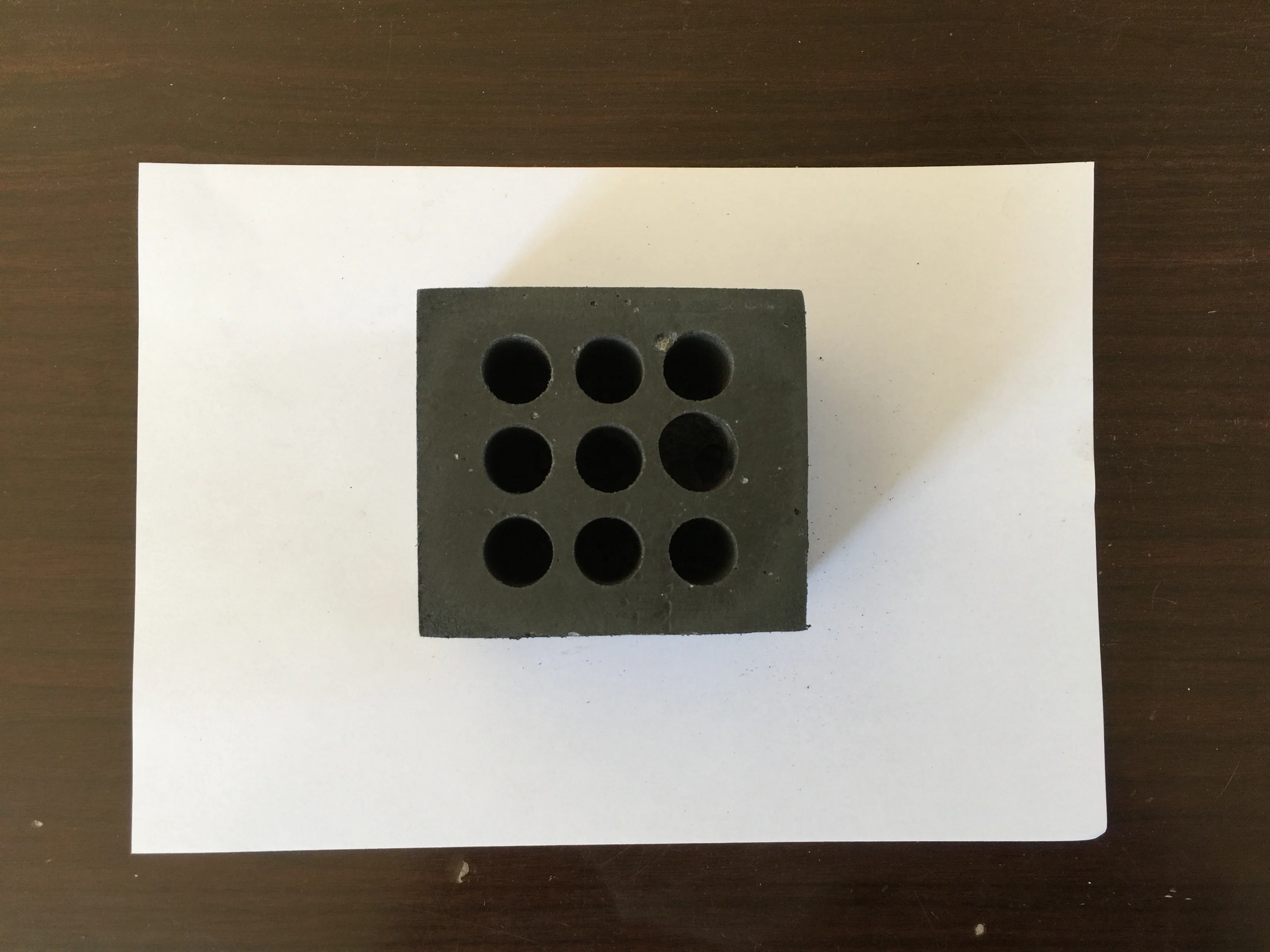
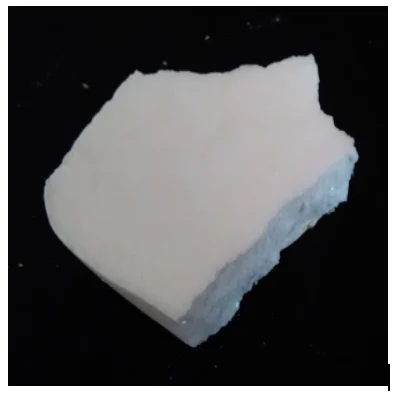
SOLID LIQUID Phase Change Waxes FOR LITHIUM ION BATTERY OF AUTOMOBILE POWER
- Category: >>>
- Supplier: Shanghai Bading Technology Co. Ltd.
Share on (62321309289):
Product Overview
Description
Product Description
SOLID-LIQUID PHASE TRANSFORMATION WAX FOR LITHIUM ION BATTERY OF AUTOMOBILE POWER
Electric vehicle and hybrid electric vehicle have significant advantages in energy efficiency and environmental protection, so they have received worldwide attention. Compared with other secondary batteries, lithium-ion batteries have the advantages of light weight, small volume, high energy density, high power density, no memory effect and environmental protection. They are the best choice of power batteries and will become the main energy source in the development of electric vehicles and hybrid electric vehicles, and they will also restrict the development of these batteries. The performance of the whole car. Experiments show that with the increase of discharge rate, the temperature of the battery increases obviously, indicating that the heat released from the battery is also increasing, and the temperature distribution on the surface of the battery is not uniform, the maximum temperature difference reaches 10 C, and the temperature of the positive electrode is higher than that of the negative electrode, which is extremely unfavorable to the performance and life of the single battery, so in order to be more effective. Effective control of the temperature balance of the battery itself requires an effective battery thermal management system. A bottleneck in the development of electric vehicles or hybrid electric vehicles today is the lack of adapted batteries. As long as lithium-ion batteries are safer, this bottleneck can be solved. That is to say, as long as the thermal management of batteries can be solved, lithium-ion batteries can be designed and manufactured as batteries available on the market. A much larger battery. Various studies at home and abroad show that the thermal management system of batteries cooled by phase change materials has good prospects. Compared with the battery pack without thermal management system, the high-energy battery module with phase change material is safer, and the capacity degradation rate of lithium-ion battery module will be greatly reduced. At the same time, compared with other kinds of phase change materials, organic phase change materials have many advantages, such as high latent heat of phase change, low vapor pressure during melting, almost no supercooling phenomenon, no chemical reaction and good chemical stability, no phase separation and corrosion, etc. However, ordinary organic phase change materials have the shortcomings of low thermal conductivity and liquid flowing everywhere after melting. The former makes the heat generated by battery discharge unable to be transmitted quickly, which reduces the temperature control effect of phase change materials in batteries. The latter makes the packaging of phase change materials in batteries a difficult problem. However, solid-liquid phase change wax is the initial raw material of other types of phase change wax, such as solid-solid phase change wax, powder phase change wax, phase change plate and elastic phase change wax, so solid-liquid phase change wax is the basis of these phase change materials.
The role of phase change wax in lithium-ion batteries is that when the temperature of lithium-ion batteries rises to the phase change temperature close to the phase change temperature of phase change wax, the phase change wax begins to take place, so that the heat will be absorbed rapidly and massively, so that the temperature of lithium-ion batteries does not exceed a certain set temperature. The performance and capacity degradation rate of the pool will be effectively guaranteed. The standard for solid-liquid phase change wax is shown in the table below.
Performance Indicators of Phase Change Waxes for Automotive Power Lithium Ion Batteries
| L5 | L9 | L14 | L18 | L20 | L28 | L32 | L35 | L42 | L46 |
Melting Point,℃ | 5 | 9 | 14 | 18 | 20 | 28 | 32 | 35 | 42 | 46 |
Enthalty,kJ/Kg
| 210 | 210 | 230 | 220 | >200 | >200 | 220 | 220 | 210 | 210 |
Specific heat,kJ/(kg.℃)
| 3.22 | 3.22 | 3.22 | 3.22 | 3.22 | 3.22 | 3.22 | 3.22 | 3.22 | 3.22 |
Thermal conductivity,w/(m.℃)
| 0.21 | 0.21 | 0.21 | 0.21 | 0.21 | 0.21 | 0.21 | 0.21 | 0.21 | 0.21 |
Appearance, Visual Measurement | white | white | white | white | white | white | white | white | white | white |
Packaging & Shipping


Company Information


We Recommend
New Arrivals
New products from manufacturers at wholesale prices