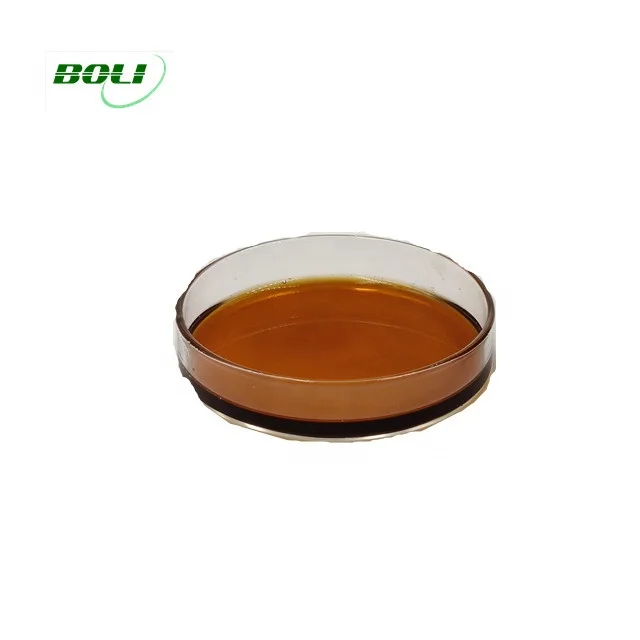
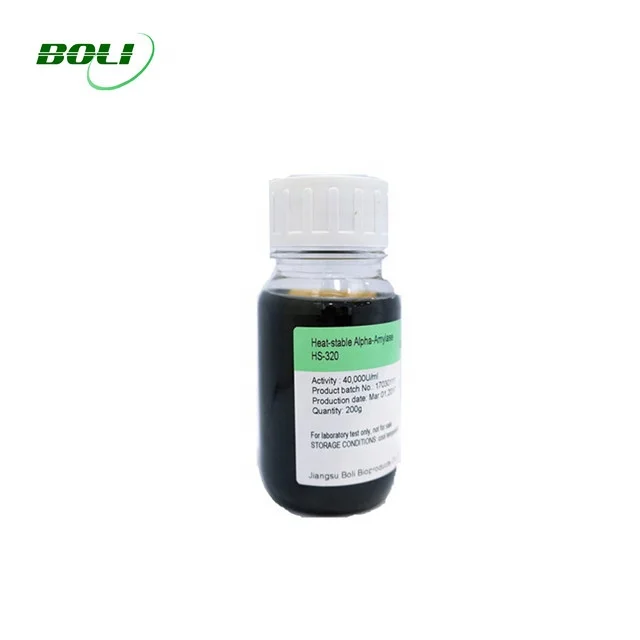
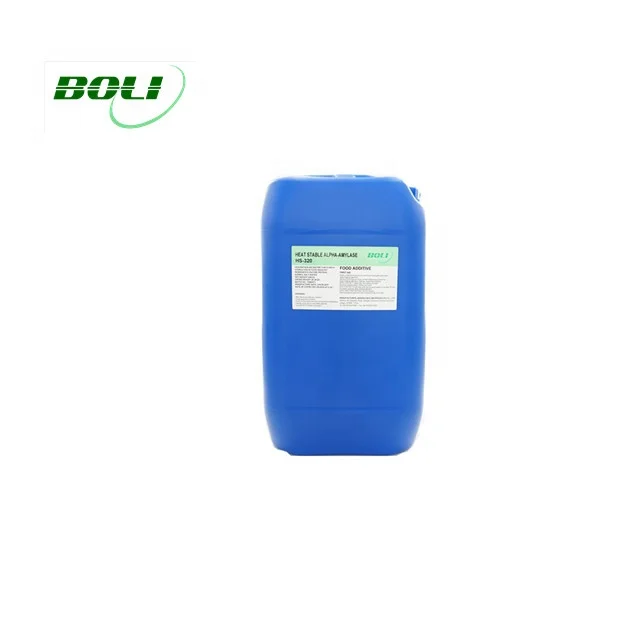
Liquid Saccharification Enzyme alpha amylase HS 320
- Category: >>>
- Supplier: Jiangsu Boli Bioproducts Co. Ltd.
Share on (62477088161):
Product Overview
Description
Description
HS-320 is produced from non-genetically modified strains of Bacillus licheniformis through submerged fermentation and refining extraction process. It is endoamylase that can rapidly decrease viscosity of gelatinous starch solution by randomly hydrolyzing starch, glycogen and its degradation products within the α-D-1, 4 glucosidic bonds to produce soluble dextrins and oligosaccharides. Prolonged hydrolysis with HS-320 may produce a small quantity of glucose and maltose.
As a Heat-stable Alpha-amylase with a robust alpha-amylase activity and superior pH stability under high temperatures, HS-320 has found its wide application in the production of starch sugar.
Effect of PH
HS-320 is active over a wide range of pH, depending on the application. It works effectively at pH from 5.0 to 8.0 with its optimal pH ranging from 6.0 to 6.4. HS-320 remains stable at pH from 5.0 to 10.0 at 25°C. Its optimum pH depends on actual conditions including temperature, substrate concentration and processing time.
Effect of Temp
Optimum temperature of HS-320 for interval liquefaction is 90∼95°C. HS-320 liquefies starch substrates efficiently at 95∼97°C and remains highly active at 100°C. HS-320 demonstrates exceptional thermal stability at temperatures from 105∼110°C, maintains its stability for 5 to 7 minutes and keeps on liquefying efficiently. The exact temperature optimum depends on actual conditions including pH, substrate concentration and processing time.
EFFECT of CALCIUM
The presence of calcium is helpful to increase the thermal stability of this enzyme. HS-320 requires a very low calcium concentration of 50∼70 ppm (dry solids basis) to ensure its stability.
Usage Guidelines
For industrial application of one-time spray liquefaction, first prepare 30∼35% w/w starch slurry, adjust pH 6.0 ∼ 6.2, add calcium ion 50∼70 mg/L, and then add this product at a dosage rate of 0.4∼0.6 kg/TDS. Liquefy at 105∼110°C for 5 to 7 minutes, flash cooling down to around 97°C, keep on liquefying at a temperature above 95°C for 90∼ 120 minutes so as to reach required DE value. If calcium ion concentration in tap water is already sufficient, it is no need to add calcium.
The actual dosage rate of HS-320 depends on the actual situation including application fields, starches, substrate concentration, temperatures, pH and other processing conditions. To optimize the dosage, it is recommended to conduct a number of liquefaction trials prior to the routine use of HS-320.
Packaging & Storage
HS-320 is packaged in 25 kg, 30 kg food-grade HDPE plastic drums, or 1125 kg food-grade IBC totes. Customized packaging is available upon request.
HS-320 has been formulated for optimal stability. Its typical shelf-life is six months if it is stored below 25°C in its original packaging, sealed and unopened, protected from the sunlight. Its shelf-life will be eighteen months if it is stored properly at 0∼10°C. Prolonged storage and/or adverse conditions such as higher temperatures may lead to a higher dosage requirement, therefore should be avoided.
Safe Handling
Inhalation of enzyme dust and mists should be avoided. In case of contact with skins or eyes, promptly rinse with water for at least 15 minutes. For detailed handling information, please refer to the Material Safety Data Sheet.
Detailed Images
We Recommend
New Arrivals
New products from manufacturers at wholesale prices