
ETFE coating powder for Electrostatic spraying
- Category: Appliance Paint >>>
- Supplier: Hubei Everflon Polymer Co. Ltd.
Share on (62495328640):
Product Overview
Description
Product Description

Ethylene tetrafluoroethylene (ETFE) is a thermoplastic copolymer derived from the polymerization of ethylene and
tetrafluoroethylene monomers. These materials are extremely tough and abrasion-resistant having excellent chemical resistance and continuous operating temperatures up to 150 °C (302 °F).
ETFE is also an excellent electrical insulator and has good nonstick and low-friction properties. The high-build JP40 ETFE coating represents a new, improved formulation of ETFE resin.
Using appropriate product combinations, coating systems are now available for use in a wide variety of applications ranging from thin-film systems (75–250 μm [3–10 mil]) for service involving abrasion resistance or mild chemical service, to thick-film systems (up to 2000 μm [80 mil]) for linings where excellent chemical protection is required. Thick-film ETFE coatings have been improved for application in thicker films per coat.
The application technique involves a spray-and-bake procedure whereby multiple coats, sprayed and baked individually, are used to achieve the desired final film thickness. The resulting finish is tough, seamless, and without pinholes—perfect for applications in harsh chemical environments. The relative chemical inertness of ETFE also makes it ideal for applications where maintaining product purity is critical.
Benefits of Techyours ETFE Coatings
* Industry-leading chemical resistance
* Very good dielectric strength
* Interchangeable and compatible liquid and powder topcoats
* A wide range of FDA-compliant options for food application
* Improved efficiency when the powder primer is used in conjunction with a complete powder system
* Compatibility with aluminum, stainless steel, and carbon steel substrates
* In-use operating temperature of 149 °C (300 °F)
Data List of JP40
Properties | Techyouors JP40 | Techyours DQ40 | Techyours CC40 |
Color | Clear Top coat | Clear Primer coat | Colored Primer coat |
Weight Solids, % | 1629 (22.4) | 1629 (22.4) | 1629 (22.4) |
Volume Solids, % | 100 | 100 | 100 |
Density, lb/gal (kg/L) | 14.67 (1.76) | 14.67 (1.76) | 14.26 (1.71) |
Maximum In-Use Temperature, °F (°C) | 302 (150) | 302 (150) | 302 (150) |
Application


Metal Surface Preparation
Best adhesion is obtained by thoroughly cleaning and then roughening the substrate. Cleaning is preferably done using a
commercially available hot alkaline solution. Commercial solvent degreasing is an acceptable alternative, as long as appropriate health and safety precautions are taken. Solvent cleaning by hand is not recommended. It is also the general consensus in theindustry that a hightemperature burn-off prior to grit blasting provides improved performance of the final coating system.
Roughening is preferably done by grit blasting with aluminum oxide. New grit will give the best profile because it creates sharper peaks and valleys than can be obtained with old, rounded grit. The blast profile (surface roughness depth) should be at least 75–125 μm (3–5 mil) for intended coating thicknesses above 750 μm (30 mil). This profile can generally be achieved with coarse grit (10–20 mesh) using 620–690 kPa (90–100 psi) air pressure but surface properties of the part to be coated and design of the blasting equipment may require variations for optimal performance. For thin films a lower blast profile is adequate.
Primer Application
ETFE has inherently superior adhesion when compared to most other fluoropolymers, and has been used without a primer in a variety of applications. However, the ETFE primer approximately doubles the adhesive strength of the bond.
Powder Topcoat Application
ETFE Powder can be applied using any commercially available powder coating equipment. The powder is given an electrostatic charge, which results in an attraction to the grounded metal part. Use the maximum charging voltage that provides a good electrostatic attraction without repulsion. This voltage is usually in the 20–30 kV range, but varies with the specific equipment used.
Adjust delivery air pressure to produce a cloud of powder that does not excessively blow past the part. After the first coat is applied, the part becomes electrically insulated and subsequent coats are poorly attracted, leading to thin films per coat. Thus, after the first coat, the hot flocking method (applying the powder to a hot part, immediately after it is removed from the baking oven) is combined with the electrostatic application. The resulting film builds will vary, depending on the temperature of the part and its mass (ability to hold heat). Spraying a hot part will always yield thicker films per coat than spraying a cold part. It may be necessary to decrease the application voltage after the first coat to avoid the formation of pits on the coating surface. These pits are caused by excessive charge and build.
Packing & Delivery
Handling and Storage ETFE coatings should be stored in their original plastic bags to avoid moisture pickup or contamination.
Techyours ETFE JP40 is stable indefinitely, while the 532-6405 has a shelf life of 18 months.
Everflon ETFE

Everflon's ETFE
Everflon™ ETFE (ethylenetetrafluoroethylene) is a melt processable fluoroplastic resin. Everflon™ ETFE fluoroplastics are ideal for wire coating and molding a wide variety of end use articles and components.
Everflon™ ETFE has a wide service temperature range with characteristics of other fluoroplastic resins; low flammability, chemical resistance, exceptional dielectric and electrical properties, superior mechanical toughness, abrasion resistance and environmental robustness.
Everflon™ ETFE fluoroplastic grades have a service temperature range of 150°C- 200°C. In addition to these upper service temperature ranges, Everflon™ ETFE also retains its useful properties at cryogenic temperatures.
Everflon™ ETFE has a wide service temperature range with characteristics of other fluoroplastic resins; low flammability, chemical resistance, exceptional dielectric and electrical properties, superior mechanical toughness, abrasion resistance and environmental robustness.
Everflon™ ETFE fluoroplastic grades have a service temperature range of 150°C- 200°C. In addition to these upper service temperature ranges, Everflon™ ETFE also retains its useful properties at cryogenic temperatures.
While Everflon™ ETFE can be fabricated into solid shapes and molded articles it is best known as an industry leading product line in the wire and cable industry where it is used for wire coating and cable jacket fabrication.
Everflon™ ETFE offers wire and cable OEMs a high performance fluoroplastic material with excellent electrical properties, ease of processing and extreme toughness.
The Everflon™ ETFE product line is one the broadest in the industry. With Melt Flow Rates (MFR) from 2 to 30, and a wide range of application specific grades, Everflon™ ETFE is uniquely positioned to offer exceptional performance in both general purpose, thin wall and wire and cable constructions.
Special Everflon™ ETFE grades are also available for special applications involving rotational molding and where static dissipativer adhesion properties are required.


Excellent heat resistance
Hydrophobic
Excellent electrical insulating properties
Low coefficient of friction
First class cryogenic stability
High dielectric strength
Oleophobic
Excellent chemical resistance
Virtually unaffected by UV or weather
Visit US


About Everflon Fluoropolymers
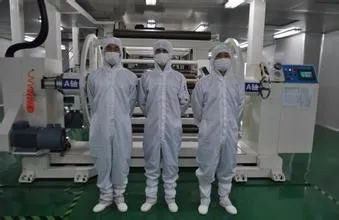
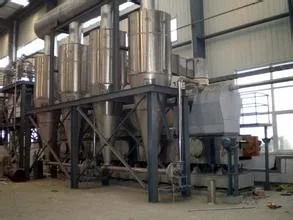
Everflon® Fluoropolymer specializes in the production, development, and sales of high-performance fluoropolymer materials. It provides the most basic fluoropolymer raw materials for C&F Group's fluorochemicals. After years of research and development and production, it is currently PTFE, FEP,PFA,ETFE and PVDF materials, and can provide a variety of physical properties of dispersions, granules and powder to meet the needs of various processing applications such as spraying, extrusion, molding, injection molding.
Relying on the Group's Quality Assurance Department and Application Laboratory, Everflon® provides the highest quality and stable fluoroplastic raw materials to meet the high quality requirements of middle and high-end customers and reduce the quality of raw materials caused by production and processing. Problems such as rising costs and inefficiency have established extensive and stable cooperative relations with main-stream manufacturers at home and abroad.
Everflon Fluoropolymers Family

We Recommend


New Arrivals
New products from manufacturers at wholesale prices