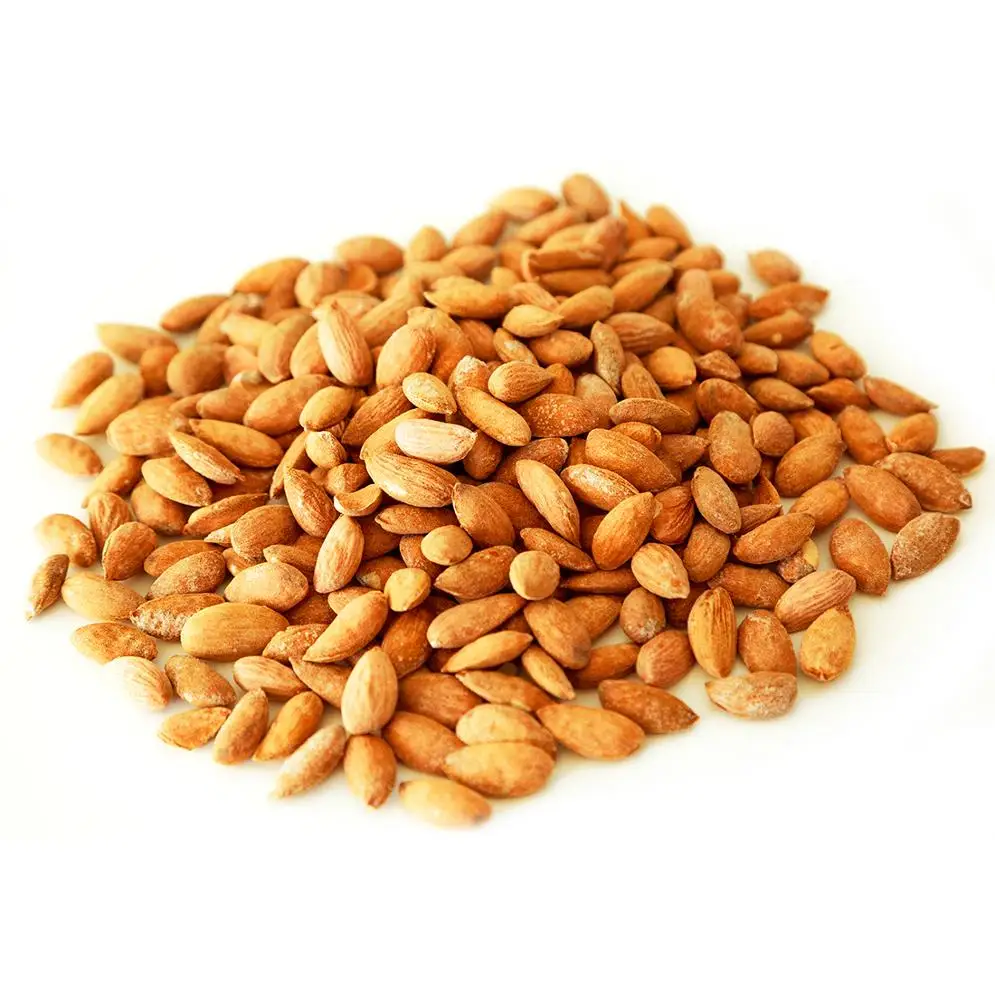
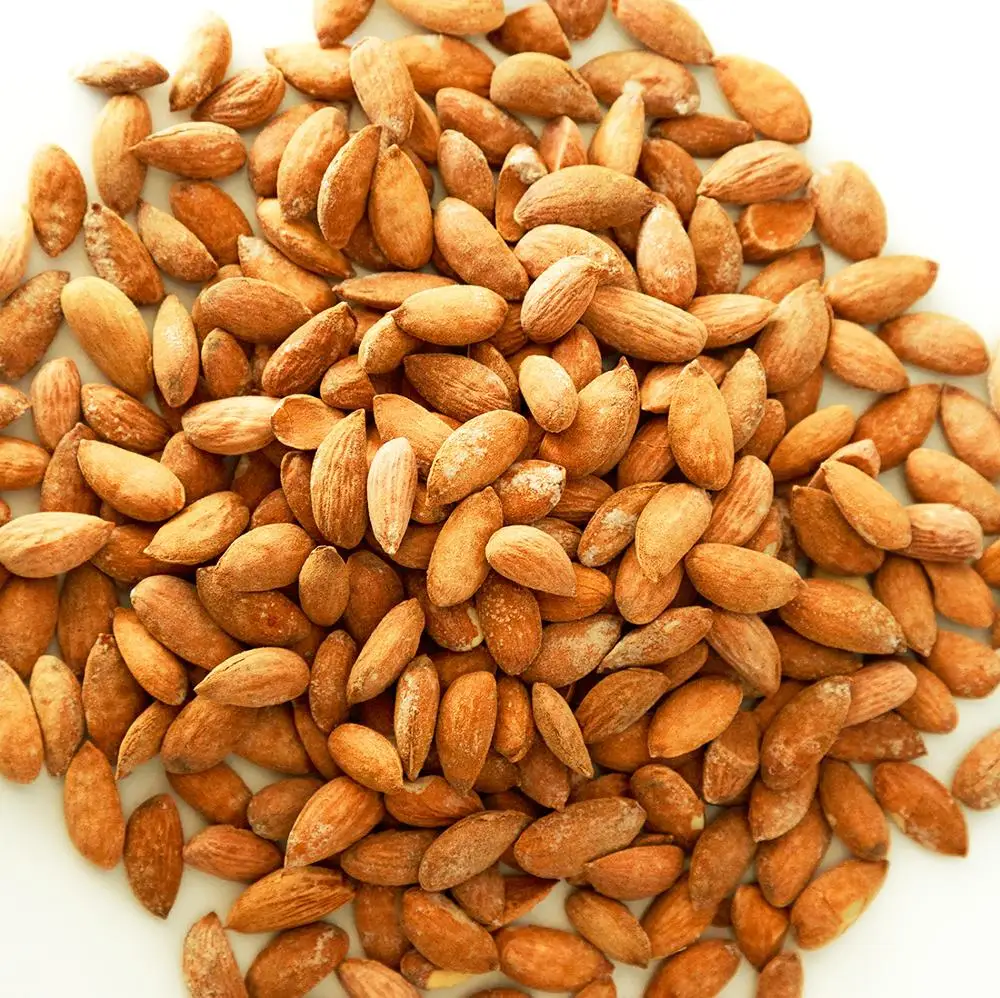
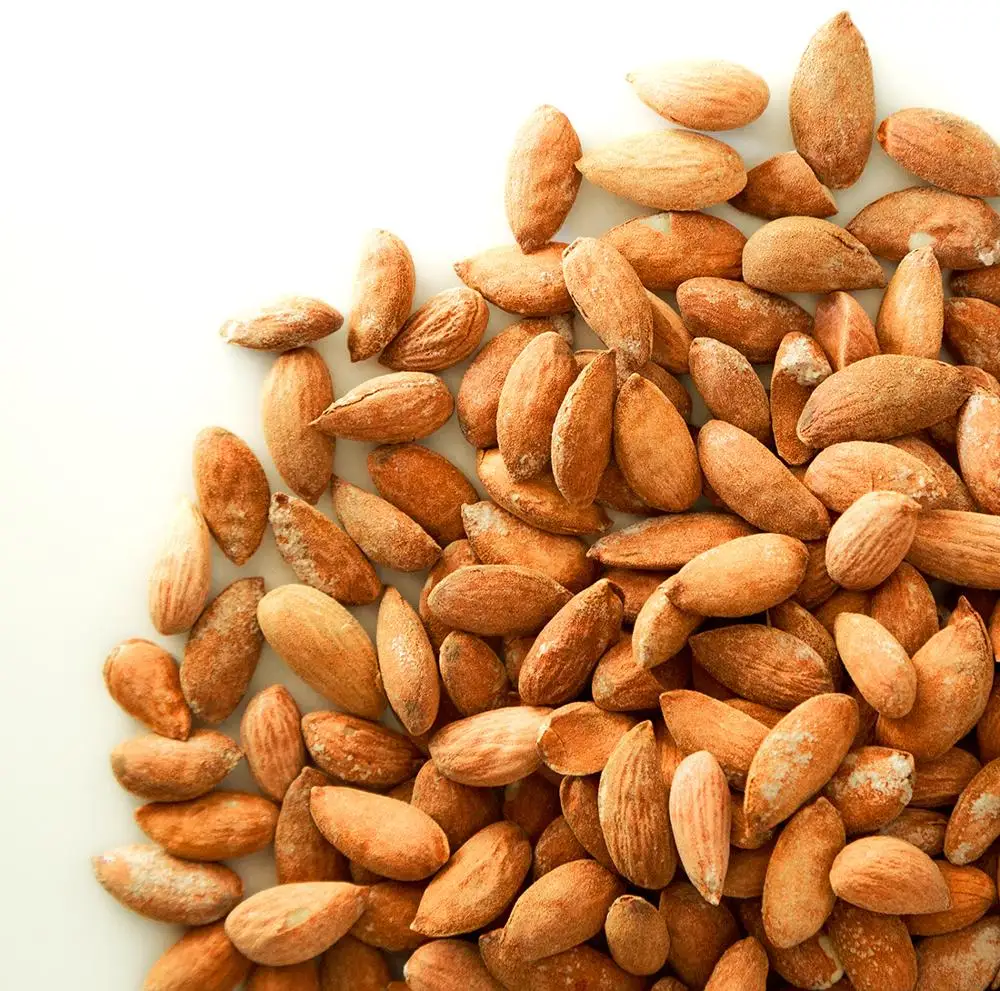
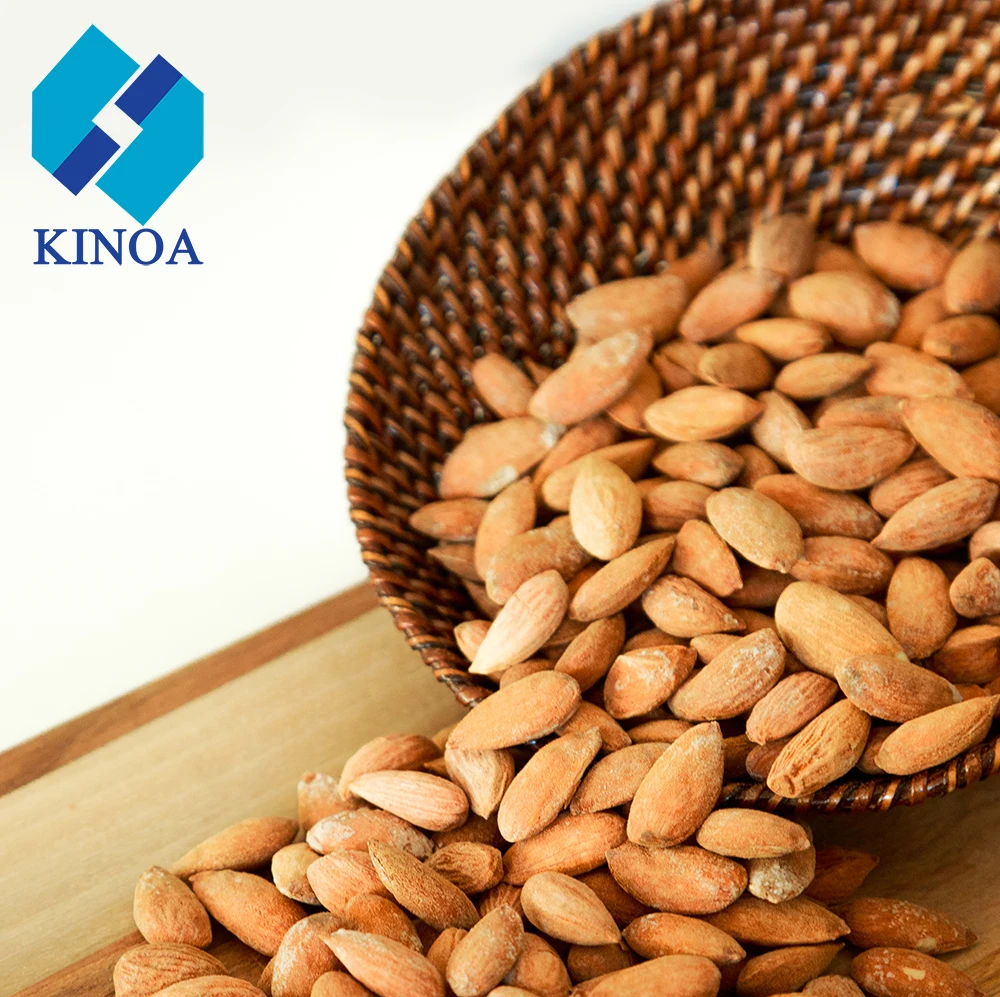
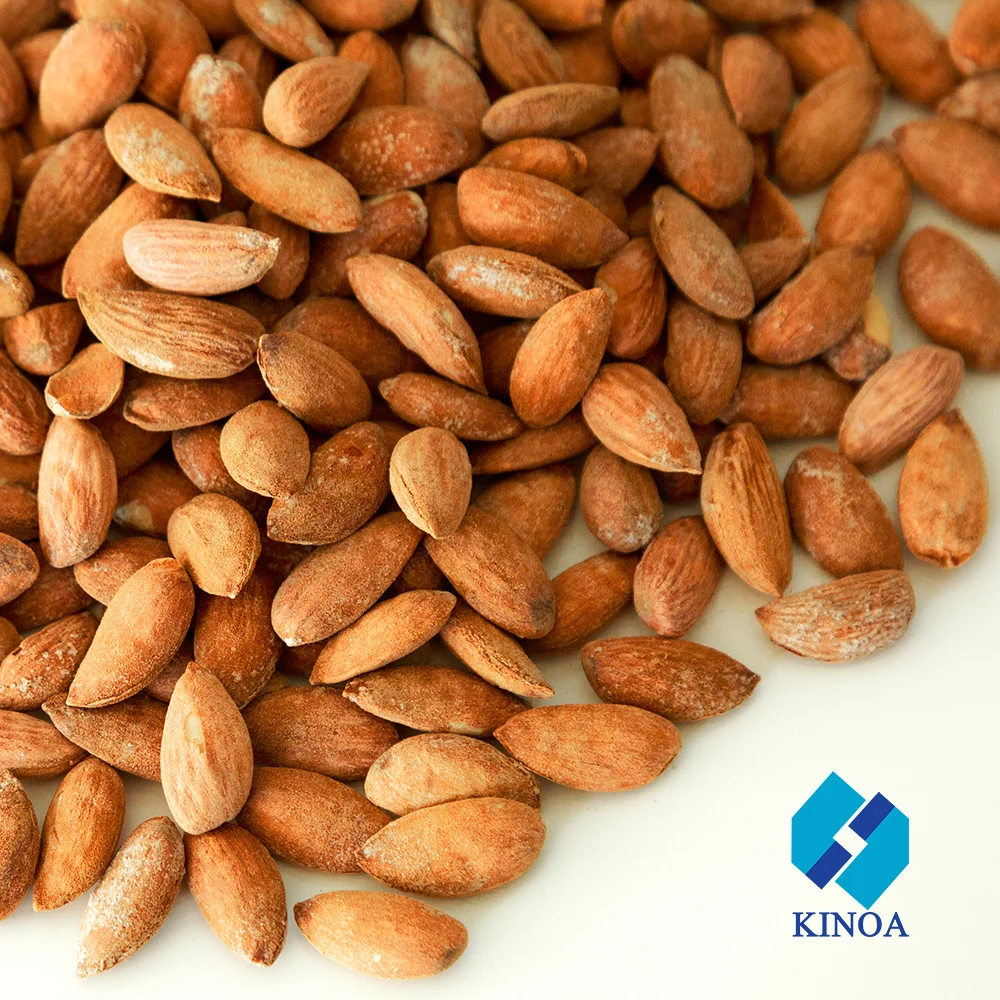
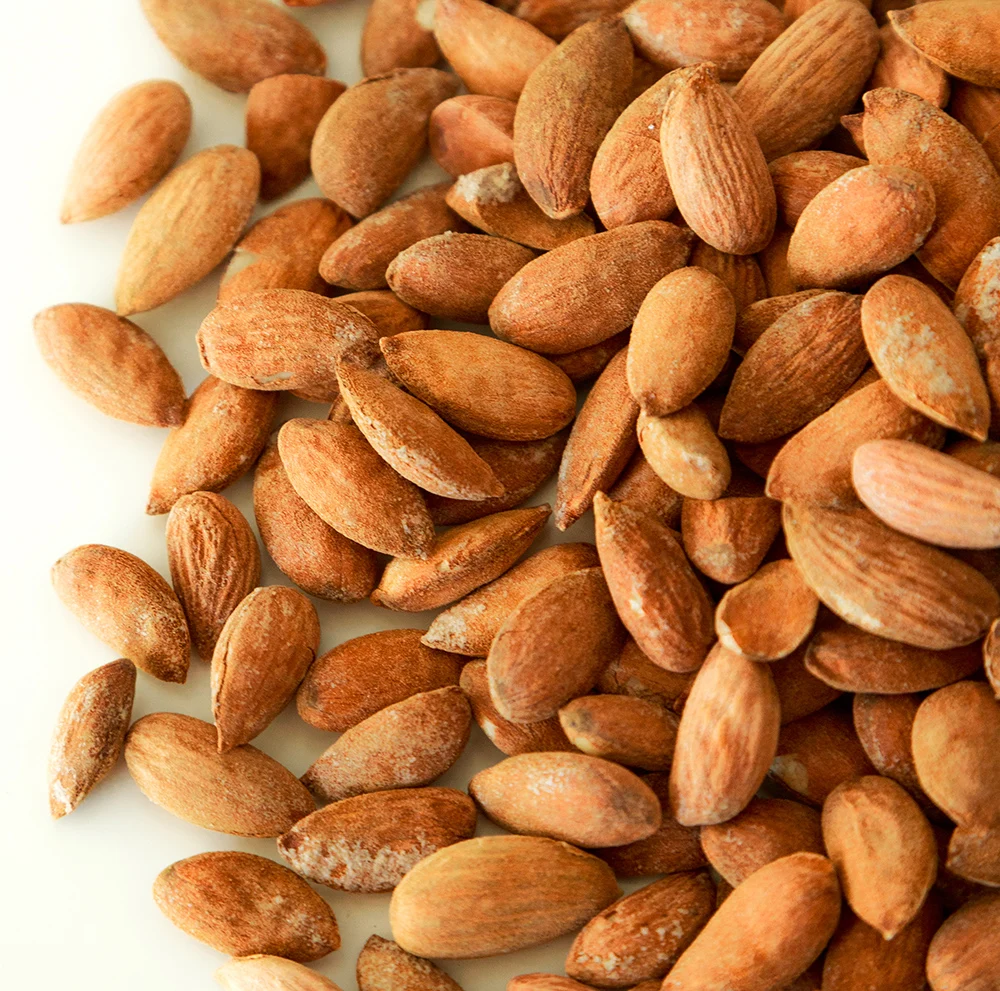
100% fresh raw and roasted almonds nuts
US $600.00-$1200
Share on (62514221117):

Almonds are the most common walnut crop in California. Local farmers provide up to 100% need for almonds in the USA and 80% - in the world. There are about 25 varieties of this plant with different ripening dates and quality characteristics.
Almonds grow in Central Asia, the Caucasus, India, the countries of the Middle East, Africa, etc. The fruit of the almond consists of a green peel, which bursts when ripened - and under it is a nut, which in turn consists of a shell and a kernel, covered with light skin - to a dark brown color. At the fracture, the nuclei are white with a creamy tint.

The almond kernels of Uzbekistan have a rounded shape, a wrinkled surface and an average core length. Well suited for blanching and further processing and frying.
Almonds are used raw or fried, whole, crushed, cut with petals for the preparation and decoration of cookies, cakes, pastries and sweet dishes. Ground almonds are used in the manufacture of pastes and fillers, essences for flavoring cakes and sauces, as a sprinkle. Famous pasta cakes are also made from almond flour. Another gingerbread based on grated almonds, known worldwide, is marzipan.
According to most consumers, premium chocolate is the ideal base for adding almonds. In addition, the production of almond milk and almond oil, which can also be used to create confectionery products, also shows an increasing growth. They are great for making products that do not contain dairy components and gluten, which has long been one of the trends in healthy eating.

| Appearance | Almond kernels, dried, whole, normally developed, having a characteristic appearance, shape, size for this variety |
| Taste, smell | Peculiar to almond kernels. Extraneous taste and smell are not allowed. |
| Color | Homogeneous, from golden to light brown |
| Texture | Thick and crispy |
| Size (number of fruits after pitting, pcs. in 28,35 g) | 20/22, 22/24, 23/25 |
| Size spread,%, no more | 1.7 |
| The number of broken kernels (not less than 1/8 of the whole kernel),%, no more | 1.0 |
| Scratches and chips (at least 6 mm in diameter),%, no more | 10.0 |
| Humidity,%, no more | 6 |
| Infestation by pests (the presence of live insects, pupae, larvae) | Not allowed |
| Metal impurities | Not allowed |
| Foreign impurities, including loose mineral impurities | 0.1 |
| Safety indicators | In accordance with the Technical Regulations of the Customs Union |

| Appearance | Kernels of roasted almonds having a characteristic appearance, shape, size for this variety |
| Taste, smell | Peculiar to roasted almonds. Extraneous taste and smell are not allowed. |
| Color | Brown, creamy with a beige tint |
| Texture | Thick and crispy |
| Size (number of fruits after pitting, pcs. in 28,35 g) | 18/20, 20/22, 23/25, 25/27, 27/30, 30/32, 32/34, 34/36, 36/40 |
| Size spread,%, no more | 1.7 |
| The number of broken kernels (not less than 1/8 of the whole kernel),%, no more | 2.0 |
| Scratches and chips (at least 6 mm in diameter),%, no more | 5.0 |
| Humidity,%, no more | 1.8~2.2 |
| Infestation by pests (the presence of live insects, pupae, larvae) | Not allowed |
| Metal impurities | Not allowed |
| Foreign impurities, including loose mineral impurities | 0.1 |
| Safety indicators | In accordance with the Technical Regulations of the Customs Union |


100 g of roasted almonds contain:
Water - 2.5 g
Proteins - 21.1 g
Fats - 52.1 g
Carbohydrates - 10.3 g
Dietary fiber (fiber) - 10.9 g
100 g of raw almonds contains:
Water - 4.0 g
Proteins - 18.6 g
Fats - 57.7 g
Carbohydrates - 13.0 g
Dietary fiber (fiber) - 7.0 g
Vitamins:
Vitamin A (beta-carotene) - 1.0 mcg
Vitamin B1 (thiamine) - 0.1 mg
Vitamin B2 (Riboflavin) - 1.0 mg
Vitamin B3 or vitamin PP (niacin) - 3.6 mg
Vitamin B4 (Choline) - 52.1 mg
Vitamin B5 (pantothenic acid) - 0.3 mg
Vitamin B6 (pyridoxine) - 0.1 mg
Vitamin B9 (folic acid) - 53.0 mcg
Vitamin E (tocopherol) - 23.
Vitamins:
Vitamin A (beta-carotene) - 20.0 mcg
Vitamin B1 (thiamine) - 0.3 mg
Vitamin B2 (Riboflavin) - 0.7 mg
Vitamin B3 or vitamin PP (niacin) - 4.0 mg
Vitamin B5 (pantothenic acid) - 0.4 mg
Vitamin B6 (pyridoxine) - 0.3 mg
Vitamin B9 (folic acid) - 40.0 mcg
Vitamin E (tocopherol) - 30.8 mg
Macronutrients:
Potassium - 712 mg
Calcium - 267 mg
Magnesium - 281 mg
Sodium - 3 mg
Phosphorus - 470 mg
Macronutrients:
Potassium - 748 mg
Calcium - 273 mg
Magnesium - 234 mg
Sodium - 10 mg
Sulfur - 178 mg
Phosphorus - 473 mg
Chlorine - 39 mg
Trace elements:
Iron - 3.8 mg
Manganese - 2.3 mg
Copper - 1.1 mg
Selenium - 2.3 mcg
Zinc - 3.3 mg
The energy value of 100 g of roasted almonds is about 595.0 kcal / 2.489 kJ.
Trace elements:
Iron - 4.2 mg
Iodine - 2.0 mcg
Manganese - 1.9 mg
Copper - 0.1 mg
Fluorine - 91.0 mcg
Zinc - 2.1 mg
The energy value of 100 g of roasted almonds is about 645.0 kcal / 2.699 kJ.


Q: Are you a trading company?
A: We are a trading and manufacturing company.
Q: Do you provide samples? Is it free or extra?
A: We can supply the sample if we have a ready batch in stock, 0.5kg to 1 kg sample is free, but the customers have to pay the courier cost.
Q: Do you have all the necessary documents on your goods?
A: We have all the documents authorizing the export of goods from Uzbekistan. In addition, at the request of the customer, we can provide ISO 22000 HACCP certificate.
Q: How can I place an order?
A: You can directly quote by Alibaba platform or by contract and any convenient way for you.
Q: Terms of payment?
A: 30%~40% prepayment, 70%~60% against copy all shipping documents.
Q: Delivery terms?
A: All prices are FCA Tashkent (Uzbekistan price), we also according EXW, FOB and CIF basis.