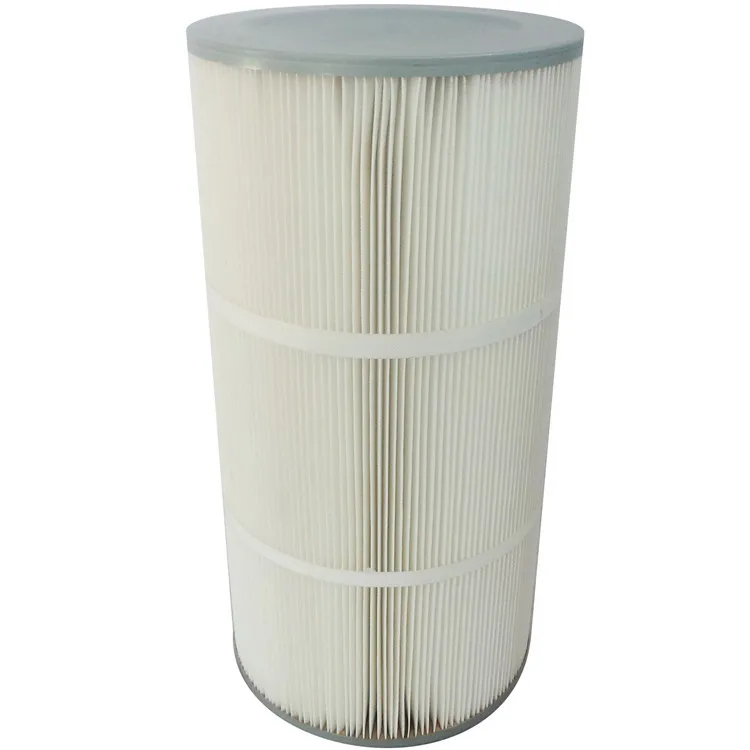
Фильтрующий картридж для оборудования для обработки отработанных газов в химическом волокне, картридж для воздушного фильтра, пылесборник
16,50 $ - 18,00 $
Сохранить в закладки 1600313352286:
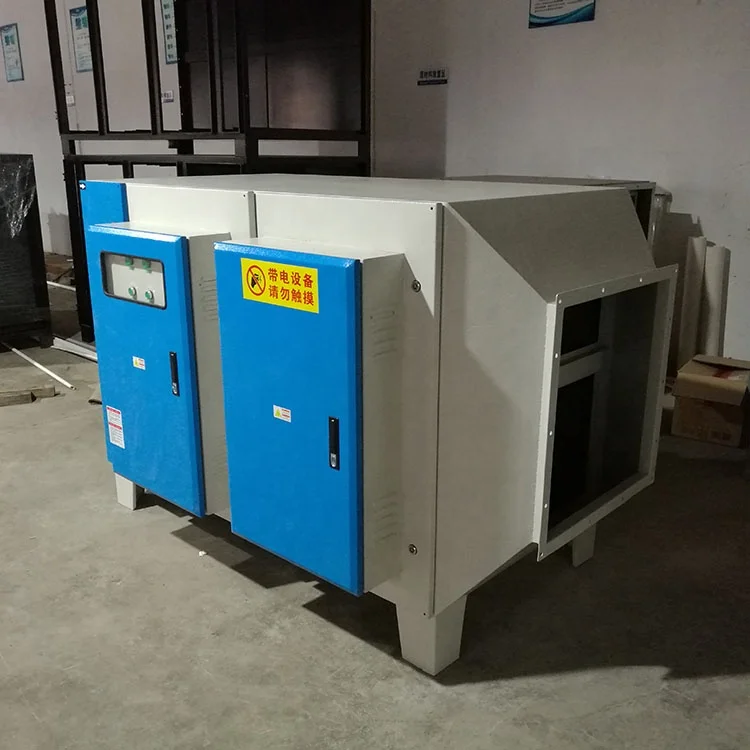
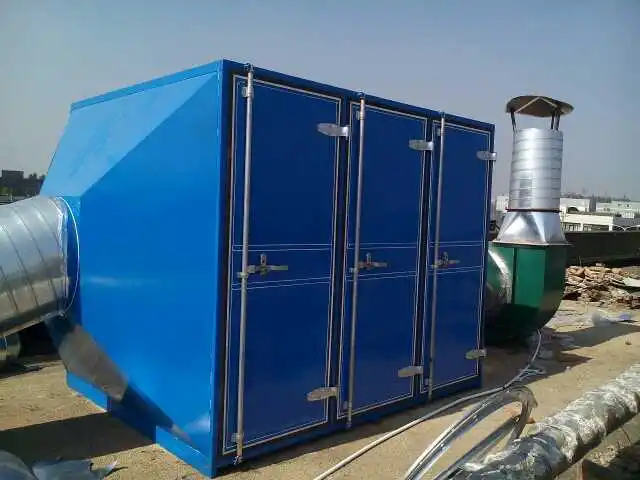
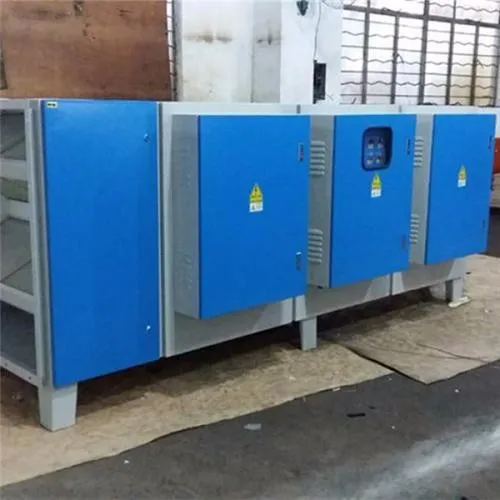
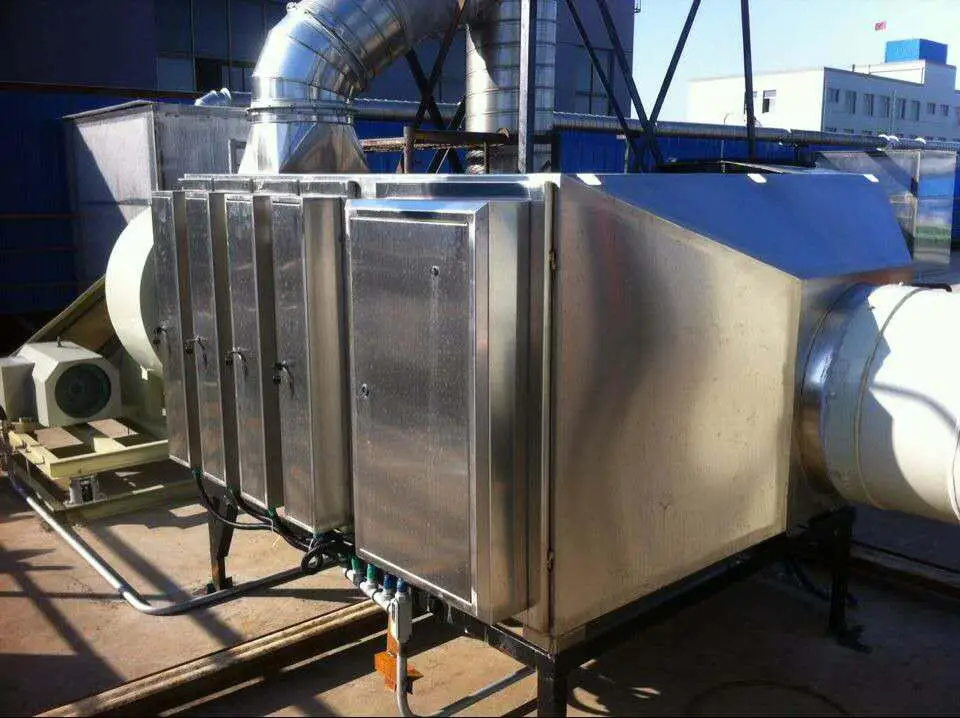
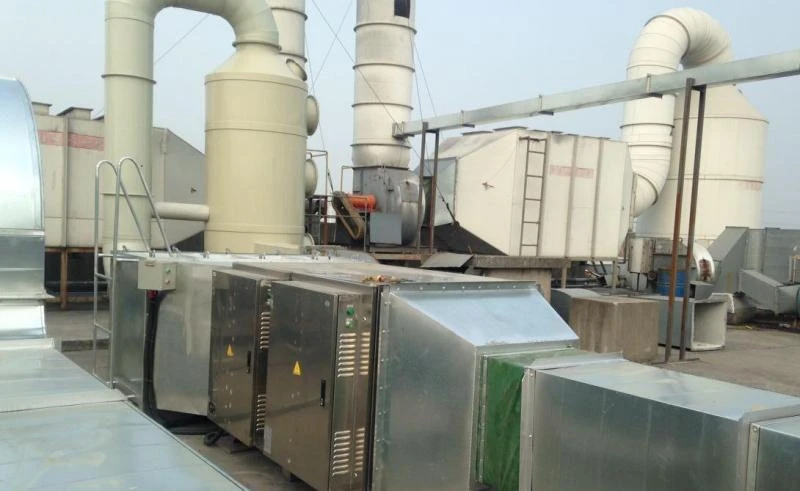
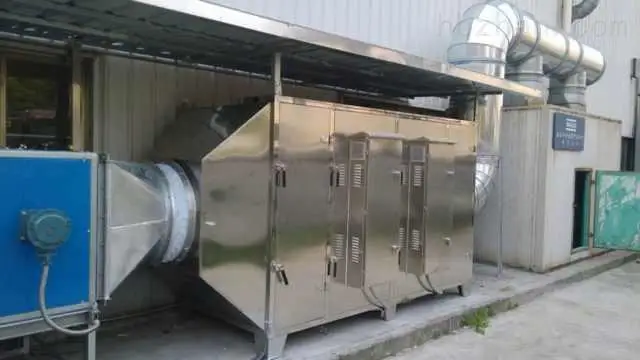
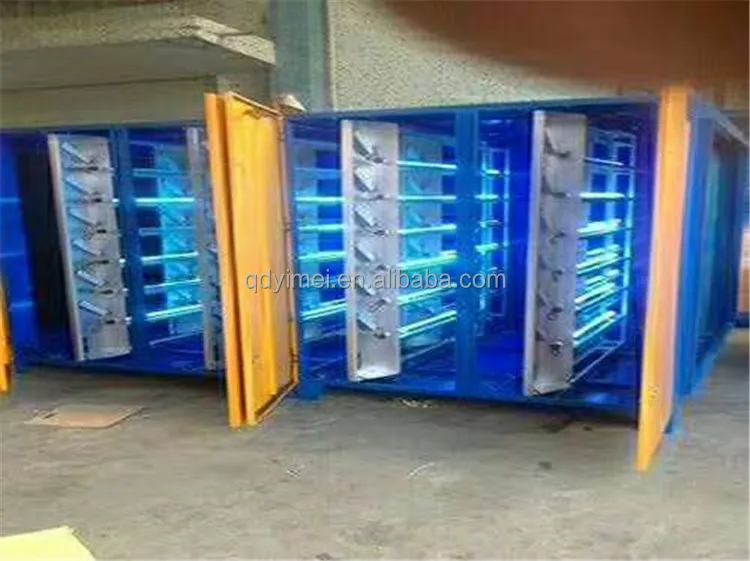
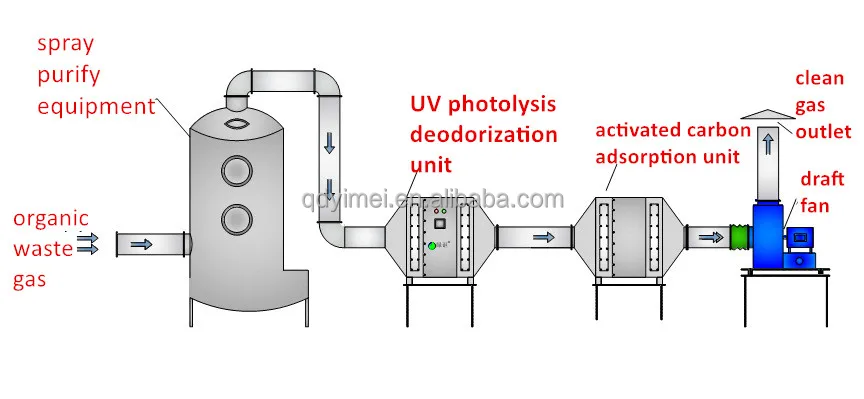
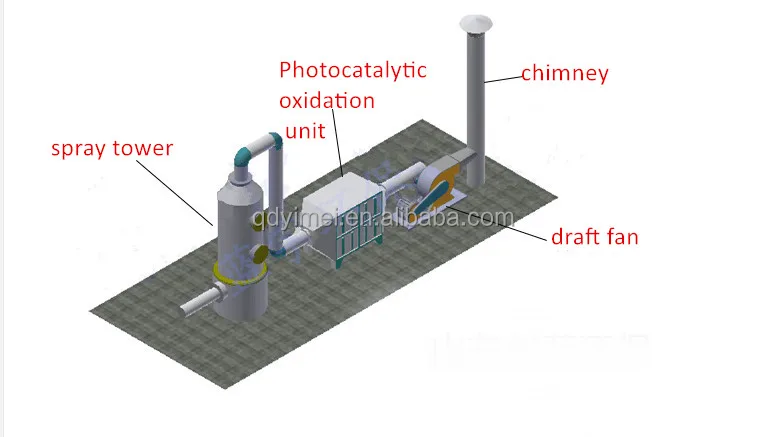
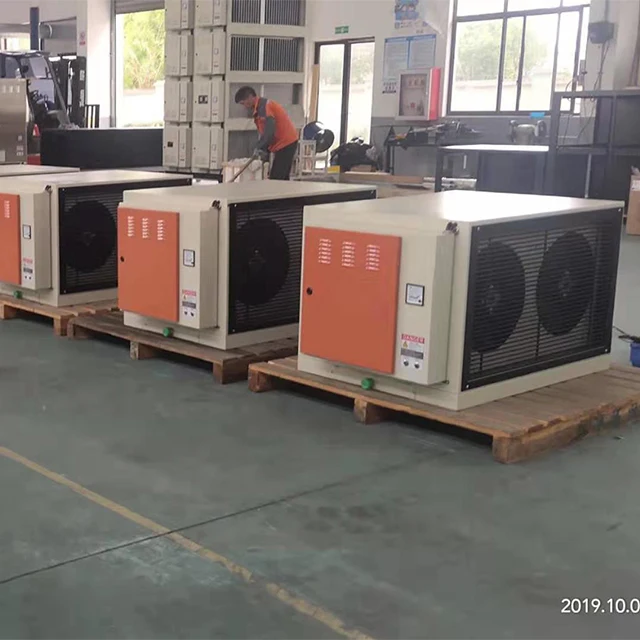
Photocatalytic oxidation deodorization equipment UV photocatalytic oxidation technology principle
For the treatment of VOCs with low concentration and large air volume, the most widely used technology is UV photocatalytic oxidation. The equipment to treat exhaust gas using this technology is simple, cost-effective, and low in operation and maintenance costs. Therefore, it has become the shou choice for small and medium-sized enterprises in waste gas treatment. method. However, due to the low degree of automation of the current industrial waste gas treatment equipment, there are still loopholes in the waste gas treatment monitoring of the industrial waste gas treatment equipment, and the effect evaluation is not ideal.
Principles of UV photocatalytic oxidation technology
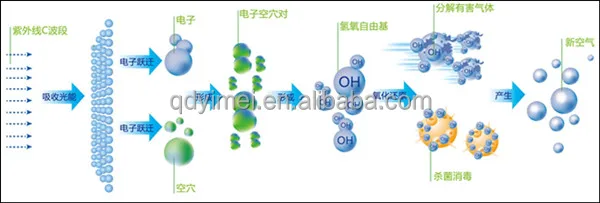
The principle of UV photocatalytic purification is mainly composed of photolysis and photocatalytic oxidation technology.
Photolysis technology uses 185nm short-wavelength ultraviolet light to split the exhaust gas molecules, break the molecular chain, and at the same time photolyze water and oxygen in the air to generate hydroxyl radicals, ozone and other oxidants to oxidize and remove VOCs; photocatalytic oxidation technology is in the equipment The addition of nano-level active materials to the UV light produces a stronger catalytic degradation function. Because TiO2 as a catalyst is inexpensive, has a wide range of sources, has high ultraviolet light absorption, high light corrosion resistance, high catalytic activity, and non-toxicity, it has a strong adsorption effect on many organic substances, so it has become a variety of experimental research. Commonly used photocatalyst.
The main problems faced by the photocatalytic reaction are catalyst deactivation, small reaction kinetic constant, unpredictable reaction mechanism, etc. At the same time, humidity can inhibit the photocatalytic rate, especially when the concentration of organic waste gas is large, this effect is more obvious. Therefore, the application of photocatalytic technology in the treatment of exhaust gas with high humidity is limited. Since nanomaterials themselves have an oxidizing effect on organics, the photocatalytic resistance of nanomaterials and binders, the catalytic activity of the carrier, including regeneration after deactivation, and the firmness of the film are still key technical problems in photocatalytic technology.
Ozone and toluene do not react chemically in their natural state. Ozone and vacuum ultraviolet light have a degrading effect on toluene. 254nm ultraviolet light can promote ozone to generate oxygen free radicals, thereby oxidizing exhaust gas molecules. Ozone and water vapor in the air can generate hydroxyl free radicals under vacuum ultraviolet conditions, and hydroxyl free radicals can oxidize toluene.
Take the exhaust gas with air volume of 10000 m3/h and toluene 200mg/m3 as an example. To achieve a degradation rate of more than 60%, the required photolysis part is configured in 40 (150W dual-band), and the photocatalytic part is configured in 40 (150W single Wave band ultraviolet lamp) photocatalytic net 3-4 square meters, the total power is 12KW. In the future, the possibility of improving the degradation efficiency of the unit by optimizing the design of the air duct, improving the performance of the lamp tube, and the photocatalytic network is not ruled out. But with the current technical level, 12KW should be the current basic configuration.
Under proper humidity conditions, the degradation rate of toluene by photolysis combined with photocatalysis can reach more than 65%. If there is only photolysis, the degradation rate is as high as 40%, and if the configuration is increased, the degradation rate will decrease. If there is only photocatalysis, the degradation rate is as high as 15%, and only photolysis and photocatalysis can react together to reach more than 65%, indicating that photolysis and photocatalysis have synergistic effects.
Main factors affecting the treatment effect
Through equipment improvement and laboratory tests, the main factors affecting the efficiency of UV photocatalytic treatment of VOCs are mainly studied from the UV wavelength, initial temperature, initial concentration, relative humidity, residence time, reaction medium, etc., to find the best reaction efficiency and the lowest energy Consumption.
(1) The influence of exhaust gas concentration: UV photocatalytic treatment of VOCs is suitable for applications including low-concentration organic waste gas produced in spray workshops, printing, electronics, pharmaceuticals, food and other industries. The effect is better for concentrations below 20-200ppm. As the concentration of VOCs increases, the degradation efficiency will also decrease.
(2) The influence of low relative humidity: Under certain humidity conditions, oxygen absorbs most of the 185nm ultraviolet light, but as the humidity further increases, part of it is that water vapor competes with oxygen to absorb 185nm wavelength ultraviolet light, and water vapor absorbs More 185nm ultraviolet light is generated, and more hydroxyl radicals are generated at the same time. Water vapor reacts with active oxygen to generate hydroxyl radicals. The oxidizing properties of hydroxyl radicals are stronger than that of ozone and active oxygen, so that the speed of photolysis is significantly accelerated, which promotes an increase in the removal rate of exhaust gas per unit time. The test proves that the relative humidity is 30- In the range of 65%, the photolysis efficiency increases, and gradually decreases when the relative humidity exceeds 70%.
(3) The influence of wind speed: A large number of experiments have proved that the higher the wind speed, the smaller the difference in humidity between water vapor inlet and outlet, which means that the higher the wind speed, the lower the value of the jue pair of hydroxyl radicals. Therefore, under the conditions of low wind speed, the contribution of hydroxyl radicals to the VOCs of volatile organic compounds is large, and under the conditions of high wind speed, the effect of hydroxyl radicals on the degradation of organic substances will become very limited. The wind speed also affects the surface temperature of the UV lamp. The surface temperature of the lamp is directly related to the luminous efficiency of the UV lamp. When the lamp surface temperature is higher than a certain value, it will directly affect its luminous efficiency. In the equipment test, the response effect is better when the wind speed is lower than 2m/s. In a certain equipment space, the wind speed affects the residence time at the same time. Generally, the residence time increases, and the removal efficiency of exhaust gas is significantly increased. The reason is that the residence time increases, and the number of collisions between 185nm ultraviolet light and organic matter must increase. When the residence time reaches 10s, if the residence time is extended, the degradation efficiency of exhaust gas will not increase significantly. Especially at low concentrations, extending the residence time does not equivalently increase the removal efficiency of exhaust gas.
In the entire photolysis photocatalysis box, there are only two real reaction areas, one is the high optical power density area of the photolysis part, and the other is the catalytic net interface of the photocatalysis part. In the photolysis part, the optical power density is high enough and the area is large enough so that the degradation ability is sufficient. However, since the main degradation mechanism of photolysis is that light-excited molecules to an excited state causes chemical bonds to break, rather than mainly relying on ozone, the photolysis part should be designed according to the concentration of pollutants. In fact, the residence time of the photolysis zone is not long. .
The actual reaction speed of photocatalysis is relatively slow, mainly due to the formation of a gas-liquid interface with a high specific surface area to increase the reaction capacity, and the formation of more hydroxyl radicals through high catalytic activity to increase the reaction efficiency.
Therefore, it is more important to increase the residence time in the photocatalytic reaction zone, rather than simply increasing the box size!
(4) The influence of the light source: At present, vacuum ultraviolet lamps with two bands of 185nm and 254nm are generally selected, but the quality of UV lamps on the market varies.
At present, the main ultraviolet lamps on the market are low-pressure mercury lamps (liquid mercury or amalgam lamps). The mechanism of emitting ultraviolet light is to use the excitation-emission light in the mercury plasma state, of which 185nm and 254nm are its characteristic spectrum.
By comparing the transmittance of 185nm and 254nm, the material of the tube is generally synthetic quartz.
(5) Reasonable equipment space layout and structure: There are also some problems in the manufacture of purification equipment. At present, the automation of UV photocatalytic treatment of VOCs equipment is low, and there is basically no automatic detection and monitoring function, so the overall effect of the product is not Able to conduct effective efficiency assessments. The arrangement and quantity of catalysts must be properly handled, the light transmittance and gas flow rate must be handled accurately, and reasonable energy matching and structural optimization must be carried out. Otherwise, the effective removal rate of many equipment is far from enough.
Different lamp arrangement
The light power of the UV lamp decays quickly with distance, so the UV lamps in the photolysis part cannot be arranged too scattered, otherwise the power of the UV light in the photolysis space is too low, resulting in a sharp drop in degradation efficiency. Of course, too dense is not enough, on the one hand the temperature will be too high, on the other hand the ballast is not easy to place. It is recommended that the distance between the photolysis UV lamps should not be greater than 10 cm, the distance between the UV lamps of the photocatalytic part should not be greater than 10 cm, and the distance between the lamp and the photocatalyst net should not be greater than 8 cm.
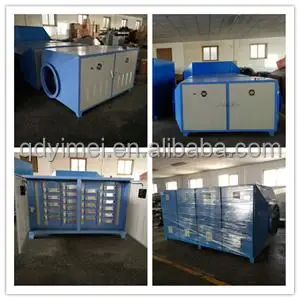
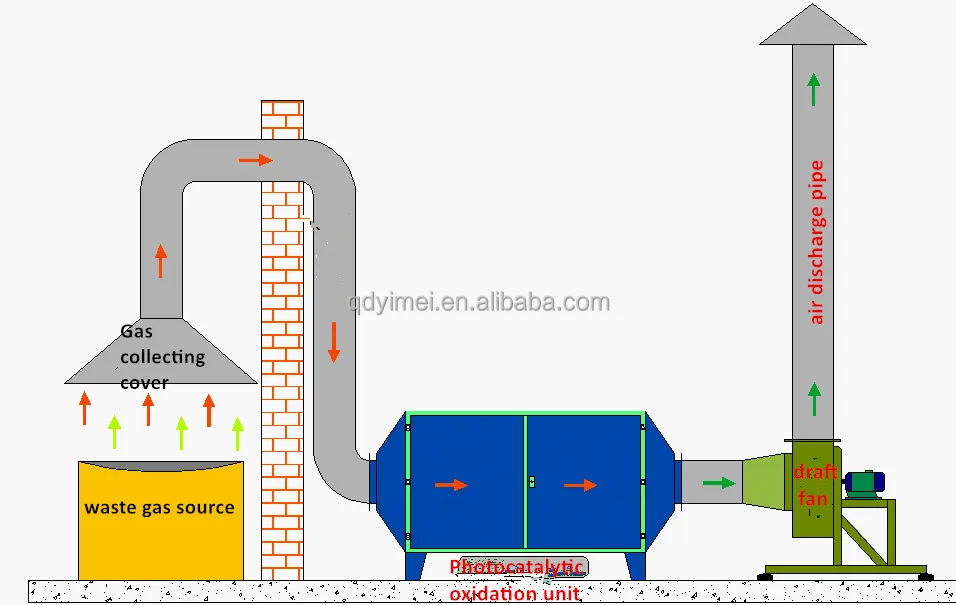
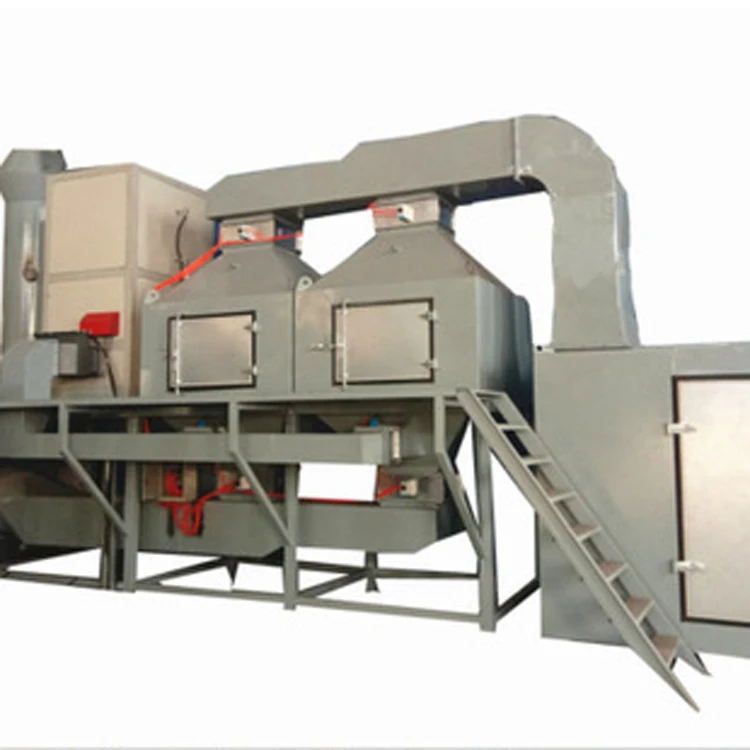
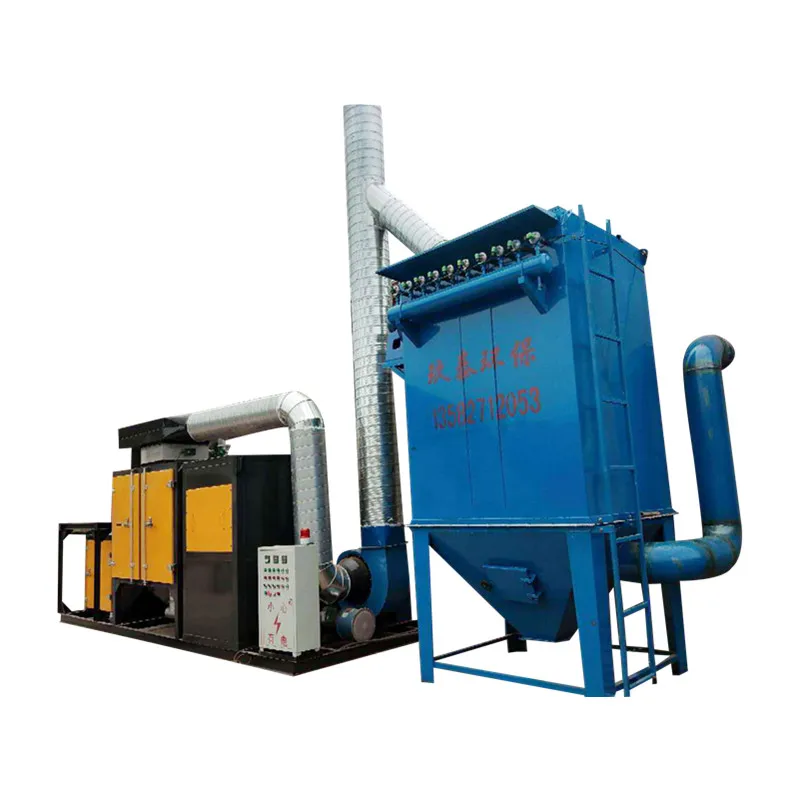
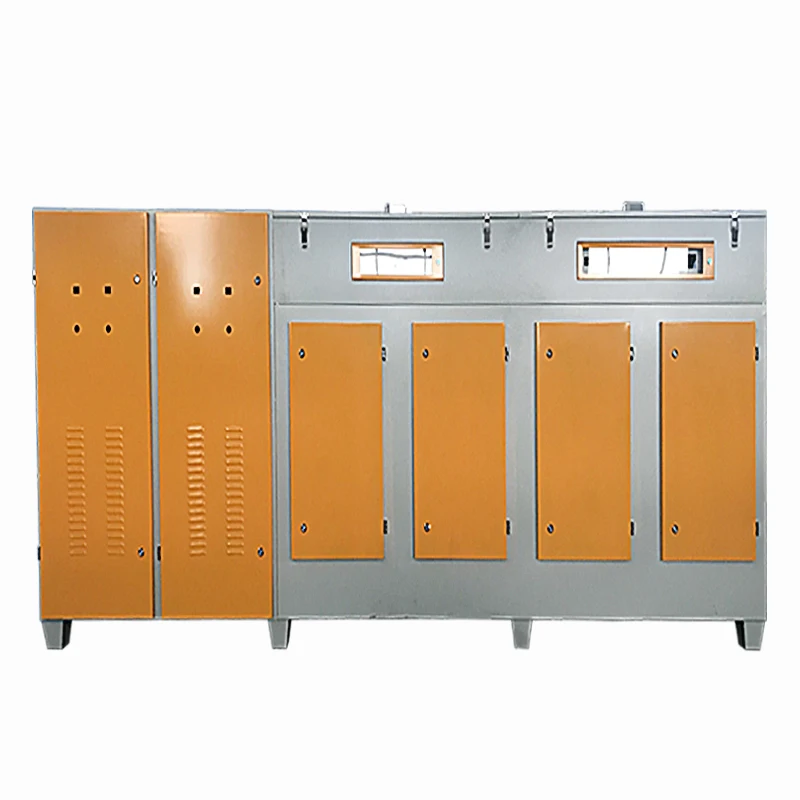
Overview of core equipment performance characteristics :
1. Effectively eliminating odor: efficient removal of volatile organic compounds (VOC), inorganic, H2S, NH3, thiols, other major pollutants and a variety of odor, removal deodorization efficiency can reach as high as more than 99%, desulfurization effect greatly exceeds China promulgated in 1993 odorous pollutants emission standards (GB14554-93).
2. Without adding any material: only need equipment corresponding exhaust pipe and exhaust the power, the stench gas by purification equipment for deodorization decomposition, without adding any material involved in chemical reactions.
3. Strong adaptability: can adapt to the high concentration, big volume, different deodorizations and purifications of odor substances, can work 24 hours a day continuously with stable and reliable operation.
4. Low operating costs: this equipment is without any mechanical action, no noise, no need for personnel management and daily maintenance, only for regular inspection. This equipment is with low energy consumption, equipment wind resistance is extremely low(<50 pa), it can save a lot of wind power energy consumption.
5. Equipment with light weight covers a small area: it's suitable for compact layouts, small venues and other special conditions.
6. High quality imported materials: with high fire prevention and anti-corrosion performance, stable performance and long service life.
7. Malodorous gases without the need for special pre-treatment, such as it can work normally in heating, humidification and other equipment working temperature between -30 ℃ and 95 ℃, humidity at 30% -97%, PH values between 3 and 11. But if there is a lot of gas vapor or dust, it must be carried out in addition to water or dust removal treatment, otherwise it will affect the purification effect, reducing the life of the UV ultraviolet lamp, increasing operating costs.
8. Environmental protection high-tech products: using the most advanced technology concepts, developed the high-tech environmental purification product, can completely decompose toxic and hazardous substances in malodorous gases, and can achieve the perfect deodorizing effect. Malodorous gases through decomposition can be completely achieve sound emissions, no secondary pollution, while achieving effective disinfection and sterilization effect.
Technical parameter:
model | VOOF-HXT-1K | VOOF-HXT-2K | VOOF-HXT-3K | VOOF-HXT-4K | VOOF-HXT-5K |
External dimension (mm) L*W*H | 2100*850*850 | 2600*1000*1100 | 2700*1000*1200 | 2700*1000*1300 | 2800*1000*1400 |
Air Inlet outlet dia(mm) | 200 | 200 | 300 | 300 | 400 |
design flow speed m/s | ≤1.5 | ≤1.5 | ≤1.5 | ≤1.5 | ≤1.5 |
rated air flow(m3/h) | 1000 | 2000 | 3000 | 4000 | 5000 |
Draft voltage/electric power /power | AC380V/50HZ,1.5kw | AC380V/50HZ,2.2kw | AC380V/50HZ,3kw | AC380V/50HZ,3kw | AC380V/50HZ,5.5kw |
resistance<(Pa) | ≤500 | ≤500 | ≤150 | ≤150 | ≤150 |
material | Carbon steel Powder painting or stainless steel | ||||
temperature(℃) | ≤40 | ≤40 | ≤40 | ≤40 | ≤40 |
The activated carbon is made of special waterproof honeycomb carbon; | |||||

Новинки товаров от производителей по оптовым ценам