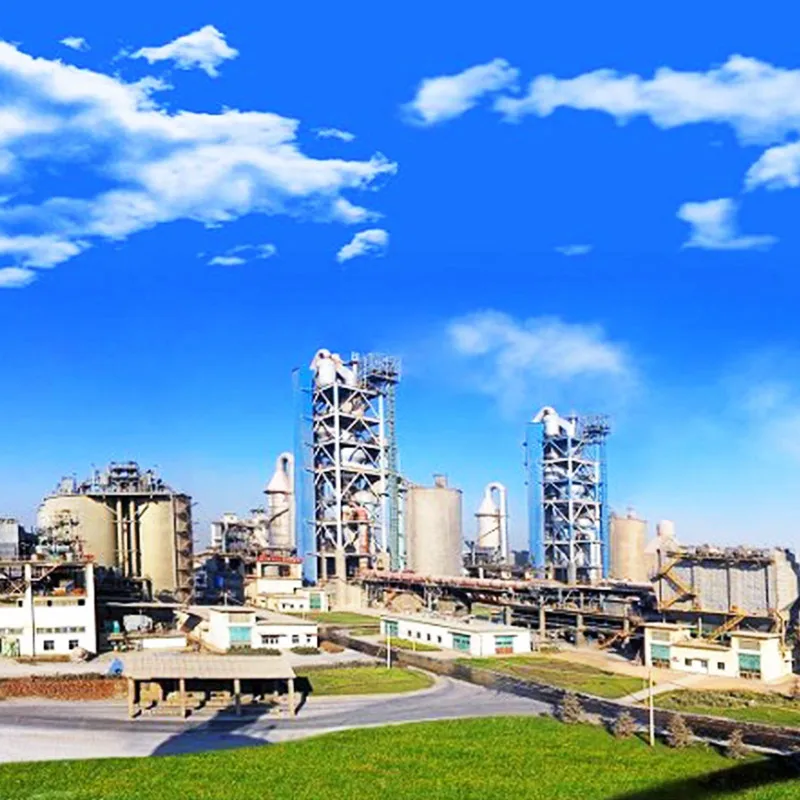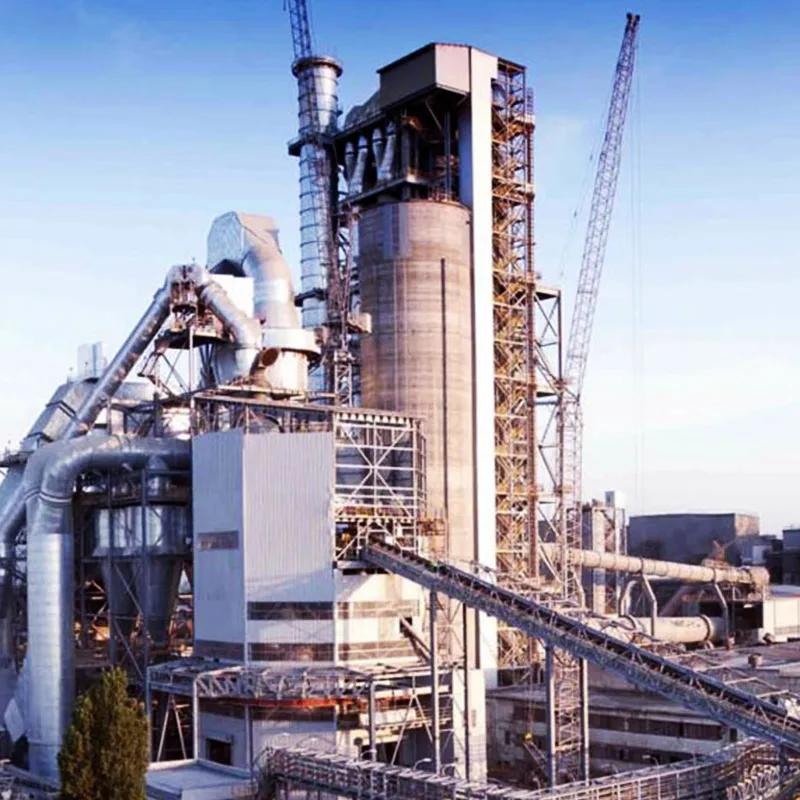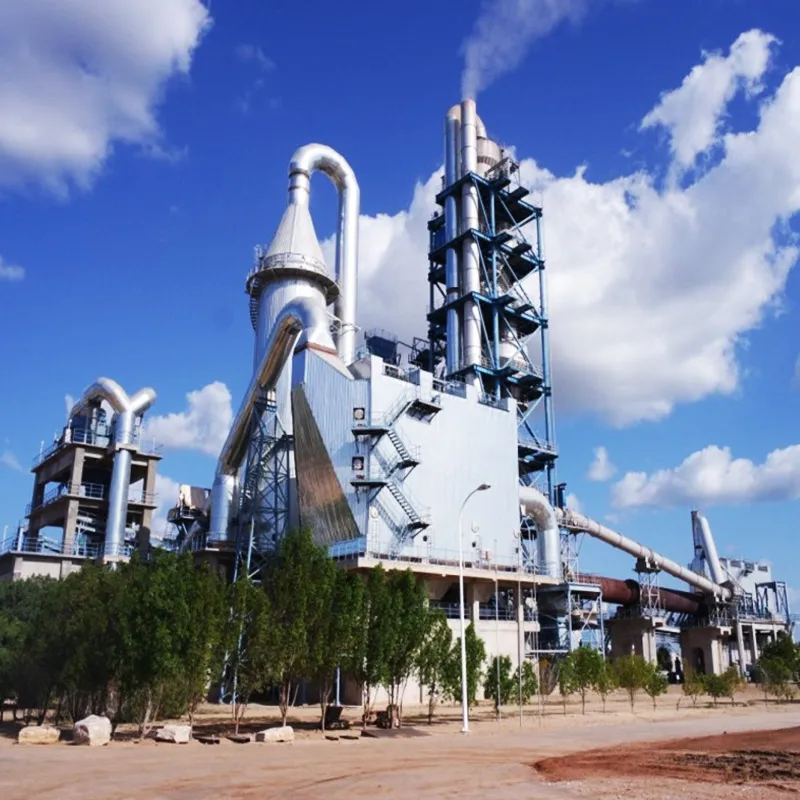
Завод по производству портландцемента 50 тонн в день под ключ процесс производства

Сохранить в закладки 1600524836069:


Цена:*

Количество:

  • В избранное

Описание и отзывы

Характеристики


Products Description


Portland cement is the basic ingredient of concrete. Concrete is formed when portland cement creates a paste with water that binds with sand and rock to harden.

Cement is manufactured through a closely controlled chemical combination of calcium, silicon, aluminum, iron and other ingredients.

Common materials used to manufacture cement include limestone, shells, and chalk or marl combined with shale, clay, slate, blast furnace slag, silica sand, and iron ore. These ingredients, when heated at high temperatures form a rock-like substance that is ground into the fine powder that we commonly think of as cement.


Bricklayer Joseph Aspdin of Leeds, England first made portland cement early in the 19th century by burning powdered limestone and clay in his kitchen stove. With this crude method, he laid the foundation for an industry that annually processes literally mountains of limestone, clay, cement rock, and other materials into a powder so fine it will pass through a sieve capable of holding water.

Cement plant laboratories check each step in the manufacture of portland cement by frequent chemical and physical tests. The labs also analyze and test the finished product to ensure that it complies with all industry specifications.

The most common way to manufacture portland cement is through a dry method. The first step is to quarry the principal raw materials, mainly limestone, clay, and other materials. After quarrying the rock is crushed. This involves several stages. The first crushing reduces the rock to a maximum size of about 6 inches. The rock then goes to secondary crushers or hammer mills for reduction to about 3 inches or smaller.

The crushed rock is combined with other ingredients such as iron ore or fly ash and ground, mixed, and fed to a cement kiln.


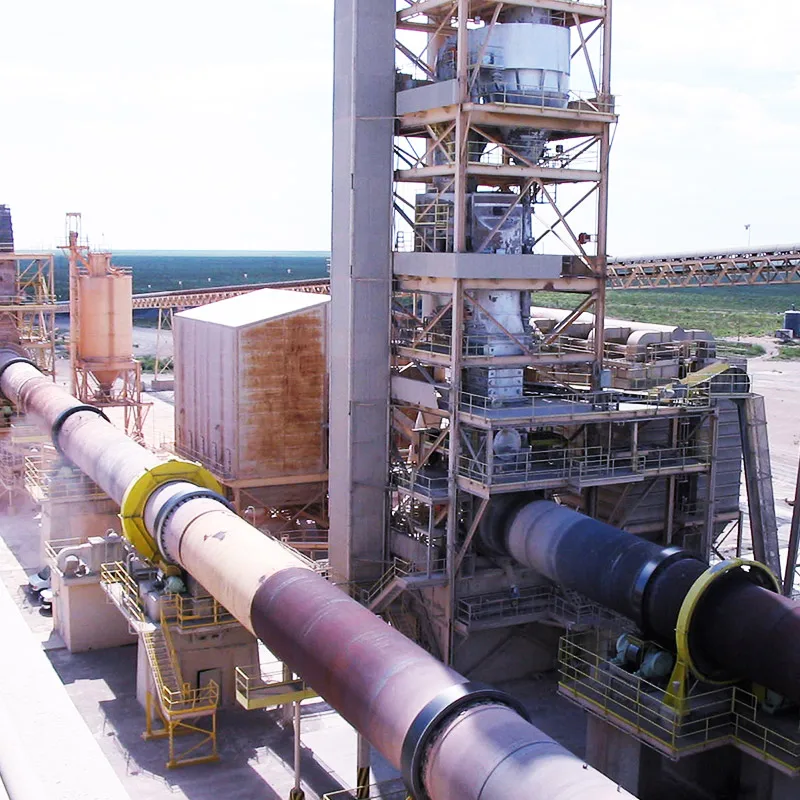
The cement kiln heats all the ingredients to about 2,700 degrees Fahrenheit in huge cylindrical steel rotary kilns lined with special firebrick. Kilns are frequently as much as 12 feet in diameter—large enough to accommodate an automobile and longer in many instances than the height of a 40-story building. The large kilns are mounted with the axis inclined slightly from the horizontal.

The finely ground raw material or the slurry is fed into the higher end. At the lower end is a roaring blast of flame, produced by precisely controlled burning of powdered coal, oil, alternative fuels, or gas under forced draft.

As the material moves through the kiln, certain elements are driven off in the form of gases. The remaining elements unite to form a new substance called clinker. Clinker comes out of the kiln as grey balls, about the size of marbles.


Clinker is discharged red-hot from the lower end of the kiln and generally is brought down to handling temperature in various types of coolers. The heated air from the coolers is returned to the kilns, a process that saves fuel and increases burning efficiency.

After the clinker is cooled, cement plants grind it and mix it with small amounts of gypsum and limestone. Cement is so fine that 1 pound of cement contains 150 billion grains. The cement is now ready for transport to ready-mix concrete companies to be used in a variety of construction projects.

Although the dry process is the most modern and popular way to manufacture cement, some kilns in the United States use a wet process. The two processes are essentially alike except in the wet process, the raw materials are ground with water before being fed into the kiln.


Factory Supply Turnkey Advantages

(1) It adopts the most advanced hydraulic stopper device at home and abroad, a metering plunger pump with high metering accuracy, a high-precision speed control valve and a contact-type graphite block sealing device and other domestic advanced technologies.

(2) In order to improve the degree of automation, the kiln head adopts an industrial TV to watch the fire, the process flow simulates a fluorescent screen, and the calcination belt adopts an infrared scanner to directly reflect the calcination status of the calcination belt on the computer. The use of these new technologies is intuitive, easy to operate, and reliable to use.

(3) The automation level is high. The adjustment, control and alarm of the production system operation are all controlled by PLC in the main control room. There are few on-site operators and high labor efficiency. It adopts full negative pressure production, smooth air flow, stable production operation and high safety.

(4) The pulse bag filter is used for dust removal, and the emission concentration is less than 50mg/Nm3, which is lower than the national emission standard, which effectively protects the environment of the production site.

(5) Compared with the equipment of the same specification, the operation rate is increased by 10%, the output is increased by 5%-10%, and the heat consumption is reduced by 15%.


Main Equipment


Working Flow


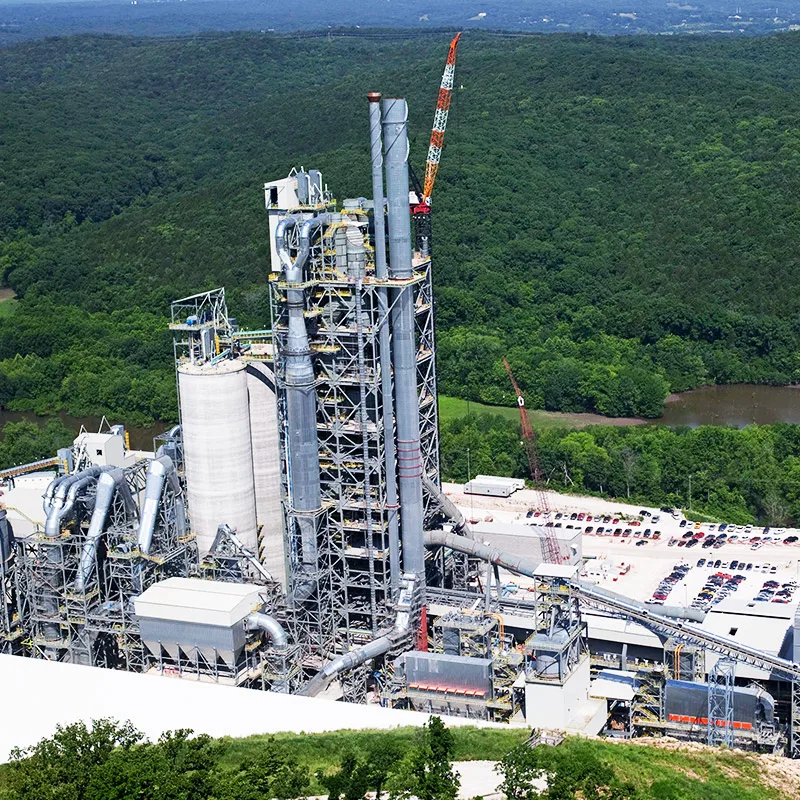
Portland cement production uses limestone and clay as the main raw materials, which are crushed, batched, and grinded into raw material by raw mill, and then fed into cement rotary kiln for calcination to become clinker, and then add appropriate amount of gypsum to the clinker, add some mixed materials or additives, and grind it into cement by cement ball mill, and then transported out of the factory by a packaging machine or a bulk machine.

At present, cement plants usually adopt the dry process cement production process, which dry and grind raw materials into raw materials at the same time and feed them into a dry rotary kiln for calcining become clinker. The main advantage of dry production is the low heat consumption.

(1) Raw Material Crushing & Conveying

(2) Raw Material Batching & Grinding

(3) Clinker Calcinations & Cooling

(4) Cement Dosing & Grinding

(5) Cement Packing & Conveying


Product Paramenters


No.
Workshop name
Main equipment
Work plan
Quantity
1
Limestone crushing
Single-Stage Hammer Crusher
Feeding size: <600mm
Capacity: 120t/h
Discharging size: 90% <25mm
6d/w×7h/d
1
2
Mixed material crushing
High-Efficiency Crusher
Feeding size: <215mm
Capacity: 50t/h
Discharging size: 90% <20mm
1d/w×7h/d
2
3
Raw material grinding
Ball Mill
Feeding size:≤25mm
Finished fineness:Feeding moisture:≤ 8%
Finished moisture:<1%
Capacity: 50 t/h
7d/w×20h/d
1
4
Clinker calcination
Rotary Kiln
Heat consumption: ≤950kCal/kg
Capacity: 800t/d(33.3t/h)
Power: 220kW
Fuel: gas
7d/w×24h/d
1
5
Cement grinding
Cement Mill
Feeding size:≤20mm
Finished fineness:Capacity: 45 t/h PC32.5
Power: 1600kw
7d/w×22h/d
1
6
Cement packing
Rotary Packing Machine
Capacity: 100t/h
With cement bulk machine
6d/w×12h/d
1


Product delivery


Project Cases


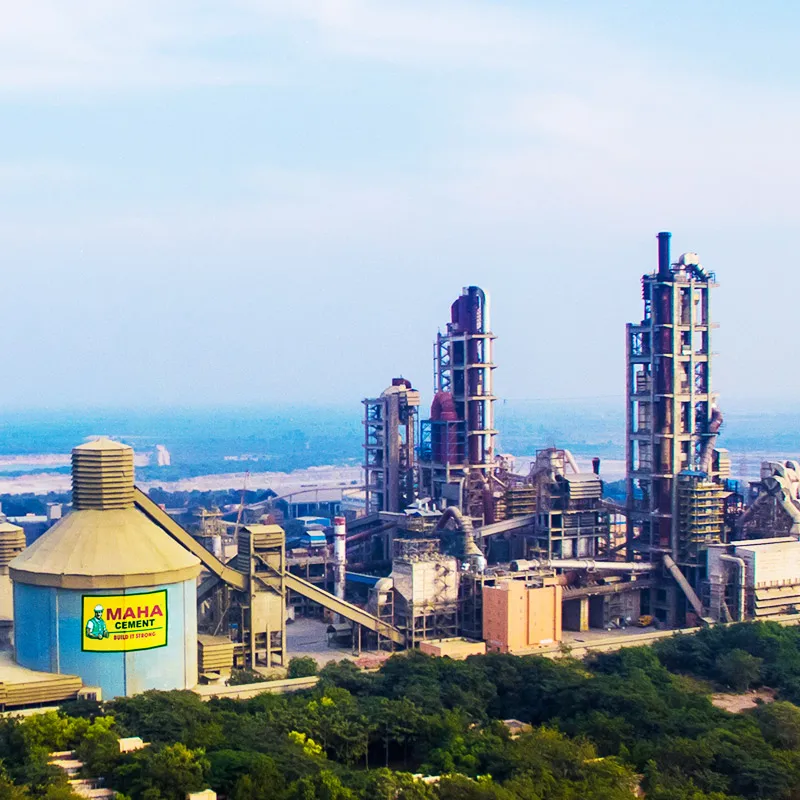
1000 TPD Factory Supply Turnkey Portland Cement Plant of Pakistan
Country: Pakistan
Production Capacity: 1000TPD
Production Type: Portland Cement Plant


Company Profile


Henan Turui Machinery Co., Ltd is a professional manufacturer of different mining machinery. It integrates the design, research,production, sales and installation together, guaranteeing the reliable and stable quality.

Its main products includes calcining equipment, ore dressing equipment, crushing and screening equipment, drying and cooling equipment, and grinding equipment. There are more than hundred of customers using our products all over the world, such as in south-east Asia, south-Asia, middle Asia, middle-east area, Africa, Australia, South America. The company covers an area of 40,000 square meters, building area of 10,000 spare meters. There are more than forty sets of boring-milling machine, gear hobbling machine, vertical lathe, and travelling crane at the workshop.

Now the company has more than one hundred employees, including 8 professional engineers. Seventy-five percent of the employees have participated the professional technical training, which makes sure high-efficient pre-sales and after-sale service.


Why Choose Us


Choosing a reliable supplier is halfway to a robust cement grinding plant. And Turui Machinery is the right supplier you are looking for.
1. 1.Turui can provide a custom-design solution to cement manufacturing for every client.
2. 2.Turui can provide perfect after-sales service, which covers equipment installation, operation, production, and maintenance. And we will send technicians for guidance and training until customers are satisfied.
3. 3.Turui can provide cement grinding plants at factory prices.
4. 4.Cement production starts up in three to six months.
5. 5.All types of cement are possible.


Похожие товары

Новые поступления

Новинки товаров от производителей по оптовым ценам