





Китайский прокурор хорошая служба права в Китае письмо прокурора
- Категория: Юридические услуги >>>
- Поставщик: Shanghai Jiuhui Law Firm
Сохранить в закладки 50019086871:
Описание и отзывы
Характеристики
About us
Shanghai Jiuhui Law Firm is a reputable law firm which was organized under the laws of China and was licensed to provide legal and consulting services in China. We are consistently recognized as a premier law practice for clients in and out of China. With more than 20 years of practicing law in China, our legal teams have an in-depth understanding and knowledge of China legal culture and market dynamics.
We have an affinity for the complex and an aptitude to simplify. We always have an involvement in client's industry approach and suggest practical insightful business and individual solutions. Our mission is partnering with clients to achieve cost effectiveness, timely delivery of optimal effective solutions, integrity and personal responsibility. We listen to our clients and work with them to determine the right solution at the right time so clients are assured of the best advice and terms available for each individual circumstance.
Our legal teams have served the clients in and out of China since 1990s. We have advised on some significant investments, international trades, real estate projects, arbitrations, litigations and individual needs to date. The expertise we have allows us to place ourselves at your full disposal to offer our advisory services in China, to suggest the best path to lead you to the best solutions for any challenge in your business and life.
We have established branches in Beijing, Shanghai, Guangzhou and Shenzhen, and our national presence could help satisfy your needs all around China. In addition, our services are linked with auditing and accounting services by prestigious accouting firms in China, which can ensure that your businesses in China go smoothly and comply with all statutory and accounting standards.
To find out more about how we can help your business move forward or help meet your personal needs, please call us at +86 18501760036
Our Services
Our services are list as below, which we will explain them with detail as following:
Business Setup
Company Information
Chinese Contract
International Trade
Trademark Registration
IP Protection
Merger & Acquisition
Litigation
Arbitration
Other Services
China Business Setup
The staff with Shanghai Jiuhui Law Firm have extensive experience with the entire spectrum of business entities in China, from simple Representative Offices to more complex Foreign Invested Enterprises such as Wholly Foreign Owned Enterprises (WFOEs) and Joint Ventures (JVs). We have served hundreds of clients from more than 30 countries in virtually every industry sector.
Our consultants have developed an extensive network of local connections to expedite business registration projects and to negotiate for favorable incentives for large Foreign Direct Investment (FDI) projects.
Shanghai Jiuhui Law Firm also provides a wide range of business support services tailored to the needs of Representative Offices and newly established foreign invested companies in China, including accounting services and regulatory compliance assistance.
Registering a foreign company in China is complex as it involves approval from multiple local authorities and bureaus. Our extensive network of local government bureaus contacts, knowledge of local regulations and experience with hundreds of projects already executed can help you accelerate your entry and growth in China.
Foreign companies that engage in business operations in China are required to pay taxes according to the local tax laws. The most commonly used forms of business for foreign companies are the Representative Office (Rep. Office) and the Limited Liability Company (LLC). The most important tax categories for these forms of businesses are corporate income tax and business tax, which is being transitioned to a new value-added tax (VAT) system, as well as the value-added tax (VAT) for manufacturing, wholesale, retail, and trade.
We assist our clients with their China projects regardless of which stage of development they are in – researching the business environment, entering the market or are already growing their business within China. We are committed to guiding our clients through the challenges of achieving their goals by not only keeping them abreast of current trends but also anticipating how those trends may impact the market they are in. We customize our approach according to our clients' specific needs.
Our main priority is to provide high-quality services to maximize our clients' potential for long-term success within China. Our mission is to provide the best solutions for our clients' China market entry & growth needs and to become the partner of choice for companies and organizations doing business in China.
Company Information
I have ever handled so many fraudulent trading cases in which the foreign partners have all been defrauded or scammed by the Chinese partners. The reason is all the same that the foreign partners failed to conduct background check on reliabilities of the Chinese partners, which could have been easily done before the transactions.
The company information from Shanghai Jiuhui Law Firm can be geared to meet a range of specific criteria, if you are seeking to buy from China or sell to Chinese buyers, sourcing manufacturing capacity in China for your products, looking to invest in Chinese business or looking for reliable Chinese business partners.
Shanghai Jiuhui Law Firm can deliver a highly cost effective solution to the problems of getting behind glossy presentation and cultural confusion to see the real quality and position of a Chinese business. The staffs with Shanghai Jiuhui Law Firm have more than 20 years' experience in China company research, investigation and commercial analysis sector. They bring experience and knowledge to the presentation of China company information.
Shanghai Jiuhui Law Firm can research and report on any company in China to the depth required. Chinese company information and assessment is structured in sections, each with its own price and each purchasable individually. You can buy any level of company information from simple registration searches (confirming that a company is legally incorporated) to detailed and in-depth profiles. Information from which selection can be made includes: Corporate Details, including export license details, Business Operations, History, Strategic/Political factors, International connections, Financial Status, Reputation, Rating and Overall Assessment.
Our research facilities in Beijing, Shanghai, Guangzhou, Shenzhen, Chengdu, Wuhan and other major cities in China are well-established businesses. They combine an extensive and painstakingly constructed contact network across China with the China company registration authorities, with good experience in 'live' company research through identifying and interviewing knowledgeable individuals concerning any company. This latter capacity is essential in an environment where even data formally collected by the local authorities may not always be entirely trustworthy.
Chinese Contract Review
In many business situations there comes a time when a relationship or transaction needs to be set down in writing. Contracts are an integral part of business relationships throughout the world. This is no less true in China. Chinese contracts are drafted everyday for many different purposes. A main hindrance to the foreigner doing business in China is the inability to read a contract he is expected to sign. Even if a translation of a China contract is produced, the contract is sill written in legal terms. And complex legal minutia can fill many of the pages of a China contract. For this reason, it is often advisable to retain legal counsel that is fluent in Chinese, English, and legal terminology in both languages.
At Shanghai Jiuhui Law Firm, we can produce a Chinese to English translation of a proposed contract. This translation will be carried out or modified by a China lawyer with a fluent knowledge of English. By doing this, the rights and interest of our client will be best guarded. Possible issues that they would be on the lookout for in a contract between a Chinese and a foreigner would be conflicts of law issues between China and another jurisdiction, unequal rights between the two parties, and possible legal ambiguities that could lead to unnecessary litigation in the future. These are just a few of the issues to look out for regarding Chinese contracts.
People in or out of China may sign property leases, vehicle and equipment leases, advertising agreements, web site development and maintenance agreements, banking documents and numerous other contracts in the usual course of business. Retaining a China lawyer can make these contracts simple and easily understandable. The China lawyer may help you with the clauses like negotiating the terms, identifying the parties, completing all blanks, allocating risk, indemnification provisions, warranties, representations, events of default, rights and responsibilities, remedies provisions and so on.
It is always wise to have a competent legal professional review any document before signature. This is true especially in China where a Chinese contract is written in Chinese script. Failure to retain competent legal advice before signing a Chinese contract could lead to unforeseen legal consequences befalling the foreign businessman in China. Please contact Shanghai Jiuhui Law Firm today for more information about Chinese contract review.
International Trade in China
The staff with Shanghai Jiuhui Law Firm have a strong history of advising clients on customs matters, WTO, international trade regulations, import and export controls on strategic commodities and technologies, and on supply chain operations across Greater China.
Our International Trade Group comprises lawyers, former trade officials and former customs officials based in China and Hong Kong who can offer advice on a comprehensive range of regulatory, customs and tax issues relating to trade, sourcing, contract manufacturing, wholesale and retail distribution, franchising, direct sales, after-sales and reverse logistics operations in the Greater China region.
We also advise on a wide range of WTO issues such as optimizing cross-border trade in goods and services through regional and bilateral free trade agreements, import and export controls on strategic goods and technologies, trade sanctions and local legislation compliance with WTO commitments.
We regularly assist clients in investigations and audits by customs authorities and export control authorities across Greater China. We can help clients with matters relating to smuggling, licensing violations and foreign exchange controls violations, as well as the application of anti-corruption laws.
We understand the challenges of the global economy because we have been at the forefront of its evolution. We have cultivated the culture, commercial pragmatism and technical and interpersonal skills required to deliver world-class service tailored to the preferences of world-class clients worldwide.
We have the deep roots and knowledge of the language and culture of business required to address the nuances of local markets worldwide. And our culture of friendship and broad scope of practice enable us to navigate complexity across issues, practices and borders with ease. Our team is commercially focused and results-driven, and works closely with clients to leverage synergies and provide legal advice that is tailored, innovative and practical.
Clients need to provide the following materials for trademark registration in China:
- A simple power of attorney executed by the applicant, no notarization is required.
- A soft copy of the trademark. Four black and white prints as well as fifteen color prints are required when a trademark is in color.
- A detailed list of products or services to be covered in the application.
- A copy of Certificate of Incorporation or Business Registration Certificate or anything of similar nature which shows the name and address of the applicant.
- A Chinese translation of the applicant's name should be provided where available especially where the name of the applicant incorporates its trademark for which a Chinese translation already exists.
- One copy of certificate issued by competent authorities authorizing manufacture in the home country in the case of a trademark covering pharmaceutical products for human use. A certificate of the Chamber of Commerce of the home country is sufficient.
- A priority document when priority is claimed. The document can be filed within 3 months after the filing date of the application.
Step by Step Procedures for Trademark Registration in China:
- Step 1: Clients send to us(by email or fax or post) a specimen of the trademark, a detailed list of products to be covered by the trademark and at the same time make payment for the pre-filing search to us by remittance;
- Step 2: We conduct the pre-filing search and prepare search report and email the search reports to clients;
- Step 3: (If the search results indicate that the application is likely to be accepted and clients decide to proceed) Clients send us the Photostat copy of identity proof (passport copy for individual and Certificate of Incorporation or Business Registration License) and at the same time make payment for the pre-filing search to us by remittance;
- Step 4: We prepare the registration application forms and Power of Attorney and deliver them to clients for execution;
- Step 5: Clients send the duly executed and registration forms back to us;
- Step 6: We submit the application documents to the Trademark Registration Bureau;
- Step 7: The Trademark Registration Bureau perform examination and other procedures; if no objection received, the Trademark Registration Bureau then issues the Certificate of Registration;
- Step 8: We forward the Certificate of Registration to clients.
Time Scale for Trademark Registration in China: Currently it is taking approximately 24 months to get a trademark in China.
Period of Protection for Trademarks in China: 10 years.
IP Right Protection
CHINA'S CURRENT IP RIGHT ENVIRONMENT
Since joining the World Trade Organization (WTO), China has strengthened its legal framework and amended its IPR and related laws and regulations to comply with the WTO Agreement on Traded-Related Aspect of Intellectual Property Rights (TRIPs). Despite stronger statutory protection, China continues to be a haven for counterfeiters and pirates. According to one copyright industry association, the piracy rate remains one of the highest in the world and foreign companies lose over one billion dollar in legitimate business each year to piracy. On average, 20 percent of all consumer products in the Chinese market are counterfeit. If a product sells, it is likely to be illegally duplicated. U.S. companies are not alone, as pirates and counterfeiters target both foreign and domestic companies. Though Chinese governments have given commitments to tackle the problem, enforcement measures taken to date have not been sufficient to deter massive IPR infringements effectively.
THE BEST PROTECTION IS PREVENTION
Though China is a party to international agreements to protect intellectual property (including WIPO, Bern Convention, Paris Convention, among others), a company must register its patents and trademarks with the appropriate Chinese agencies and authorities for those rights to be enforceable in China. Copyrights do not need to be registered but registration may be helpful in enforcement actions. China has mended many times its Patent Law to extend the scope of protection. To comply with TRIPs, China Patent Law extended the duration of patent protection to 20 years from the date of filing a patent application. Chemical and pharmaceutical products, as well as food, beverages, and flavorings are all patentable. China follows a first to file system for patents, which means patents are granted to those that file first even if the filers are not the original inventors. This system is unlike the United States, which recognizes the "first to invent" rule, but is consistent with the practice in other parts of the world, including the European Union. Under China's patent law, a foreign patent application files by a person or firm without a business office in China must apply through an authorized patent agent, while initial preparation may be done by anyone.
CHINA'S IP RIGHT ENFORCEMENT SYSTEM
Protection of IP in China follows a two-track system. The first and most prevalent is the administrative track, whereby an IP rights holder files a complaint at the local administrative office. The second is the judicial track, whereby complaints are filed through the court system. (China has established specialized IP panels in its civil court system throughout the country.) Determining which IP agency has jurisdiction over an act of infringement can be confusing. Jurisdiction of IP protection is diffused throughout a number of government agencies and offices, with each typically responsible for the protection afforded by one statute or one specific area of IP-related law. There may be geographical limits or conflicts posed by one administrative agency taking a case, involving piracy or counterfeiting that also occurs in another region. China's courts also have rules regarding jurisdiction over infringing or counterfeit activities, and the scope of potential orders.
Though companies are finding commercial opportunities in China, there are many potential pitfalls companies should be aware of, including issues related to the protection of intellectual property. It is strongly advised to consult a China IP lawyer if you have any IP issue with your business in China.
Merger & Acquistion
Establishing Presence in China through Merger and Acquisition
On a global basis, mergers and acquisitions (M&A) were the prevalent method through which multinationals conducted foreign investment, previously, 'green field' investments were virtually the only option available to foreign investors in China. However, this appears to have changed dramatically over the past ten years, with the Chinese Government having introduced and consolidated various laws and regulations since 2002, with the intention of stimulating M&A related activity.
The robust growth of China's economy and its further liberalization of the domestic market after its accession to the World Trade Organization have worked together to fuel the accelerated pace of M&A activity in recent years. Statistics shows that China-related M&A transactions rose 50% in 2004 over the previous year. High profile foreign acquisitions include HSBC's US $1.74 billion acquisition of a 19.9% stake in the Bank of Communications and Anheuser-Busch's US $600 million acquisition of Harbin Brewery Group. It is foreseeable that M&A activity, which offers foreign investors a more immediate method of entering the China market as opposed to 'green field' investment, will continue to boom in China in the years to come.
Suppose a US-based company 'ABC Co.' has preliminarily identified an ideal target company in China, which it intends to acquire. Before proceeding to conduct an in-depth financial assessment and structure the prospective acquisition, it is advisable to take the following into consideration: 1. M&A transactions in China require examination and approval by Chinese government agencies. 2. The sectoral restrictions applicable to 'green field' investment in China are also applicable to foreign-related M&A transactions. 3. Ascertaining the nature and desirable businesses of the target is essential to structuring the M&A transaction.
Due to the general lack of transparency or proper regulations in China, many Chinese companies may have certain irregularities incurred somewhere/sometime in the course of its business. It is imperative that a foreign investor resolve any irregularities before entering into the transaction. Therefore, conducting a legal due diligence exercise is often just as important as conducting a financial due diligence to determine the viability of the target company in a merger and acquisition deal.
Litigation
Do foreigners in China enjoy the same litigation rights as Chinese?
Yes, they do. Aliens, stateless persons, foreign enterprises and organizations that bring suits or enter appearance in the courts shall have the same litigation rights and obligations as citizens, legal persons and other organizations of China. If the courts of a foreign country impose restrictions on the civil litigation rights of the citizens, legal persons and other organizations of China, the courts of China shall follow the principle of reciprocity regarding the civil litigation rights of the citizens, enterprises and organizations of that foreign country.
Can foreigners apply for property preservation with China courts?
Yes, they can. In the cases where the execution of a judgment may become impossible or difficult as a result of the acts by either party or for other reasons, the court may, at the application of the other party, order the adoption of measures for property preservation. In adopting property preservation measures, the court may enjoin the applicant to provide security; if the applicant fails to do so, his application shall be rejected. After receiving an application, the court must, if the case is urgent, make an order within 48 hours; if the order for the adoption of property preservation measures is made, the execution thereof shall begin immediately.
Any interested party whose lawful rights and interests would, due to urgent circumstances, suffer irretrievable damage without immediately applying for property preservation, may, before filing a lawsuit, apply to the court for the adoption of property preservation measures. The applicant must provide security; if he fails to do so, his application shall be rejected. After receiving an application, the court must make an order within 48 hours; if the court orders the adoption of property preservation measures, the execution thereof shall begin immediately.
How long does the litigation case last in China?
A court trying a case in which the ordinary procedure is followed, shall conclude the case within six months from the date of docketing the case. Where an extension of the period is necessary under special circumstances, a six-month extension may be allowed subject to the approval of the president of the court. Further extension, if needed, shall be reported to the court at a higher level for approval. The court trying a case in which summary procedure is followed shall conclude the case within three months from the date of placing the case on the docket. The summary procedure may be shifted to the ordinary procedure if necessary. The actual time period for the foreign-related litigation may be longer than the time mentioned above.
How can foreigners participate in the litigation in China?
The court shall conduct trials of civil cases involving foreign element in the spoken and written language commonly used in China. Translation may be provided at the request of the parties concerned, and the expenses shall be borne by them. When foreign nationals, stateless persons or foreign enterprises and organizations need lawyers as agents ad litem to bring an action or enter appearance on their behalf in the court, they must appoint lawyers of China.
Any power of attorney mailed or forwarded by other means from outside the territory of China by a foreign national, stateless person or a foreign enterprise and organization that has no domicile in China for the appointment of a lawyer or any other person of China as an agent ad litem must be notarized by a notary office in the country of domicile and authenticated by the Chinese embassy or consulate accredited to that country or, for the purpose of verification, must go through the formalities stipulated in the relevant bilateral treaties between China and that country before it becomes effective.
Aribitration
What are the requirements for the arbitration in China?
The arbitration is an alternative form of dispute resolution where, rather than using the public court system, the parties' dispute is heard before a private arbitrator. The parties' submission to arbitration to resolve their dispute shall be on the basis of both parties' free will and an arbitration agreement reached between them. If a party applies for arbitration in the absence of an arbitration agreement, the arbitration commission shall not accept the case. If the parties have concluded an arbitration agreement and one party institutes an action in a people's court, the people's court shall not accept the case, unless the arbitration agreement is null and void.
In accordance with China's Arbitration Law, the following disputes cannot be put to arbitration: a. Disputes arising from marriage, adoption, guardianship, bringing up of children and inheritance; and b. Disputes that have been stipulated by law to be settled by administrative organs.
What are the key differences between the arbitration and the litigation in China?
Some of the key differences between these two forms of dispute resolution are as follows: a. In respect of arbitration, the parties have the right to take appointment an arbitrator from the selected list. While for the litigation, judges are appointed by the state and cannot be designated by the parties. b. In respect of arbitration, the parties concerned have the right to choose the arbitration body, the arbitration rules applied and the arbitration location, while the litigation procedure must be strictly in accordance with the law and the regulations. c. In principle, the arbitration hearing is not open and the decisions/judgments are not made publicly available. Civil cases adjudicated by people's courts shall usually be heard publicly, except for the cases that involve state secrets or the private affairs of individuals, or are otherwise provided by law. A divorce case or a case involving trade secrets may not be heard publicly if a party so requests. People's courts shall publicly pronounce their judgments in all cases regardless if the cases were tried publicly or privately. d. Generally speaking, an arbitration award is final. After the award is given, the arbitration commission or the People's Courts shall not accept the re- application of the suit concerning the same dispute by any of the parties concerned. e. In trying civil cases, the People's Courts shall, according to the provisions of the law, follow the systems of panel hearing, withdrawal, public trial and the court of second instance being that of last instance.
Which is better for foreigners: litigation or arbitration?
Generally speaking, litigation is not a poorer option as a dispute resolution mechanism compared with the arbitration. The main problem with litigation is that the process, whilst improving, is still more susceptible than it ought to be to improper influence and to the risks of incompetent adjudication. In addition, where "foreign elements" are involved, a Court is not required to complete the adjudication of a case within a specified time. That does not mean that the time period for handling foreign-related civil cases can be delayed indefinitely. But normally the time period of litigation is longer than arbitration.
The single biggest advantage of arbitration is that it is far easier to enforce arbitral award in foreign countries than it is to enforce court judgments. To the best of the authors' knowledge few Chinese judgments have ever been registered as a judgment in foreign countries and vice versa.
Other services
Shanghai Jiuhui Law Firm also provide the legal services about the following items:
FDI in China;
Sell a Business;
Invest in a Business;
Shareholder Documents;
Partnership Documents;
Contract Drafting & Negotiation;
Employment and Severance Agreements;
Company liquidation and dissolution;
Lease Review and Preparation;
Personalized Estate Planning;
Last Will and Testament and Probate;
Trusts;
Bankruptcy;
Personal Injury;
Medical Malpractice;
Product liability
Criminal Defense
Getting Married
Inheritance
Getting Devorced
If you need further information about our legal services, please feel free to contact us with +86 18501760036. We will respond as soon as possible.
Похожие товары
Правовые услуги, предоставляемые профессиональными юристами в Китае

Правовые услуги для бизнеса Россия

Китайский ювер предлагает правовые услуги для открытия споров по торговле и бизнесу
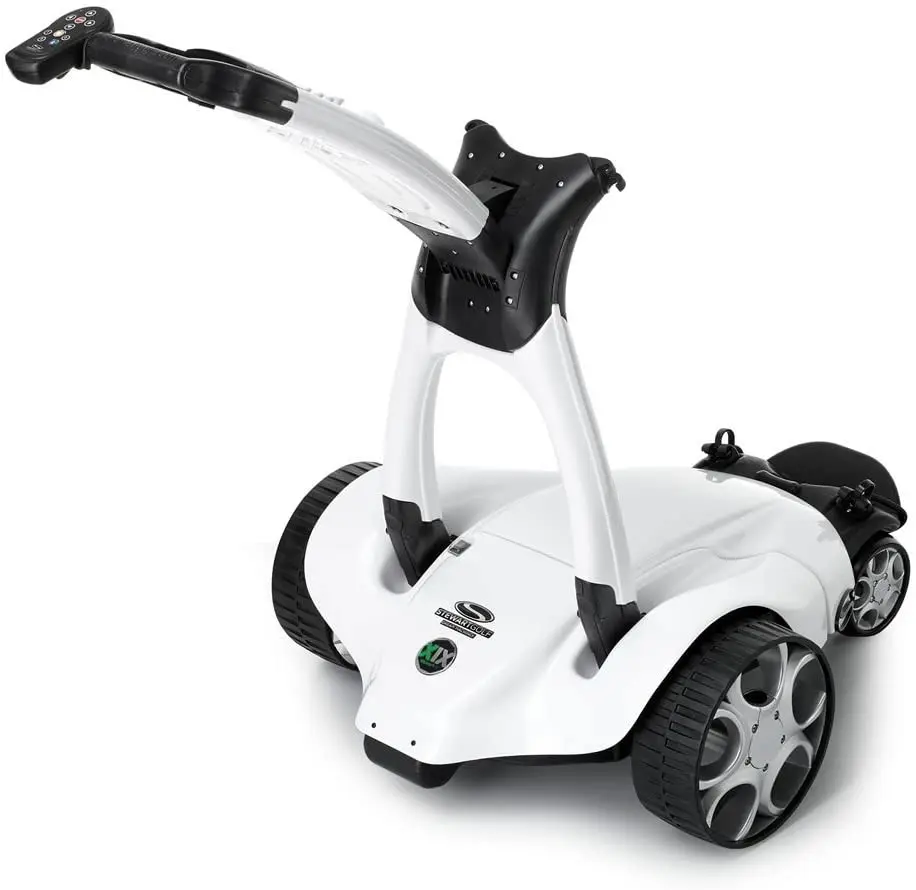
Высококачественные электрические тележки Stewarts Golf X9

Управление дебицией, правовая служба китайского юриста
800,00 $

Правовые услуги, базирующиеся в США-Артур дельонг в Эйзенхауэре Карлсоне PLLC
400,00 $

Подача претензии в случае любых внутренних торговых сделок от имени клиента (продавец/покупатель; Грузополучатель)
Новые поступления
Новинки товаров от производителей по оптовым ценам
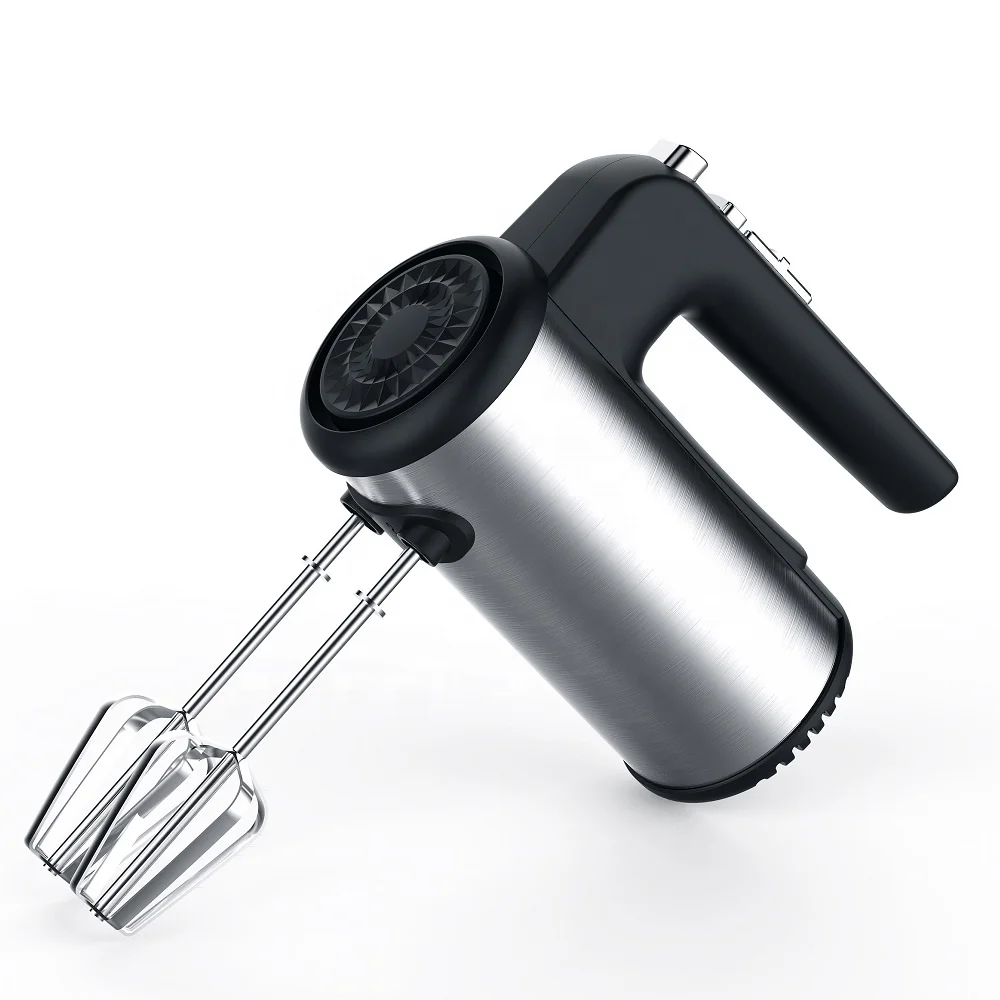
300 Вт безопасный для посудомоечной машины 5-скоростной турбо с крючками для теста, венчик, электрический ручной миксер
571,11-666,30 ₽

Медицинский портативный прибор для гемодиализа катетер и кровообращения диализа почек ухода за здоровьем
Многофункциональная роскошная водонепроницаемая палатка из брезента для кемпинга однокомнатная всесезонная с настраиваемым размером новый стиль рынка Ближнего Востока
45 688,76-56 159,10 ₽

Санитарно-гигиеническое сиденье для
Счетчик купюр с низким уровнем шума на тонкопленочных транзисторах, автоматическое определение разных валют, 4,2 дюйма
50 448-52 351,70 ₽

Ожерелье из нержавеющей стали изящное ожерелье с чакрами на заказ модное позолоченное ювелирное изделие водонепроницаемой подвеской без
121,84-217,03 ₽

Мужские спортивные кроссовки с логотипом
856,67-999,45 ₽
OEM ODM, настоящее изобретение, персонализированный прямой автоматический открытый пользовательский логотип, рекламный зонт для гольфа с логотипом для отелей
842,39-938,53 ₽