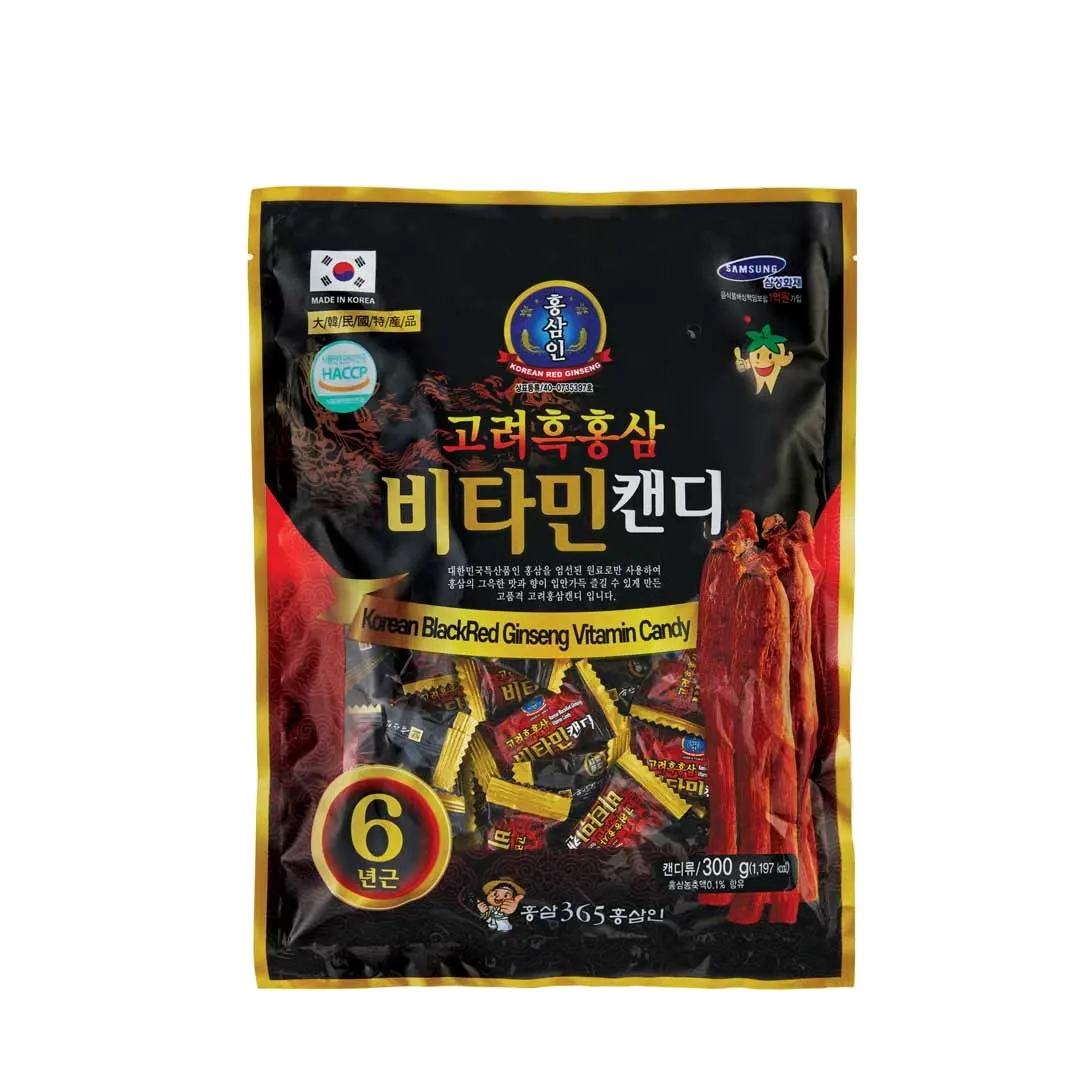
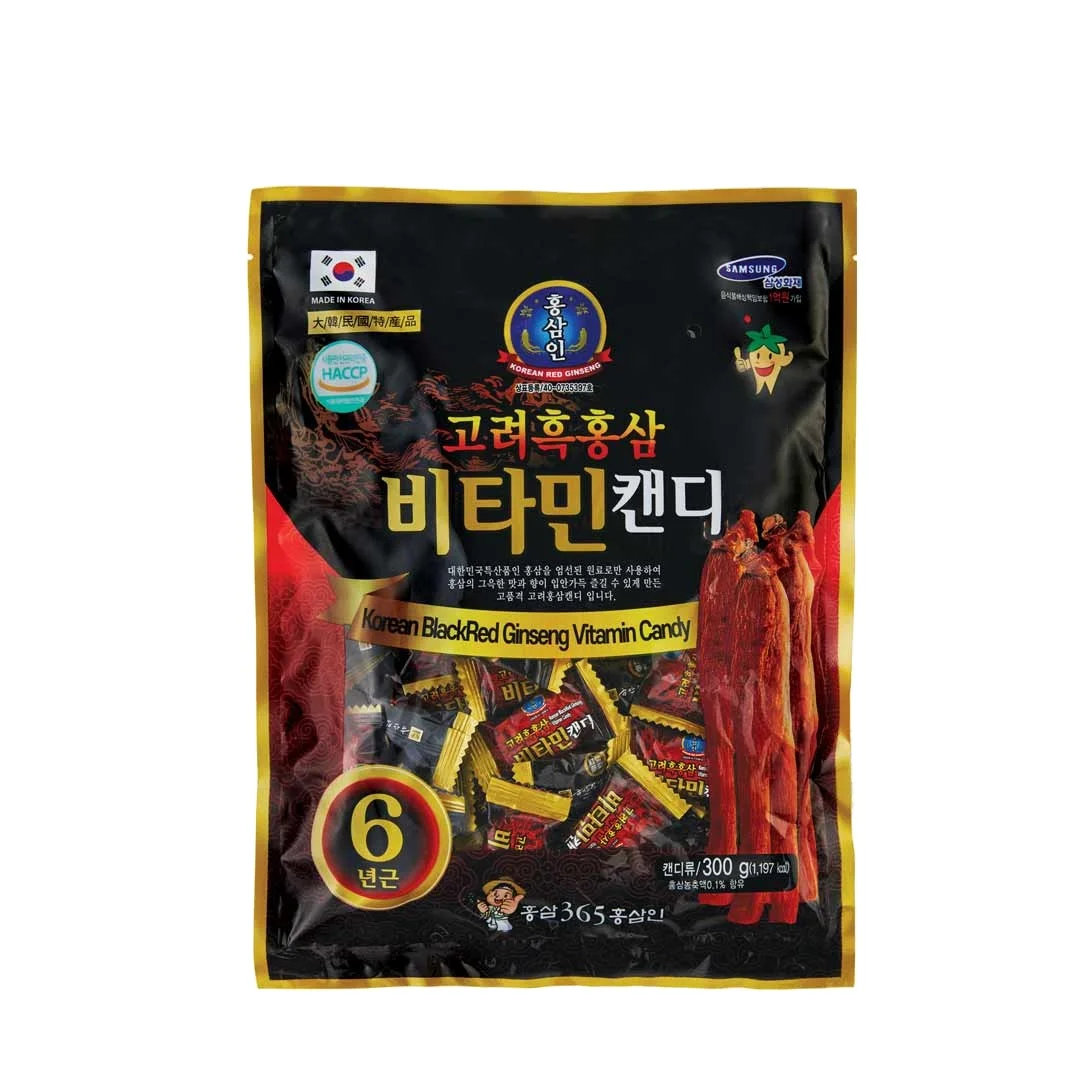
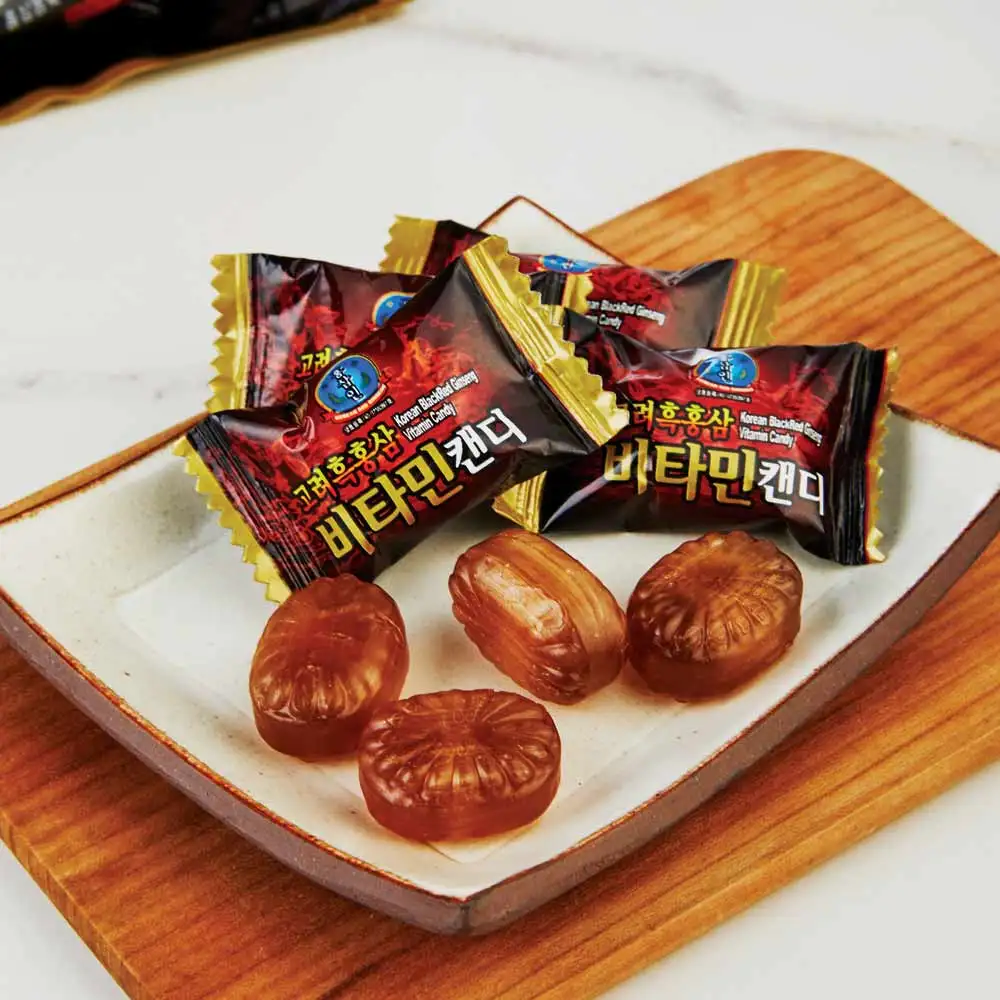
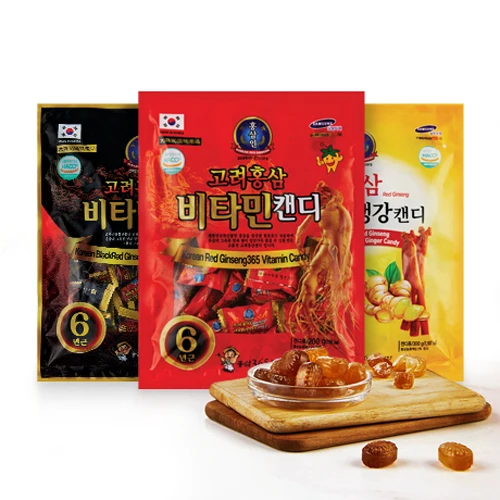
Korea Geumsan Vitamin 6 Year Panax Black Ginseng Root Extract Containing Candy (300g Bag)
- Category: Tablet Candies >>>
- Supplier: KOREA GINSENG ASSOCIATION
Share on (10000004323855):
Product Overview
Description
Produced in Korea Direct supply by Famers Cooperative

All Members of The Geumsan Ginseng Cooperative
Products Description


HS Code | 1704.90-9000 |
Brand Name | Korea Black Ginseng Vitamin Candy |
Weight | 300g/bag |
Type | Extract Candy |
Order Unit | 1 Carton Box |
Minimum Order Quantity | 1 Carton Box |
Certificate | ISO9001, ISO22000 |
Shelf Time | 2 years after production date |
Payment Terms | T/T, Irrevocable L/C, Western Union, Moneygram, Papal |
Price Terms | FOB Busan Port / Incheon Airport |
Shipment Period | Shipment will be completed within 15 days after Balance Payment |
Departing Port | Busan Port or Incheon Port (Ocean Freight), Incheon Airport(Air Freight) |
Benefits Of Ginseng
Boosting Stamina
Ginseng relieves fatigue by boosting energy in, both, the mind and body.
Supporting Metabolism and the Circulatory System
Ginseng is said to help to improve specific metabolic functions and even support the growth of the body by boosting blood
formation and helping to regulate blood circulation. By increasing blood formation and circulation, ginseng helps improve the
functions of lung and spleen.
Calming the Nerves
Ginseng helps strengthen the functions of the heart by relaxing one's mind and calming mental instability, supporting the body's natural defenses against stress. By acting to reduce stress and anxiety, general well-being and mental health are improved. Supporting General Well-Being As the body is an integrated system of organs, ginseng is said to contribute to total bodily health by supporting the functions of the lungs, spleen, and stomach as well as the blood and circulatory system.
Supporting Healthy Lung Functions
Ginseng helps lessen coughing by supporting normal lung functions and is said to be good for the lungs, helping to keep them strong.
Supporting the Spleen and Stomach
Ginseng improves one's appetite and helps prevent diarrhea by supporting healthy stomach functions.
Detoxification
Ginseng supports the natural removal of toxins in the body. It is said to help the bowels, and support intestinal immune system functions.
Ginseng relieves fatigue by boosting energy in, both, the mind and body.
Supporting Metabolism and the Circulatory System
Ginseng is said to help to improve specific metabolic functions and even support the growth of the body by boosting blood
formation and helping to regulate blood circulation. By increasing blood formation and circulation, ginseng helps improve the
functions of lung and spleen.
Calming the Nerves
Ginseng helps strengthen the functions of the heart by relaxing one's mind and calming mental instability, supporting the body's natural defenses against stress. By acting to reduce stress and anxiety, general well-being and mental health are improved. Supporting General Well-Being As the body is an integrated system of organs, ginseng is said to contribute to total bodily health by supporting the functions of the lungs, spleen, and stomach as well as the blood and circulatory system.
Supporting Healthy Lung Functions
Ginseng helps lessen coughing by supporting normal lung functions and is said to be good for the lungs, helping to keep them strong.
Supporting the Spleen and Stomach
Ginseng improves one's appetite and helps prevent diarrhea by supporting healthy stomach functions.
Detoxification
Ginseng supports the natural removal of toxins in the body. It is said to help the bowels, and support intestinal immune system functions.

Item | PCS per C/Box | Box Size(cm) | Weight(g) |
Korean Red Ginseng Extract Plus | 5boxes | 39x35.5x19.5 | 6,000g |
Korean Red Ginseng & Pomegranate Jelly | 6boxes | 21x42.5x47 | 8,200g |
Korean Sugar Free Red Ginseng Candy | 20bags | 50x32x21 | 11,000g |
Korean Red Ginseng Vitamin Candy | 40bags | 50x32x21 | 9,000g |
Korean Black Ginseng Vitamin Candy | 30bags | 50x32x21 | 13,000g |
Korean Ginger Vitamin Candy | 30bags | 50x32x21 | 13,000g |
Company Profile
Geumsan Ginseng Cooperative
Reasons for the steady stream of buyers from the world visiting Geumsan
Geumsan is the trading center for ginseng and red ginseng and it understands the value of ginseng and red ginseng with a 1500-year history. Geologically, it is equipped with clean nature, fertile soil, and pollution-free environment that enables the consistent cultivation and production of solid and high-quality ginseng.
Reasons for the steady stream of buyers from the world visiting Geumsan
Geumsan is the trading center for ginseng and red ginseng and it understands the value of ginseng and red ginseng with a 1500-year history. Geologically, it is equipped with clean nature, fertile soil, and pollution-free environment that enables the consistent cultivation and production of solid and high-quality ginseng.

Geumsan Ginseng Cooperative reaching the world
Geumsan Ginseng Cooperative consists of ginseng-related agricultural, manufacturing, and retail companies in Geumsan, Choong cheongnam-do, Korea. It is equipped with a one-stop system of ginseng cultivation, manufacturing, and distribution.
Through product shows held with consumer evaluators, the is consistently producing the highest-quality ginseng products in Korea.
Through product shows held with consumer evaluators, the is consistently producing the highest-quality ginseng products in Korea.
For that, it has been recognized not only in Korea but in the global market of 10 countries—USA, Canada, Germany, England,Austria, Australia, Japan, China, Taiwan, and Vietnam—and is spreading to the rest of the world by reaching one million dollars indirect export. Geumsan Ginseng Cooperative will create the joy of working together
One-stop system for ginseng cultivation to manufacturing and sales

Geumsan Ginseng Cooperative consists of ginseng-related agricultural, manufacturing, and retail companies in Geumsan,Choongcheongnm-do, Korea. It is equipped with a one-stop system of ginseng cultivation, manufacturing, and distribution, Throughproduct show held with consumer evaluators,
We are consistently producing the highest-quality ginseng products in Korea.
Clutivation > Production > Sales
Manufacturing Technique
Cutting edge one-stop production system
Specially designed scientific system and safe sanitary quality maximize
red ginseng's characteristic aroma, saponin nutritional content, etc.

Certifications

Ginseng cultivated and produced in Korea called “Korean ginseng,” also known as “Goryeo ginseng,” has long been noted for its excellent efficacy.
Its external appearance resembles the human body due to the thick and fleshy root, consisting of a top and main part that look like the head and torso of a human being, and the rootlets, which look like legs. Experts believe that the external
characteristics unique to Korean ginseng are owed to the excellent climatic and soil conditions and the advanced cultivation
method of Korea.For centuries, people in the East including Korea and China have used ginseng as a tonic herb to invigorate the body. It was given the scientific name, Panax ginseng C.A. Meyer, by Russian scientist C.A. Meyer in 1843 with “Panax” meaning “cure-all” to indicate that it can help treat all types of diseases and illnesses. The variety grown in Korea is considered the best of its kind, and it is known as Korean ginseng.
There are similar ginseng varieties cultivated in the U.S., Japan, China, and Russia, but they differ in terms of form and
composition. As for the taxonomic classification, Korean ginseng belongs to family Araliaceae, genus Panax, and species ginseng,and has the scientific name, Panax ginseng C.A. Meyer. There are 6 different species belonging to the genus, Panax.
Why Geumsan Ginseng is Best?
Geumsan Ginseng has the longest history in herbal medicine, inheriting the legacy down from Baekje ginseng, a top-notch species, Geumsan has a mountainous area, in which mountain terrain accounts for 72% of the total area, with a big difference in daily temperate range. Geumsan ginseng is nearest to wild ginseng in terms of climate and soil. Geumsan ginseng is rich in medicinal ingredients, including anti-cancer agents, while foreign counterparts are less in other ingredients than saponin.Geumsan Ginseng has an even level of saponin and is safe for everyone.
A global center of Korean ginseng production and a hub of ginseng marketplaces incl. the International Ginseng Market, fresh ginseng market and traditional ginseng marketCenter of ginseng production (80% of the local economy)
Its external appearance resembles the human body due to the thick and fleshy root, consisting of a top and main part that look like the head and torso of a human being, and the rootlets, which look like legs. Experts believe that the external
characteristics unique to Korean ginseng are owed to the excellent climatic and soil conditions and the advanced cultivation
method of Korea.For centuries, people in the East including Korea and China have used ginseng as a tonic herb to invigorate the body. It was given the scientific name, Panax ginseng C.A. Meyer, by Russian scientist C.A. Meyer in 1843 with “Panax” meaning “cure-all” to indicate that it can help treat all types of diseases and illnesses. The variety grown in Korea is considered the best of its kind, and it is known as Korean ginseng.
There are similar ginseng varieties cultivated in the U.S., Japan, China, and Russia, but they differ in terms of form and
composition. As for the taxonomic classification, Korean ginseng belongs to family Araliaceae, genus Panax, and species ginseng,and has the scientific name, Panax ginseng C.A. Meyer. There are 6 different species belonging to the genus, Panax.
Why Geumsan Ginseng is Best?
Geumsan Ginseng has the longest history in herbal medicine, inheriting the legacy down from Baekje ginseng, a top-notch species, Geumsan has a mountainous area, in which mountain terrain accounts for 72% of the total area, with a big difference in daily temperate range. Geumsan ginseng is nearest to wild ginseng in terms of climate and soil. Geumsan ginseng is rich in medicinal ingredients, including anti-cancer agents, while foreign counterparts are less in other ingredients than saponin.Geumsan Ginseng has an even level of saponin and is safe for everyone.
A global center of Korean ginseng production and a hub of ginseng marketplaces incl. the International Ginseng Market, fresh ginseng market and traditional ginseng marketCenter of ginseng production (80% of the local economy)


OEM Service
Professional OEM Service & Export Experience
Private Label, Complete OEM services
OEM experience of leading distributors Export Experience ( Japan, USA, Europe, China, Vietnam …)
We Recommend

Special soda fizzy candy Japanese kids snacks sweets traditional
JP uFFE526.25-uFFE530.00

Traditional refreshing taste and bubbles snack candy hard sweet
JP uFFE526.25-uFFE530.00
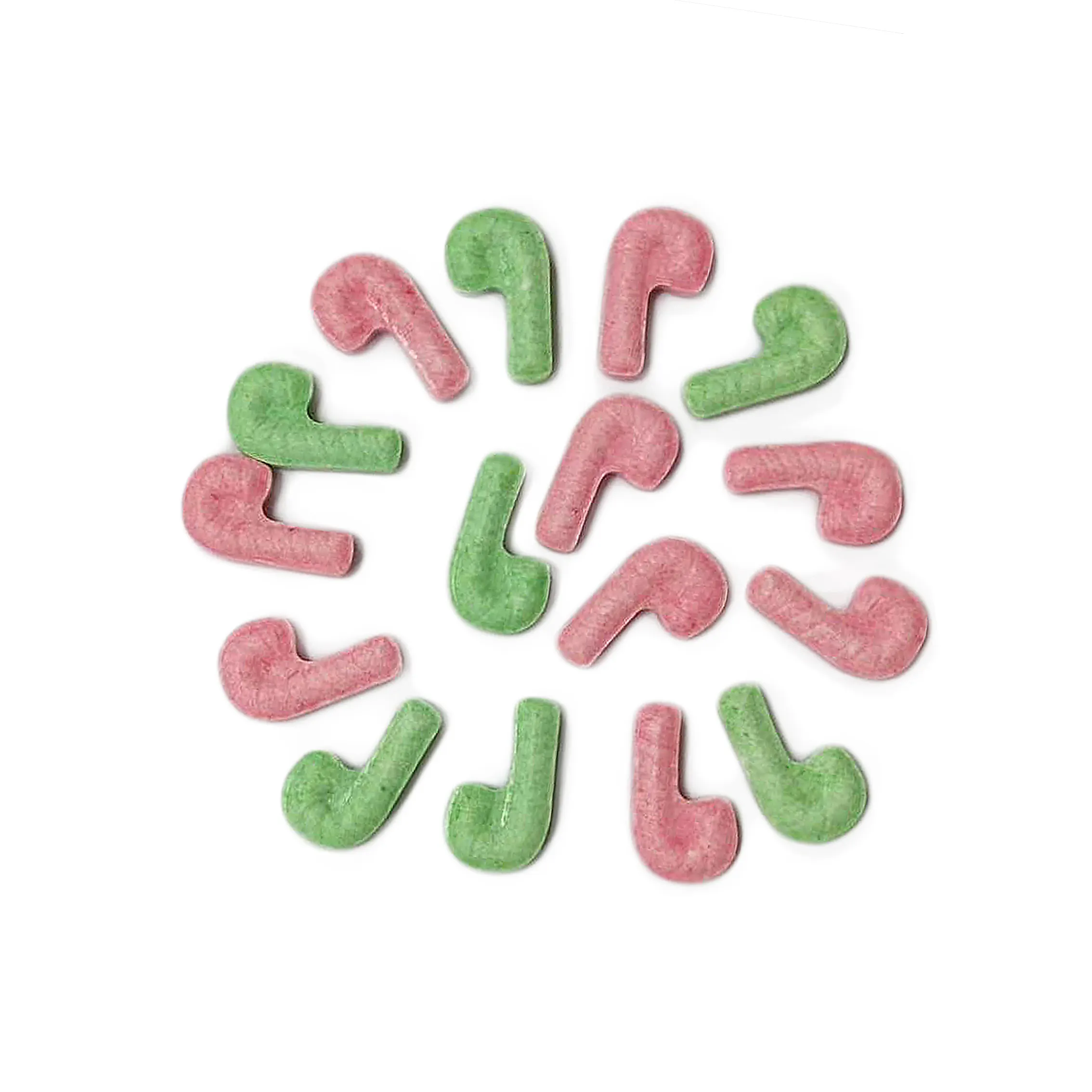
20g Candy Cane Press Candy In Tablet Crutch Candy
US $23.43-$24.92

Kids Colorful Plastic Sweet Fruit Butterfly Toy Confectionery Candy
US $18.50-$50.00

New Arrivals
New products from manufacturers at wholesale prices