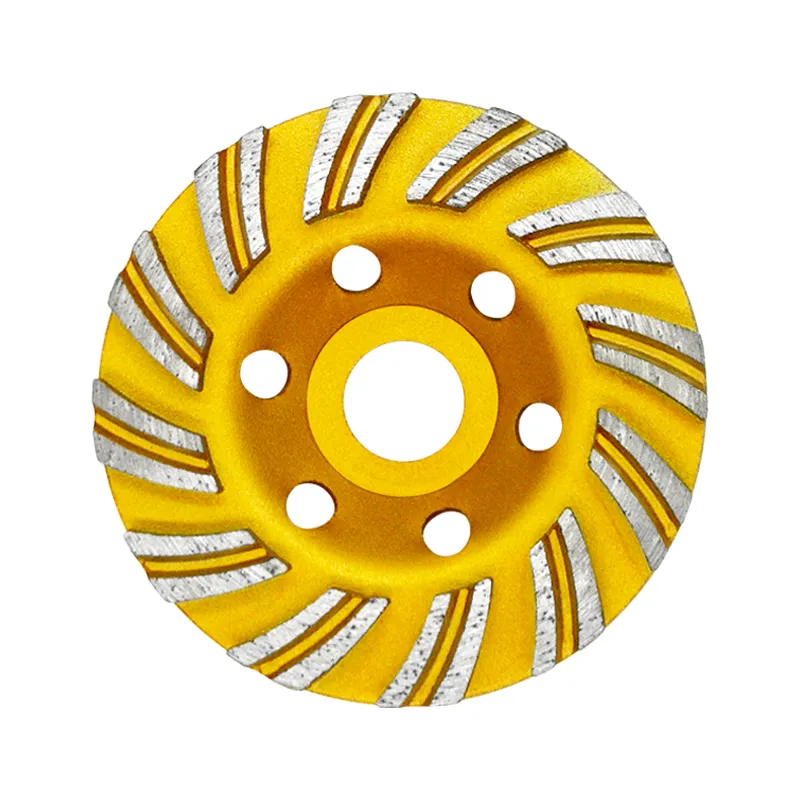
5" Superior Quality Skiful 115*1.0*22.2mm china cutting disc
US $0.10-$0.50
Share on (143872939):
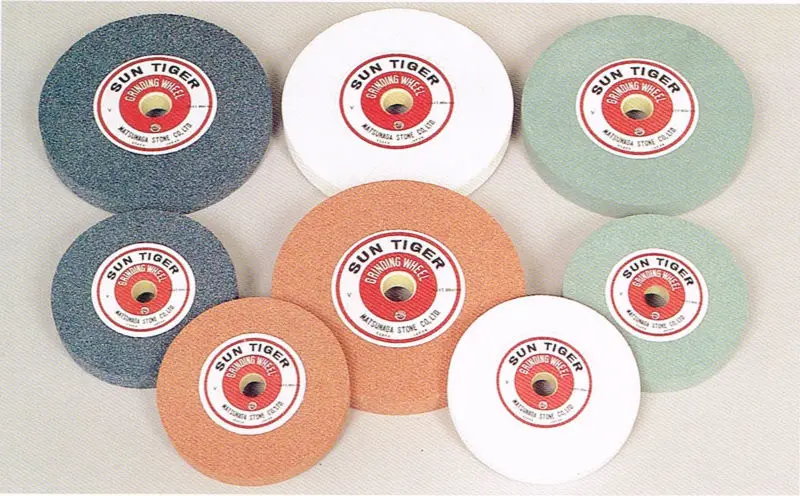
Wheel performance and operation are determined by five variable factors.
1. Type of Abrasive
2. Size of Abrasive
3. Grade of Hardness
4. Wheel Structure
5. Type of Bond
1. Type of Abrasive
A (Aluminum Oxide) abrasives are used for steel and other materials of high strength.
C (Silicon Carbide) abrasives for materials of low tensile strength and non-metallics such as glass, plastics, cast iron, building materials, etc.
2. Size of Abrasive
The selection of the right grain size for particular operation depends upon the finish desired. Where finish is not important, the rate of stock removal is the governing factor. The physical characteristics of the material to be ground affect the choice, since hard, brittle materials resist penetration and, consequently, the advantage of using coarse grain sizes is largely lost. Finer grain sizes are recommended for precision where extreme accuracy is required.
3. Grade of Hardness
The grade of hardness is defined as the measure of strength or degree of tenacity with which the abrasive grains are held in the wheel.
(a) The harder the material, the softer the grade. The softer the material, the harder the grade.
(b) Decreasing the wheel speed makes the wheel act “Softer”. The higher the work speed in relation to wheel speed, the harder the grade, and vice versa.
4. Wheel Structure
Close spacing (dense structures) for operations where the area of contact is small; for example, tool and cutter grinding, cylindrical and center-less operations. In general, use close spacing where the shape of the cutting face of the wheel must be maintained. Wide spacing (open structures) for grinding soft, ductile materials. Wide spacing is advantageous where the area of contact between the work and the wheel is broad, such as would be experienced in surface grinding.
5. Type of Bond
Resinoid Bond is a synthetic resin. The value of this bond lies in its great strength. Vitrified Bond is ceramic in nature, similar to glass or porcelain. Vitrified wheels are matured in accurately controlled kilns at temperatures from 2200F to 2400F. This process of bonding is adapted to the widest scope of grinding, both for fast stock removal and all classes of precision grinding.
New products from manufacturers at wholesale prices