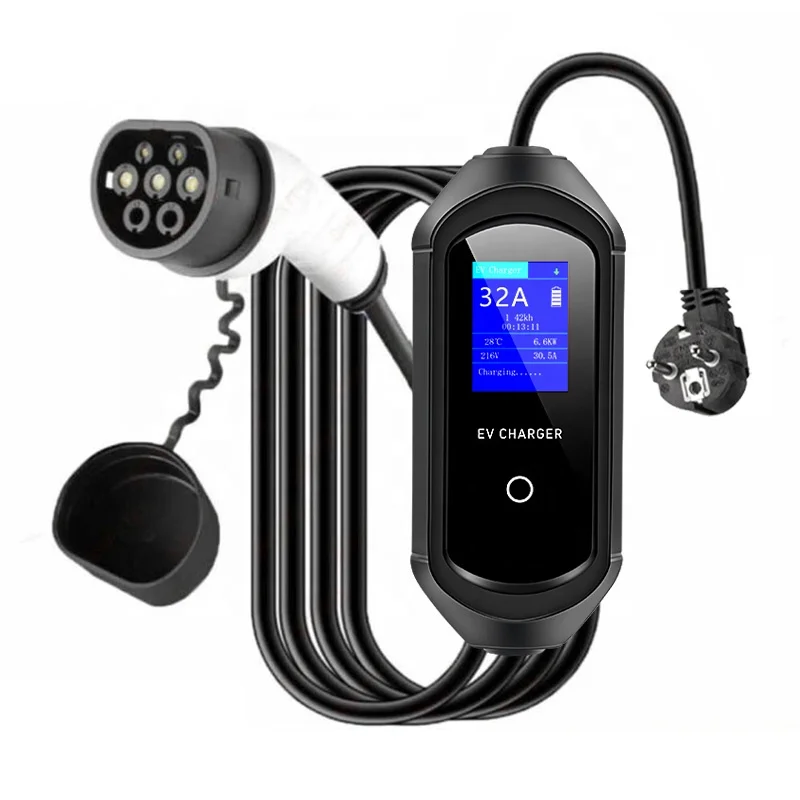

Portable EV Recharger 32A 7KW Car EVSE GBT EVchargerforvwid4 ID6 Charging EV GBT Charger for ID Volkswagen Charger ID 4 Charging
- Category: Auto Electronics >>>
- Supplier: Jiangsu Lutong Electric Co. Ltd.
Share on (1600732063603):
Product Overview
Description
Products Description


Product Name | Portable EV Recharger 32A 7KW | ||||||
MOQ | The minimum order quantity is ONE piece | ||||||
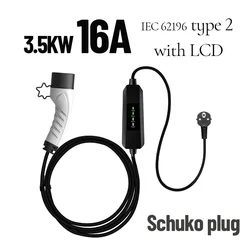
Rated Power | 7KW | 3.5KW | |||||
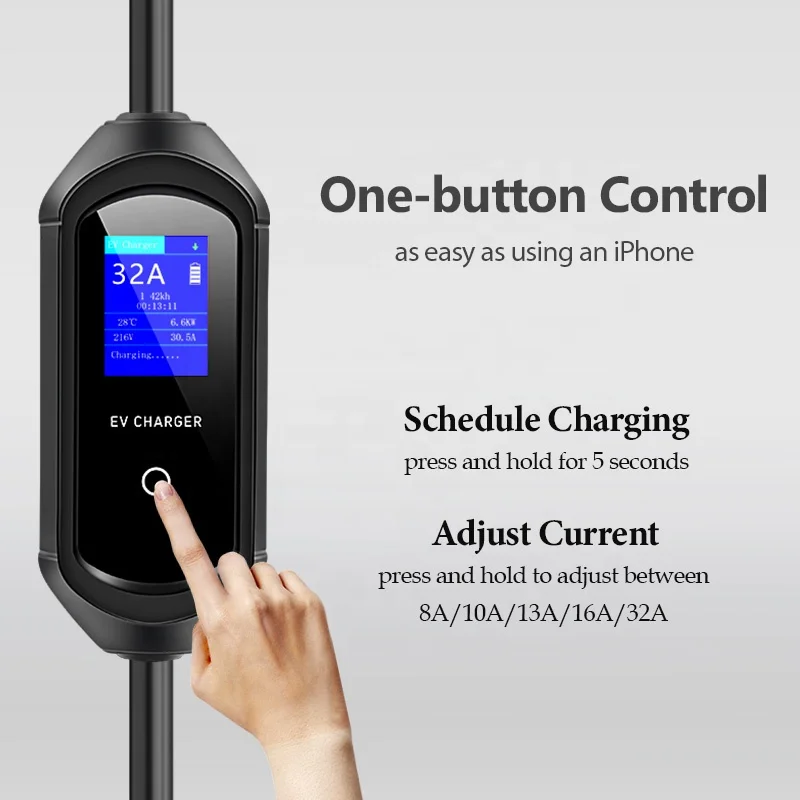
Adjustable Current | 32A, 16A, 13A, 10A, 8A | 16A, 13A, 10A, 8A | |||||
Power Phase | Single Phase, 1 Phase | ||||||
Cable Length | 5 meters by default or customization | ||||||
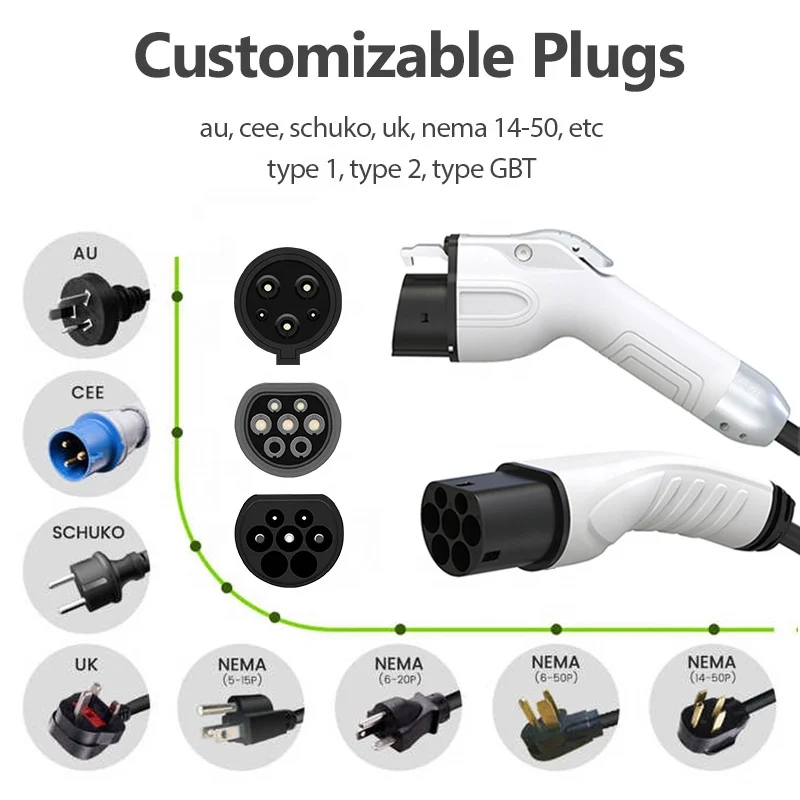
Charge Connector | Type 2, Type 1 or Type GBT | ||||||
LCD Display | Optional 2.8-inch LCD screen shows charging data | ||||||
WIFI + APP | Optional WIFI + App allows to remotely monitor and control charging | ||||||
Charge Schedule | Optional charge schedule reduces electric bills at off-peak hours | ||||||
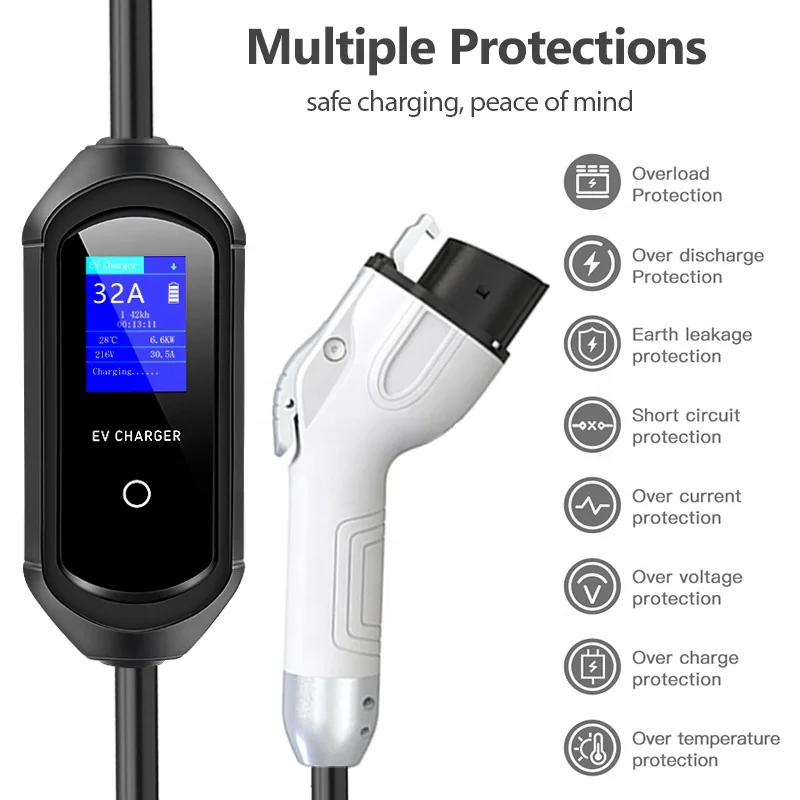
Built-in Protections | Protect against Overvoltage, Overcurrent, Overcharge, Overload, Electric Leakage, etc. | ||||||
One-button Control | As easy as using an iPhone | ||||||
Power Plug | industrial EU plug or NEMA 14-50P, 10-30P | normal schuko EU plug, US, UK, AU, GBT plug, etc. | |||||
Have Questions? | |||||||
portable ev recharger 32a 7kw car evse gbt evchargerforvwid4 id6 charging ev gbt charger for id volkswagen charger id 4 charging
Cost-effective: This portable EV charger has a built-in "Off-peak Charging" feature that allows you to schedule charging during hours with lower energy prices, helping you reduce your electric bills.
Portable: This portable EV charger is perfect for travel or visiting friends. It has an LCD screen that displays charging data and can be connected to a normal Schuko, EU Industrial, NEMA 10-30, or NEMA 14-50 outlet.
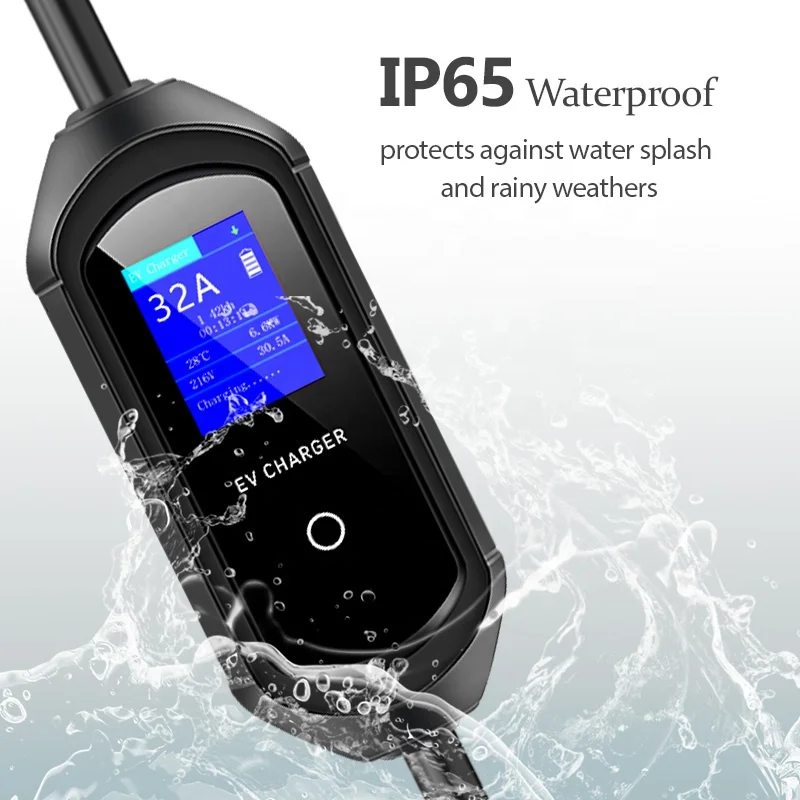
Durable and Safe: Made of high strength ABS material, this portable EV charger is built to last. It also has multiple protection measures in place for added safety, including over-current, over-voltage, under-voltage, leakage, overheating, and IP65 waterproof protection.
Compatible: Lutong EV chargers are compatible with a wide range of electric and plug-in hybrid vehicles, and meet GBT, IEC-62196 Type 2 or SAE J1772 standards. Additionally, the electric current can be adjusted to 5 levels (32A-16A-13A-10A-8A) if power supply is insufficient.
Company Profile

Founded in 1989, with over 30 years of industry experience, Jiangsu Lutong Electric Co., Ltd is a leading provider of electric vehicle (EV) charging solutions. We specialize in producing top-of-the-line EV chargers that to meet a variety of needs and budgets. We have a wide range of chargers and related accessories available, including Level 1, Level 2, Level 3 (DC Fast Charging) chargers, etc., all of which are manufactured in-house by our team of experts.
Our commitment to innovation, quality and customer satisfaction has resulted in products that are reliable, efficient and easy to use. Lutong is proud to be a part of the solution to the global energy transition and we look forward to serving you.

Certifications

Packaging & Shipping

FAQ

1. What’s the MOQ?
The MOQ is only one SINGLE piece.
2. Can I add my logo?
Yes, logo customization is supported.
3. Can I customize product and packaging?
Yes, all aspects of customizations are supported.
4. When will my order be shipped?
1-3 days depending on quantity.
5. How long is the warranty?
12-36 months depending on the products.
6. Do you test your products before shipment?
Multiple stages of testing and inspection are conducted before shipment.
7. Can I ask some more questions?
8. Why no one answers my inquiry?
Inquiries will be answered IMMEDIATELY, except when delayed by time zone difference.
How to choose portable EV chargers
Charging speed: Look for a charger that offers a high charging speed, as this will allow you to charge your EV quickly while on the go. Level 2 chargers, which use a 240-volt outlet, are generally faster than Level 1 chargers, which use a standard 120-volt household outlet. Higher power chargers will charge your vehicle faster, but you'll need to make sure your vehicle can handle the charging power.
Power supply: Different charging powers require different power supplies. 3.5kW and 7kW chargers require a single-phase power supply, while 11kW and 22kW chargers require a three-phase power supply.
Electric current: Some EV chargers have the ability to adjust the electric current. This can be useful if you have a limited power supply and need to adjust the charging speed.
Portability: Consider how portable the charger is. Some chargers are small and lightweight, making them easy to take with you on the go, while others are larger and heavier.
Compatibility: Make sure the charger is compatible with your EV. Check the input and output specifications of the charger and ensure that it is compatible with your vehicle's charging port.
Safety features: Look for a charger that has built-in safety features such as over-current, over-voltage, and over-temperature protection. These features will help protect your EV's battery and charging system.
Smart features: Some EV chargers come with an app that allows you to manage charging, set schedules, track charging costs, and view the miles driven. These smart features can be useful if you want to monitor charging status while away from home, or if you want to reduce electric bills by scheduling charging during off-peak hours.
Cable Length: Be sure to choose an EV charging cable that is long enough to reach the charge port of your car, as EV chargers come with cables of varying lengths, with 5 meters being the default.
We Recommend


New Arrivals
New products from manufacturers at wholesale prices