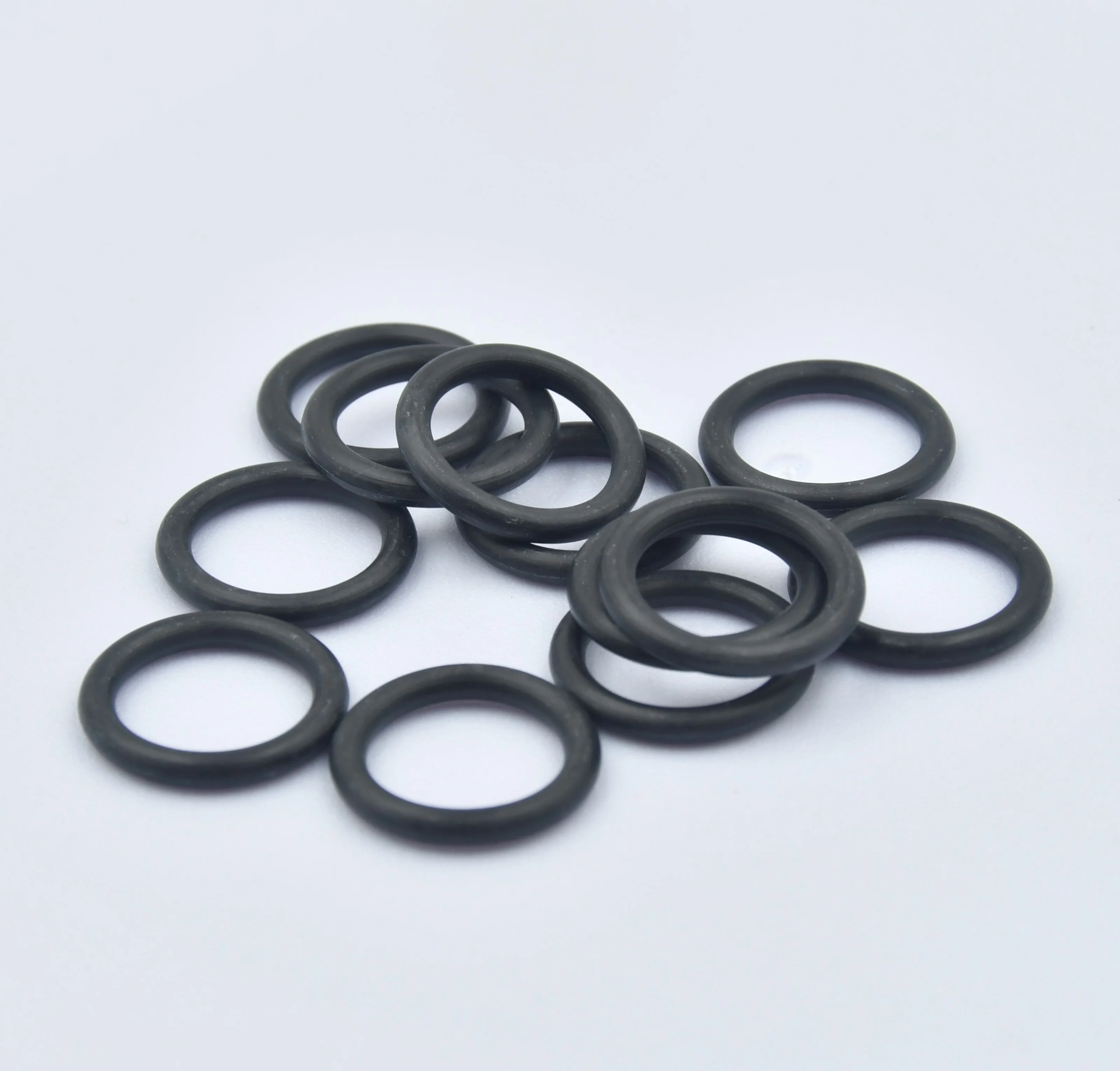
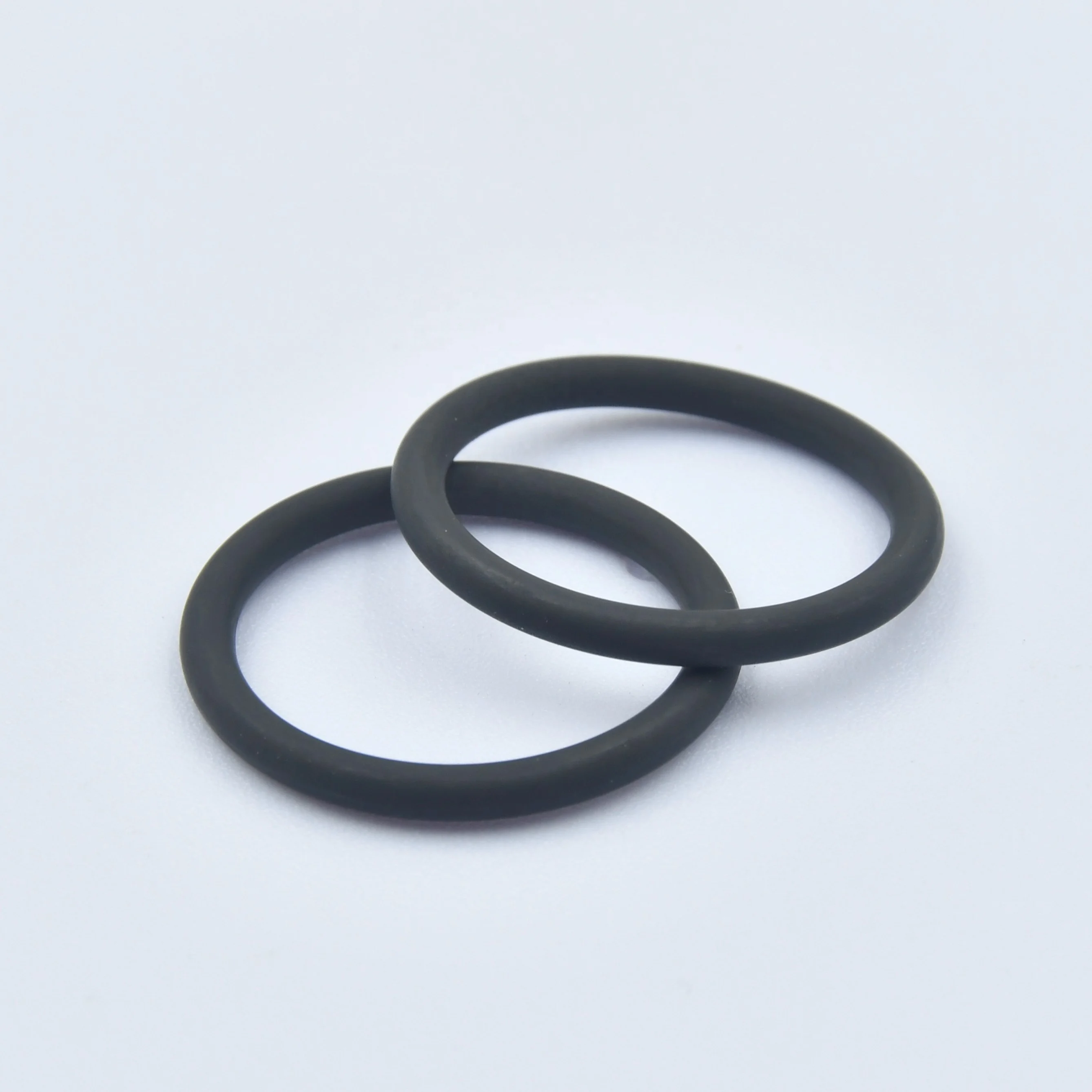
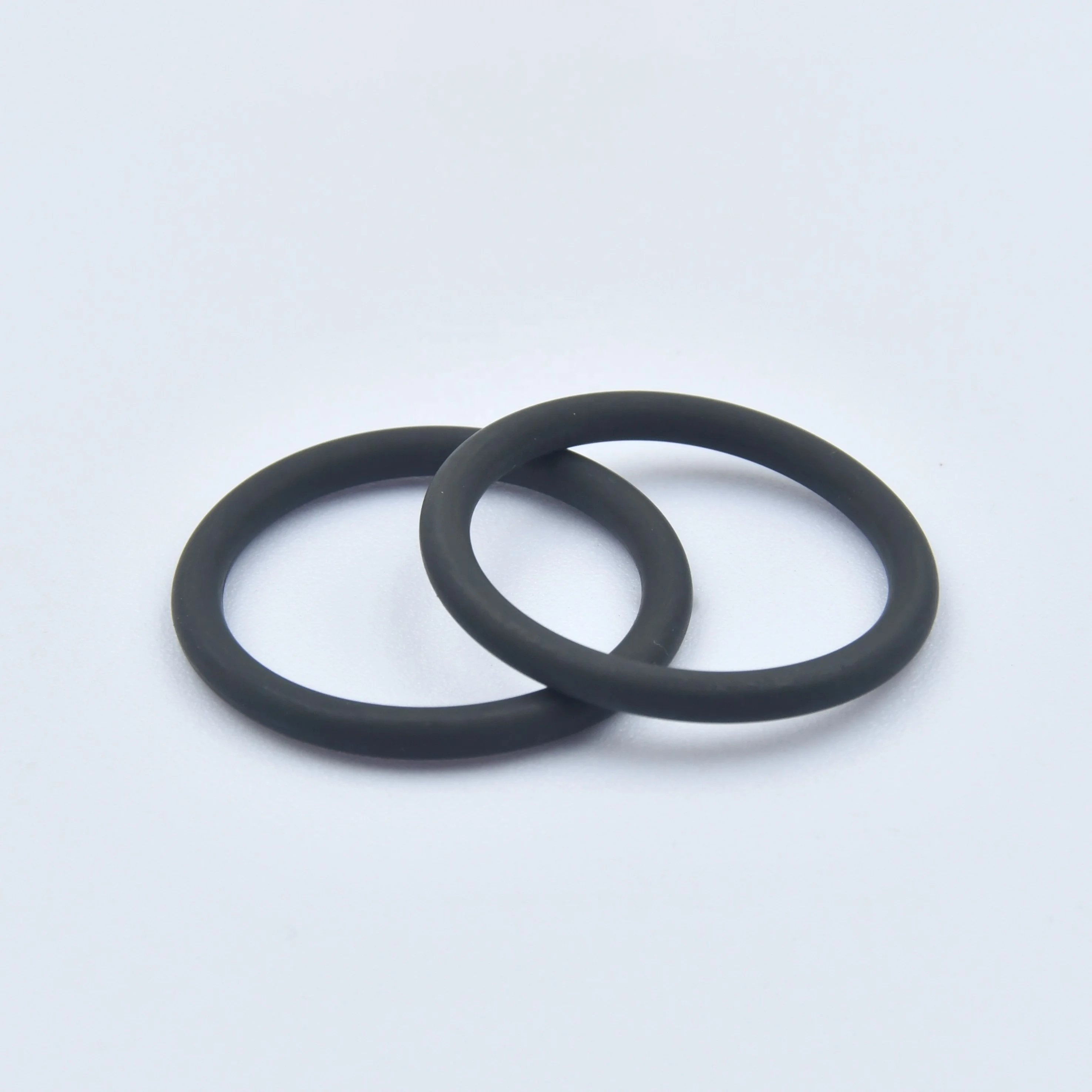
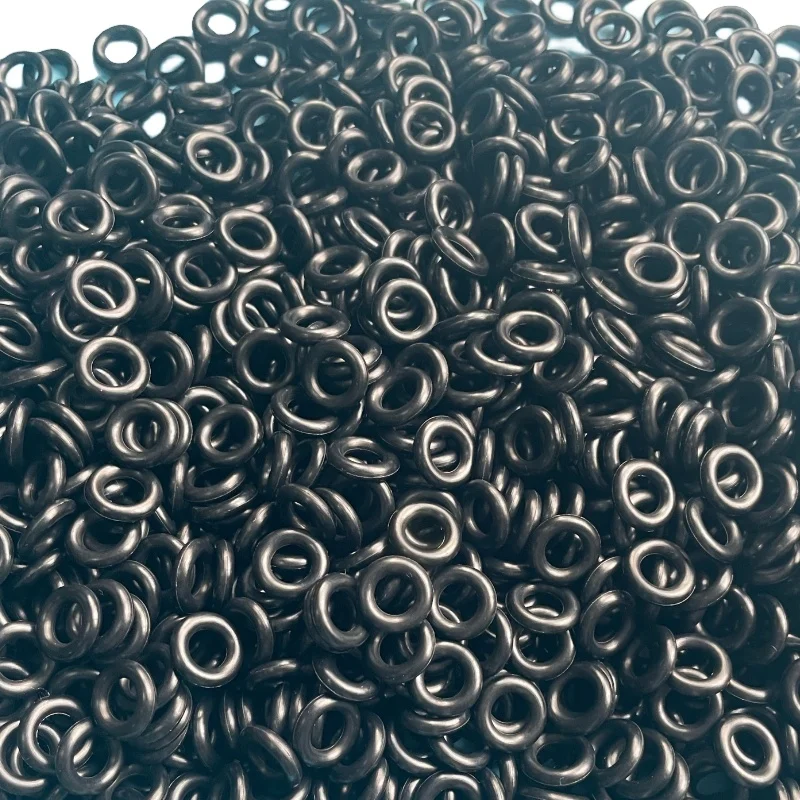
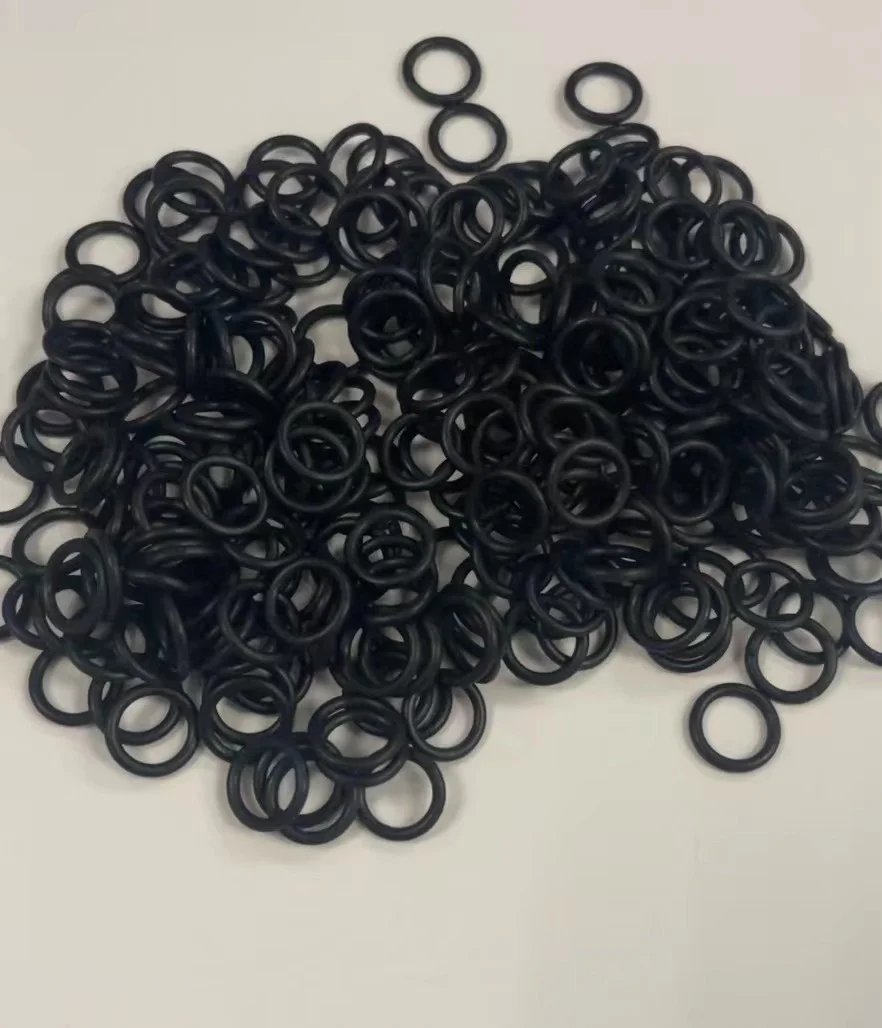
HOVOO NBR 70 80 90 Shore Black O Ring 6.2*1.2 NBR O Ring Seal High quality NBR Rubber Ring
- Category: >>>
- Supplier: Nanjing Hovoo Machinery Technology Co. Ltd.
Share on (1600984834331):
Product Overview
Description

Place of Origin: | Guangdong, China |
Condition: | New, 100%new |
Brand Name: | Hovoo |
Model Number: | standard,Non-standard |
product name: | O RINGS |
Key words: | NBR O Ring |
Hardness: | 90 Shore |
Certification: | ISO FAD NSF ROHS2 MSDS |
Application: | Waterproof, oil-proof and gas-proof |
Packaging : | PEbag for inner packing and carton for the outside packing |
Lead Time: | Within 5 days after after deposite |


1) At these temperatures lubricants degrade after a short time
2)Special compound.
3) High swelling at room temperature, hydrolysis at high temperatures.
4) Medium to high swelling according to temperature.
5) In water/steam.

NBR O RING
Heat resistance
Up to 100°C(212F) with shorter life @ 121C(250F)
Cold flexibility
Depending on individual compound, between -34°and -57°C(-30F and -70F).
Depending on individual compound, between -34°and -57°C(-30F and -70F).
Chemical resistance
Aliphatic hydrocarbons (propane, butane, petroleumoil, mineral oil and grease, diesel fuel, fuel oils) vegetable and mineral oils and greases.
HFA, HFB and HFC fluids.
Dilute acids, alkali and salt solutions at low temperatures.
Water (special compounds up to 100°C)(212°F)
Dilute acids, alkali and salt solutions at low temperatures.
Water (special compounds up to 100°C)(212°F)
Not compatible with:
Fuels of high aromatic content (for flex fuels a specialcompound must be used).Aromatic hydrocarbons (benzene).Chlorinated hydrocarbons (trichlorethylene)Polar solvents (ketone, acetone, acetic acid, ethylene-ester).
Strong acids.
Brake fluid with glycol base.
Ozone, weather and atmospheric aging
Fuels of high aromatic content (for flex fuels a specialcompound must be used).Aromatic hydrocarbons (benzene).Chlorinated hydrocarbons (trichlorethylene)Polar solvents (ketone, acetone, acetic acid, ethylene-ester).
Strong acids.
Brake fluid with glycol base.
Ozone, weather and atmospheric aging

FKM O RING
Fluorocarbon (FKM) has excellent resistance to high tem.peratures, ozone, oxygen, mineral oil, synthetic hydraulicfluids, fuels, aromatics and many organic solvents andchemicals. Low temperature resistance is normally notfavorable and for static applications is limited to approxi-mately -26°C (-15°F) although in certain situations it issuitable down to -40°C(-40F).Under dynamic conditions.the lowest service temperature is between -15C and -18(5°F and 0°F).
Gas permeability is very low and similar to that of butylrubber. Special FKM compounds exhibit an improvedresistance to acids, fuels, water and steam.
Heat resistance
Up to 204°C (400°F) and higher temperatures withshorter life expectancy.
Cold flexibilitv
Down to -26°C (-15°F) (some to -40C) (-40F)
Chemical resistance
Mineral oil and grease, low swelling in ASTM oil No.1, and IRM 902 and IRM 903 oils.
Non-flammable hydraulic fuels in the group HFD
Silicone oil and grease.
Mineral and vegetable oil and grease
Aliphatic hydrocarbons (fuel, butane, propane, naturalgas).
Aromatic hydrocarbons (benzene, toluene)Chlorinated hydrocarbons (trichlorethylene and carbon tetrachloride).
Fuels, also fuels with methanol content.
High vacuum.
Very good ozone, weather and aging resistance.
Not compatible with:Glycol based brake fluids.
Ammonia gas, amines, alkalis.
Superheated steam.
Low molecular organic acids (formic and acetic acids).
Gas permeability is very low and similar to that of butylrubber. Special FKM compounds exhibit an improvedresistance to acids, fuels, water and steam.
Heat resistance
Up to 204°C (400°F) and higher temperatures withshorter life expectancy.
Cold flexibilitv
Down to -26°C (-15°F) (some to -40C) (-40F)
Chemical resistance
Mineral oil and grease, low swelling in ASTM oil No.1, and IRM 902 and IRM 903 oils.
Non-flammable hydraulic fuels in the group HFD
Silicone oil and grease.
Mineral and vegetable oil and grease
Aliphatic hydrocarbons (fuel, butane, propane, naturalgas).
Aromatic hydrocarbons (benzene, toluene)Chlorinated hydrocarbons (trichlorethylene and carbon tetrachloride).
Fuels, also fuels with methanol content.
High vacuum.
Very good ozone, weather and aging resistance.
Not compatible with:Glycol based brake fluids.
Ammonia gas, amines, alkalis.
Superheated steam.
Low molecular organic acids (formic and acetic acids).

VMQ O RING
SICICONE O RING
Heat resistance
Up to approximately 204°C (400F) (special com-pounds up to 232°C (450°F).
Cold flexibility
Down to approximately -59°C to -54 (-75F to-65°F) with special compounds down to -115°(-175°F).
Chemical resistance
Engine and transmission oil (e.g.: ASTM oil No.1)
Up to approximately 204°C (400F) (special com-pounds up to 232°C (450°F).
Cold flexibility
Down to approximately -59°C to -54 (-75F to-65°F) with special compounds down to -115°(-175°F).
Chemical resistance
Engine and transmission oil (e.g.: ASTM oil No.1)
Animal and vegetable oil and grease.
Brake fluid (non-petroleum base).
Brake fluid (non-petroleum base).
Fire-resistant hydraulic fluid, HFD-R and HFD-S
High molecular weight chlorinated aromatic hydro-carbons(including flame-resistantinsulators,and coolant for transformers).
Moderate water resistance.
Diluted salt solutions.
Ozone, aging and weather resistant.
Moderate water resistance.
Diluted salt solutions.
Ozone, aging and weather resistant.
Not compatible with:
Superheated water steam over 121°C (250°F)
Acids and alkalis.
Low molecular weight chlorinated hydrocarbons(trichloroethylene).
Superheated water steam over 121°C (250°F)
Acids and alkalis.
Low molecular weight chlorinated hydrocarbons(trichloroethylene).
Aromatic mineral oil.Hydrocarbon based fuels.
Aromatic hydrocarbons (benzene, toluene)
Aromatic hydrocarbons (benzene, toluene)

PU (AU ,EU) O RING
One must differentiate between polyester urethane (AU)and polyether urethane (EU). AU type urethanes exhibitbetter resistance to hydraulic fluids. Polyurethane elas-tomers, as a class, have excellent wear resistance, hightensile strength and high elasticity in comparison with anyother elastomers. Permeability is good and comparablewith butyl.
acids
Heat resistance
Ketones, esters, ethers, alcohols, glycols
Up to approximately 82°C (180°F).
Cold flexibility
Down to approximately -40°C (-40°F)
Chemical resistance
Pure aliphatic hydrocarbons (propane, butane, fuel).
Mineral oil and grease. Silicone oil and grease.
Mineral oil and grease. Silicone oil and grease.
Water up to 50°C (125°F) (EU type)
Ozone and aging resistant.
Not compatible with:
Ketones, esters, ethers, alcohols, glycols
Hot water, steam, alkalis, amines, acids

How to choose correct material?

Production process


We Recommend




New Arrivals
New products from manufacturers at wholesale prices