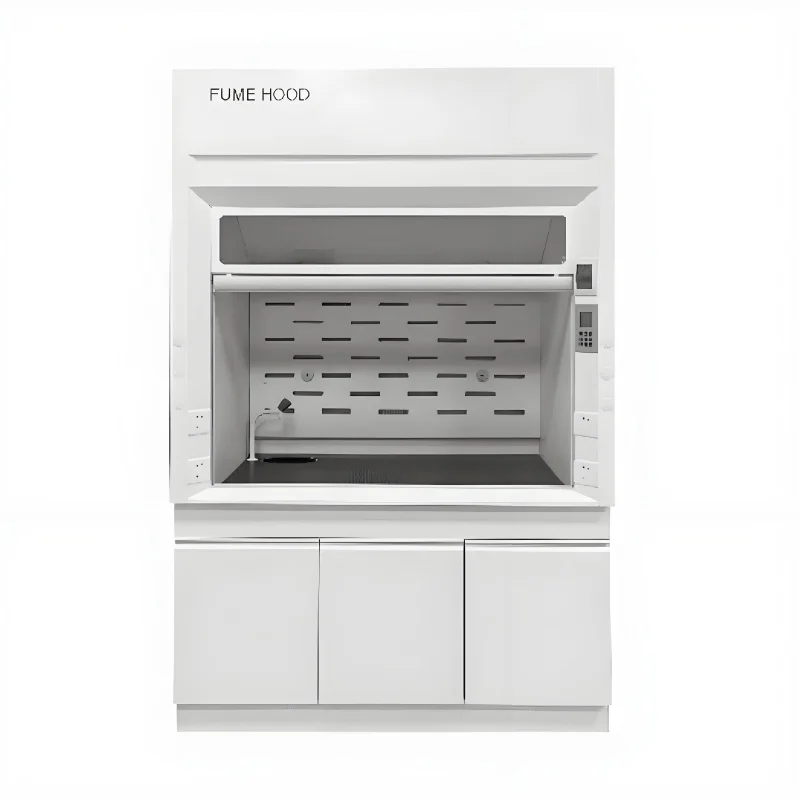
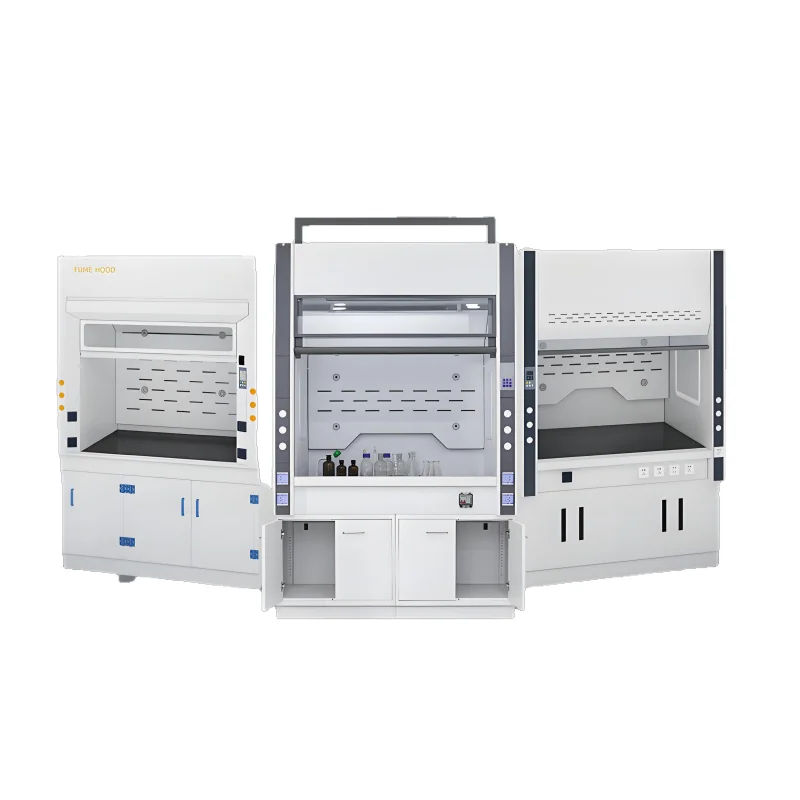
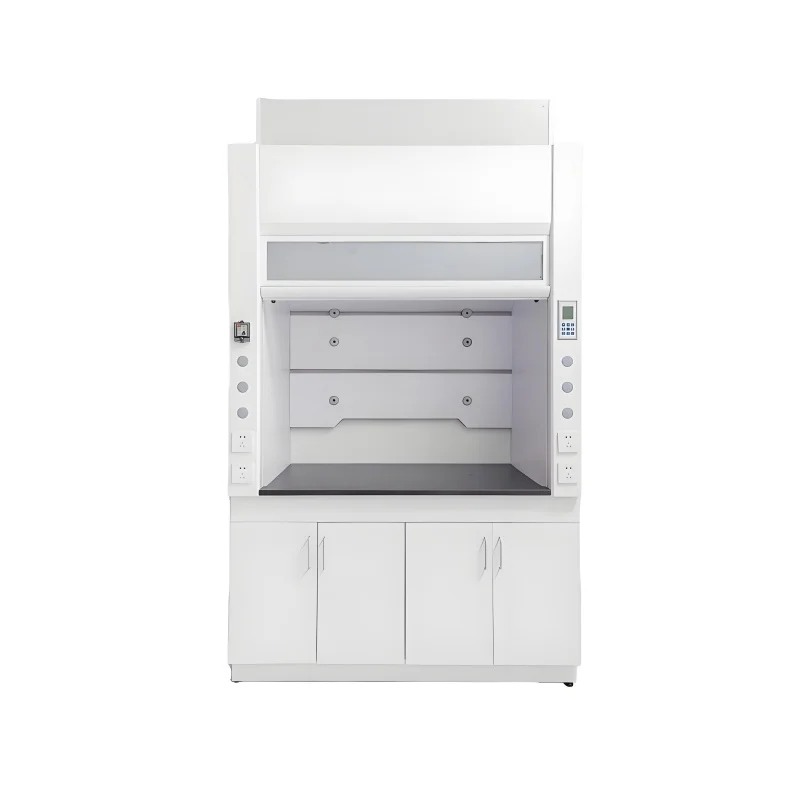
pp fume hood school furniture lab cabinet chemical laboratory fume hood
- Category: >>>
- Supplier: Jiangxi Aiyi Hi-Tech Co. Ltd.
Share on (1601260768656):
Product Overview
Description
pp fume hood furniture lab cabinet chemical laboratory fume hood
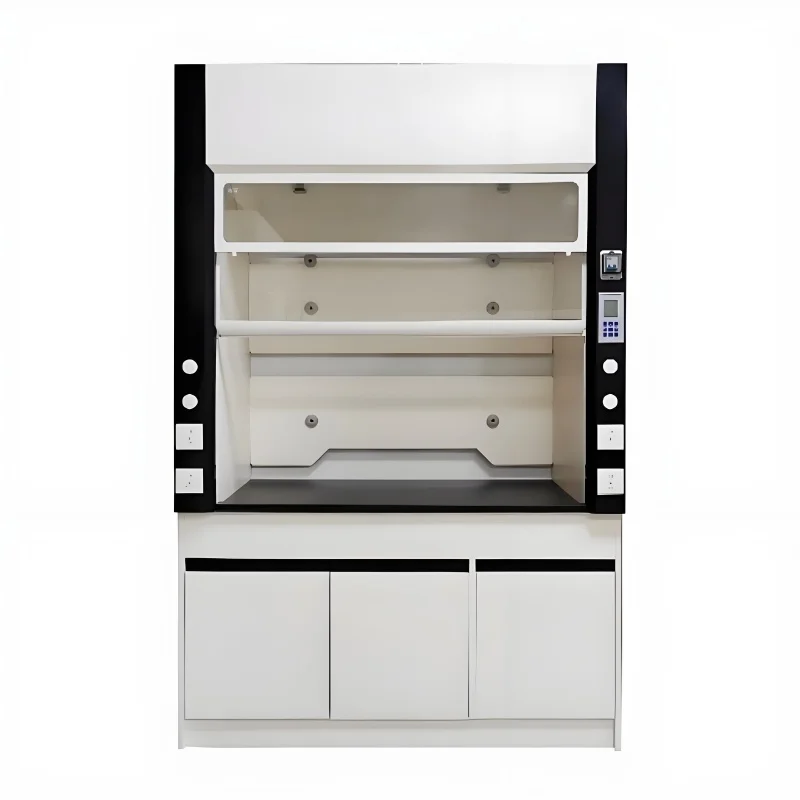
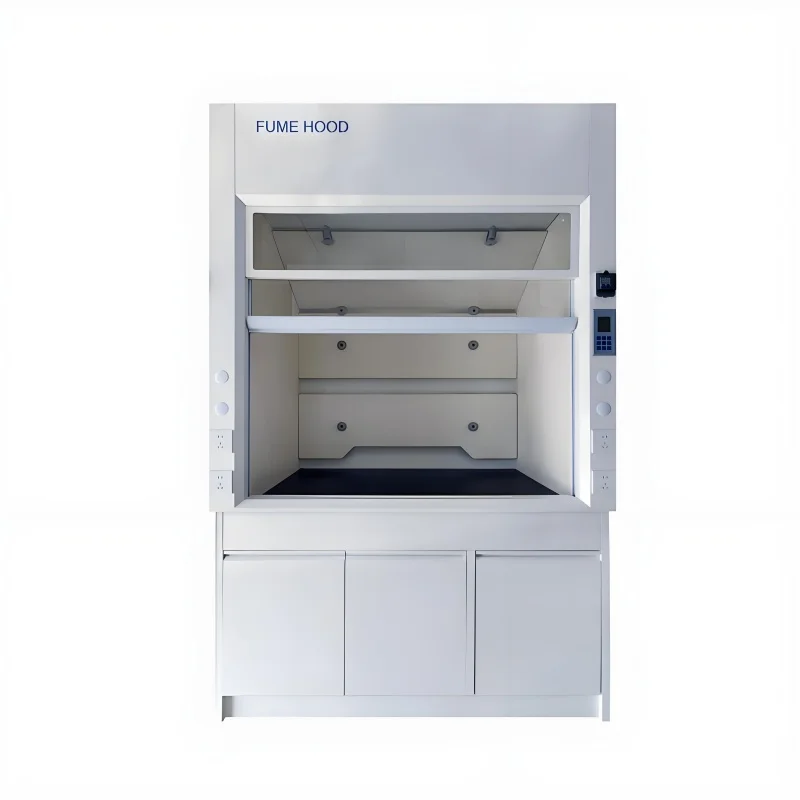
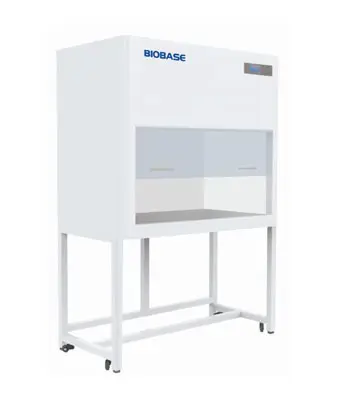
PP fume hoods are a kind of safety equipment designed for laboratories to deal with hazardous odorous gases, stinky gases, humid gases and corrosive substances, in order to protect the safety of experimental personnel and to prevent the contaminated substances in the experiment from spreading to the laboratory. The following are the main features and introduction of PP fume hood:
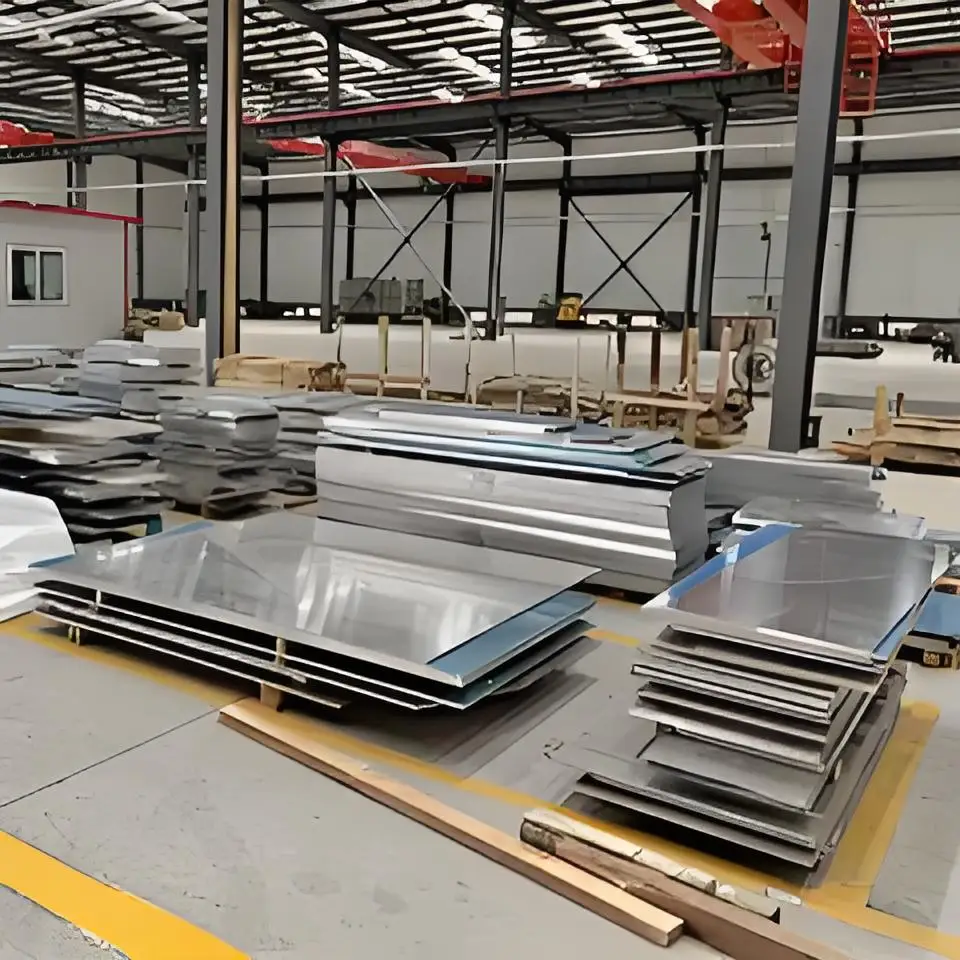
1, Material: The cabinet of PP fume hood is usually made of porcelain-white PP board seamlessly welded and molded, with a thickness of 8mm, which has good resistance to strong acid and alkali, impact resistance, corrosion resistance and never rust.
2, Countertop: There are various choices of countertop, including solid core physicochemical board, PP board, ceramic board, etc., which are selected according to the specific needs of the laboratory.
3, Design: left and right side panels, front panel tilted inward at an angle of 30 ° angle design, front panel and left and right side panels seamlessly welded molding, easy to operate. The cabinet can be equipped with optional water and gas faucets, sinks and control valves.
4, liner: liner made of 8mm thick PP board, one-piece welding process, excellent airtightness between the liner; deflector plate with three-stage exhaust design to ensure that harmful gases are completely discharged.
5, Windows: Windows are made of 5mm thick tempered glass, safe and explosion-proof. The frames around the window and the sliding rails on the left and right sides of the adjustable door are made of PVC and molded.
6, control panel: equipped with a control panel, cabinet lighting system, circuit system, air volume adjustment system can be operated in the control panel.
7, electrical equipment: usually equipped with laboratory-specific multifunctional sockets, with dust-proof, acid and alkali resistant, waterproof design.
8, Dimensions: External and internal dimensions will vary according to different models and can be customized according to needs.
9, Application: PP fume hoods are suitable for many fields such as electronic industry, chemical industry, electroplating industry, food industry, etc., especially in environments where acid and alkali resistant solutions are required.
1, Material: The cabinet of PP fume hood is usually made of porcelain-white PP board seamlessly welded and molded, with a thickness of 8mm, which has good resistance to strong acid and alkali, impact resistance, corrosion resistance and never rust.
2, Countertop: There are various choices of countertop, including solid core physicochemical board, PP board, ceramic board, etc., which are selected according to the specific needs of the laboratory.
3, Design: left and right side panels, front panel tilted inward at an angle of 30 ° angle design, front panel and left and right side panels seamlessly welded molding, easy to operate. The cabinet can be equipped with optional water and gas faucets, sinks and control valves.
4, liner: liner made of 8mm thick PP board, one-piece welding process, excellent airtightness between the liner; deflector plate with three-stage exhaust design to ensure that harmful gases are completely discharged.
5, Windows: Windows are made of 5mm thick tempered glass, safe and explosion-proof. The frames around the window and the sliding rails on the left and right sides of the adjustable door are made of PVC and molded.
6, control panel: equipped with a control panel, cabinet lighting system, circuit system, air volume adjustment system can be operated in the control panel.
7, electrical equipment: usually equipped with laboratory-specific multifunctional sockets, with dust-proof, acid and alkali resistant, waterproof design.
8, Dimensions: External and internal dimensions will vary according to different models and can be customized according to needs.
9, Application: PP fume hoods are suitable for many fields such as electronic industry, chemical industry, electroplating industry, food industry, etc., especially in environments where acid and alkali resistant solutions are required.
Product Description

Product Name | Model | Size (mm) |
PP fume hood | desktop | 1200*850*2350 |
1500*850*2350 | ||
1800*850*2350 |
product details
related products
FAQ
1, Is the material of laboratory furniture resistant to chemical corrosion?
Yes, the laboratory furniture we provide is made of high-quality materials, such as PP board or solid-core physicochemical board that is resistant to strong acids and alkalis, which are specially treated to resist common chemicals in the laboratory and ensure that they will not be deformed or discolored in long-term use.
2, Is the design of the furniture ergonomic?
Absolutely. Our design team has given full consideration to user comfort and work efficiency. All furniture is ergonomically designed to ensure that users do not feel fatigued even after long hours of work.
3, What are the customization options for laboratory furniture?
We offer a full range of customization services, including size, color, material and additional features. You can customize the furniture to best suit the specific needs and space layout of your lab.
4, Is it easy to install and maintain the furniture?
Our laboratory furniture is designed with a focus on easy installation and maintenance. Most products come with detailed installation instructions, and our customer service team is always ready to help. For maintenance, we use materials that are easy to clean and durable, reducing the need for maintenance.
5, What kind of after-sales service do you provide if there are problems with the furniture during use?
We take after-sales service very seriously and offer a comprehensive warranty. If any problem occurs during the use of the furniture, our customer service team will respond quickly to provide a solution.
Yes, the laboratory furniture we provide is made of high-quality materials, such as PP board or solid-core physicochemical board that is resistant to strong acids and alkalis, which are specially treated to resist common chemicals in the laboratory and ensure that they will not be deformed or discolored in long-term use.
2, Is the design of the furniture ergonomic?
Absolutely. Our design team has given full consideration to user comfort and work efficiency. All furniture is ergonomically designed to ensure that users do not feel fatigued even after long hours of work.
3, What are the customization options for laboratory furniture?
We offer a full range of customization services, including size, color, material and additional features. You can customize the furniture to best suit the specific needs and space layout of your lab.
4, Is it easy to install and maintain the furniture?
Our laboratory furniture is designed with a focus on easy installation and maintenance. Most products come with detailed installation instructions, and our customer service team is always ready to help. For maintenance, we use materials that are easy to clean and durable, reducing the need for maintenance.
5, What kind of after-sales service do you provide if there are problems with the furniture during use?
We take after-sales service very seriously and offer a comprehensive warranty. If any problem occurs during the use of the furniture, our customer service team will respond quickly to provide a solution.

Packing & Delivery


Company Profile

Certificate




Jiangxi Aiyi High tech Co., Ltd., founded in 2015, is located in the picturesque Nanchang High tech Industrial Development Zone.We are committed to transforming the power of technology into an innovation engine in the scientific research community, providing excellent laboratory equipment and comprehensive technical support to global customers.
Our main products cover five core areas: chromatographs, spectrometers, general instruments, laboratory furniture, and life science instruments. Chromatographs and spectrometers, such as high-performance liquid chromatography (HPLC), atomic absorption spectroscopy (AAS), inductively coupled plasma emission spectroscopy (ICP-OES), etc., stand out in industries such as environmental monitoring and materials science due to their excellent analytical capabilities and stability. Universal instruments, including high-precision pipettes, incubators,etc., ensure a perfect combination of precision and efficiency in every experimental operation. Laboratory furniture integrates modern design concepts and safety standards, providing researchers with a beautiful and practical working environment. Life science instruments, such as PCR instrument, gel imaging analyzer, etc., contribute to cutting-edge research in the field of life science.
Our factory


We Recommend



New Arrivals
New products from manufacturers at wholesale prices