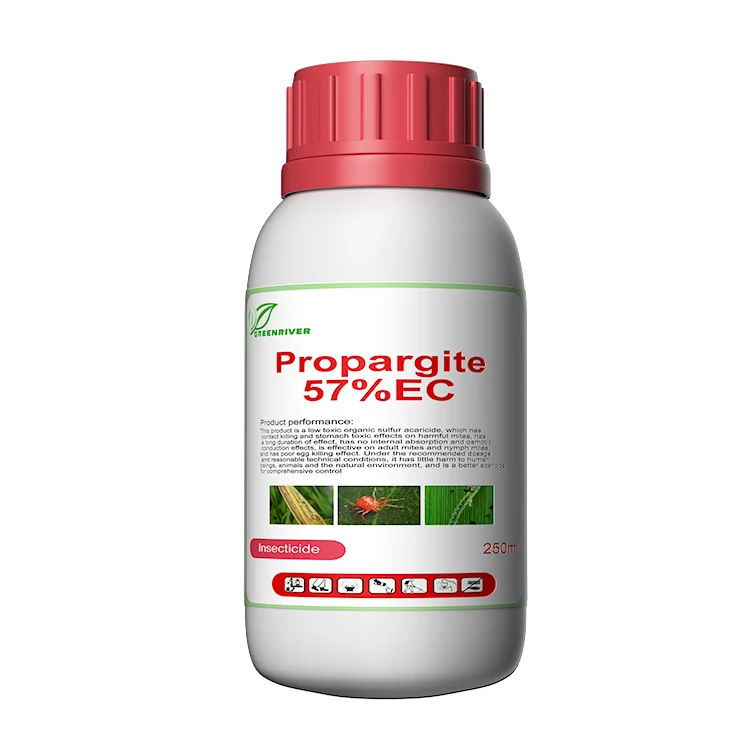
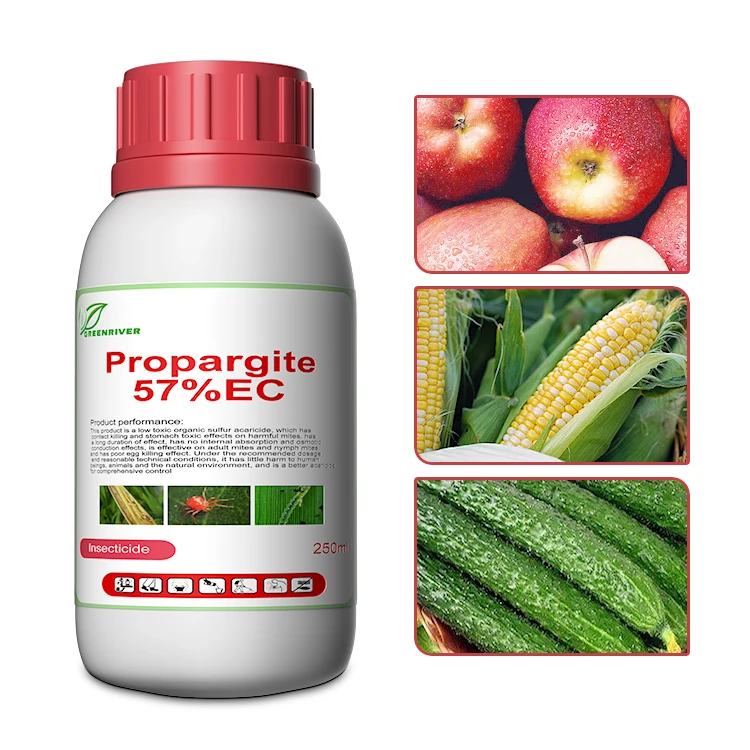
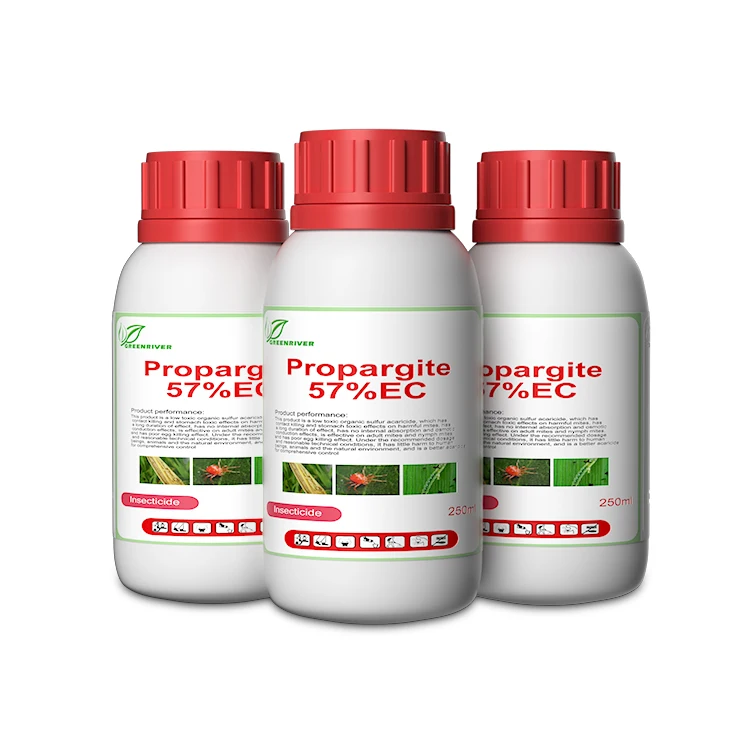
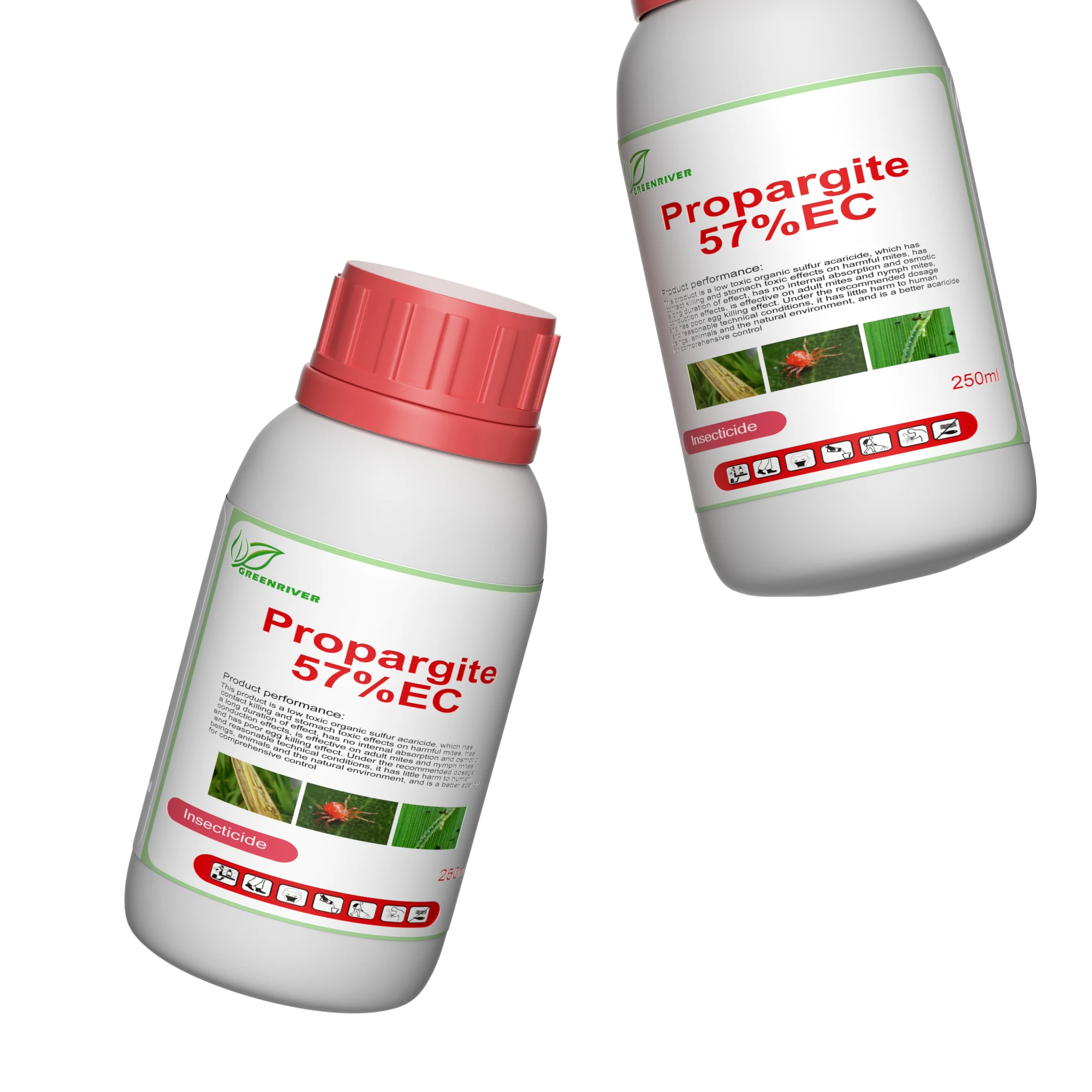
Agrochemical pesticide Propargite 90%Tech 30%WP 57%EC
- Category: Agrochemicals >>>
- Supplier: Greenriver Industry Co. Ltd.
Share on (312613302):
Product Overview
Description
Product Description


Specification
Active Ingredient | ||
Common Name | Propargite | |
Chemical Name | 2-[4-(1,1-dimethylethyl)phenoxy]cyclohexyl 2-propynyl sulfite(IUPAC); 2[4-(1,1-dimethyl-ethyl)phenoxy] cyclohexyl-2-propynyl ester(CAS) | |
Pesticide Category | Insecticide | |
CAS No | 2312-35-8 | |
Molecular Formula | C19H26O4S | |
Properties | Appearance: Dark brown liquid. Mild, solvent odour. Vapour Pressure: 0.006mPa(25°C) Solubility: Water - about 0.5 mg/kg 25°C. Miscible with organic solvents such as acetone, benzene,ethanol heptane and methanol. | |
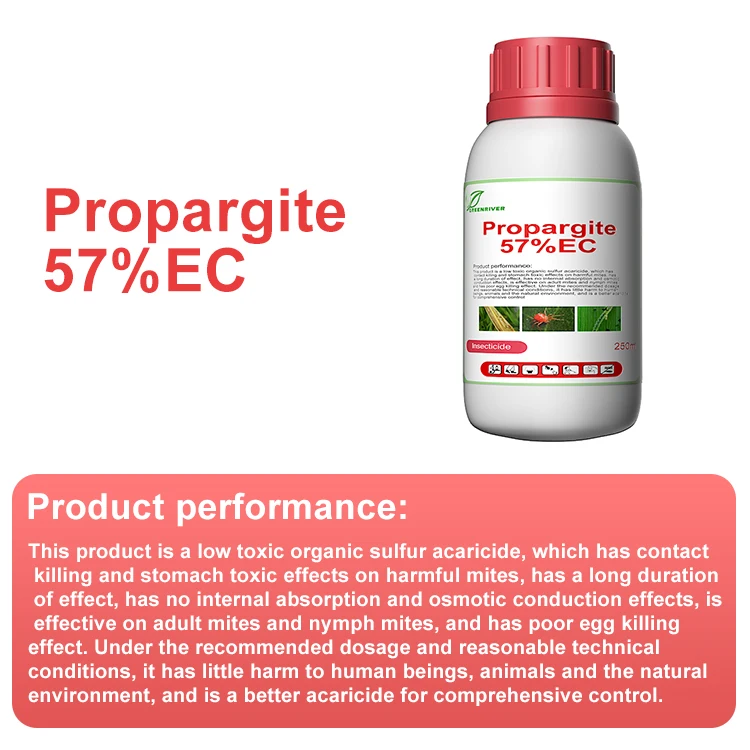
Mode of Action | Non-systemic acaricide with predominantly contact action; some additional action by inhalation. | |
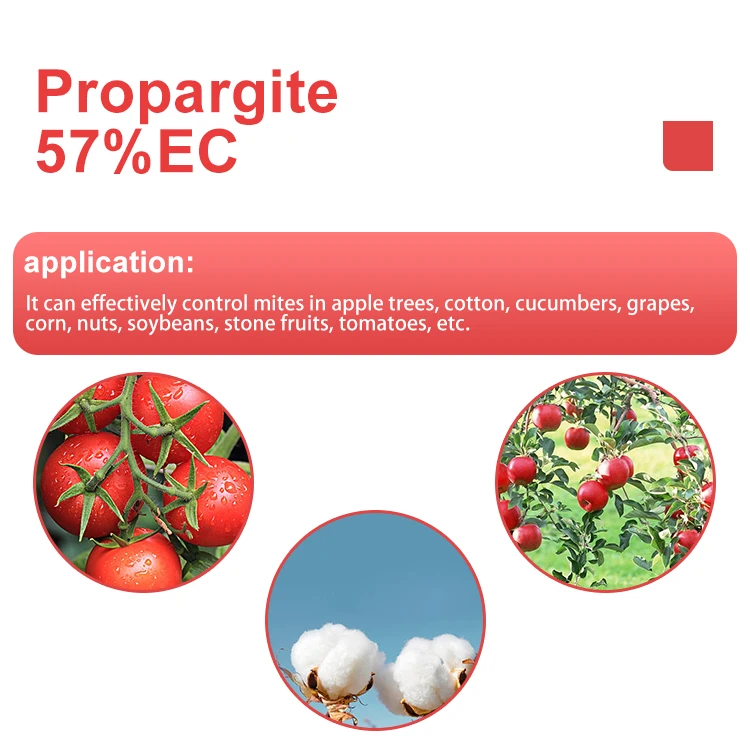
Characteristics and Uses | Controls mites on almonds, beans (dry), carrots (seed), Christmas trees, conifers, clover (seed), corn,cotton, grapefruit, grapes, hops, lemons, mint,nectarines,namentals, oranges, peanuts, potatoes, roses, sorghum (grain), sugar beets (seed), and walnuts. Postharvest use on sweet cherries, and citrus.Nonbearing use on apples, apricots, avocados, cherries, citrus,peaches,pears, plums, prunes, and strawberries. | |
Toxicity | Rat): Oral LD50 2800 mg/kg; Inhalation LC50 0.89 mg/l. (Rabbit): Dermal LD50 >4000 mg/kg. Severely irritating to eyes skin Fish: LC50 (96 h) 0.118 mg/l (rainbow trout). Bird: Oral LD50 >4640 mg/kg (mallard duck) . Bee: Nontoxic. Contact LD50 (48 h) 15 mg/bee | |
Company Profile

FAQ
Q1. I want more styles, how can I get latest catalogue for your reference?
A: You can contact us by Email, we will give you our latest catalogue according to your information.
Q2. Can you add our own logo on the product?
A: Yes. We offer the service of adding customers’ logo. There are many types of this service. If you have this need, kindly send us you own logo you are welcome.
Q2. Can you add our own logo on the product?
A: Yes. We offer the service of adding customers’ logo. There are many types of this service. If you have this need, kindly send us you own logo you are welcome.
Q3. How does your factory do regarding quality control?
A: "Quality is priority? We always attach great importance to quality controlling.
A: "Quality is priority? We always attach great importance to quality controlling.
1) Skillful workers care every details in handling the producing and packing processes;
2) Quality Control Department specially responsible for quality checking in each
process.
Q4. How can we guarantee quality?
Always a pre-production sample before mass production;
Always final Inspection before shipment;
Q5. How can I order?
A: You can directly place an order on our shop in Alibaba web. Or you can tell us the product name, packing and quantity you need, then we will send you the quotation.
Q6.what can you buy from us?
Insecticide,Herbicide,Fungicide,Rodenticide,Plant Growth Regulator
Q7. what services can we provide?
Accepted Delivery Terms: FOB,CFR,CIF,CIP,CPT,DDP,DDU,Express Delivery;
Accepted Payment Currency:USD,EUR,HKD,CNY;
Accepted Payment Type: T/T,L/C,D/P D/A,Credit Card,PayPal,Western Union,Cash;
Language Spoken:English,Chinese,Spanish,Arabic,Russian
process.
Q4. How can we guarantee quality?
Always a pre-production sample before mass production;
Always final Inspection before shipment;
Q5. How can I order?
A: You can directly place an order on our shop in Alibaba web. Or you can tell us the product name, packing and quantity you need, then we will send you the quotation.
Q6.what can you buy from us?
Insecticide,Herbicide,Fungicide,Rodenticide,Plant Growth Regulator
Q7. what services can we provide?
Accepted Delivery Terms: FOB,CFR,CIF,CIP,CPT,DDP,DDU,Express Delivery;
Accepted Payment Currency:USD,EUR,HKD,CNY;
Accepted Payment Type: T/T,L/C,D/P D/A,Credit Card,PayPal,Western Union,Cash;
Language Spoken:English,Chinese,Spanish,Arabic,Russian
We Recommend

100% Water soluble npk fertilizer/ NPK 17-17-17
US $0.51-$0.55


100% water soluble NPK 19-19-19 fertilizer
US $0.80-$1.50

New Arrivals
New products from manufacturers at wholesale prices